Artwork
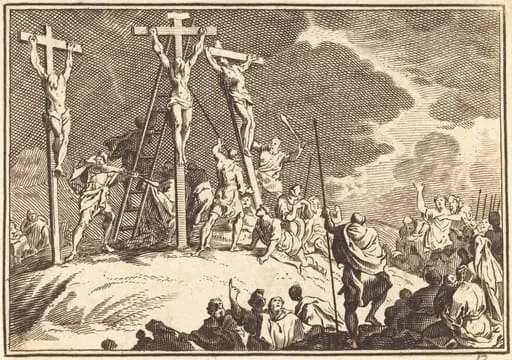
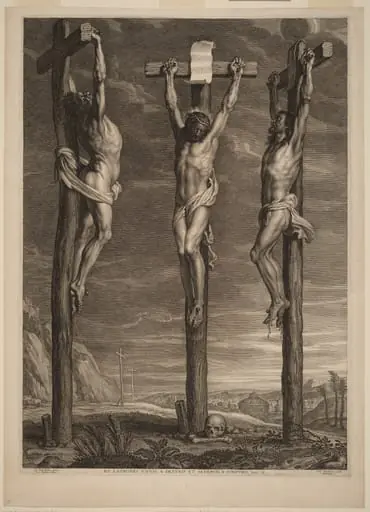
Christ on the Cross between the Two Thieves
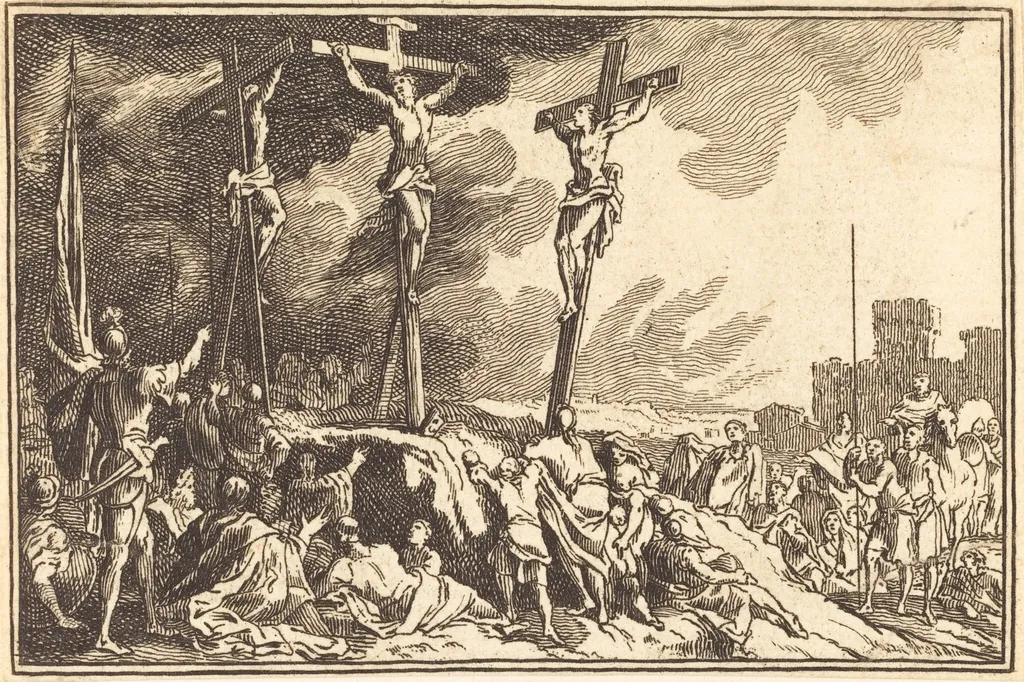
Christ on the Cross between the Two Thieves is an ink print by the Baroque artist French 17th Century. It dates from 1650 and is held in the collection of the National Gallery of Art.
About this work
Overview
This engraving depicts a dramatic scene of Christ's crucifixion, flanked by the two thieves, set against a turbulent sky and observed by a dense, anonymous crowd on a rocky hill.
Subject & Meaning
The central figure, Christ, is distinguished by his upright posture with arms outstretched, contrasting with the limp bodies of the thieves. This composition emphasizes Christ's suffering and dignity amidst chaos and the collective gaze of the crowd.
Technique & Style
The artist employed fine lines and cross-hatching techniques to achieve depth, texture, and shading, particularly evident in the rendering of clothing and the rocky terrain. The crowd's faces are intentionally blurred, de-emphasizing individuality.
Context
The use of engraving as a medium and the emphasis on line work suggest the piece aligns with traditional European printmaking practices of its time, likely serving religious or devotional purposes.
Legacy
While specific impact or influence of this engraving is not detailed, its style and subject matter place it within a broader tradition of Christian art, potentially influencing or reflecting contemporary religious representations.
Artist & collection

Artist
Seventeenth-century French printmakers turned ink into story. Their tools were burin and acid, paper their stage. Look at the Beggar Woman with Rosary (1622), etched on laid paper, her hands folded around faith, or The…

 Christ on the Cross
 Christ on the Cross
 Piercing of Christ's Side
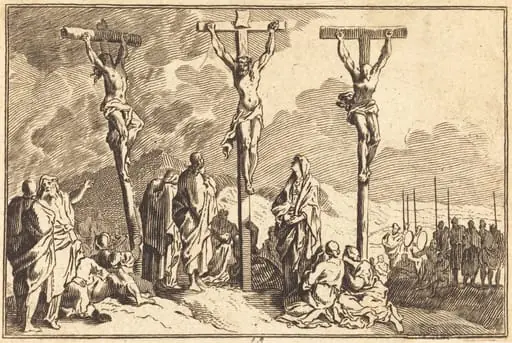 The Virgin, Saint John, and Mary Magdalene at the Foot of the Cross
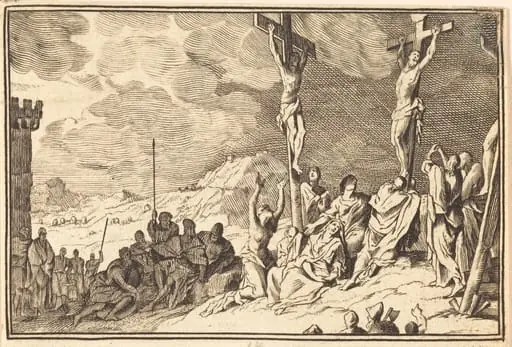 Christ Dying on the Cross
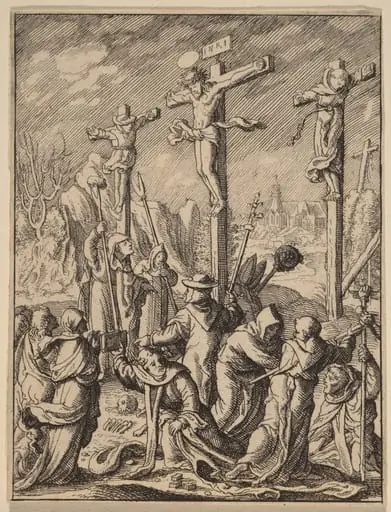 The Crucifixion
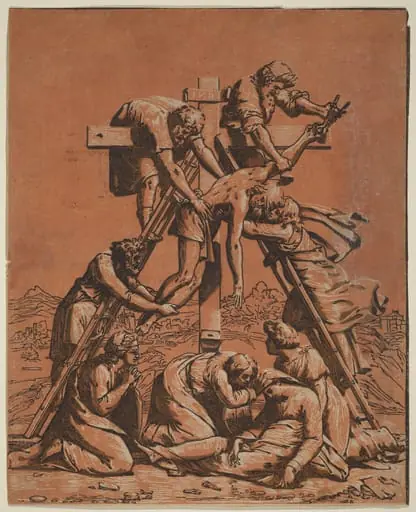 The Descent from the Cross
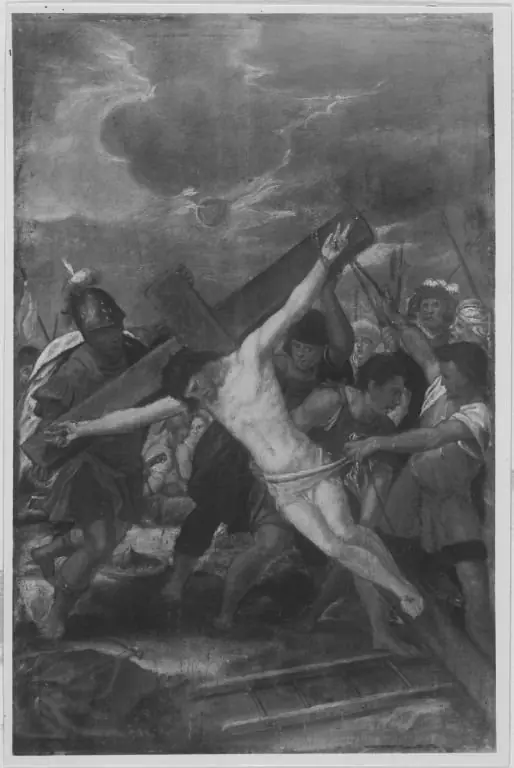 Kreuzaufrichtung Christi (Kopie nach)
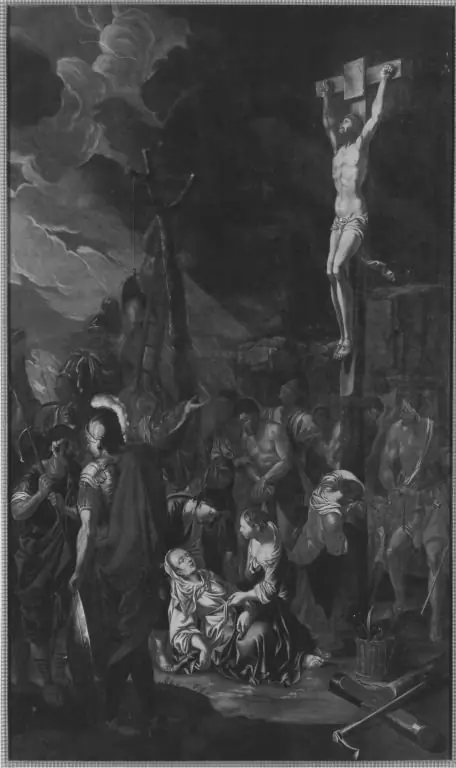 Kreuzigung
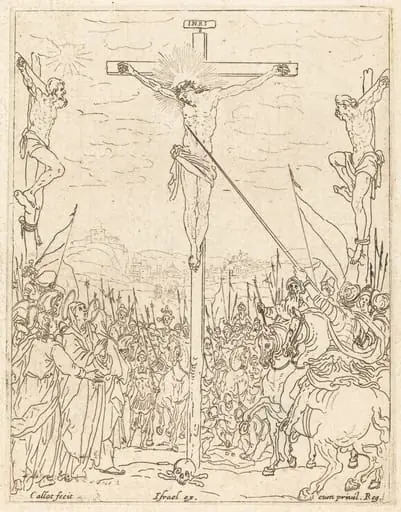 Christ on the Cross
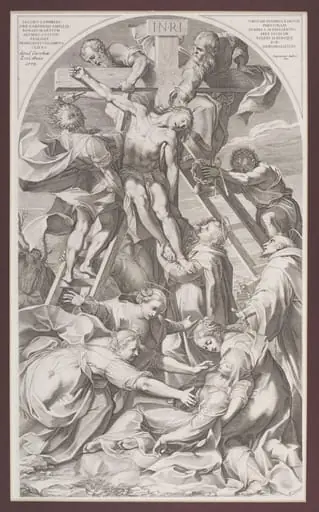 The Taking Down from the Cross
 Christ Crucified between Two Thieves