Artwork
Piercing of Christ's Side
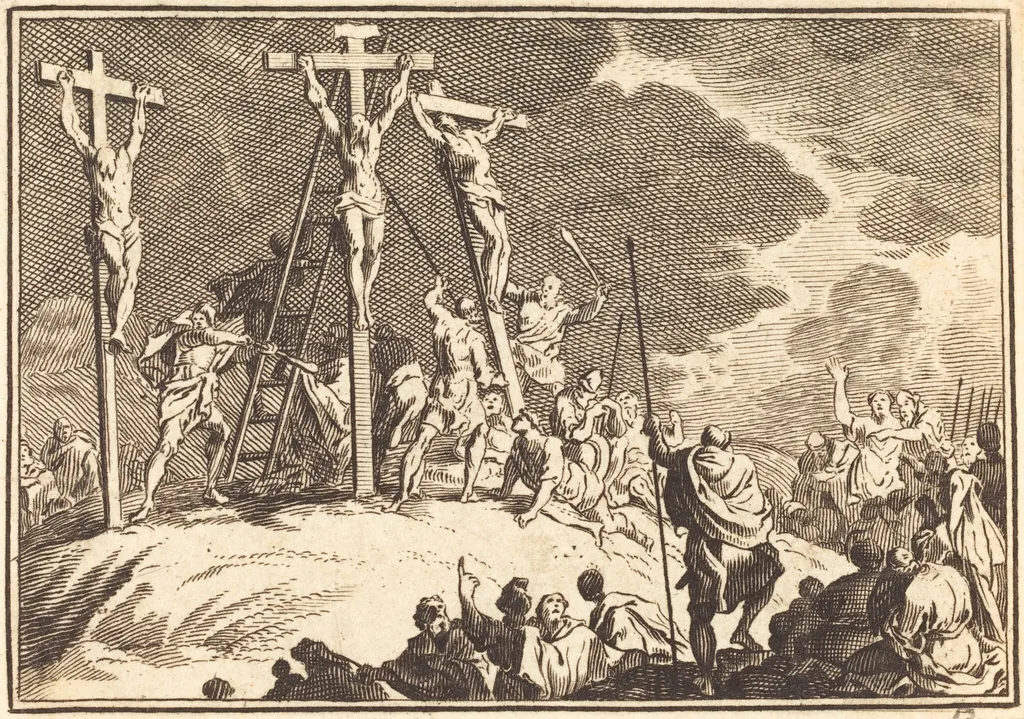
Piercing of Christ's Side is an ink print by the Baroque artist French 17th Century. It dates from 1650 and is held in the collection of the National Gallery of Art.
About this work
Overview
This 17th-century French engraving depicts the Piercing of Christ's Side, a moment from Christian iconography. A soldier thrusts a spear into Christ's side, with blood dripping onto his hand, while a group of mourners stands in the background, their features obscured by shadow.
Subject & Meaning
The engraving illustrates a pivotal, symbolic moment in Christian narrative, focusing on the physical and emotional toll of Christ's crucifixion. The contrast between the illuminated central figures and the shadowed mourners may underscore the spiritual significance of the event.
Technique & Style
Executed using cross-hatching, the engraving achieves a pronounced three-dimensional effect, with densely packed lines creating deep shadows and defining muscular forms. This technique, popular in 17th-century France, facilitated precise reproduction of painted compositions in print form.
History & Provenance
While specific details about the engraving's creation and ownership history are not provided, its style and technique firmly place it within the broader context of 17th-century French printmaking.
Context
The use of cross-hatching reflects the artistic innovations of its time, allowing for detailed, high-contrast prints that could widely disseminate religious imagery.
Legacy
As a representative of 17th-century French engraving techniques, this work contributes to the understanding of printmaking's role in religious art dissemination during the period.
Artist & collection

Artist
Seventeenth-century French printmakers turned ink into story. Their tools were burin and acid, paper their stage. Look at the Beggar Woman with Rosary (1622), etched on laid paper, her hands folded around faith, or The…



 Christ on the Cross
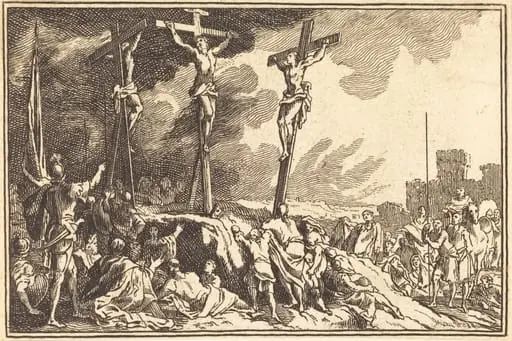 Christ on the Cross between the Two Thieves
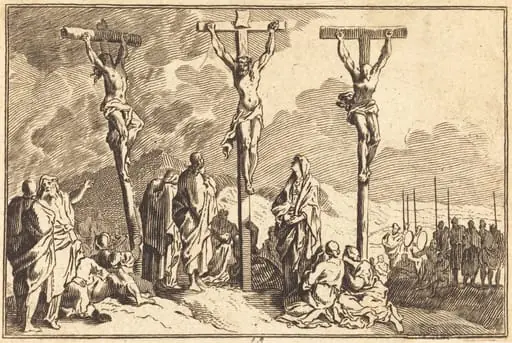 The Virgin, Saint John, and Mary Magdalene at the Foot of the Cross
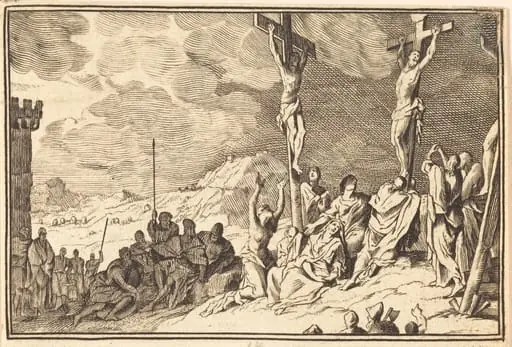 Christ Dying on the Cross
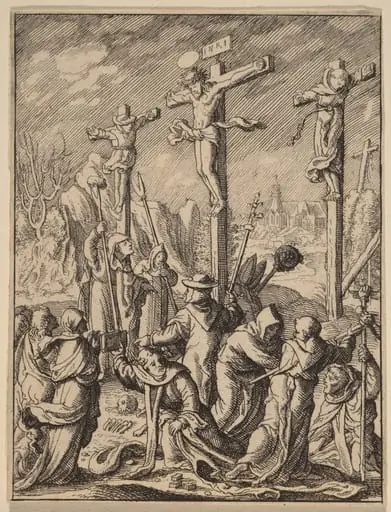 The Crucifixion
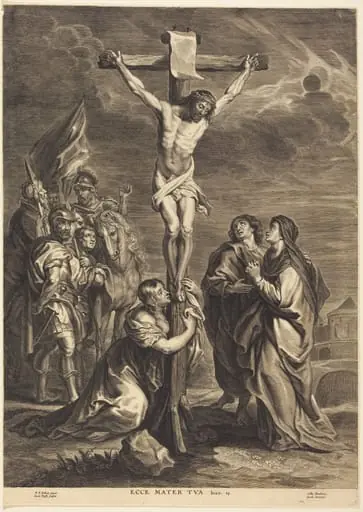 Christ on the Cross
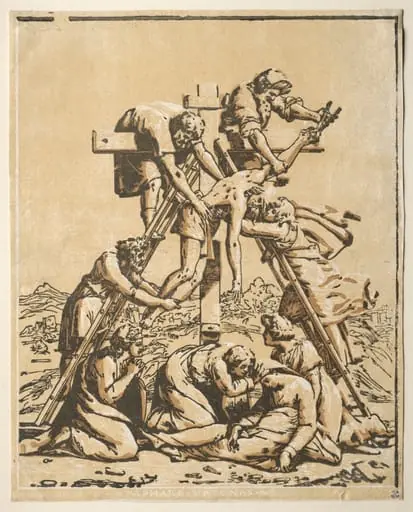 Descent from the Cross
 Kreuzaufrichtung Christi (Kopie nach)
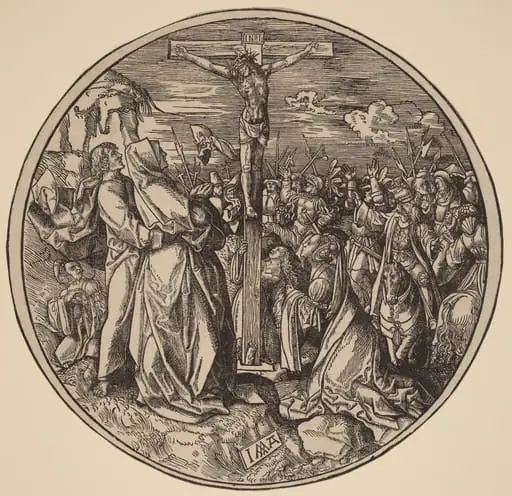 The Crucifixion
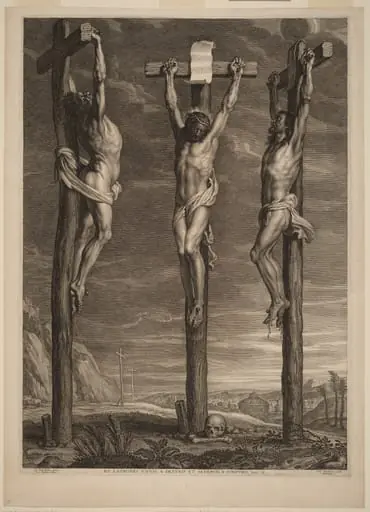 Christ Crucified between Two Thieves
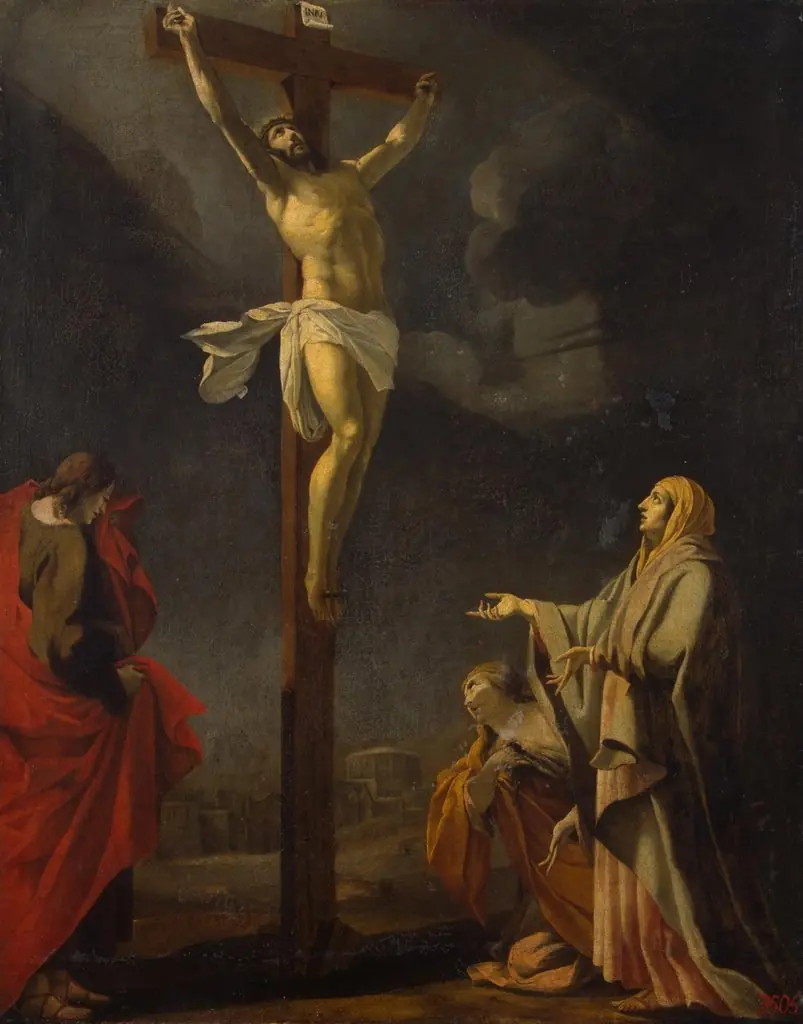 The Crucifixion
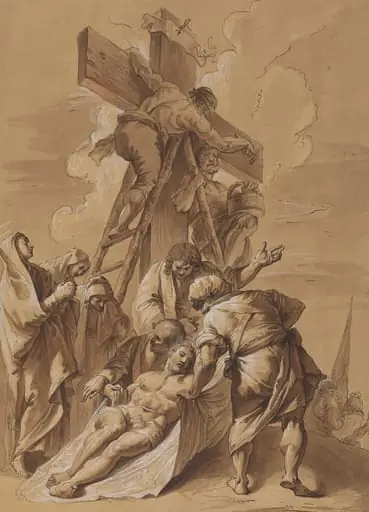 The Deposition