Artwork
The Virgin, Saint John, and Mary Magdalene at the Foot of the Cross
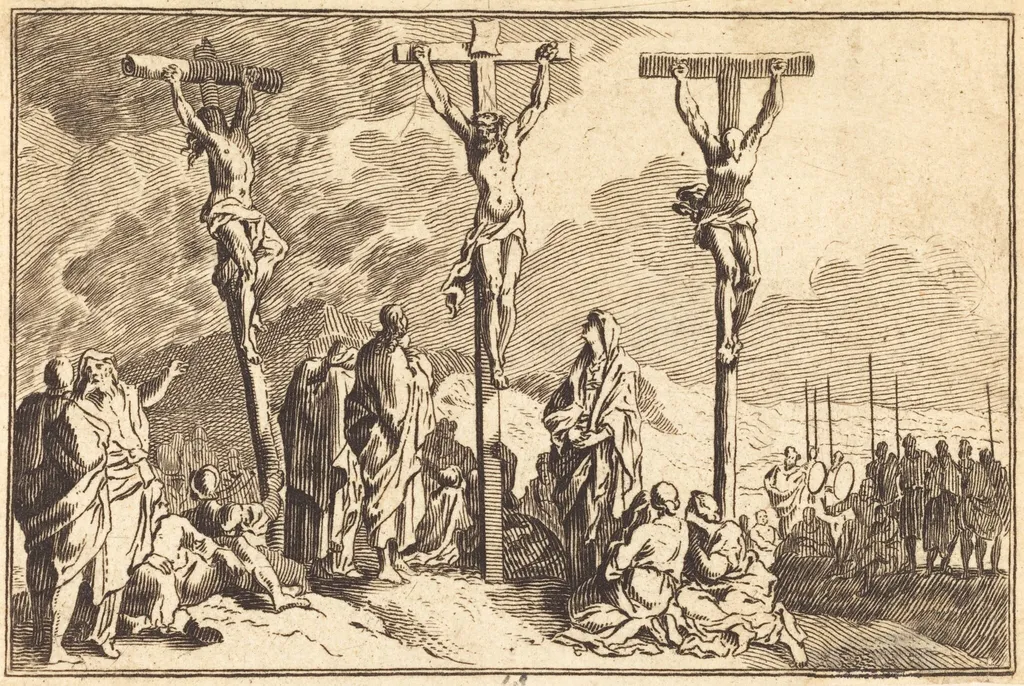
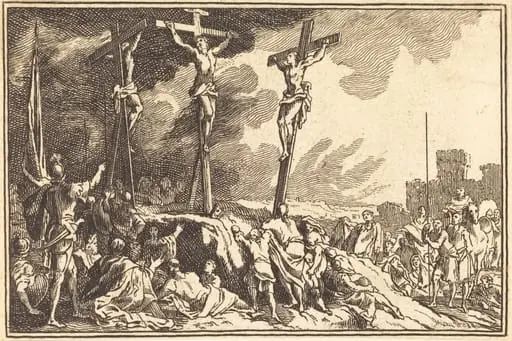
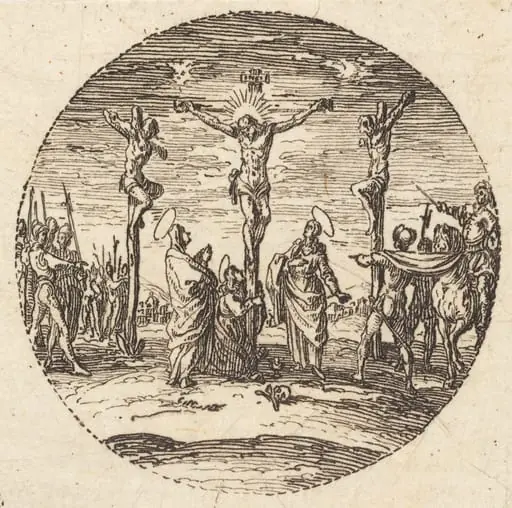
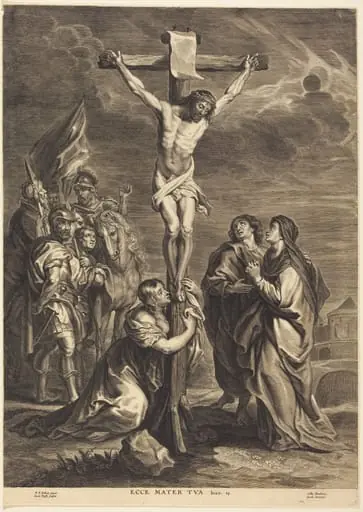
The Virgin, Saint John, and Mary Magdalene at the Foot of the Cross is an ink print by the Baroque artist French 17th Century. It dates from 1650 and is held in the collection of the National Gallery of Art. The print depicts three mourners gathered at the base of an empty cross set against a darkened sky.
About this work
Overview
The print depicts three mourners gathered at the base of an empty cross set against a darkened sky. The figures—traditionally identified as the Virgin Mary, Saint John, and Mary Magdalene—are shown kneeling, their faces illuminated by a faint, ethereal light that contrasts with the surrounding gloom.
Subject & Meaning
The composition focuses on the immediate aftermath of the crucifixion, emphasizing the emotional response of the closest followers rather than the physical presence of Christ. The sorrowful posture of the Virgin, the supportive stance of John, and the anguished expression of Magdalene convey a shared grief that underscores the human dimension of the Passion narrative.
Technique & Style
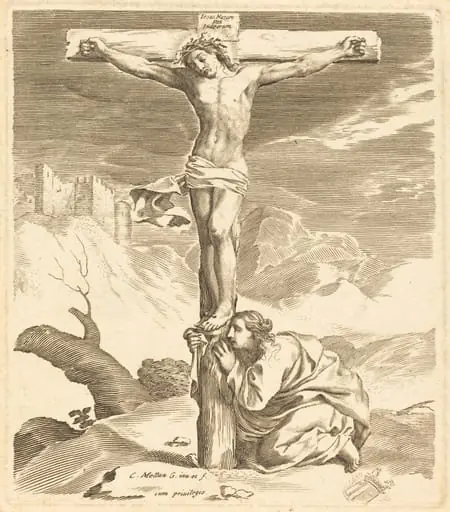
Executed as an engraving, the image relies on precise, intersecting lines to model form and create tonal depth. The artist employed cross‑hatching to suggest the soft shading of flesh and the subtle play of light on the figures, giving the surface a tactile quality that invites close inspection.
Context
While many representations of the crucifixion scene are painted, this work demonstrates how printmaking could convey comparable emotional intensity through line work alone. The choice of a monochrome medium and the stark contrast between illuminated faces and the dark sky reflect the period’s interest in dramatic chiaroscuro achieved without pigment.
Artist & collection

Artist
Seventeenth-century French printmakers turned ink into story. Their tools were burin and acid, paper their stage. Look at the Beggar Woman with Rosary (1622), etched on laid paper, her hands folded around faith, or The…