Artwork
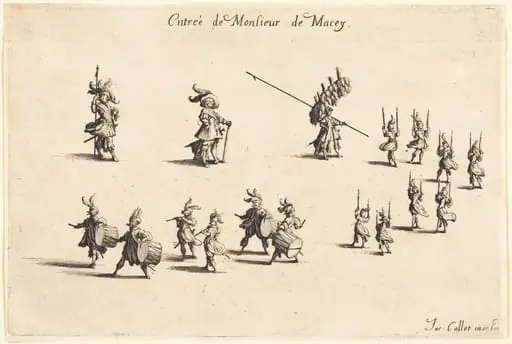
Entry of M. de Macey
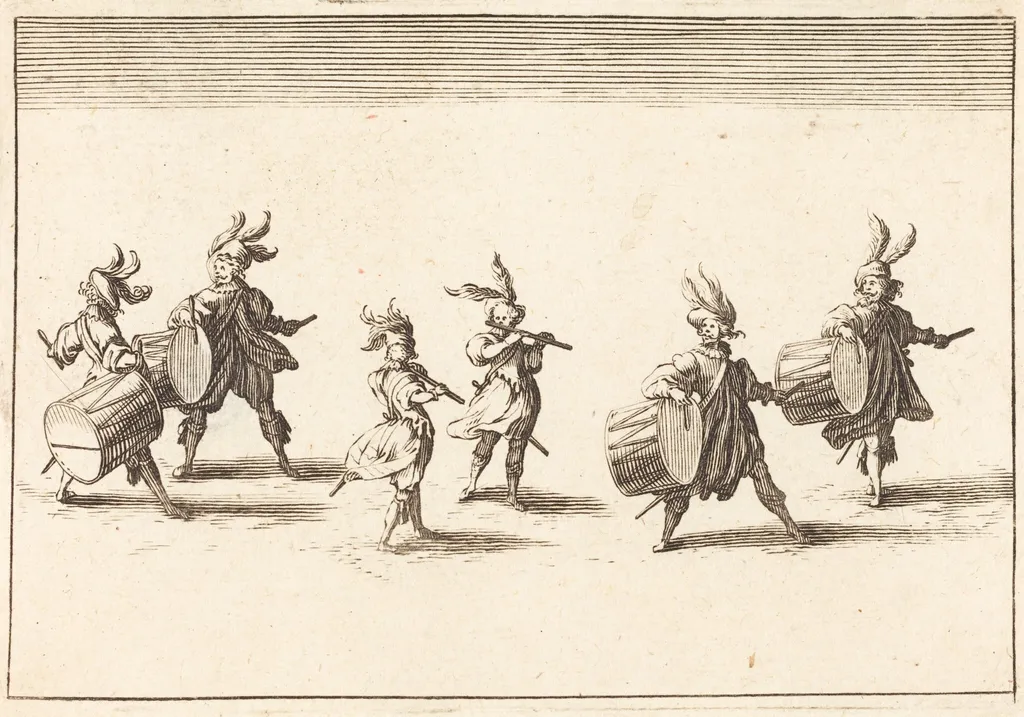
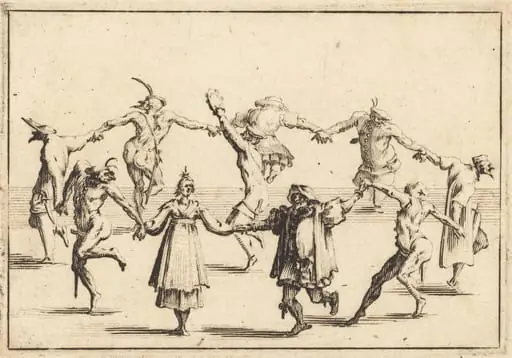
Entry of M. de Macey is an ink print by the Baroque artist French 17th Century. It dates from 1627 and is held in the collection of the National Gallery of Art. The work titled “Entry of M.
About this work
Overview
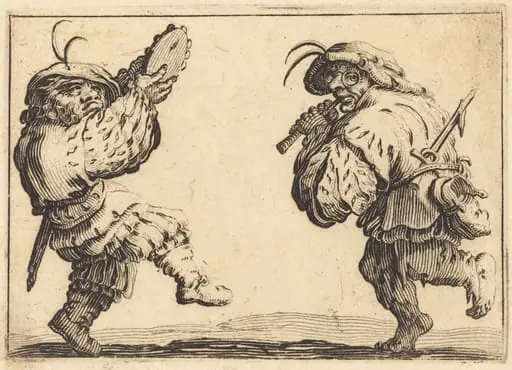
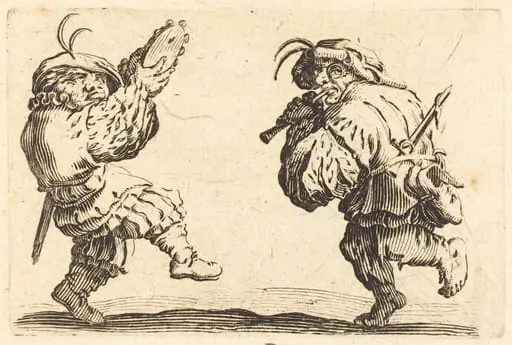
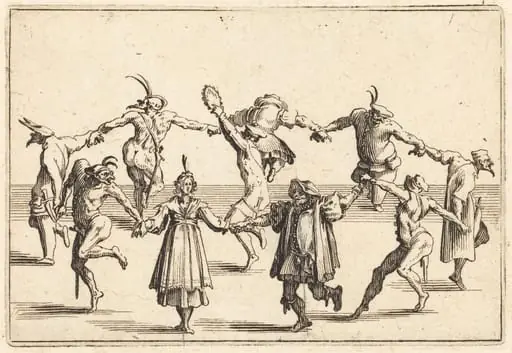
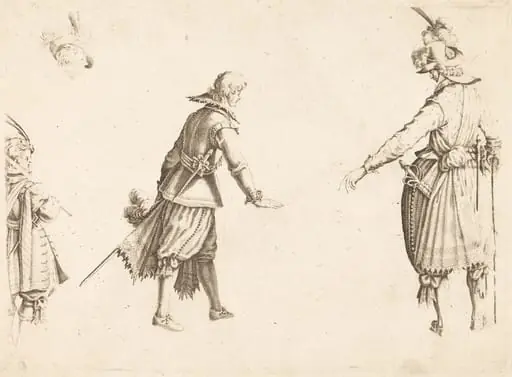
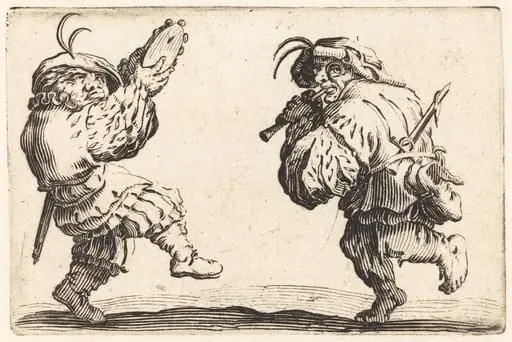
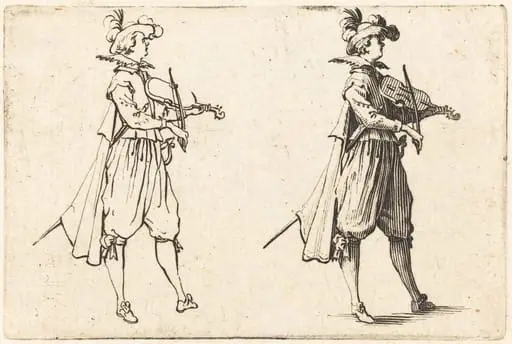
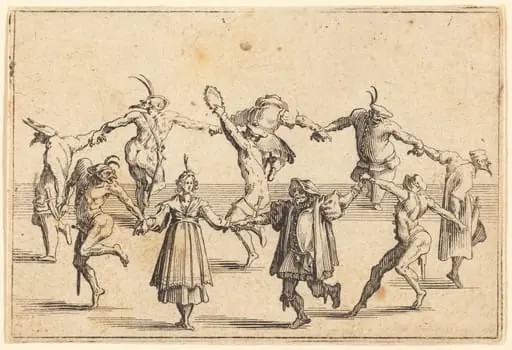
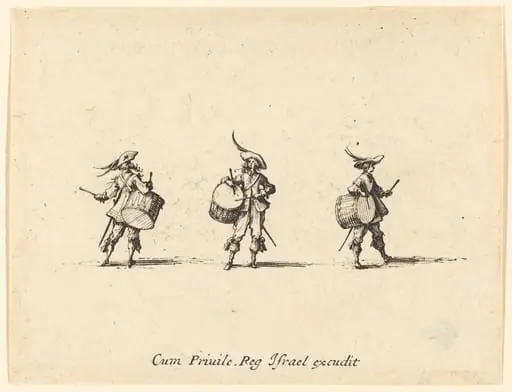
The work titled “Entry of M. de Macey” is an etching executed on laid paper. It presents a procession of five figures dressed in elaborate, period costume, moving in a line while holding musical instruments such as drums and flutes. The composition is set against a textured ground that suggests earth or sand, giving the scene a grounded, outdoor quality.
Subject & Meaning
The image depicts a ceremonial entrance, likely a festive or courtly event, where the participants display status through their ornate attire, towering feathered hats, and the presence of music. The arrangement of the figures in a single file emphasizes order and procession, hinting at a structured social ritual rather than a spontaneous dance.
Technique & Style
Created by incising lines into a metal plate with a needle, the artist transferred the design to paper by inking the plate and wiping it clean, leaving ink only in the etched grooves. This method yields a line quality that resembles a freehand sketch while maintaining the crispness of a printed image, allowing fine detail in the ruffles, stripes, and instrument forms.
Context
Etching, a printmaking technique that emerged in the 16th century, enables artists to reproduce intricate designs with relative ease compared to engraving. The medium’s capacity for delicate tonal variation makes it suitable for rendering the subtle textures of fabric and the atmospheric ground seen in this work, situating it within the broader tradition of European print culture.
Artist & collection

Artist
Seventeenth-century French printmakers turned ink into story. Their tools were burin and acid, paper their stage. Look at the Beggar Woman with Rosary (1622), etched on laid paper, her hands folded around faith, or The…