Artwork
Landscape
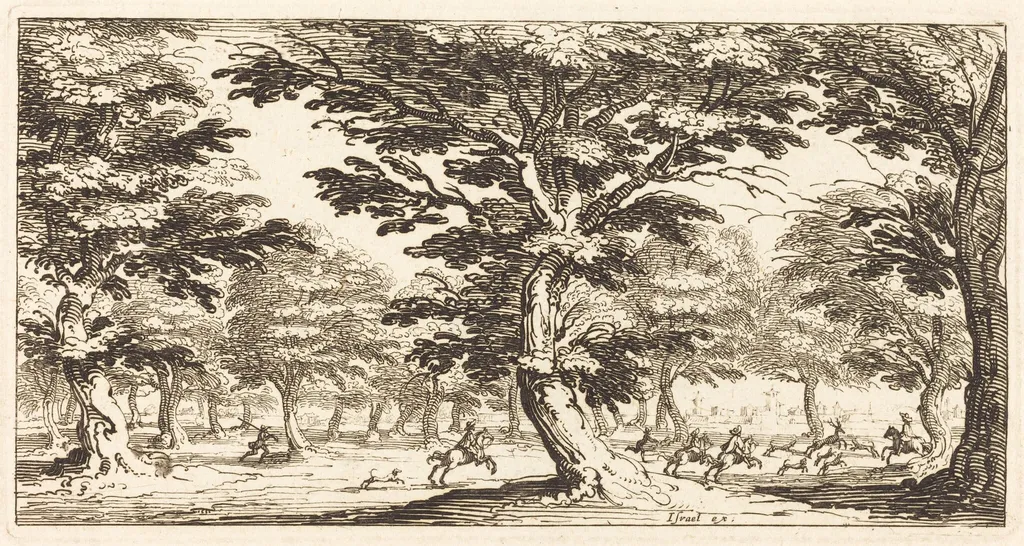
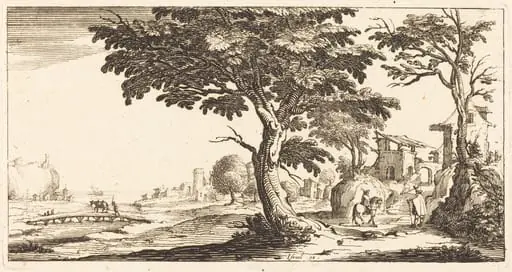
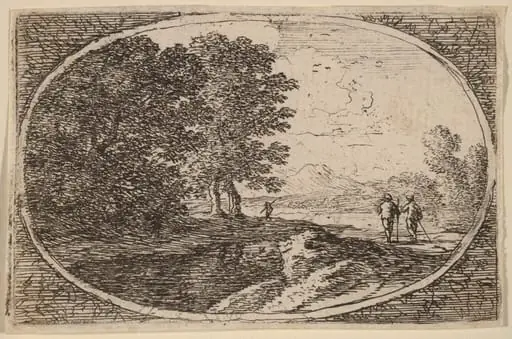
Landscape is an ink print by the Baroque artist French 17th Century. It dates from 1635 and is held in the collection of the National Gallery of Art.
About this work
Overview
The paper’s textured edges suggest it was printed from a plate with traditional methods, preserving the tactile quality of early printmaking.
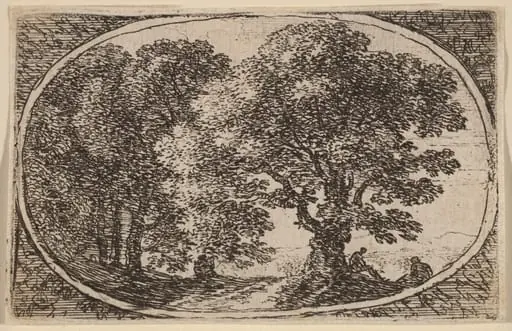
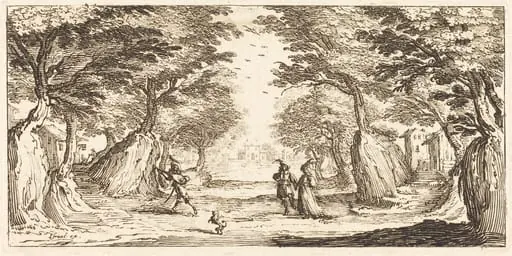
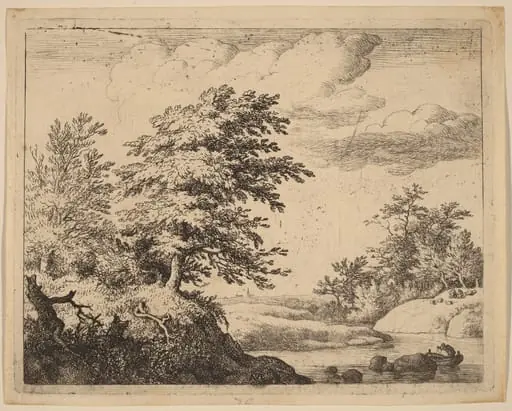
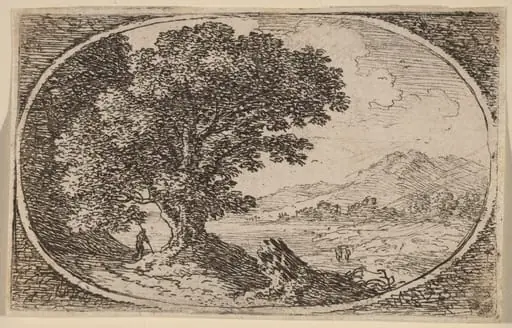
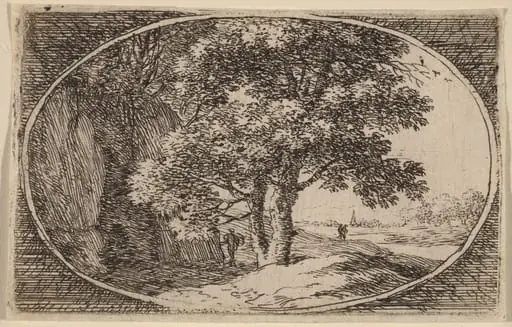
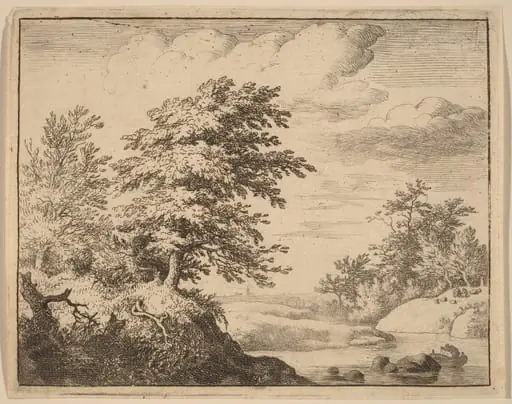
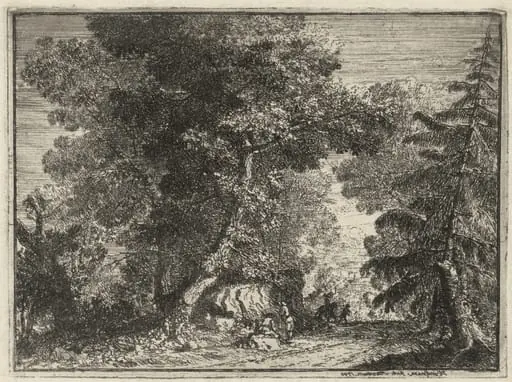
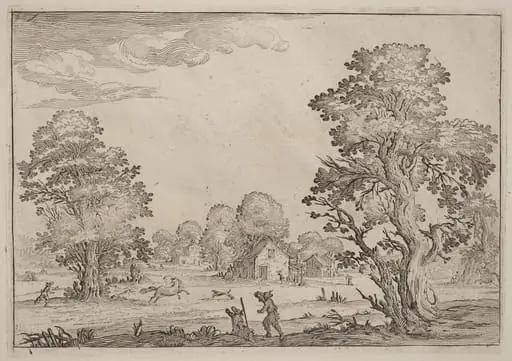
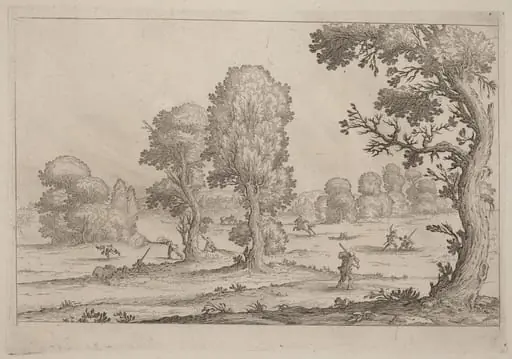
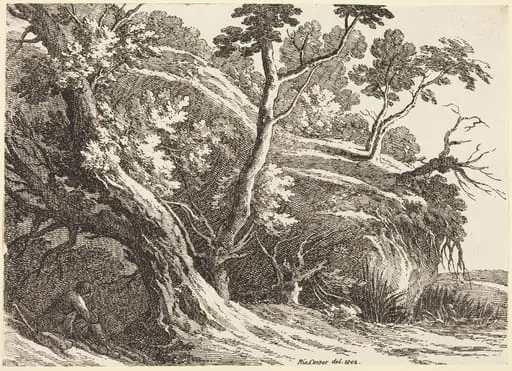
This black-and-white etching on laid paper depicts a dense forest landscape, rendered with intricate linear detail. The composition is dominated by gnarled trees whose interwoven branches create a canopy, while a winding river cuts through the background. Small figures and animals move along the riverbank, adding quiet motion to the scene. The paper’s textured edges suggest it was printed from a plate with traditional methods, preserving the tactile quality of early printmaking.
Subject & Meaning
The scene presents a natural environment inhabited by humans and animals, suggesting a harmonious coexistence rather than dominance. The river serves as both a visual conduit and a symbolic thread, linking distant parts of the landscape. The presence of figures—neither central nor exaggerated—implies daily life unfolding within nature, not apart from it. There is no overt narrative, only an impression of quiet, continuous activity.
Technique & Style
The artist employed fine, controlled etching lines to model form and suggest depth, using varying densities of ink to differentiate light and shadow across the tree trunks and foliage. The laid paper’s texture enhances the organic feel of the work, while the detailed rendering of branches and leaves demonstrates a meticulous approach to natural observation. The composition avoids symmetry, favoring a layered, almost chaotic arrangement that mimics wild growth.
History & Provenance
The print’s use of laid paper and fine-line etching aligns with 17th- or early 18th-century Northern European traditions, where landscape prints were often made for scholarly or decorative markets. While the artist’s identity is unconfirmed, the technique reflects influences from Dutch and German printmakers who specialized in wooded scenes. The preserved border suggests the print was kept in its original state, possibly as part of a collected portfolio.
Context
During the period this work likely originated, landscape prints were increasingly valued for their ability to convey natural beauty without religious or mythological allegory. Artists turned to forests and rivers as subjects worthy of study in their own right, responding to growing interest in empirical observation and the sublime in nature. This piece fits within a broader trend of secular, topographical imagery emerging in print culture.
Legacy
As a finely executed example of early printmaking, this etching contributes to the historical record of how nature was visually documented before photography. Its emphasis on texture, depth, and subtle movement influenced later landscape artists who sought to capture the complexity of wild environments. Though unsigned, its craftsmanship ensures its place within the lineage of European print traditions.
Artist & collection

Artist
Seventeenth-century French printmakers turned ink into story. Their tools were burin and acid, paper their stage. Look at the Beggar Woman with Rosary (1622), etched on laid paper, her hands folded around faith, or The…