Artwork
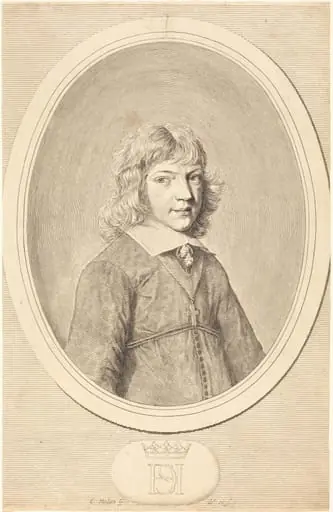
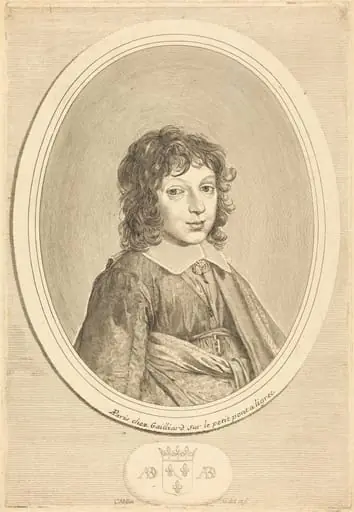
Portrait of a Boy
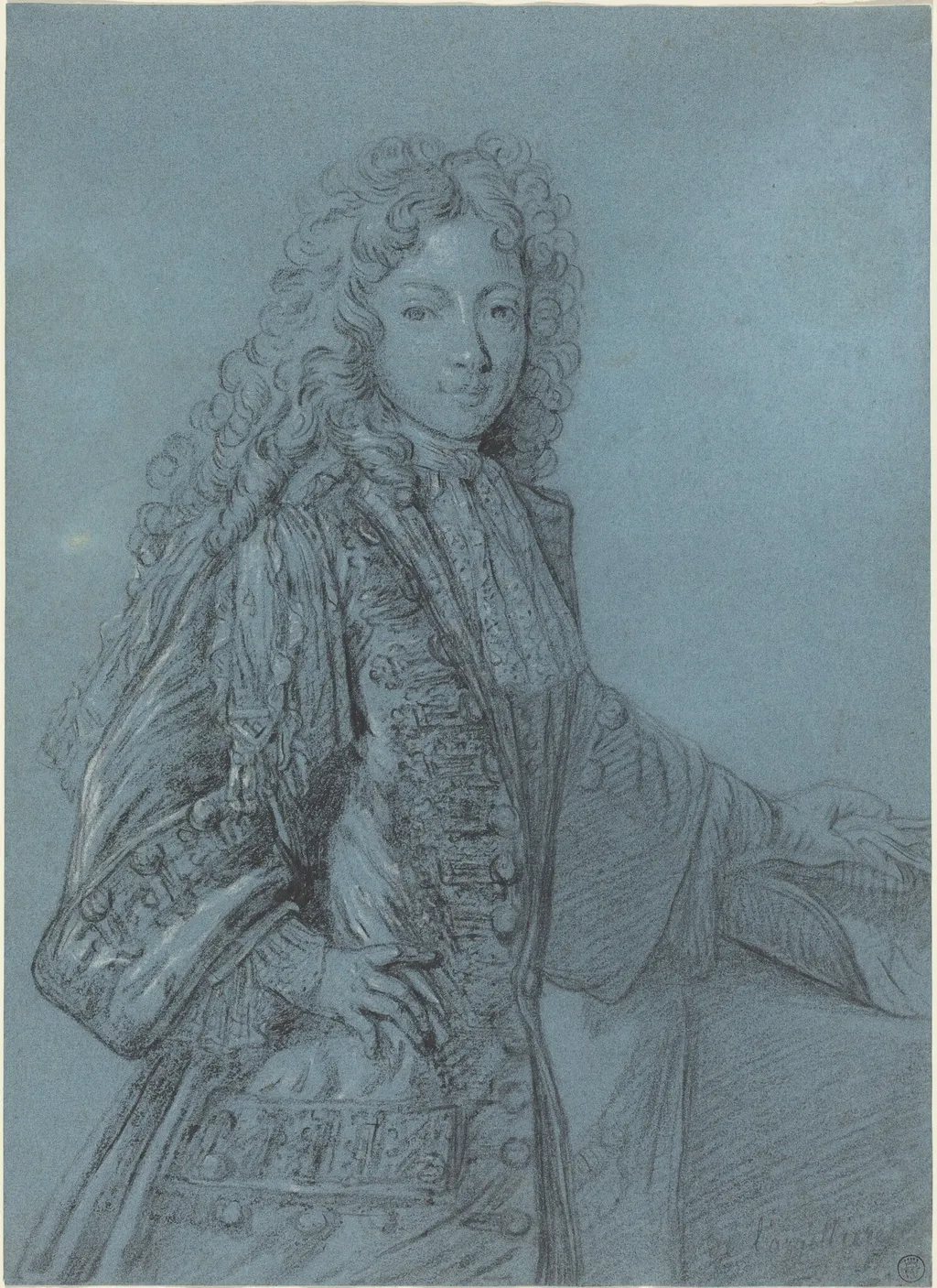
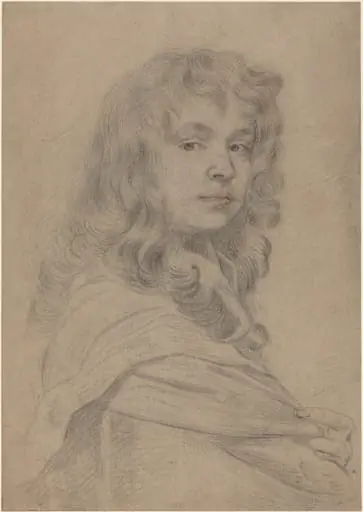
Portrait of a Boy is a chalk drawing by the Baroque artist French 17th Century. It dates from 1601 and is held in the collection of the National Gallery of Art.
About this work
Overview
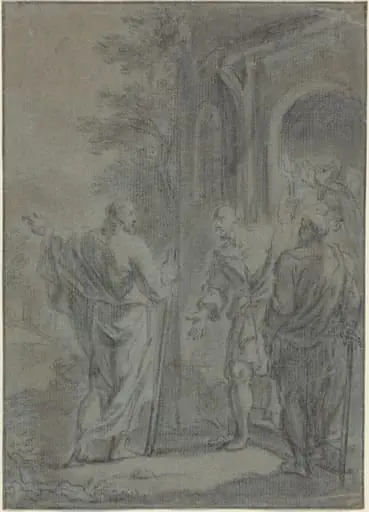
Portrait of a Boy is a drawing executed in black chalk, intensified with white chalk on a sheet of blue laid paper. The work measures roughly the size of a small portrait sheet and is signed only by its hand. It presents a single figure rendered in a rapid, gestural manner, characteristic of preparatory studies rather than a finished composition.
Subject & Meaning
The sitter is a young male, distinguished by a full head of curly hair and a solemn expression. He wears an elaborately embroidered jacket with puffed sleeves, a high standing collar, and a modestly trimmed neckline, suggesting a child of some social standing. The seriousness of his gaze and the formal attire hint at a portrait intended to record status or familial affection.
Technique & Style
The artist employs loose, swift strokes of black chalk to outline the figure, allowing portions of the paper to remain exposed for lighter tonal effects.
The artist employs loose, swift strokes of black chalk to outline the figure, allowing portions of the paper to remain exposed for lighter tonal effects. White chalk is applied selectively to the face and hands, creating a subtle contrast that lifts these areas from the blue ground. The blue laid paper serves as a cool, atmospheric backdrop, enhancing the drawing’s ethereal quality and emphasizing the chiaroscuro of the medium.
Context
Created during the Baroque period, the drawing reflects the era’s interest in dynamic movement and dramatic lighting, albeit in a reduced, sketch-like format. While not a fully finished portrait, the study demonstrates the period’s practice of rapid preparatory drawings that capture the essence of a sitter before a more elaborate painted version. Its use of colored paper and heightened chalk aligns with contemporary experiments in tonal variation.
Artist & collection

Artist
Seventeenth-century French printmakers turned ink into story. Their tools were burin and acid, paper their stage. Look at the Beggar Woman with Rosary (1622), etched on laid paper, her hands folded around faith, or The…