Artwork
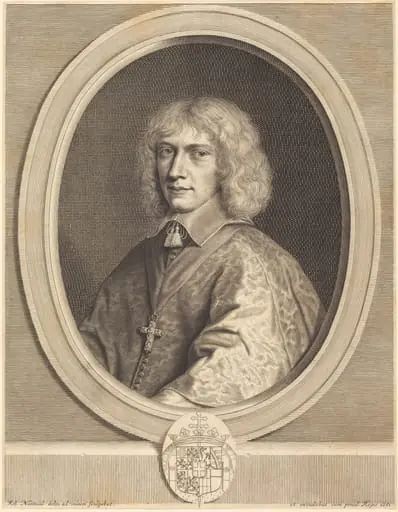
Henri de Savoie, Duc de Nemours
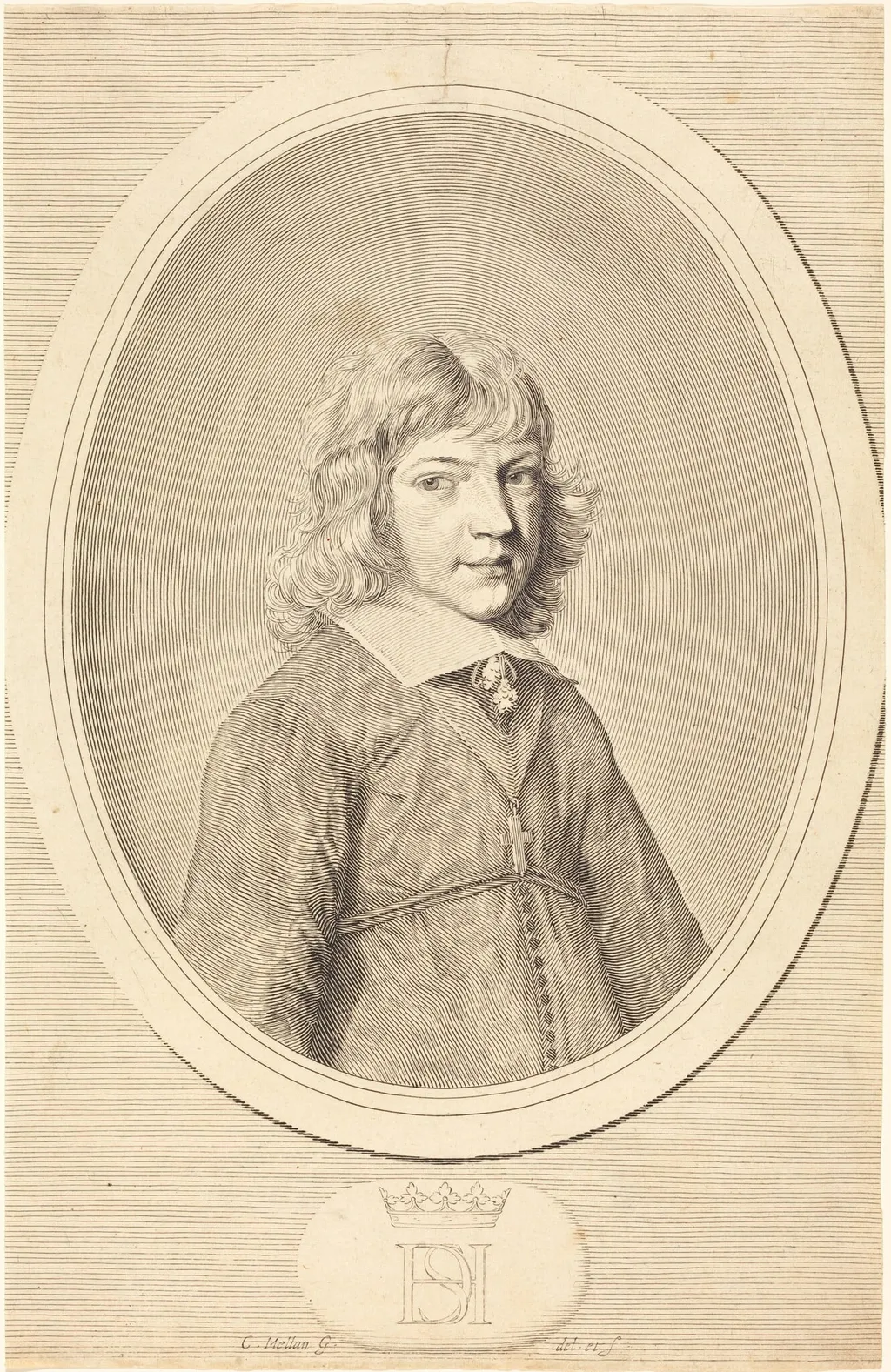
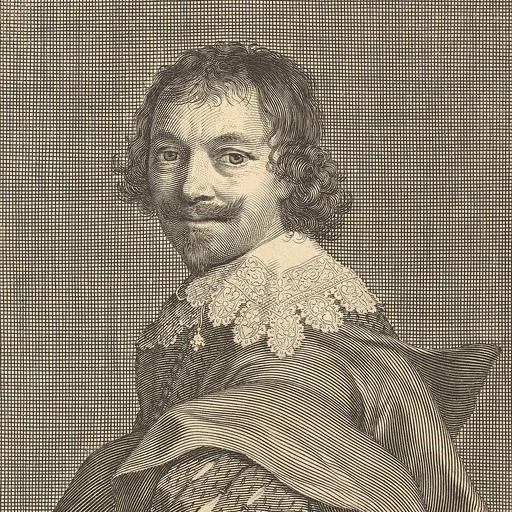
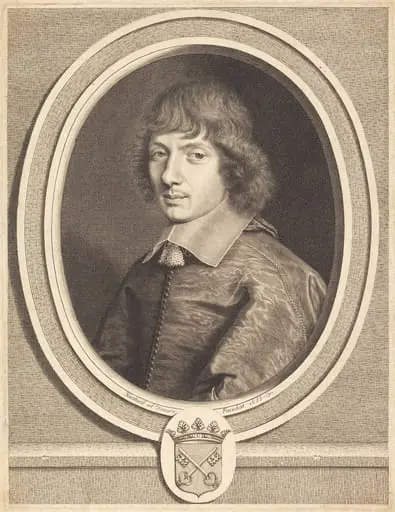
Henri de Savoie, Duc de Nemours is an ink print by the Renaissance artist Claude Mellan. It dates from 1643 and is held in the collection of the National Gallery of Art.
About this work
Overview
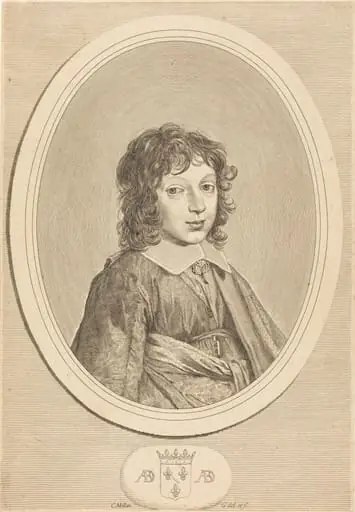
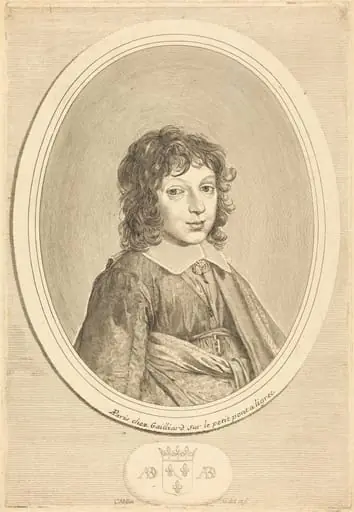
This 1643 engraving by Claude Mellan depicts Henri de Savoie, Duke of Nemours, in monochrome. Executed on laid paper, the portrait relies entirely on incised lines to model form and texture. The composition is tightly framed by two concentric circular borders, isolating the figure against a neutral field. The technique emphasizes precision and tonal gradation without the use of color or wash.
Subject & Meaning
The unsmiling expression and direct gaze convey authority and introspection, typical of portrait conventions for elite men of the period.
Henri de Savoie, a French nobleman and military figure, is portrayed with solemnity and dignity. His curled hair, high collar, and chest chain suggest aristocratic status and personal refinement. The unsmiling expression and direct gaze convey authority and introspection, typical of portrait conventions for elite men of the period. The absence of contextual elements focuses attention solely on his presence and character.
Technique & Style
Mellan employed fine, intersecting lines—cross-hatching—to build volume and shadow across the face and fabric. The texture of the ruffled collar and the sheen of the chain emerge through controlled, dense linework. The circular framing device is unusual, functioning as both decorative boundary and visual anchor. The engraving’s clarity and restraint reflect the artist’s mastery of drypoint and burin techniques on copper.
History & Provenance
Created in 1643, the print likely served as a commemorative portrait for the Duke’s circle or as a study in portraiture for Mellan’s patrons. It was produced during a period when engraved portraits were widely circulated among the French nobility. The work remained within private collections in France before entering public museum holdings, where its technical precision continues to be studied.
Context
In mid-17th-century France, engraved portraits were valued for their reproducibility and intimacy. Artists like Mellan bridged the gap between painting and print, translating the likeness of the elite into accessible formats. The circular frame may reference medallions or coinage, evoking classical ideals of permanence and honor. This work aligns with broader trends in French print culture emphasizing realism and restraint.
Legacy
Mellan’s engraving of Henri de Savoie is recognized for its technical refinement and psychological subtlety. It exemplifies the height of French line engraving before the rise of etching and mezzotint. Later artists and collectors admired its economy of means and the lifelike quality achieved through pure line. The print remains a key reference in studies of 17th-century portraiture and printmaking technique.
Artist & collection