Artwork
The Temple of Minerva Medica
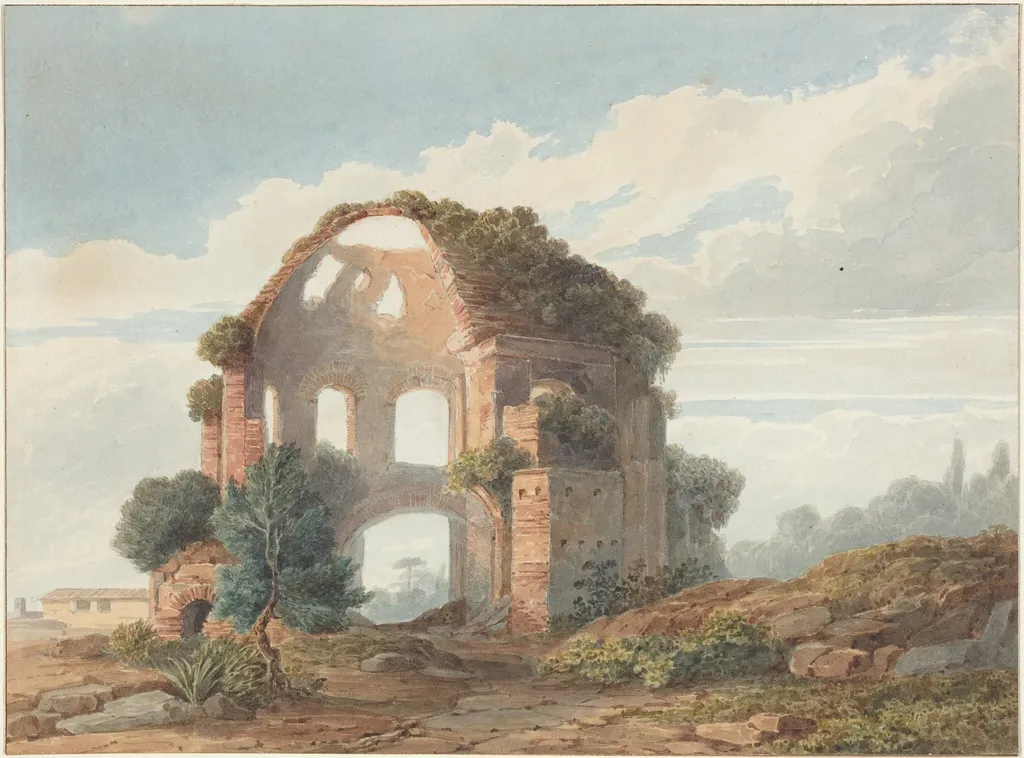
The Temple of Minerva Medica is a graphite drawing by the Baroque artist French 18th Century. It dates from 1750 and is held in the collection of the National Gallery of Art.
About this work
He used fine layers of paint, called glazing, to show soft light on the bricks.
You see a round brick building with tall arched windows. Ivy climbs its walls. The structure looks ancient but the drawing is fresh.
This is a watercolor study from 1770. The artist copied a real Roman ruin called the Temple of Minerva Medica. He used fine layers of paint, called glazing, to show soft light on the bricks.
Try another watercolor with glazing at the National Gallery of Art, Washington.
Overview
The work is a watercolor and graphite drawing executed in 1770, portraying the ruin known as the Temple of Minerva Medica in Rome. Rendered on paper, the image captures the circular brick structure with its tall arched windows, overgrown with ivy, and conveys a sense of antiquity through a fresh, observational approach.
Subject & Meaning
The drawing records a specific Roman monument, the Temple of Minerva Medica, which functioned as a burial site in antiquity. By focusing on the building’s decayed brickwork and climbing vegetation, the artist emphasizes the passage of time and the dialogue between the ancient architecture and the natural environment that now envelops it.
Technique & Style
The artist employed a layered watercolor method known as glazing, applying thin, translucent washes to achieve a delicate modulation of light across the brick surfaces. Graphite outlines define the structural forms, while the subtle color shifts suggest soft illumination, creating a nuanced atmospheric effect that balances precision with a painterly softness.
History & Provenance
Created as a study in the late eighteenth century, the drawing reflects the period’s interest in documenting classical ruins. Though the original creator remains unidentified, the piece has been referenced in comparative analyses of similar watercolor studies, such as those held by the National Gallery of Art in Washington, illustrating its role in the broader tradition of antiquarian drawing.
Artist & collection

Artist
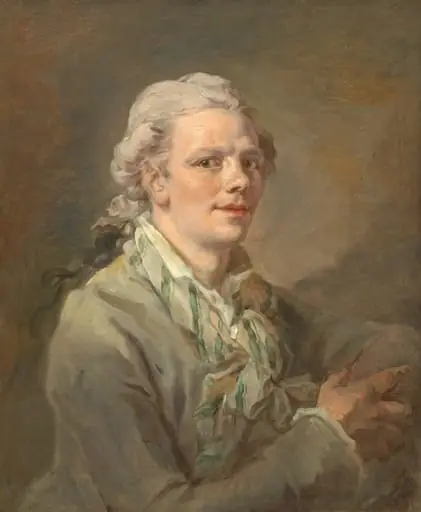
This artist worked in late 18th-century France, making portrait paintings and etched prints.


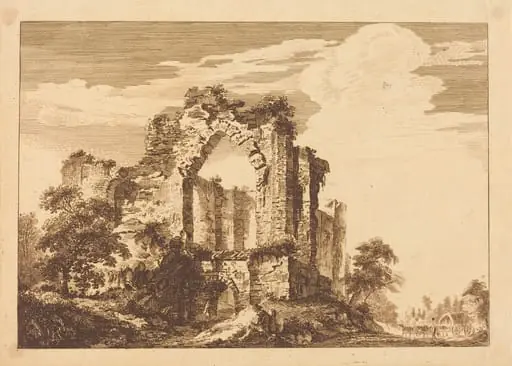 Ruins with a Seated Man, and a Covered Wagon in the Distance
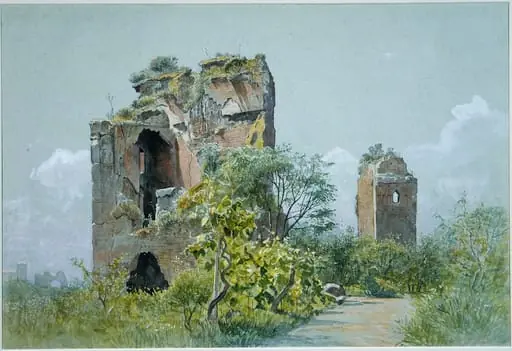 Baths of Trajan (Sette Sale, Villa Brancaccio, Rome)
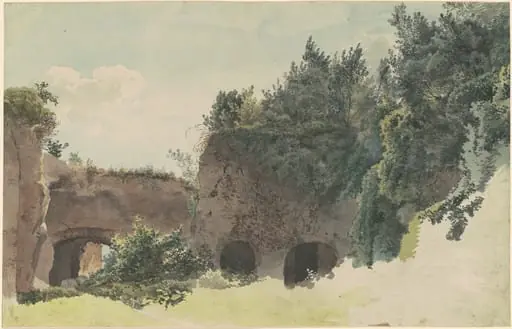 Ancient Roman Ruins Overgrown with Trees and Bushes
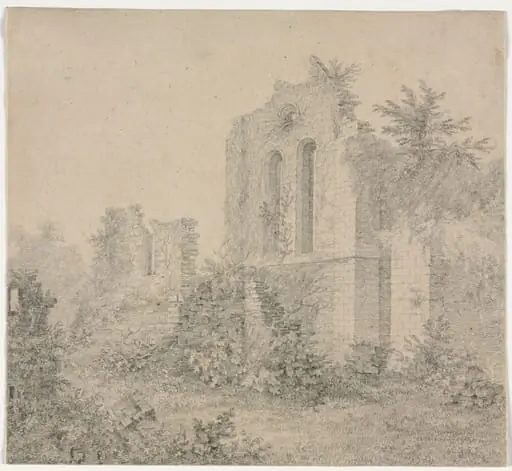 Ruins of an Abbey
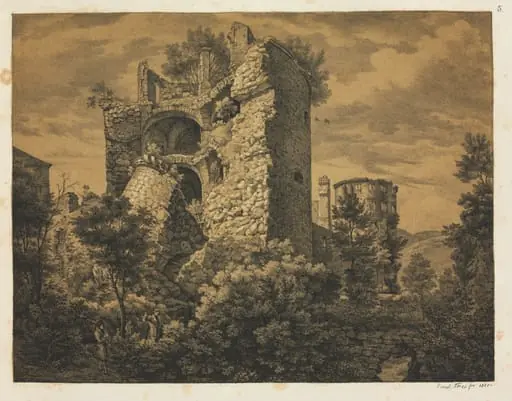 Six Views of Heidelberg Castle: Tower
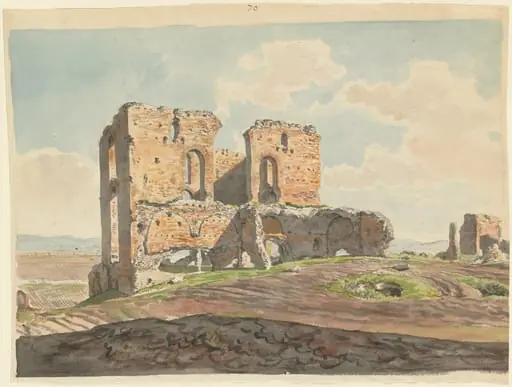 The Great Villa of the Quintilii on the Appian Way
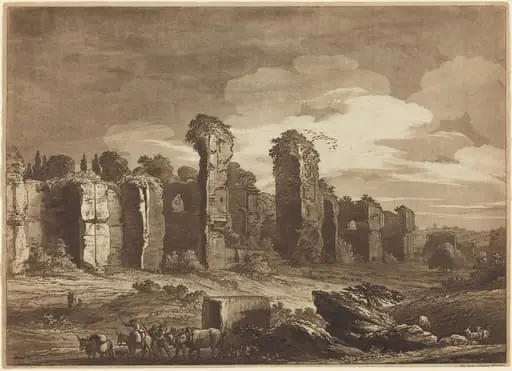 View of the Remains of Caracalla's Baths, Taken from the Jesuits Gardens at Rome
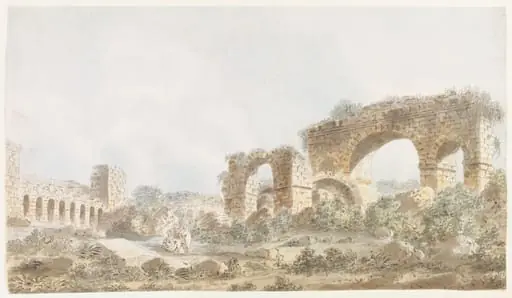 Interior of the Palace of Priam, Alexandria Troas
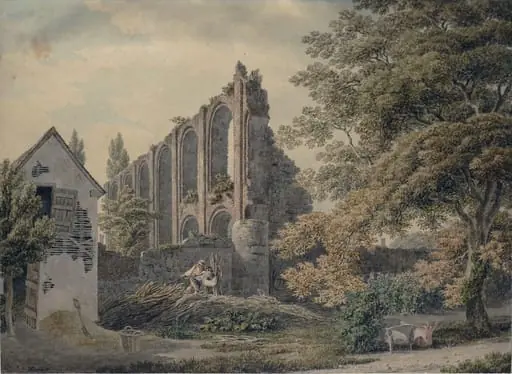 Ruins of St. Botolph's Church, Colchester
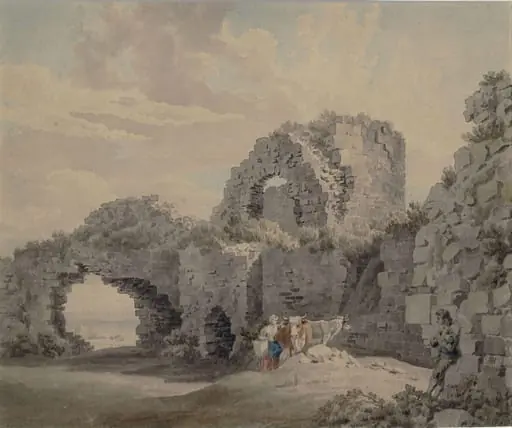 Ruins of Pevensey Castle
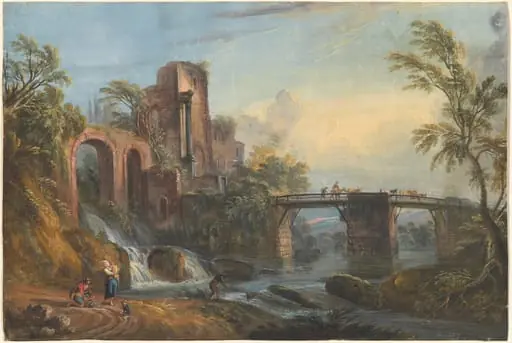 Dawn Landscape with Classical Ruins
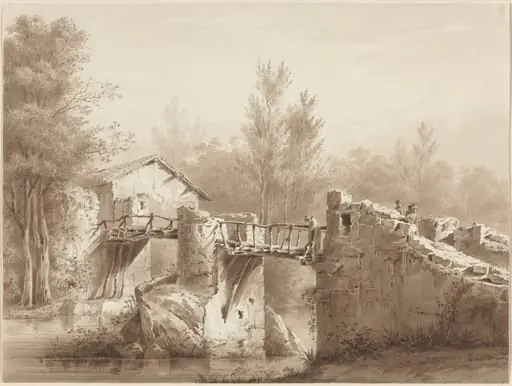 A Country Road across an Ancient Bridge