Artwork
Oedipus at Colonus
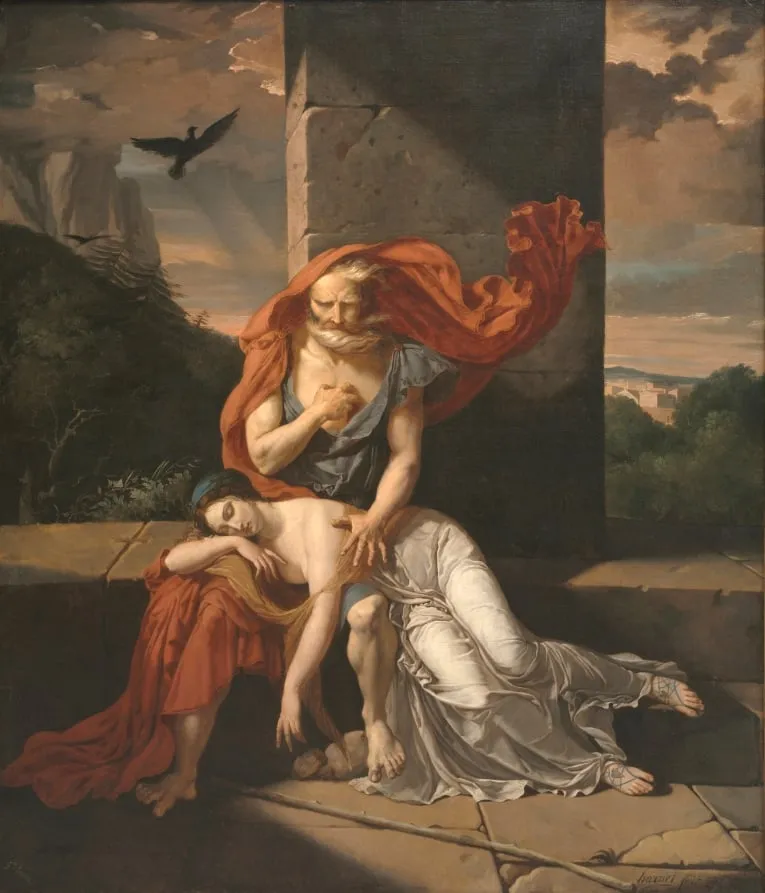
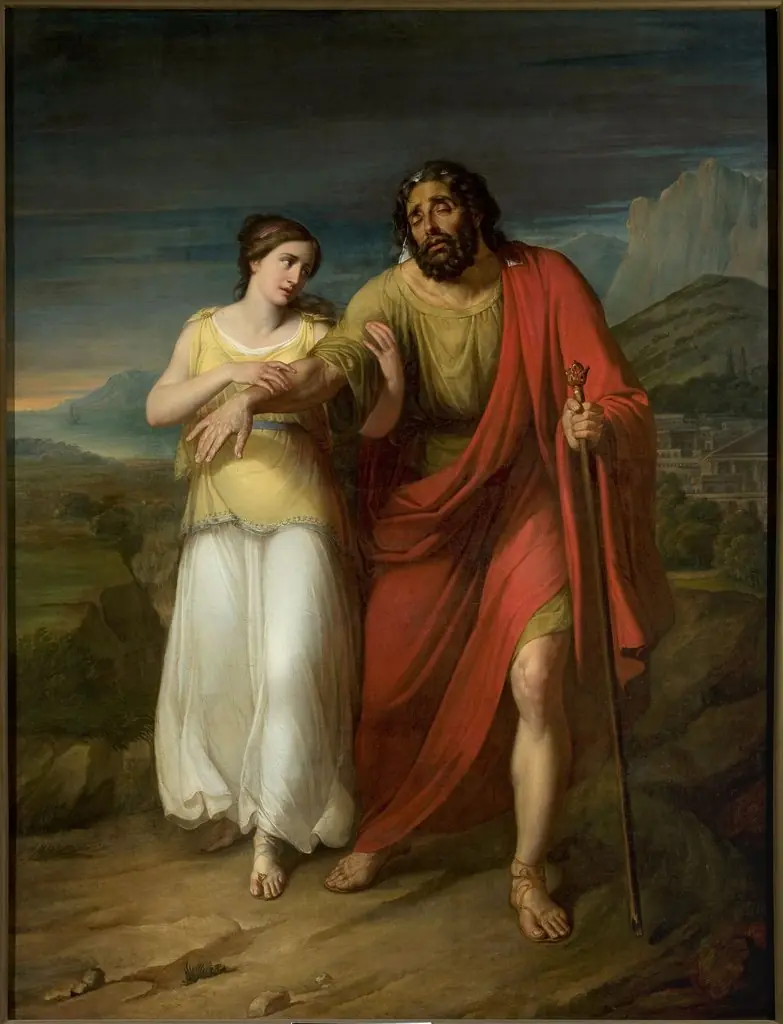
Oedipus at Colonus is an unspecified painting by the French Romanticist artist Fulchran-Jean Harriet. It dates from 1798 and is held in the collection of the Cleveland Museum of Art. This painting depicts Oedipus, the exiled king of Thebes, in his final days at Colonus, a sacred grove near Athens.
About this work
You see an old, blind man in tattered robes kneeling on rocky ground, one arm wrapped around a young woman while the other points angrily at his own face.
You see an old, blind man in tattered robes kneeling on rocky ground, one arm wrapped around a young woman while the other points angrily at his own face.
This is Oedipus, the Greek king who unknowingly killed his father and married his mother. The painting was made just after the French Revolution, when stories of exiles returning home felt urgent. The artist shows Oedipus not as a monster, but as a broken man clinging to his daughter for comfort.
For more on how this story played out in Paris at the time, look up the subject france, 18th century.
Overview
This painting depicts Oedipus, the exiled king of Thebes, in his final days at Colonus, a sacred grove near Athens. He is shown as a weathered, blind figure, physically broken yet emotionally present, holding his daughter Antigone close. The scene captures a moment of quiet dignity amid suffering, reflecting a shift in how ancient tragedy was interpreted during the post-revolutionary era in France.
Subject & Meaning
Oedipus, having fulfilled a tragic prophecy by killing his father and marrying his mother, now seeks redemption in exile. The painting emphasizes his self-reproach—not as a villain, but as a man burdened by fate. His gesture toward his own face underscores internal guilt, while his grip on Antigone suggests a fragile bond of loyalty and care, transforming the myth into a meditation on suffering and familial duty.
Technique & Style
The artist employs muted tones and rough textures to convey Oedipus’s physical decay and the barrenness of his surroundings. Loose brushwork defines his tattered robes, while the sharp contrast between his weathered form and Antigone’s smoother, more defined silhouette draws attention to their emotional dynamic. The composition is intimate, focusing on gesture and posture rather than grandeur, reinforcing the personal nature of the tragedy.
History & Provenance
Created shortly after the French Revolution, the painting responds to contemporary debates about exile and reconciliation. The 1797 Parisian staging of Sophocles’ Oedipus at Colonus, which framed the king’s return as a symbol of restored justice, directly influenced the artist. This context transformed the ancient myth into a resonant allegory for displaced citizens seeking reintegration into a changed society.
Context
In post-revolutionary France, stories of political exiles returning home echoed through public discourse. The myth of Oedipus, once a symbol of divine punishment, was reinterpreted as a narrative of moral reckoning and quiet endurance. Artists and audiences alike found in his story a mirror for the nation’s own struggles with guilt, forgiveness, and the limits of human agency after upheaval.
Legacy
The painting contributed to a broader 19th-century trend of reimagining classical myths through psychological realism. Rather than portraying Oedipus as a monstrous figure, it humanized him, influencing later depictions of tragic heroes as victims of circumstance. Its quiet emotional weight helped shift classical subject matter away from heroic idealism toward introspective, human-centered narratives.
Artist & collection