Artwork
Worshippers at the Tomb of Saint Peter
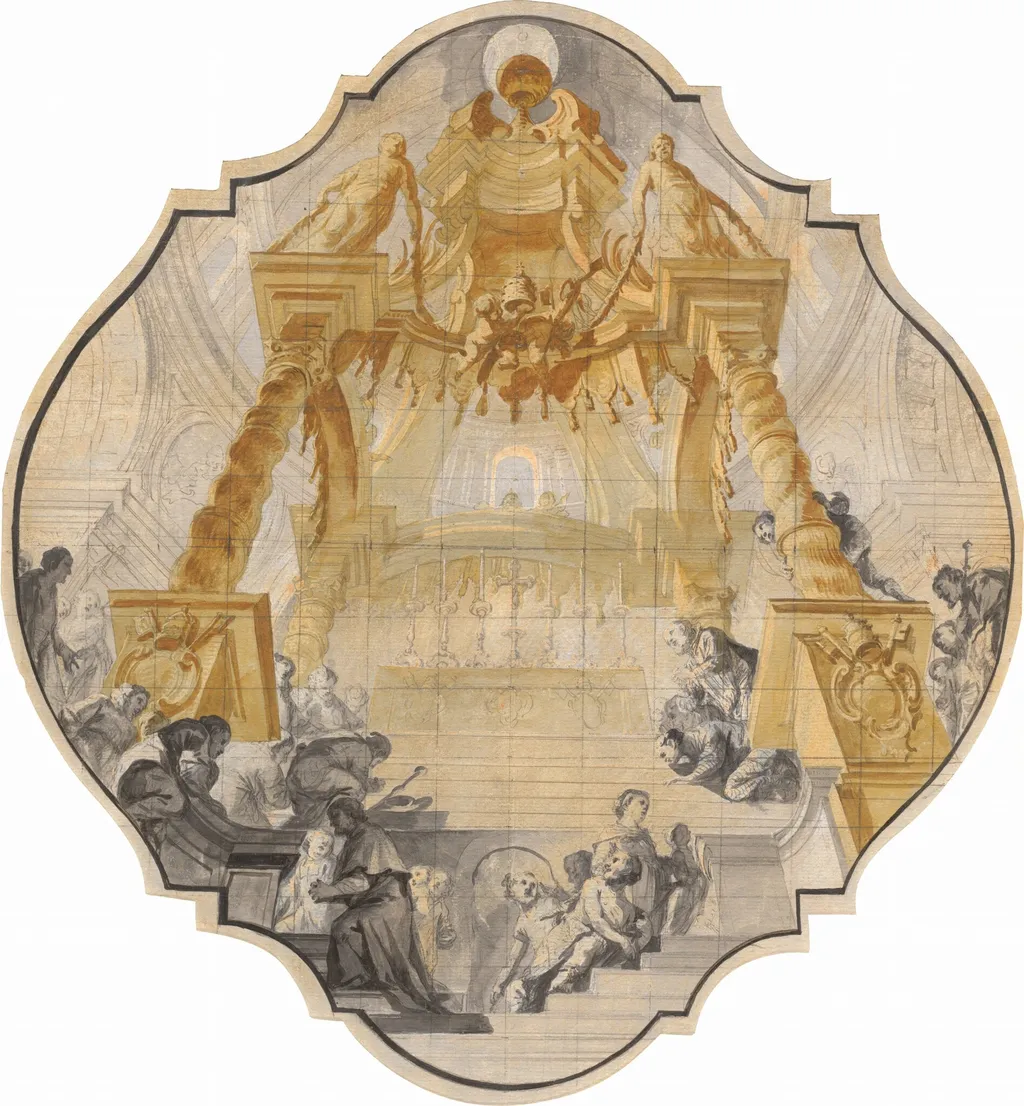
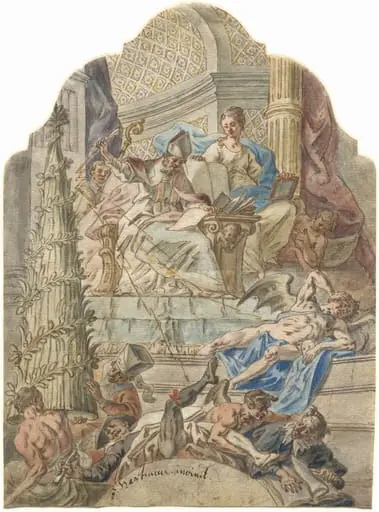
Worshippers at the Tomb of Saint Peter is an ink drawing by the Baroque artist Matthäus Günther. It dates from 1740 and is held in the collection of the National Gallery of Art.
About this work
Overview
The composition balances intricate detail with atmospheric light, suggesting a ritual moment centered on Saint Peter’s tomb.
Created in 1740 by Matthäus Günther, this drawing depicts a devotional scene within a monumental church interior. Executed in watercolor, gouache, and graphite over pen and ink, it was prepared on pink-gray paper with a stylus for indented contours and graphite squaring to guide transfer. The composition balances intricate detail with atmospheric light, suggesting a ritual moment centered on Saint Peter’s tomb.
Subject & Meaning
The scene centers on a group of worshippers kneeling before the tomb of Saint Peter, their postures conveying reverence. Above them, figures appear to ascend through a luminous, cloud-filled sky, possibly representing souls or angels. The crowded interior, lined with statues and arched niches, reinforces the sacredness of the site, transforming the tomb into both a physical monument and a spiritual threshold.
Technique & Style
Günther layered soft watercolor washes with precise pen and ink lines to define architecture and figures. Gouache added opacity for highlights, particularly in the celestial realm, while graphite squaring and stylus indentations guided the composition’s transfer. The interplay of light from above creates volume, giving the stone surfaces and drapery a sculptural presence despite the two-dimensional medium.
History & Provenance
The drawing originates from Günther’s early career in southern Germany, likely produced for a religious institution or private patron. Its preparatory nature—evident in the squared grid and indented outlines—suggests it was a study for a larger fresco or altarpiece, though no definitive later work has been identified as its direct counterpart.
Context
This work reflects the Baroque tradition’s emphasis on emotional engagement and theatrical space, common in Catholic devotional art of the period. Günther’s approach aligns with southern German and Austrian ecclesiastical art, where illusionistic interiors and celestial imagery were used to inspire piety and convey the presence of the divine within sacred architecture.
Legacy
Though not widely exhibited, the drawing exemplifies Günther’s skill in translating monumental fresco compositions into intimate preparatory studies. It remains a key example of 18th-century German religious drawing, illustrating how artists bridged detailed observation with spiritual symbolism in the decades before Neoclassicism gained prominence.
Artist & collection


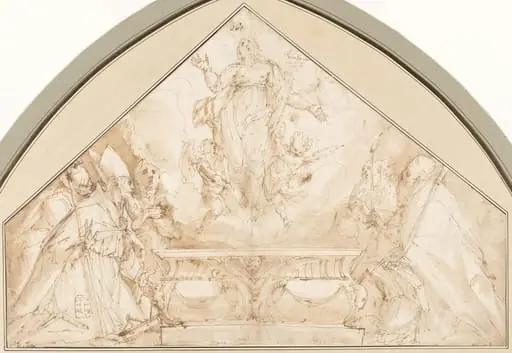 The Assumption of the Virgin with Two Bishops and Other Figures
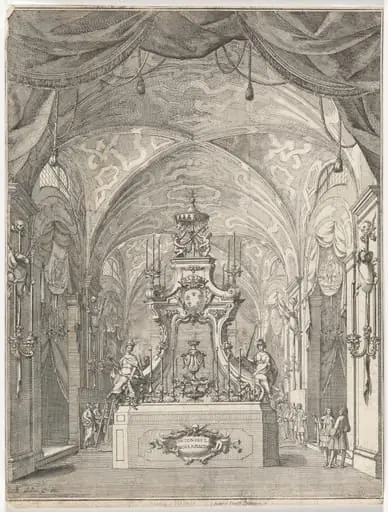 Catafalque for the Funeral of the Duke of Parma Antonio I in the Church of S. Maria Maddalena in Bologna
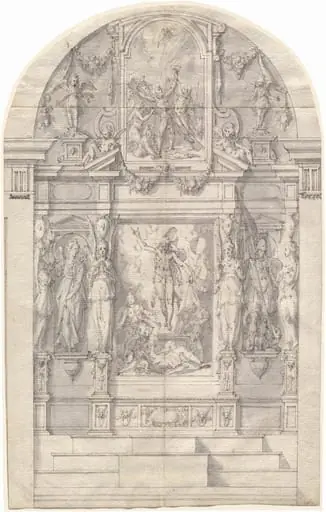 An Elaborate Altar with the Resurrection of Christ and the Martyrdom of Saint Andrew
 An Elaborate Altar of Colored Marble Ornamented with Sculptures
 An Elaborate Rococo Setting with the Virgin and Child and Saints Defeating Evil, Heresy, and Profane Love
 The Arts and Powers Pay Homage to Emperor Charles VI
 Aurora Heralding the Arrival of the Morning Sun
 H Beard Print Collection
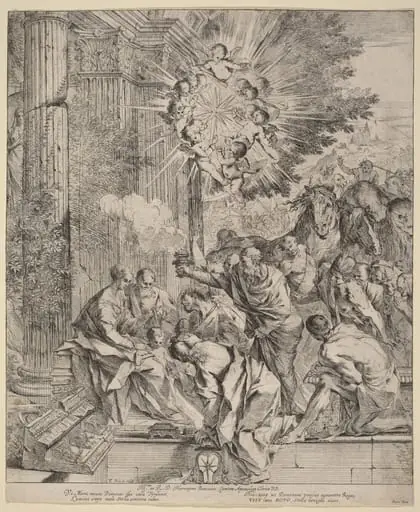 The Adoration of the Magi
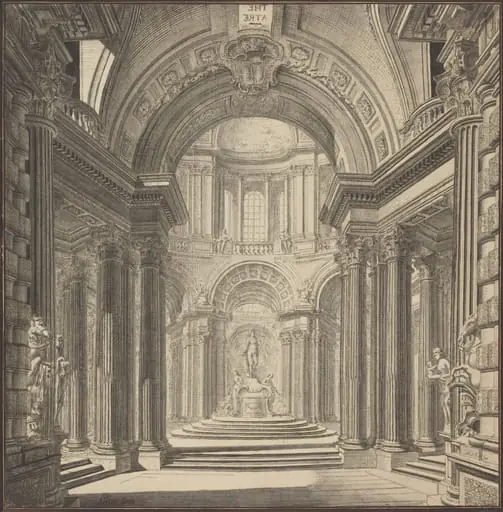 Interior of a Temple
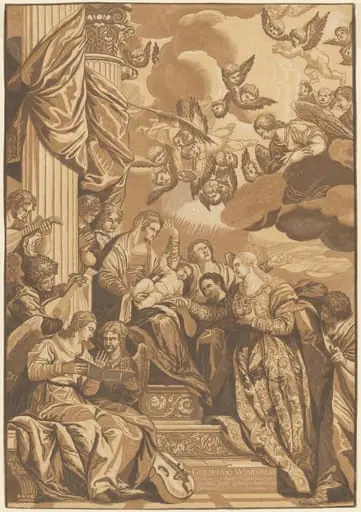 Mystic Marriage of St. Catherine
 Saint Augustine Subdues Heresy with Lightning Bolts from His Pen