Artwork
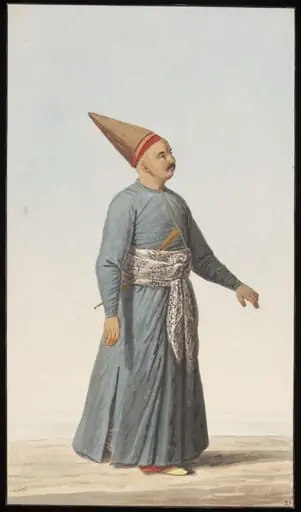
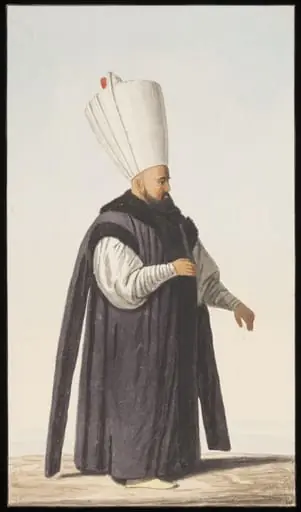
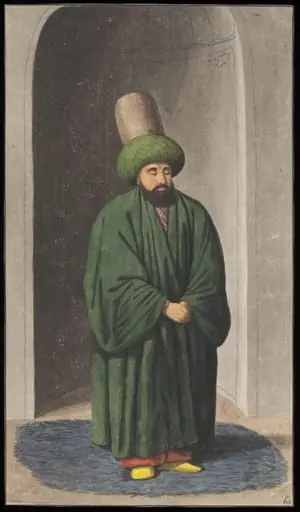
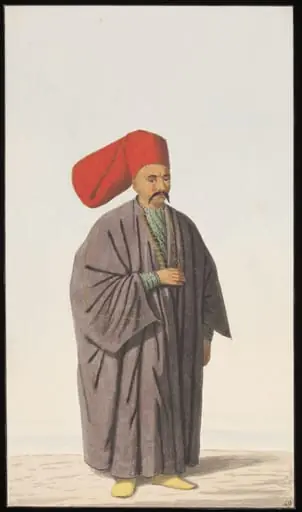
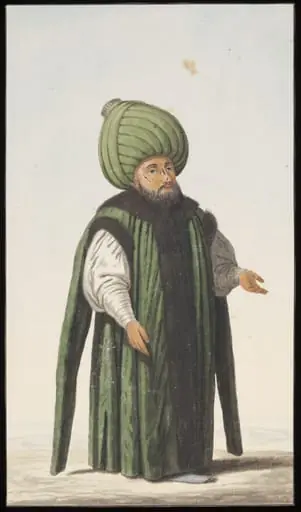
Ascibasi, or Commander of the Janisseries in ceremonial dress
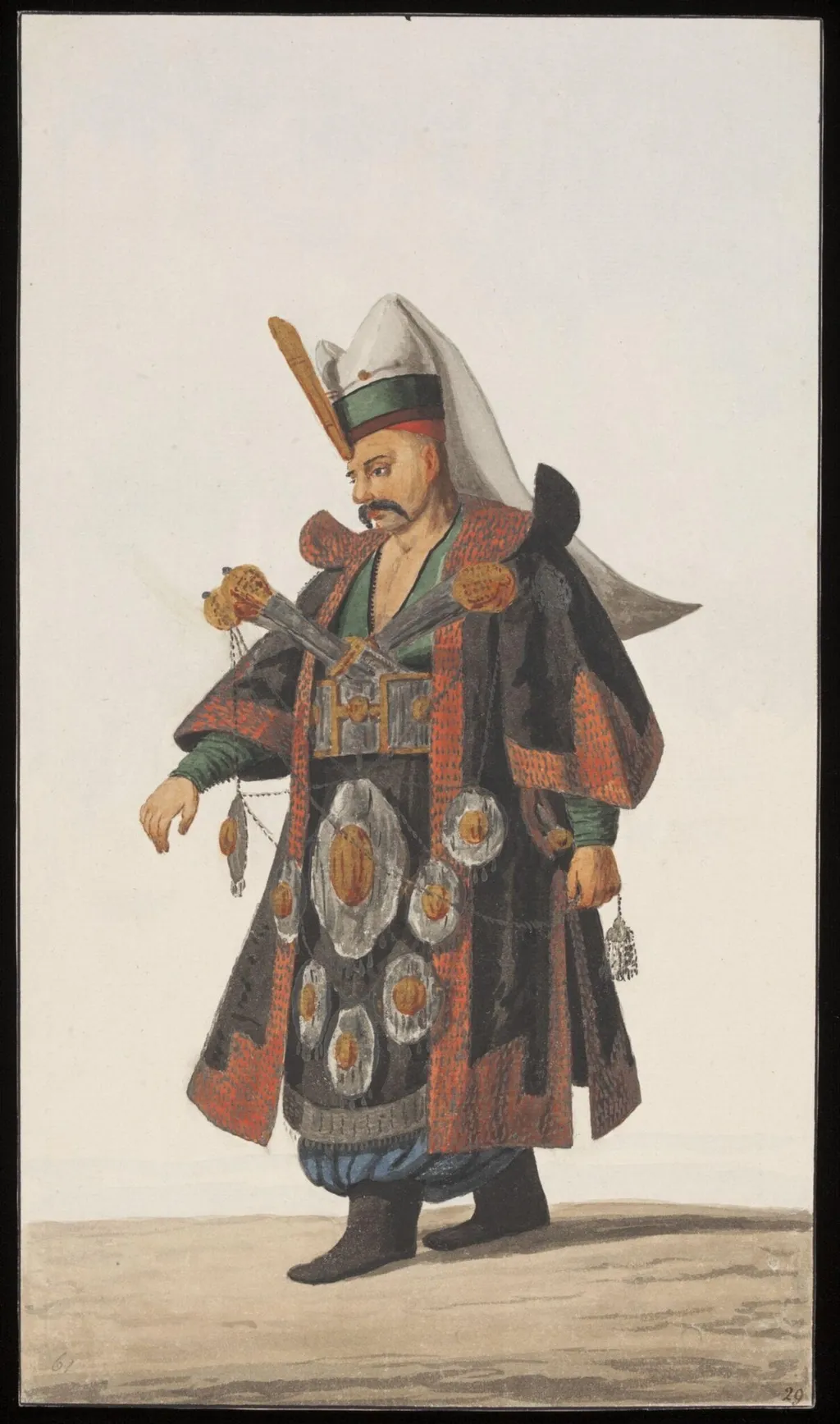
Ascibasi, or Commander of the Janisseries in ceremonial dress is a watercolor work on paper by the Romanticist artist Anonymous Greek artist. It dates from 1809 and is held in the collection of the Victoria and Albert Museum.
About this work
Overview
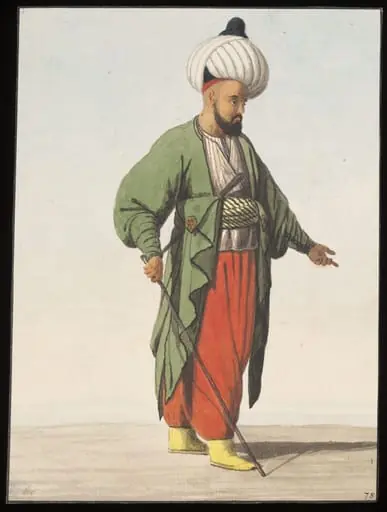
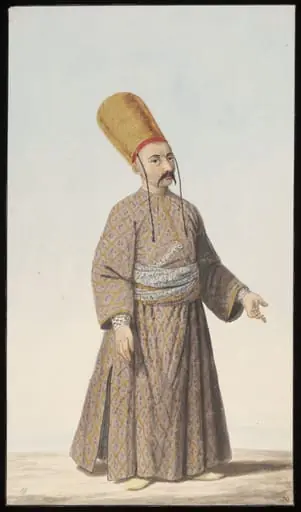
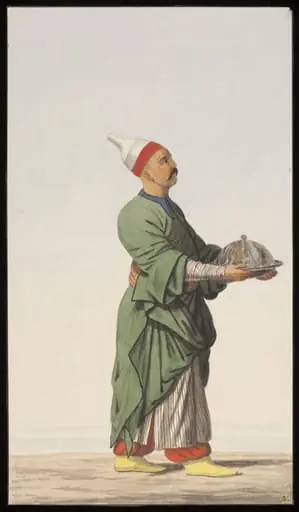
This watercolour, titled *Ascibasi, or Commander of the Janisseries in ceremonial dress*, belongs to a larger collection of Ottoman scenes commissioned by Stratford Canning, later Viscount Stratford de Redcliffe (1786–1880). The series was created during Canning’s early diplomatic posting in Istanbul, where he documented a wide range of Ottoman institutions and customs.
Subject & Meaning
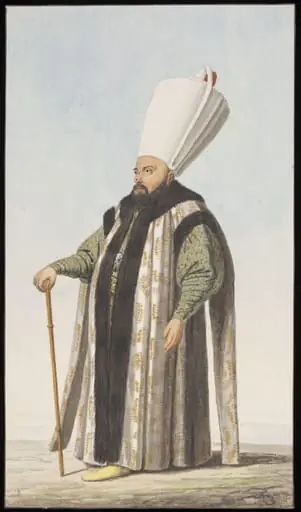
The work depicts an Ascibasi, a senior official responsible for the Janissary corps, shown in full ceremonial attire. The portrait offers insight into the visual culture of Ottoman military hierarchy and the elaborate dress associated with high-ranking officers of the period.
Technique & Style
Executed in watercolour, the piece merges the vivid, fluid application characteristic of Ottoman miniature traditions with European conventions of perspective and spatial representation. Scholars suggest the hand behind the drawing may have been linked to the workshop of Konstantin Kapidagli, reflecting a hybrid artistic approach.
History & Provenance
The series was assembled after Canning’s arrival in Istanbul in 1808, when he employed a local artist to record his observations. The original drawings entered the British Museum’s collection through copies made by Charles Cockerell, a young architect who met the artist in 1810. The Victoria and Albert Museum acquired the authentic set from Canning’s daughter Charlotte in 1895.
Context
Canning’s commission coincided with a period of heightened European interest in Ottoman visual culture. By employing a native painter, he secured a perspective that combined insider knowledge of courtly and military dress with the emerging European appetite for accurate, perspectival depictions of foreign societies.
Artist & collection

![A Pasha travelling with his escort[?], by Anonymous Greek artist](https://artifactworldgallery.com/img/anonymous-greek-artist--a-pasha-travelling-with-his-escort--01de32b8fcf30843-w320.webp)
![A Dervish[?], by Anonymous Greek artist](https://artifactworldgallery.com/img/anonymous-greek-artist--a-dervish--3c8916f5a95abb6a-w320.webp)