Artwork
Zülüflü Baltaci, or Page to the Sultan
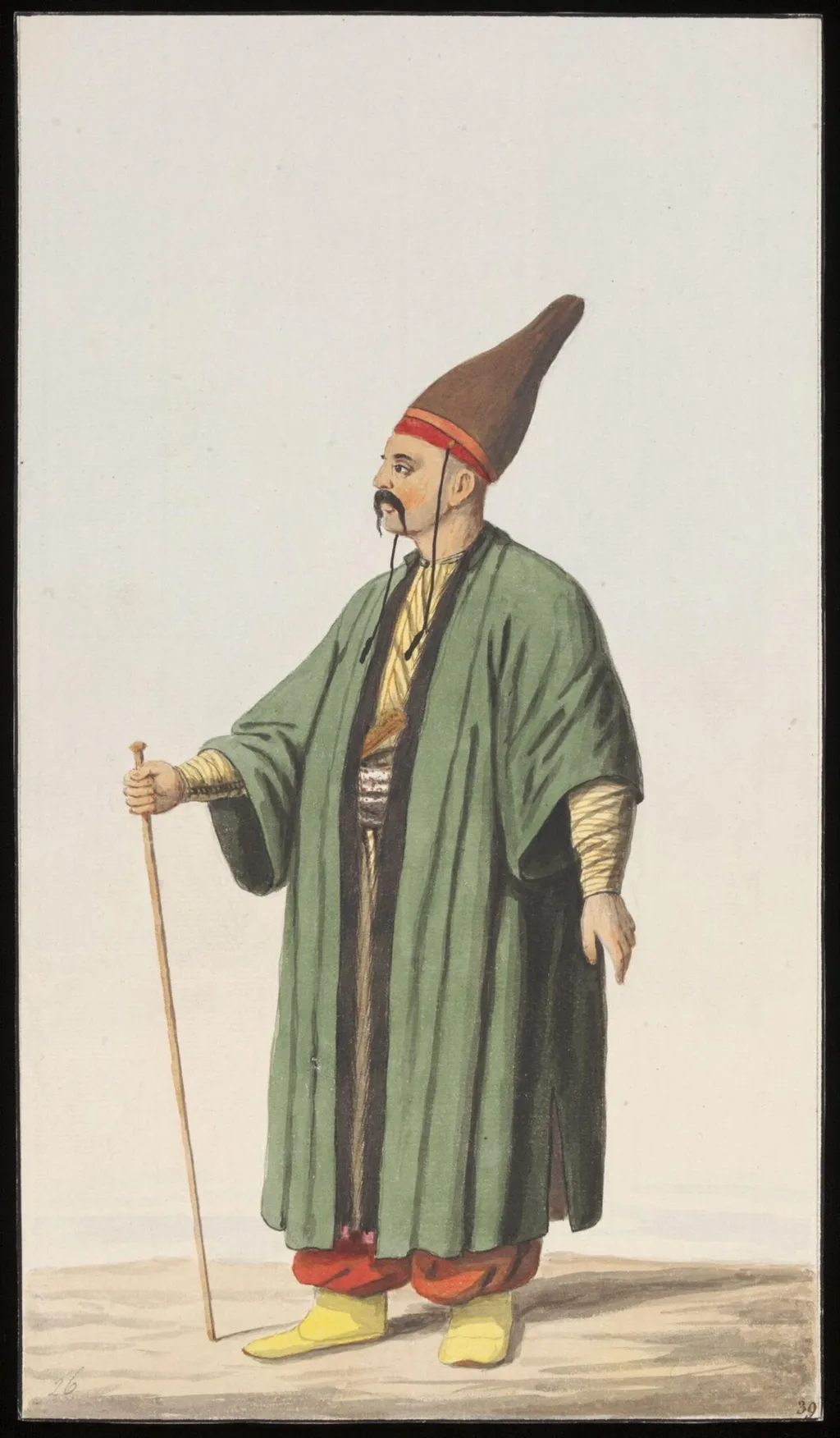
Zülüflü Baltaci, or Page to the Sultan is a watercolor work on paper by the Romanticist artist Anonymous Greek artist. It dates from 1809 and is held in the collection of the Victoria and Albert Museum. Zülüflü Baltaci, also known as Page to the Sultan, is a watercolour portrait created circa 1809 by an unidentified Greek artist.
About this work
The painting is held at the Victoria and Albert Museum, and it's a portrait, which is a type of art that focuses on depicting a person.
This painting is called Zülüflü Baltaci, or Page to the Sultan.
It was made by an Anonymous Greek artist around 1809.
The painting is held at the Victoria and Albert Museum, and it's a portrait, which is a type of art that focuses on depicting a person.
The artist's style is interesting because it combines Ottoman and European techniques.
This mix of styles is what makes the painting unique.
Check out the movement: Romanticism.
Overview
Zülüflü Baltaci, also known as Page to the Sultan, is a watercolour portrait created circa 1809 by an unidentified Greek artist. The work forms part of a larger series of Ottoman scenes commissioned by British diplomat Stratford Canning, later Viscount Stratford de Redcliffe, during his early years in Istanbul.
Subject & Meaning
The image depicts a young court attendant, traditionally called a zülüflü baltacı, who served the Ottoman sultan. By focusing on the figure’s attire and bearing, the portrait offers a glimpse into the ceremonial roles and visual culture of the imperial household in the early nineteenth century.
Technique & Style
The artist blends Ottoman water‑and‑body colour methods—characterised by dense, luminous washes—with European conventions of linear perspective and anatomical rendering. This hybrid approach produces a vivid yet structured representation, reflecting the cross‑cultural visual exchange of the period.
History & Provenance
Stratford Canning, then first secretary to the British mission in Istanbul, commissioned the series after arriving in 1808. The original drawings remained in the Canning family until Canning’s daughter Charlotte sold them to the Victoria and Albert Museum in 1895, where the portrait now resides.
Context
The early nineteenth‑century Ottoman capital attracted numerous European visitors, including architect Charles Cockerell, who met the anonymous Greek painter in 1810. Cockerell’s copies of the artist’s architectural studies are held by the British Museum, attesting to the painter’s reputation among contemporary travelers.
Artist & collection

![A Pasha travelling with his escort[?], by Anonymous Greek artist](https://artifactworldgallery.com/img/anonymous-greek-artist--a-pasha-travelling-with-his-escort--01de32b8fcf30843-w320.webp)
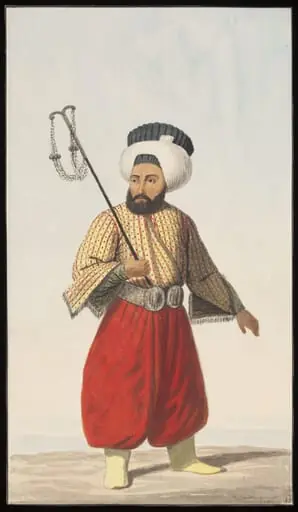
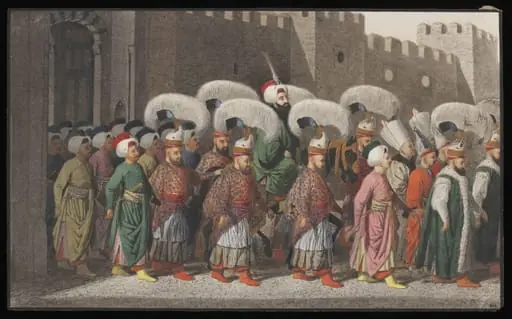
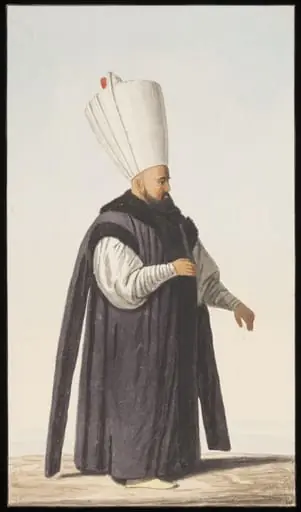
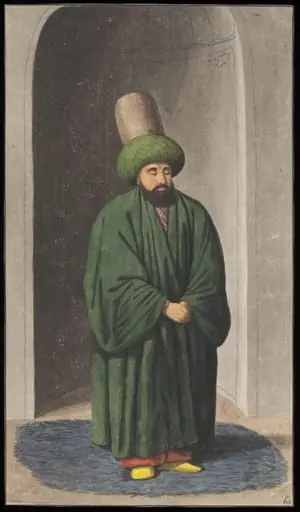
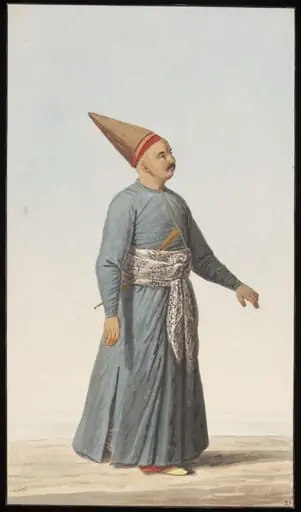 An official in the Sultan's palace
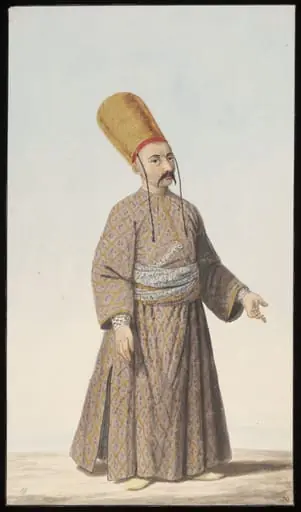 Zülüflü Baltaci, or Page of the first rank to the Sultan
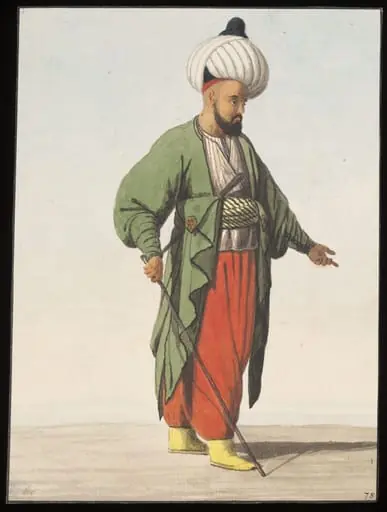 A Turkish official
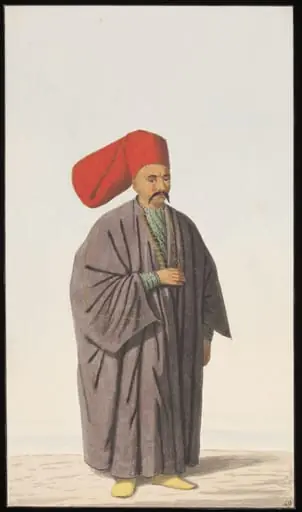 Bostancibasi, or member of the Imperial Guard
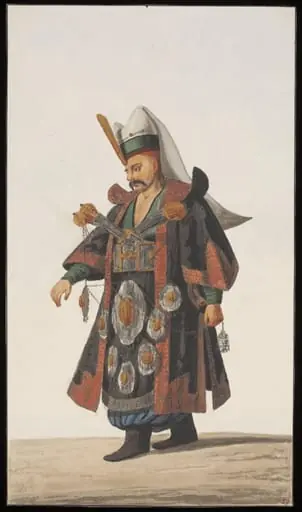 Ascibasi, or Commander of the Janisseries in ceremonial dress
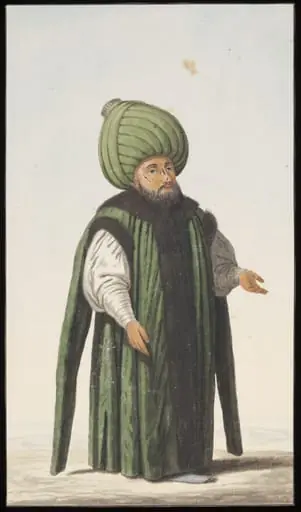 A senior Ottoman official
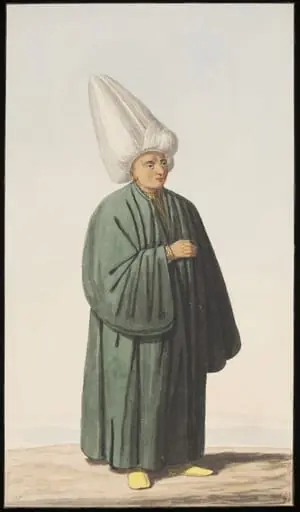 Sarayoglan, or page to the Sultan
![A Dervish[?], by Anonymous Greek artist](https://artifactworldgallery.com/img/anonymous-greek-artist--a-dervish--3c8916f5a95abb6a-w320.webp) A Dervish[?]
A Dervish[?]![A Serbetci, or drinks seller[?], by Anonymous Greek artist](https://artifactworldgallery.com/img/anonymous-greek-artist--a-serbetci-or-drinks-seller--61bdf44039236f66-w320.webp) A Serbetci, or drinks seller[?]
A Serbetci, or drinks seller[?]