Artwork
Vignette for the Title Page of Martinus Bonacina, Opera Omnia
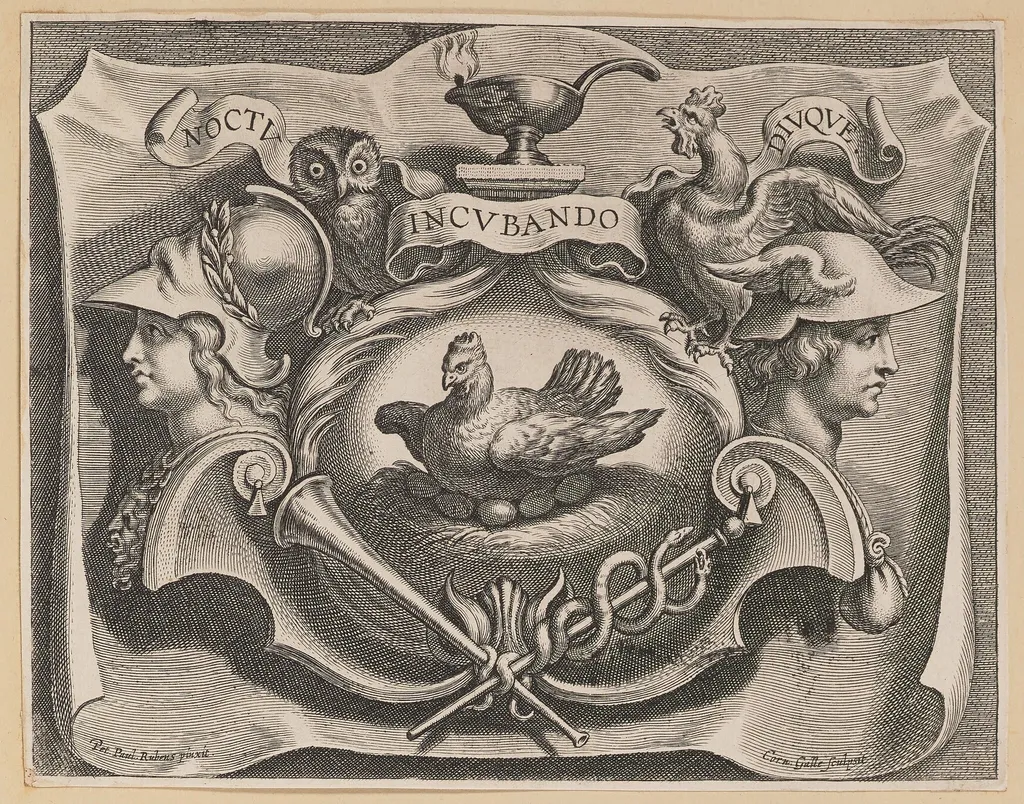
Vignette for the Title Page of Martinus Bonacina, Opera Omnia is an ink print by the Baroque artist Cornelis Galle I. It dates from 1632 and is held in the collection of the National Gallery of Art.
About this work
Overview
The 1632 engraving titled Vignette for the Title Page of Martinus Bonacina, Opera Omnia is a proof print on laid paper executed by Cornelis Galle the Elder. Galle, an Antwerp native born in 1576, was a prominent engraver whose work often accompanied scholarly publications. This particular vignette serves as a decorative frontispiece element for Bonacina’s collected works.
Subject & Meaning
The composition centers on an elaborate coat of arms bearing two owls above a rooster, accompanied by a banner inscribed “Nocti Incubando.” A partially visible female figure supports the shield, while a serpent winds around a branch beneath a moonlit sky. The juxtaposition of owls (night) and rooster (day) suggests a thematic contrast between darkness and light, reinforced by the nocturnal motto.
Technique & Style
Galle employs a dense network of fine incised lines to model volume and create subtle gradations of shadow, giving the elements a three‑dimensional presence. The rendering of clouds, the moon, and the serpent’s scales demonstrates his mastery of line work, a skill honed during his years in Italy where he absorbed a more refined, classical engraving approach.
History & Provenance
Trained under his father, the publisher Philip Galle, Cornelis spent several formative years in Rome before returning to Antwerp. There he produced prints both from his own designs and those of other artists. The vignette, intended for Bonacina’s Opera Omnia, reflects the collaborative publishing practices of the early 17th‑century Netherlandish print market.
Context
The engraving appears within a broader tradition of title‑page ornamentation that combined heraldic imagery with allegorical motifs. Such decorative vignettes were common in scholarly editions of the period, serving both aesthetic and symbolic functions to convey the learned nature of the text and the patron’s erudition.
Artist & collection

Artist
Cornelis Galle the Elder (1576 – 29 March 1650), a younger son of Philip Galle, was born at Antwerp in 1576, and was taught engraving by his father.

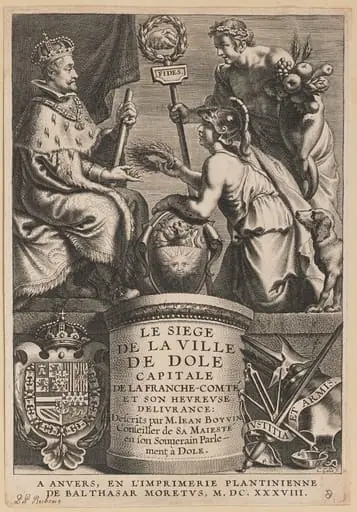 Title Page for Jean Boyvin, Le Siege de la Ville de Dole
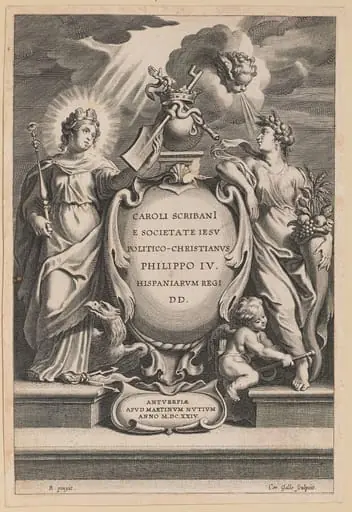 Title Page for Carolus Scribani, Politico-Christianus
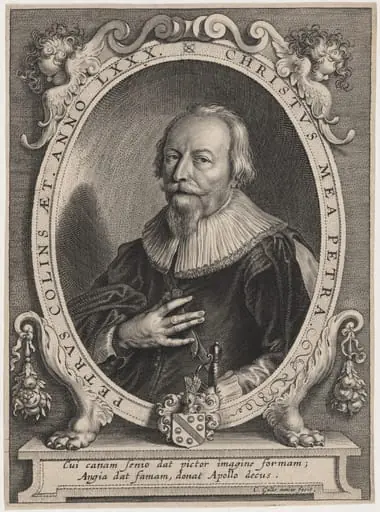 Petrus Collins
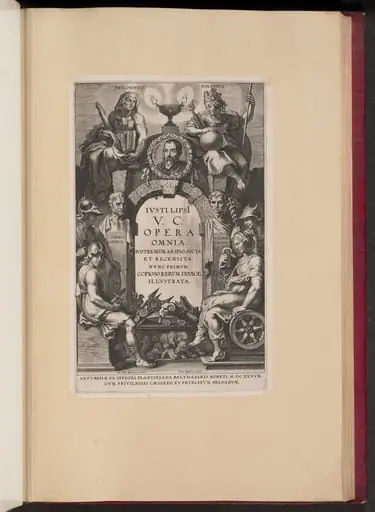 Title Page for Justus Lipsius, Opera Omnia, I
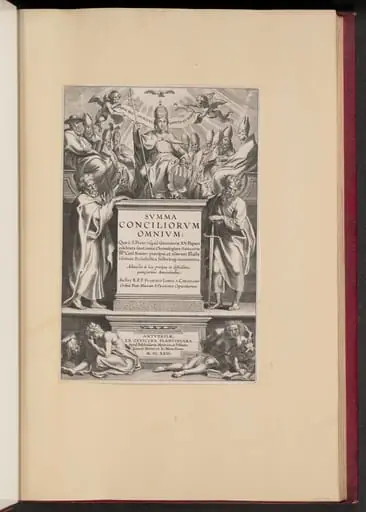 Title Page for F. Longo a Coriolano's "Svmma Conciliorvm Omnivm"
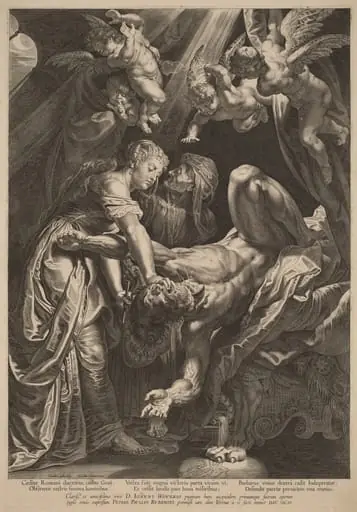 Judith Beheading Holofernes
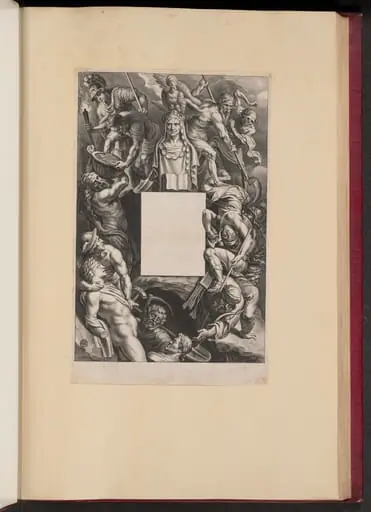 Title Page for Hubert Goltzius, Romanae et Graecae Antiqvitatis Monvmenta (Opera Omnia, I)
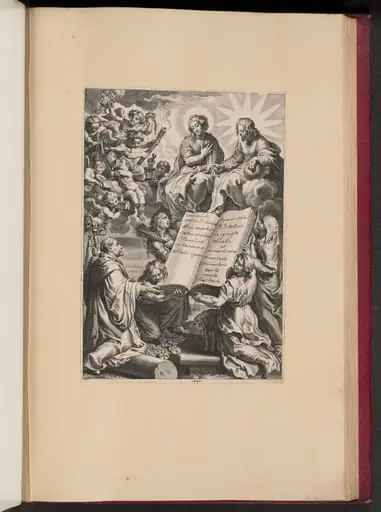 Title Page for Ludovicus Blosius, Opera
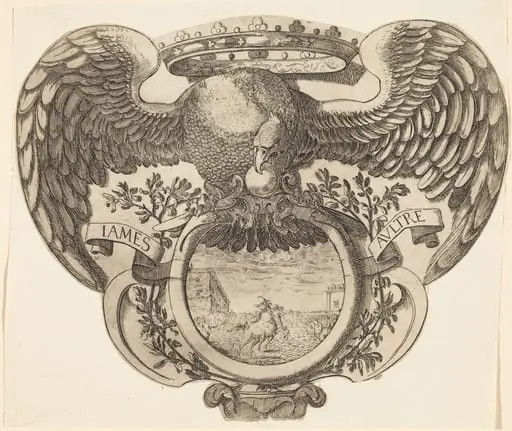 Coat of Arms
![Archetypa studiaque patris Georgii Hoefnagelii [Part 4, Title Page], by Jacob Hoefnagel](https://artifactworldgallery.com/img/jacob-hoefnagel--archetypa-studiaque-patris-georgii-hoefnagelii-part-4-title--d842859cac0814bc-w320.webp) Archetypa studiaque patris Georgii Hoefnagelii [Part 4, Title Page]
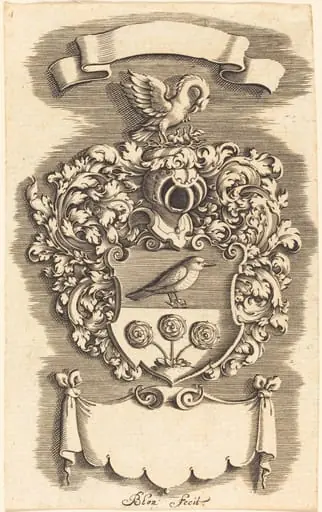
Archetypa studiaque patris Georgii Hoefnagelii [Part 4, Title Page]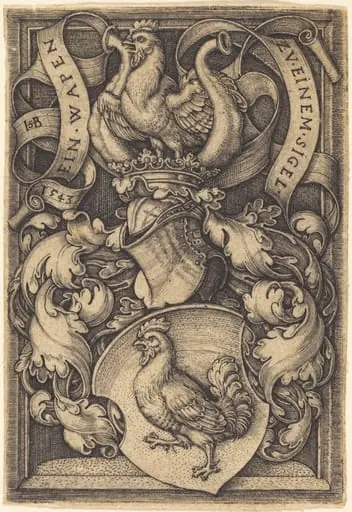 Coat of Arms with a Cock
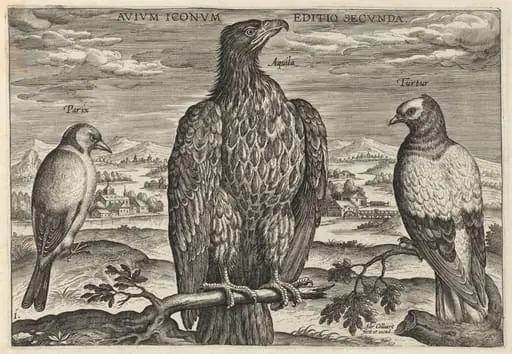 Wagtail, Eagle, and Turtledove
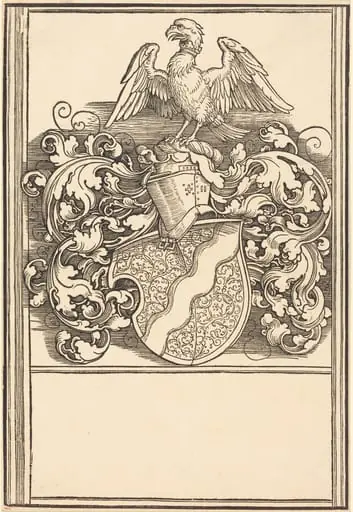 Coat of Arms of Michael Behaim
 Crest
Crest Ornament Fillet
![Archetypa studiaque patris Georgii Hoefnagelii [Part 4, Titlepage], by Jacob Hoefnagel](https://artifactworldgallery.com/img/jacob-hoefnagel--archetypa-studiaque-patris-georgii-hoefnagelii-part-4-titlep--a48938e411f894b0-w320.webp) Archetypa studiaque patris Georgii Hoefnagelii [Part 4, Titlepage]
Archetypa studiaque patris Georgii Hoefnagelii [Part 4, Titlepage]![Archetypa studiaque patris Georgii Hoefnagelii [Part 2, Title Page], by Jacob Hoefnagel](https://artifactworldgallery.com/img/jacob-hoefnagel--archetypa-studiaque-patris-georgii-hoefnagelii-part-2-title--b3c6531eef8a4e07-w320.webp) Archetypa studiaque patris Georgii Hoefnagelii [Part 2, Title Page]
Archetypa studiaque patris Georgii Hoefnagelii [Part 2, Title Page]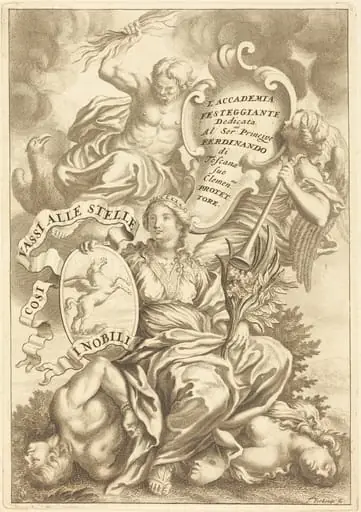 Dedication Plate