Artwork
Title Page for Carolus Scribani, Politico-Christianus
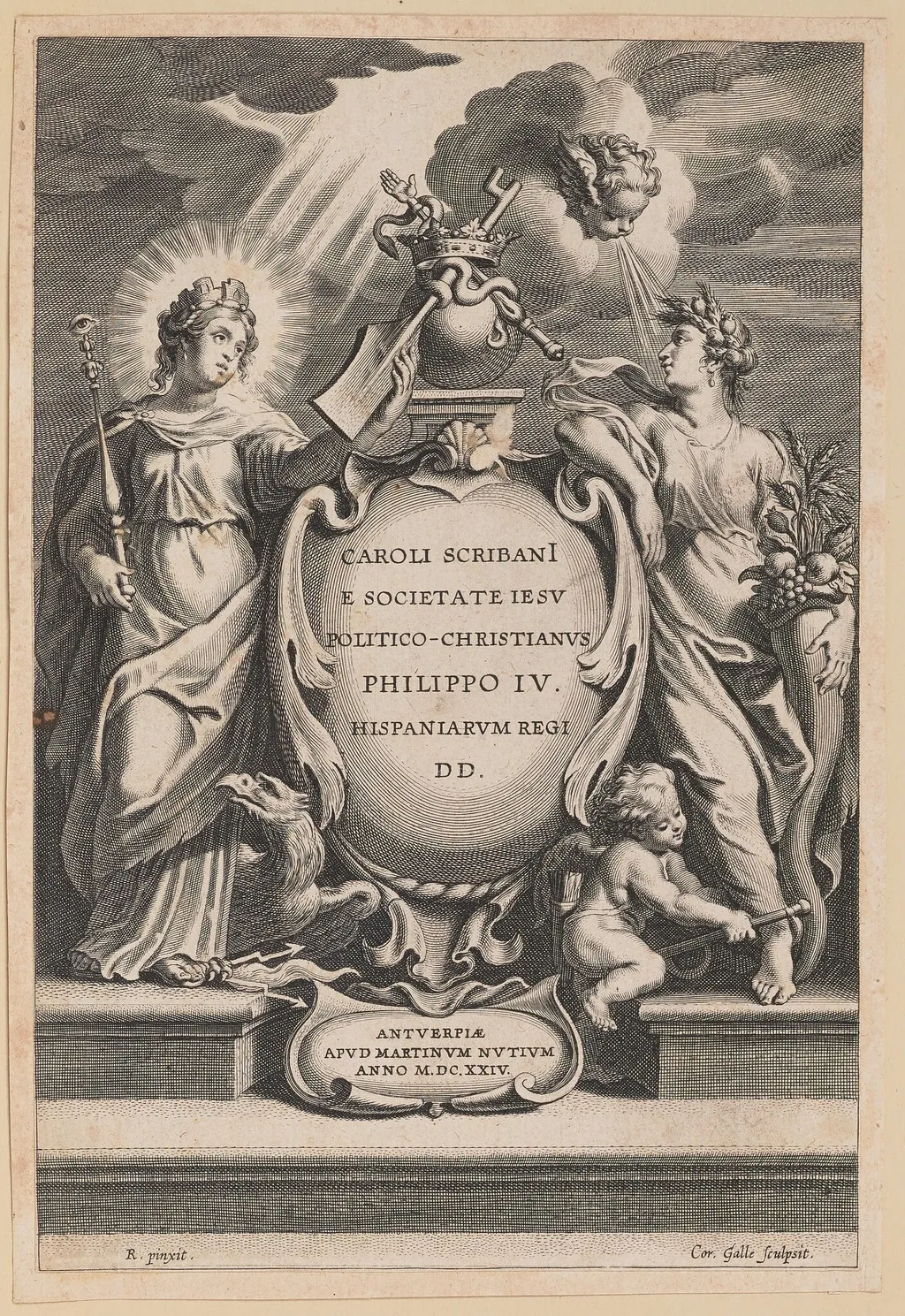
Title Page for Carolus Scribani, Politico-Christianus is an ink print by the Baroque artist Cornelis Galle I. It dates from 1624 and is held in the collection of the National Gallery of Art.
About this work
Overview
Cornelis Galle the Elder, a Flemish engraver active in the early seventeenth century, produced an engraved title page in 1624 for the work *Politico‑Christianus* by Carolus Scribani. Executed on laid paper, the print functions as a frontispiece, introducing the book’s themes through allegorical imagery and Latin inscriptions typical of Low‑Country print culture.
Subject & Meaning
The composition features two cloaked figures flanking an ornate shield. The left figure bears a staff and a book, symbols of authority and learning, while the right holds a cluster of grapes, an emblem of abundance or the Eucharist. Above them a crown and a scroll display the title and a dedication to Philip IV of Spain, suggesting a link between political power and Christian virtue.
Technique & Style
The image was created by hand engraving, a process in which the artist incised lines into a copper plate that was then inked and pressed onto laid paper. Galle’s hand shows fine, controlled lines and a balanced arrangement of figures, reflecting the refined engraving methods he honed during his stay in Rome before returning to Antwerp.
History & Provenance
The title page likely circulated with the first edition of Scribani’s treatise, serving both as advertisement and as a visual statement of the book’s content.
Born in Antwerp in 1576, Galle trained under his father Philip Galle, a prominent printmaker and publisher. After a period of work in Rome, he re‑established his workshop in Antwerp, where he both produced original designs and reproduced works by other artists. The title page likely circulated with the first edition of Scribani’s treatise, serving both as advertisement and as a visual statement of the book’s content.
Context
In the early 1600s the Low Countries were a hub for book production and printmaking, with frontispieces serving as a key element of scholarly and religious publications. The inclusion of allegorical figures and royal dedication reflects the era’s intertwining of political authority, Catholic doctrine, and humanist scholarship, all conveyed through the medium of print.
Artist & collection

Artist
Cornelis Galle the Elder (1576 – 29 March 1650), a younger son of Philip Galle, was born at Antwerp in 1576, and was taught engraving by his father.

 Vignette for the Title Page of Martinus Bonacina, Opera Omnia
 Title Page for Jean Boyvin, Le Siege de la Ville de Dole
 Petrus Collins
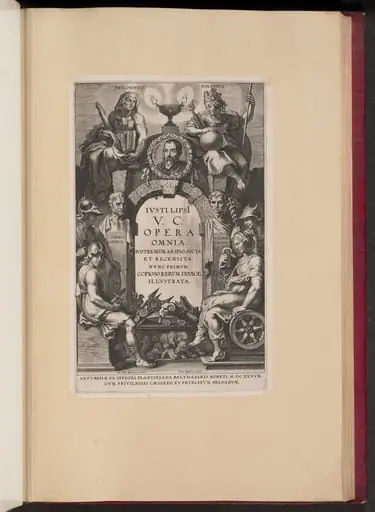 Title Page for Justus Lipsius, Opera Omnia, I
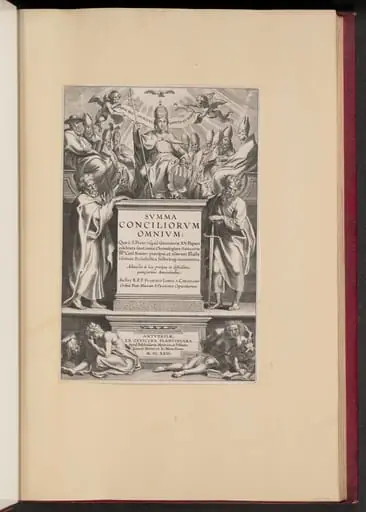 Title Page for F. Longo a Coriolano's "Svmma Conciliorvm Omnivm"
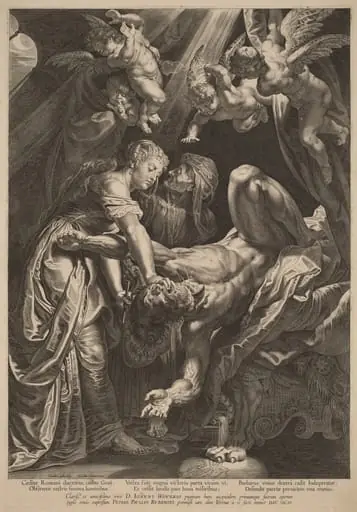 Judith Beheading Holofernes
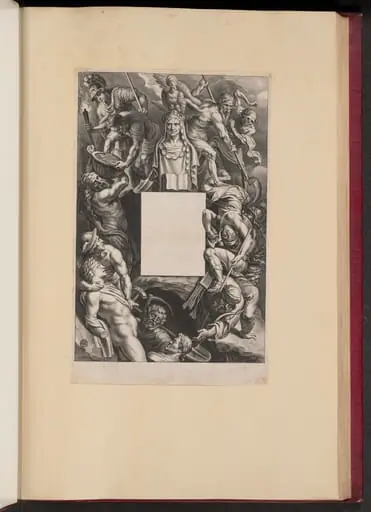 Title Page for Hubert Goltzius, Romanae et Graecae Antiqvitatis Monvmenta (Opera Omnia, I)
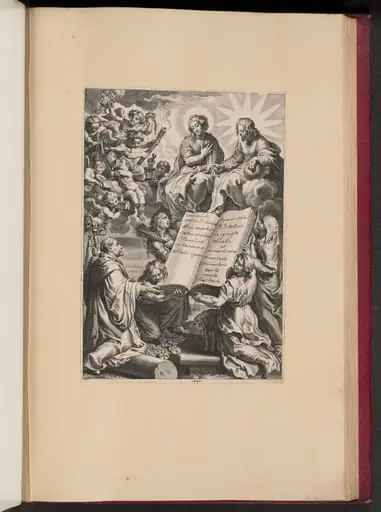 Title Page for Ludovicus Blosius, Opera
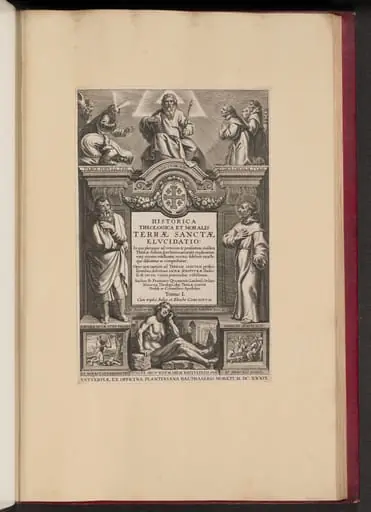 Title Page for Franciscus Aguilonius, Historica Theologica et Moralis Terrae Sanctae Elvcidatio
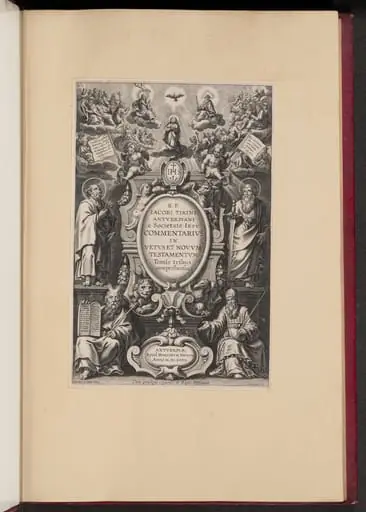 Title Page for R.P. Jacobi Tirini's "Commentarius in Vetvs et Novvm Testamentvm"
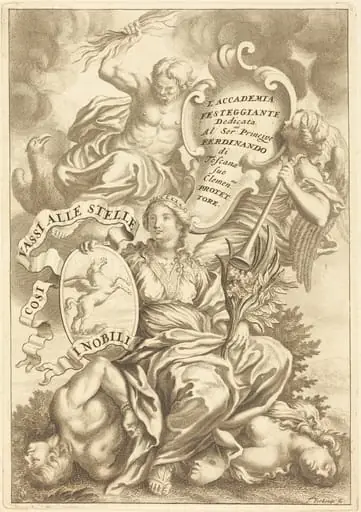 Dedication Plate
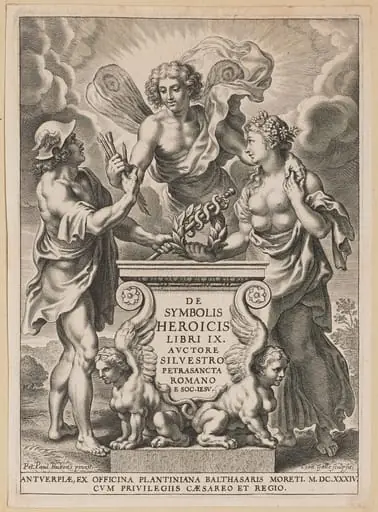 Title Page for Silvester Pietrasanta, De Symbolis Heroicis
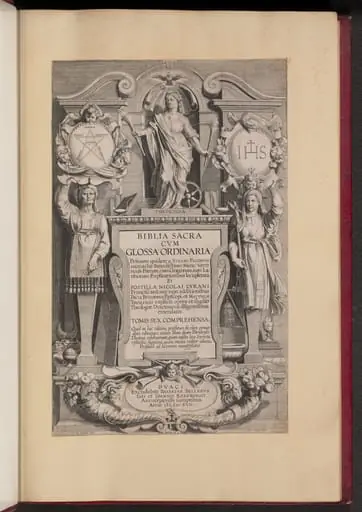 Title Page for Biblia Sacra Cvm Glossa Ordinaria
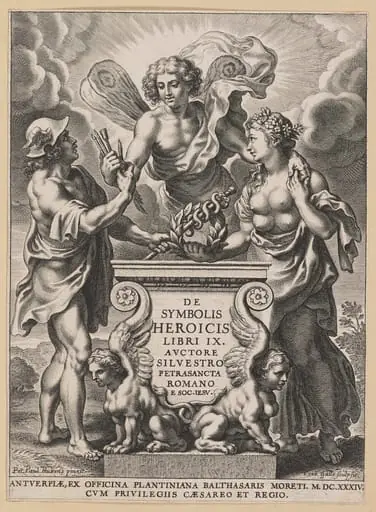 Title Page for Silvester Pietrasanta, De Symbolis Heroicis
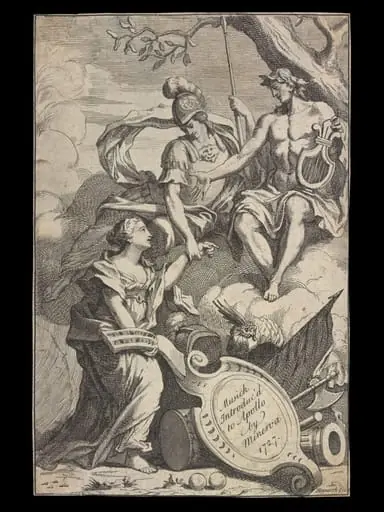 H Beard Print Collection
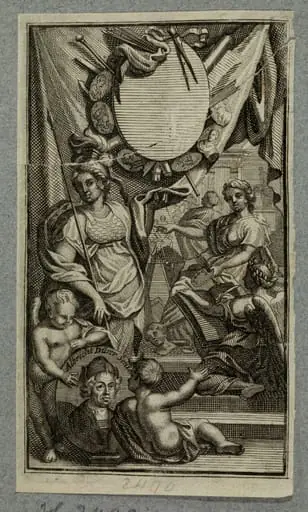 Frontispiece with portrait of Albrecht Dürer d.Ä.
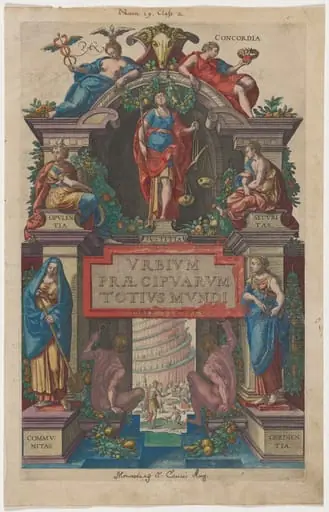 Title Page to Urbium Praecipuarum Totius Mundi
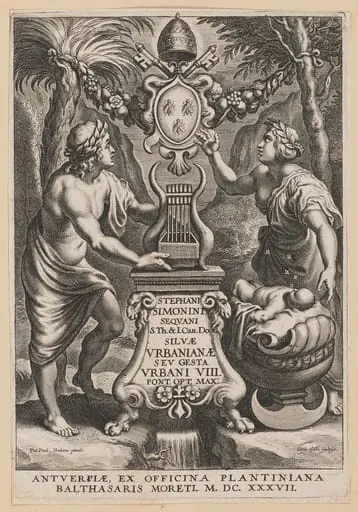 Title Page for Stephanus Simonini, Silvae Urbaninae