Artwork
Title Page for Balthasar Cordier's "Opera S. Dionysii Areopagitae, I"
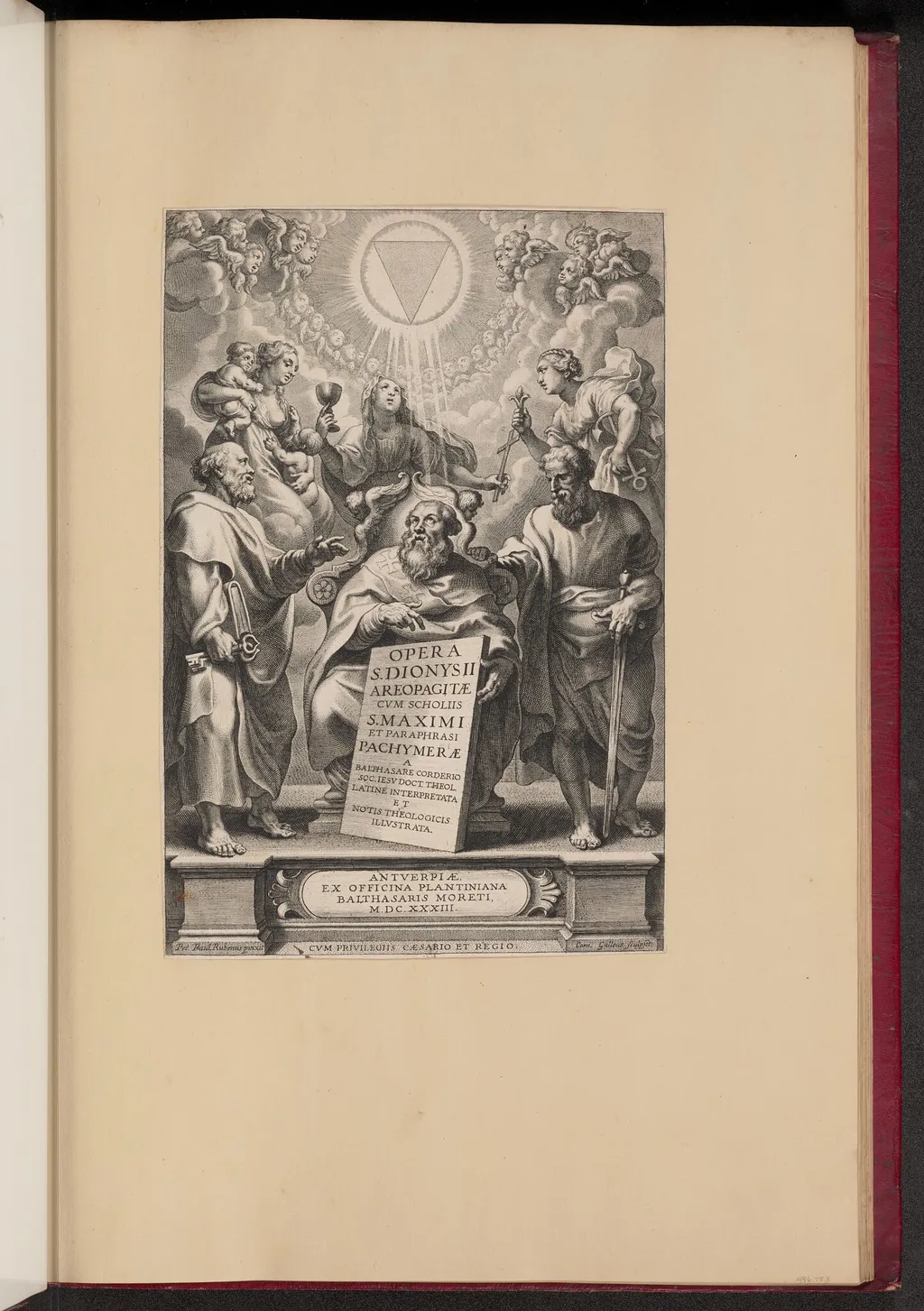
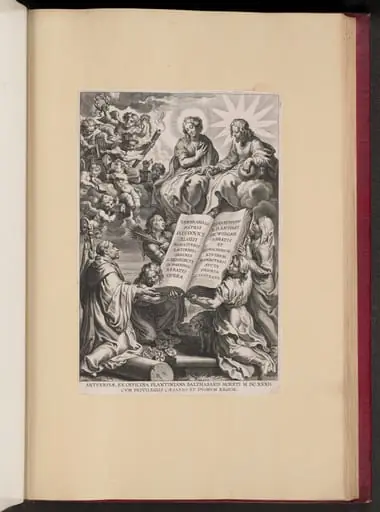
Title Page for Balthasar Cordier's "Opera S. Dionysii Areopagitae, I" is an ink print by the Baroque artist Cornelis Galle I. It dates from 1633 and is held in the collection of the National Gallery of Art. The title page for the first volume of Balthasar Cordier’s *Opera S.
About this work
This black-and-white print shows a group of robed men and winged figures gathered around a central figure holding a book.
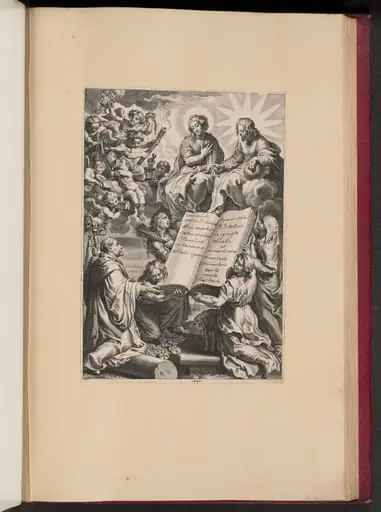
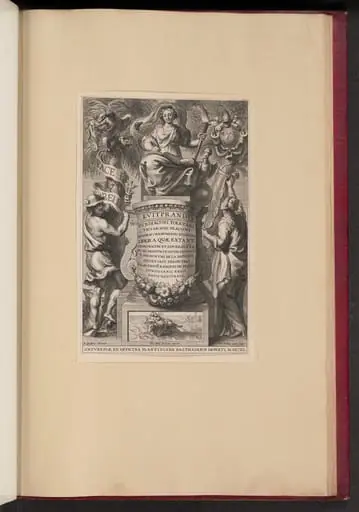
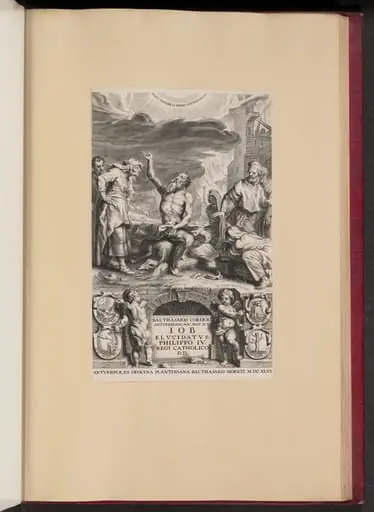
This black-and-white print shows a group of robed men and winged figures gathered around a central figure holding a book. The scene is framed like a stage, with light streaming down from above and clouds filled with cherubs. One man points upward, another holds a scroll, and the central figure wears a crown of leaves.
The text on the book and at the bottom is in Latin, naming the work and its printer. This was made as a title page for a book in 1633.
Next, look up engraving to see how artists like this created detailed prints.
Overview
The title page for the first volume of Balthasar Cordier’s *Opera S. Dionysii Areopagitae* was engraved in 1633 by Cornelis Galle the Elder. Executed on laid paper, the print serves as the frontispiece for the work, presenting a composed scene of figures surrounding a central, book‑holding figure, framed by a theatrical backdrop and Latin inscriptions identifying the publication and its printer.
Subject & Meaning
The composition gathers a group of robed men and winged attendants around a central figure crowned with a leaf wreath and holding an open book. One attendant gestures upward while another bears a scroll, suggesting scholarly discourse. The surrounding clouds populated by cherubs and the descending light create a celestial atmosphere, linking the theological content of Dionysius the Areopagite’s writings with a divine endorsement.
Technique & Style
Galle’s engraving demonstrates the precise line work and tonal modulation characteristic of early‑17th‑century Flemish printmaking. The use of fine cross‑hatching conveys depth in the drapery and architectural framing, while broader strokes define the luminous sky and cherubic forms. The artist’s training under his father Philip Galle and his Italian experience are evident in the balanced composition and the integration of classical motifs with Baroque dynamism.
History & Provenance
Born in Antwerp in 1576, Cornelis Galle the Elder trained in his father’s workshop before spending several years in Rome, where he refined his engraving techniques. After returning to Antwerp, he produced prints both after other designers and from his own designs. This title page, created for the 1633 edition of Cordier’s work, reflects the collaborative publishing practices of the period, linking Flemish craftsmanship with the dissemination of theological texts.
Context
The frontispiece appears at a time when printed books increasingly employed elaborate title pages to convey authority and attract readers. Engravings such as this one functioned as visual introductions to scholarly works, aligning the intellectual content with a visual narrative that emphasized the sacred and learned nature of the text. Antwerp’s thriving print market and its connections to Roman artistic trends facilitated such sophisticated productions.
Artist & collection

Artist
Cornelis Galle the Elder (1576 – 29 March 1650), a younger son of Philip Galle, was born at Antwerp in 1576, and was taught engraving by his father.

 Vignette for the Title Page of Martinus Bonacina, Opera Omnia
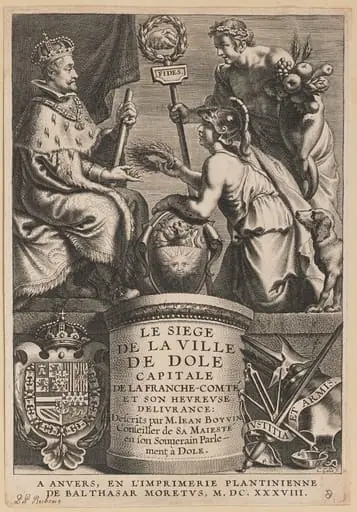 Title Page for Jean Boyvin, Le Siege de la Ville de Dole
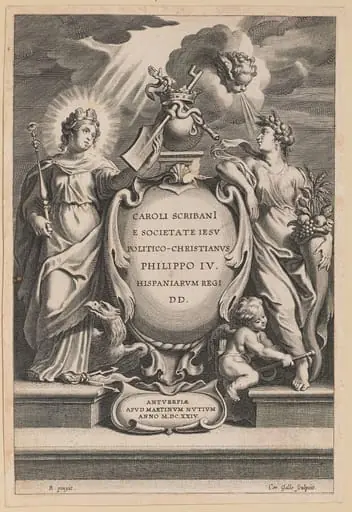 Title Page for Carolus Scribani, Politico-Christianus
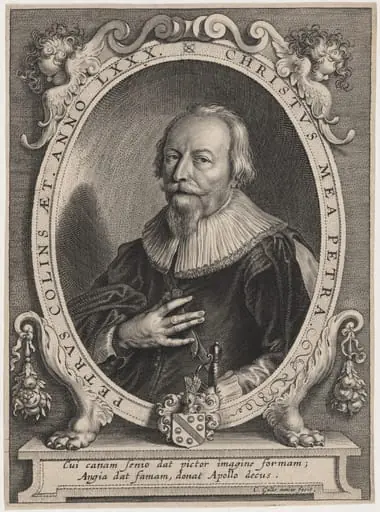 Petrus Collins
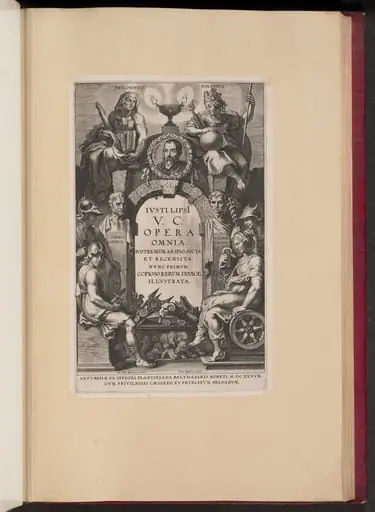 Title Page for Justus Lipsius, Opera Omnia, I
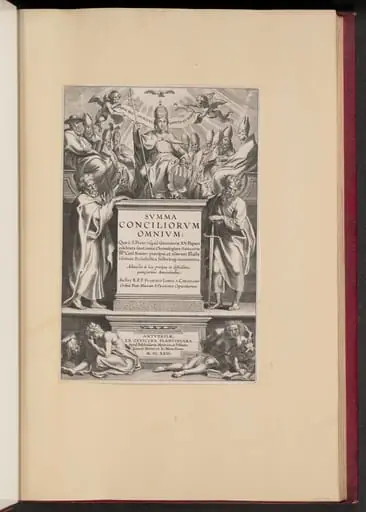 Title Page for F. Longo a Coriolano's "Svmma Conciliorvm Omnivm"
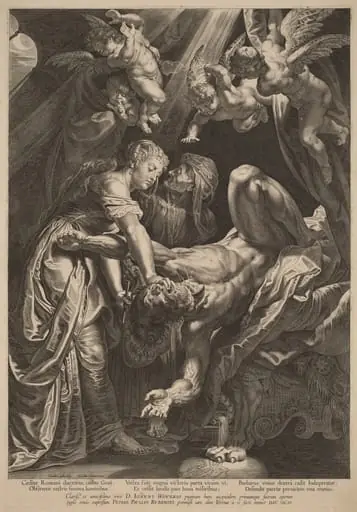 Judith Beheading Holofernes
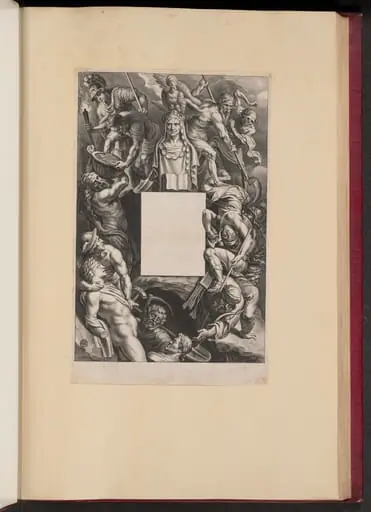 Title Page for Hubert Goltzius, Romanae et Graecae Antiqvitatis Monvmenta (Opera Omnia, I)