Artwork
The Seconda Macchina for the Chinea of 1752: The Banquet of the Gods in Villa Carl'Amalia in Caserta
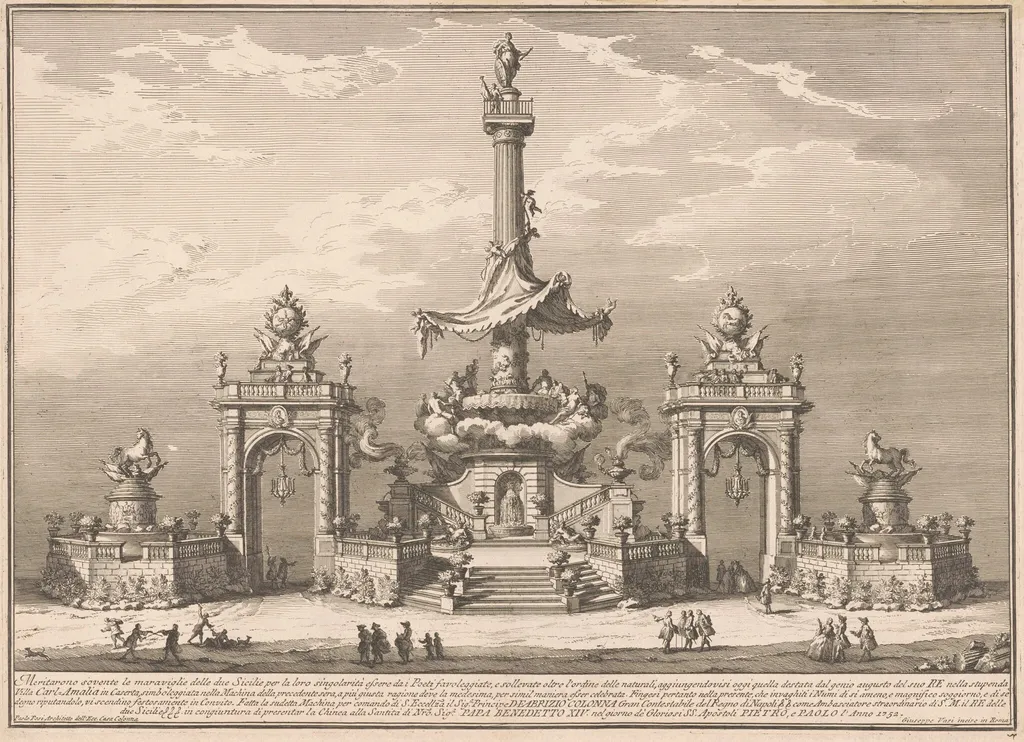
The Seconda Macchina for the Chinea of 1752: The Banquet of the Gods in Villa Carl'Amalia in Caserta is an ink print by the Romanticist artist Giuseppe Vasi. It dates from 1752 and is held in the collection of the National Gallery of Art.
About this work
Overview
Created in 1752 by Giuseppe Vasi, this etching documents a temporary architectural spectacle erected for the Chinea ceremony at Villa Carl'Amalia in Caserta. The print captures a lavish, ephemeral stage design meant to honor a royal visit, rendered with precise linework characteristic of Vasi’s topographical style. It serves as both record and artistic interpretation of a fleeting courtly event.
Subject & Meaning
Classical columns, statues, and flowing drapery construct an illusion of ancient grandeur, blending mythological symbolism with theatrical spectacle.
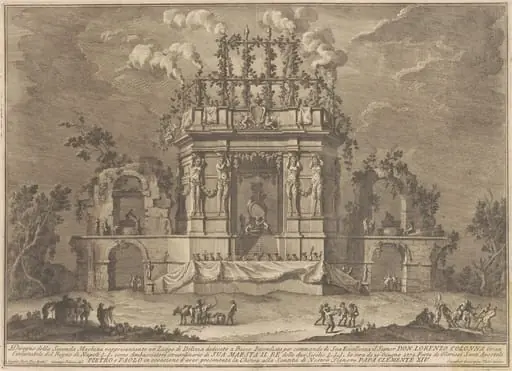
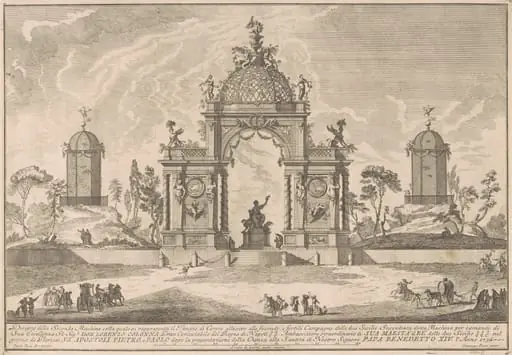
The scene depicts a fictional banquet of the gods, staged as part of a ceremonial tribute to royalty. Classical columns, statues, and flowing drapery construct an illusion of ancient grandeur, blending mythological symbolism with theatrical spectacle. The miniature figures scattered around the structure suggest a living audience, reinforcing the event’s function as a performative display of power and cultural refinement.
Technique & Style
Vasi employed etching to achieve fine detail and atmospheric depth, using controlled line work to define architectural elements and subtle shading to suggest volume. The composition balances architectural precision with the fluidity of movement among the figures, reflecting his training in both surveying and artistic representation. The print’s clarity emphasizes the artificiality of the setting without diminishing its visual impact.
History & Provenance
The print was produced to commemorate the 1752 Chinea ceremony, an annual tribute paid by the Kingdom of Naples to the Pope. Vasi, known for documenting Roman and Neapolitan architecture, recorded such ephemeral events as part of a broader effort to preserve the visual culture of the period. The work likely circulated among aristocratic patrons and collectors interested in courtly spectacle.
Context
The Chinea ceremony was a ritualized act of political submission and display, often accompanied by elaborate temporary structures. Vasi’s etching reflects the 18th-century European fascination with classical antiquity and the use of architecture as political theater. Such spectacles were designed to impress, reinforce hierarchy, and align rulers with mythic authority through staged environments.
Legacy
Vasi’s etching remains a key visual source for understanding the intersection of architecture, performance, and politics in 18th-century southern Italy. While the original structure vanished after the event, the print preserves its form and intent, offering insight into how power was visually constructed in an age before photography.
Artist & collection

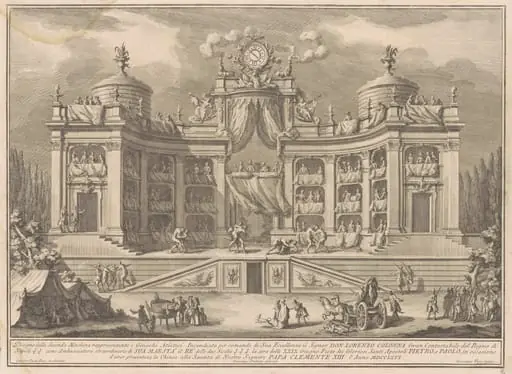 The Seconda Macchina for the Chinea of 1766: A Theater for Athletic Games
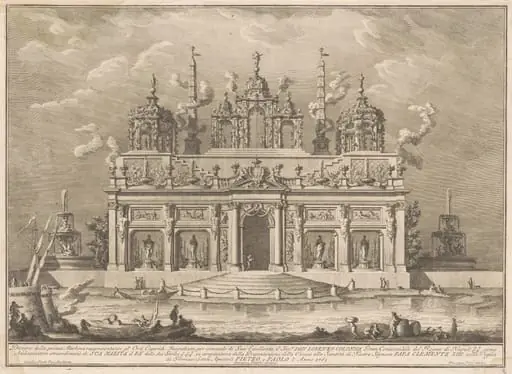 The Prima Macchina for the Chinea of 1765: The Garden of the Hesperides
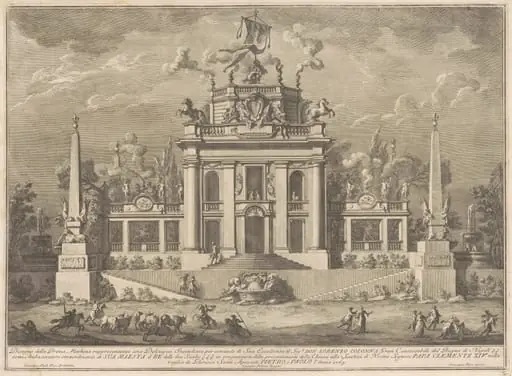 The Prima Macchina for the Chinea of 1769: A "Deliziosa"
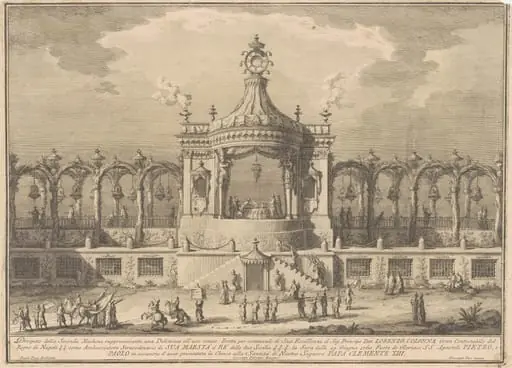 The Seconda Macchina for the Chinea of 1760: A Chinoiserie Pavilion
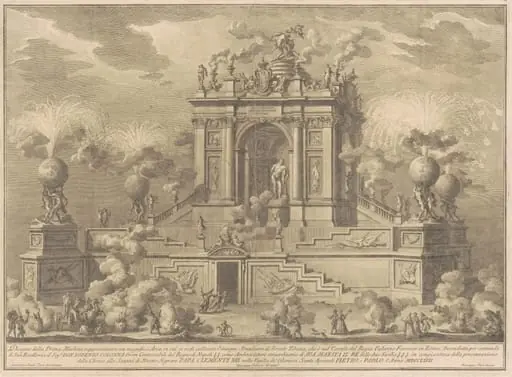 The Prima Macchina for the Chinea of 1767: A Triumphal Arch with the Farnese Hercules
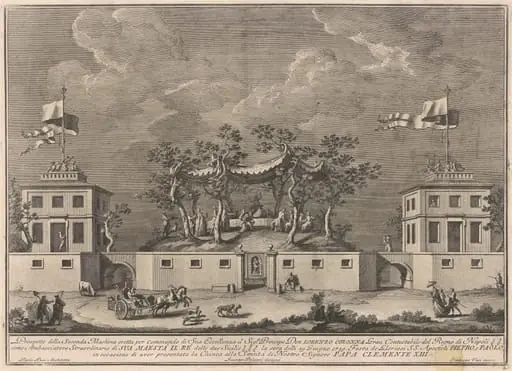 The Seconda Macchina for the Chinea of 1759: A "Deliziosa" with a Bacchanal
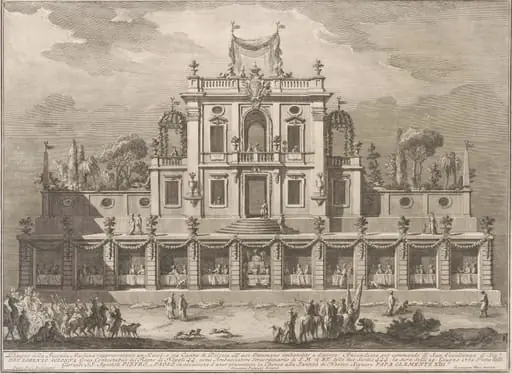 The Seconda Macchina for the Chinea of 1762: A Kiosk, or Pleasure-House in Ottoman Style
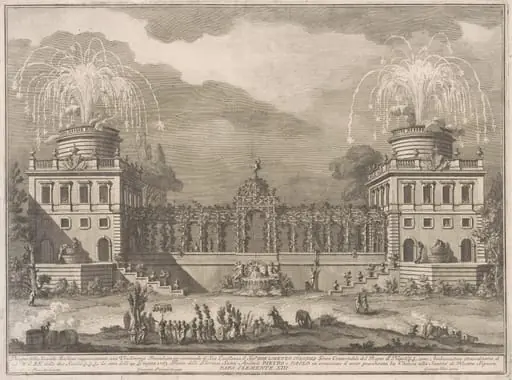 The Seconda Macchina for the Chinea of 1763: The Grape Harvest
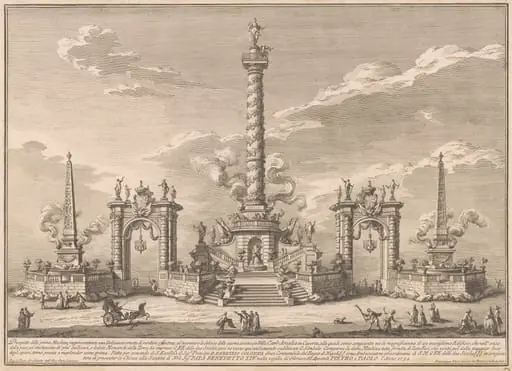 The Prima Macchina for the Chinea of 1752: A "Deliziosa" Alluding to Villa Carl'Amalia in Caserta
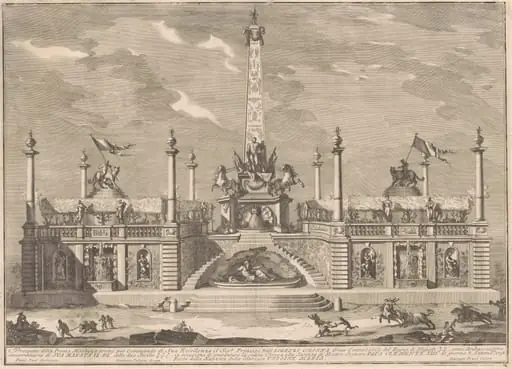 The Prima Macchina for the Chinea of 1758: A "Deliziosa" with Hanging Gardens
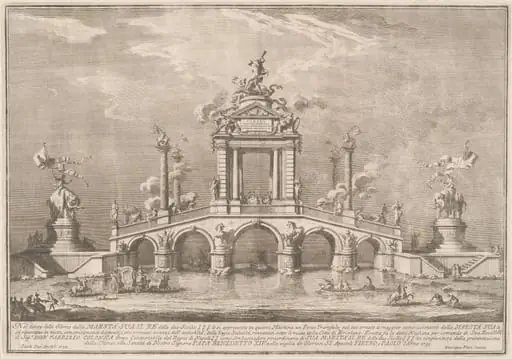 The Prima Macchina for the Chinea of 1755: A Triumphal Bridge with Antiquities from Herculaneum
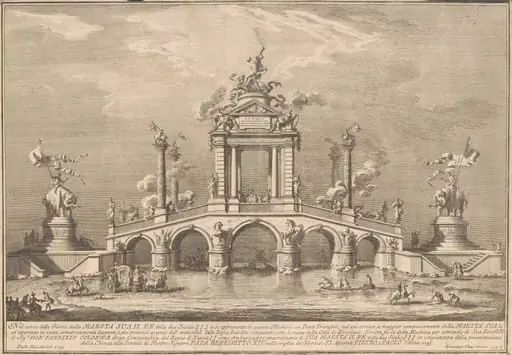 The Prima Macchina for the Chinea of 1755: A Triumphal Bridge with Antiquities from Herculaneum
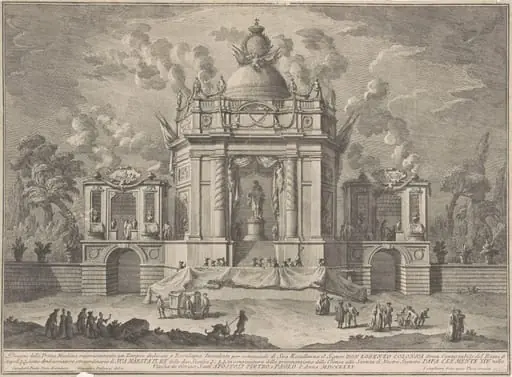 The Prima Macchina for the Chinea of 1771: The Temple of Asclepius
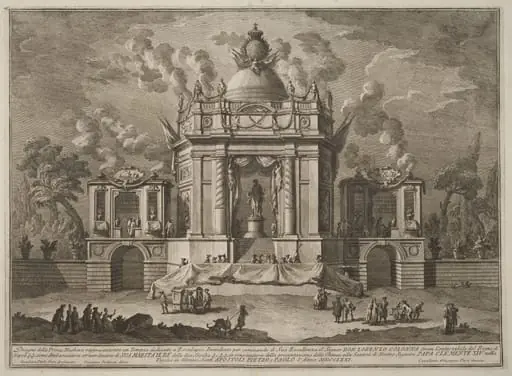 The Prima Macchina for the Chinea of 1771: The Temple of Asclepius
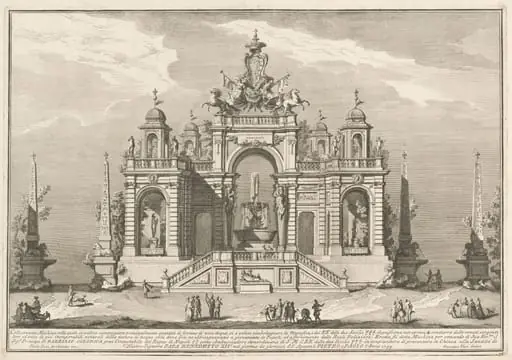 The Seconda Macchina for the Chinea of 1754: An Allegory of Waterworks
 The Seconda Macchina for the Chinea of 1771: A Pleasure Palace Dedicated to Bacchus
 The Seconda Macchina for the Chinea of 1756: The Temple of Ceres