Artwork
The Seconda Macchina for the Chinea of 1757: The Fortress of Cockaigne
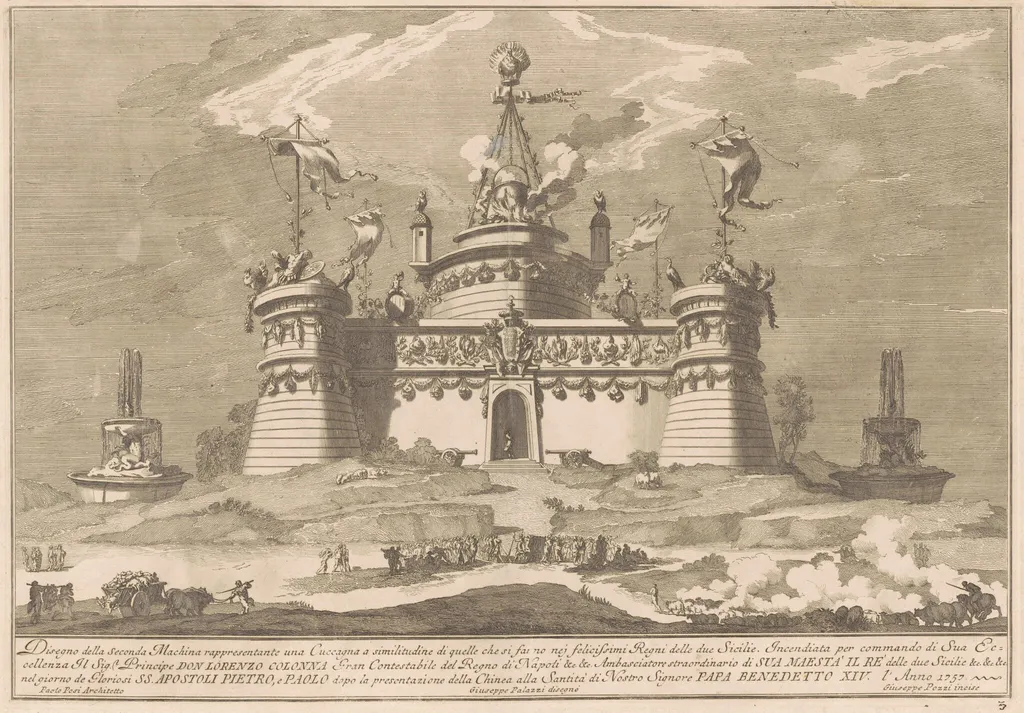
The Seconda Macchina for the Chinea of 1757: The Fortress of Cockaigne is an ink print by the Romanticist artist Giuseppe Pozzi. It dates from 1757 and is held in the collection of the National Gallery of Art.
About this work
The fortress is called the "Fortress of Cockaigne," a place from old stories where food and fun are endless.
This drawing shows a wild, towering fortress made of wood and gold leaf. It’s covered in flags, statues, and strange decorations like a giant crown on top. Below, a crowd of tiny figures—some riding elephants, others pulling cannons—march around a rocky shore. The whole scene looks like a dream, with swirling clouds and a shipwreck on the left.
The fortress is called the "Fortress of Cockaigne," a place from old stories where food and fun are endless. The artist drew it for a royal event in 1757, but it’s clearly not real—it’s more like a fantasy stage set.
Want to see more? Check out etching to learn how artists like Pozzi made detailed prints like this.
Overview
Giuseppe Pozzi’s 1757 etching, titled *The Seconda Macchina for the Chinea of 1757: The Fortress of Cockaigne*, presents an elaborate, imagined stronghold. Constructed of timber and gilded surfaces, the structure is crowded with flags, statues and a massive crown, while a multitude of diminutive figures—riders on elephants, cannon‑pullers, and spectators—populate a rocky shoreline beneath swirling clouds and a wrecked ship.
Subject & Meaning
The work visualises the legendary “Fortress of Cockaigne,” a mythic realm of perpetual abundance and revelry. By placing the fantastical citadel within a theatrical procession, Pozzi evokes the excess and spectacle associated with the Chinea, a ceremonial tribute to the Papal States, suggesting both celebration and the illusory nature of limitless indulgence.
Technique & Style
Executed as an etching, the image relies on fine incised lines to render intricate architectural details, ornamental motifs, and the crowded figures below. Pozzi’s use of contrast between dense, shadowed areas and bright, gilded highlights creates a dream‑like atmosphere, while the composition’s vertical thrust and swirling clouds reinforce a sense of theatrical grandeur.
History & Provenance
Created for the 1757 Chinea festivities—a yearly tribute involving a grand procession to Rome—the print served as a visual program for the event’s second machine, a moving stage element. Though the etching was produced for a specific royal ceremony, it was circulated among court circles and later entered museum collections as an example of mid‑18th‑century celebratory printmaking.
Artist & collection


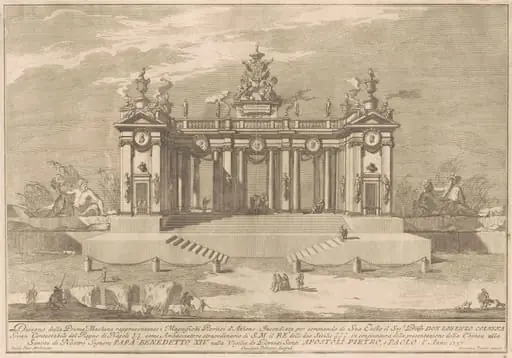 The Prima Macchina for the Chinea of 1757: The Colonnade of the Athenian Lyceum
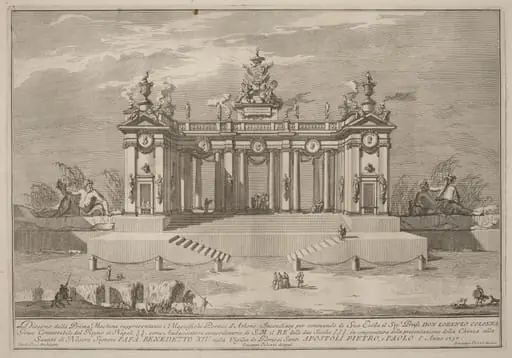 The Prima Macchina for the Chinea of 1757: The Colonnade of the Athenian Lyceum
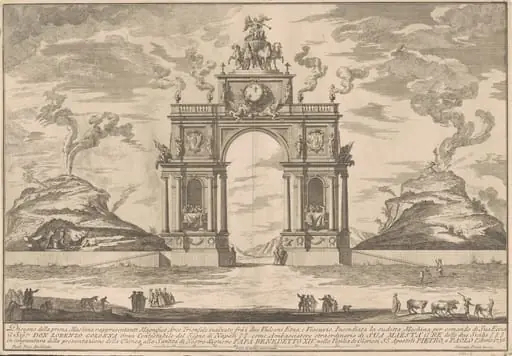 The Prima Macchina for the Chinea of 1756: A Triumphal Arch between Mount Etna and Mount Vesuvius
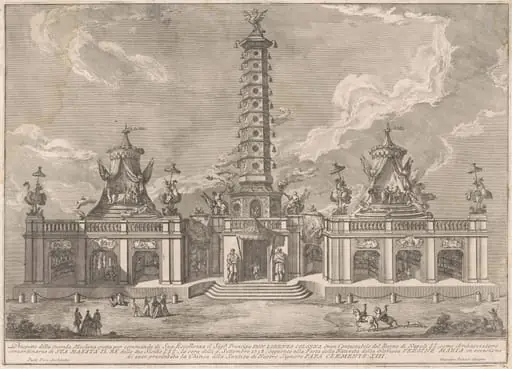 The Seconda Macchina for the Chinea of 1758: The Porcelain Tower of Nanjing
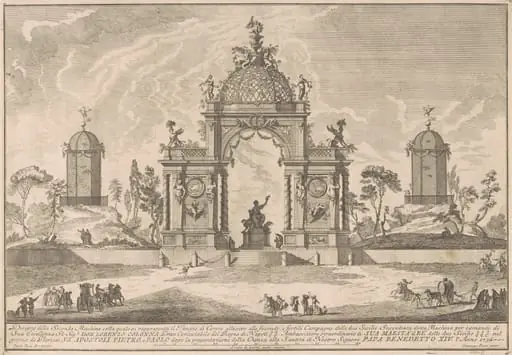 The Seconda Macchina for the Chinea of 1756: The Temple of Ceres
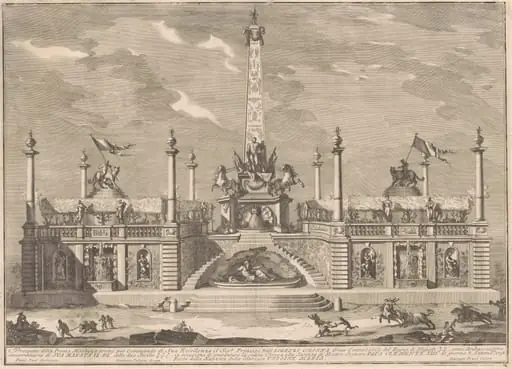 The Prima Macchina for the Chinea of 1758: A "Deliziosa" with Hanging Gardens
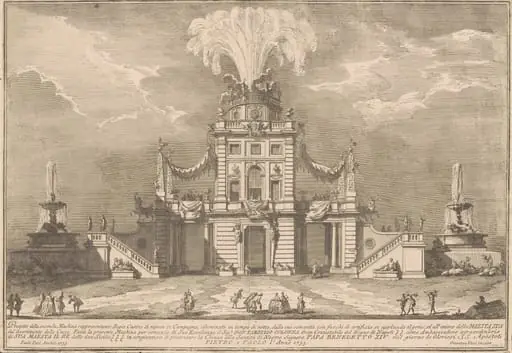 The Seconda Macchina for the Chinea of 1755: A Royal Hunting Lodge
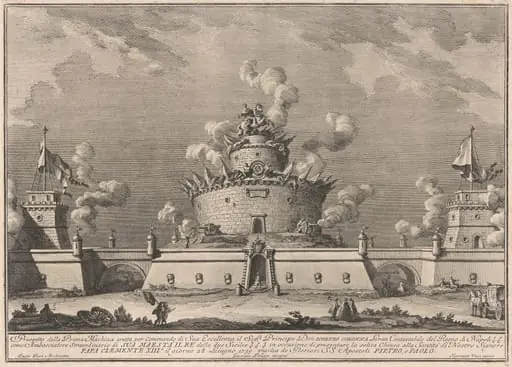 The Prima Macchina for the Chinea of 1759: A Fortress
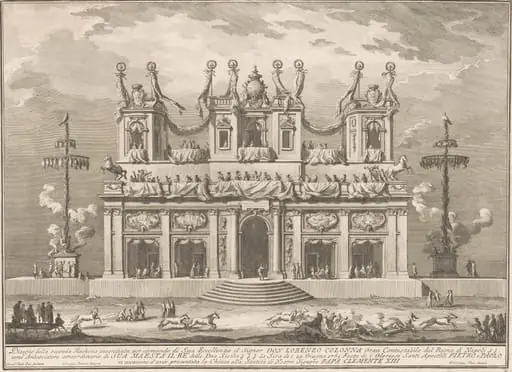 The Seconda Macchina for the Chinea of 1765: A Decorated Building with Cockaigne Poles
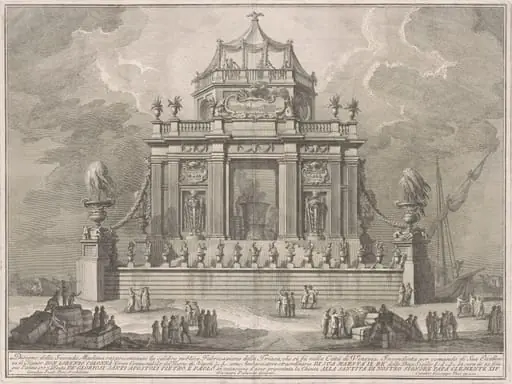 The Seconda Macchina for the Chinea of 1773: The Preparation of Theriac in Venice
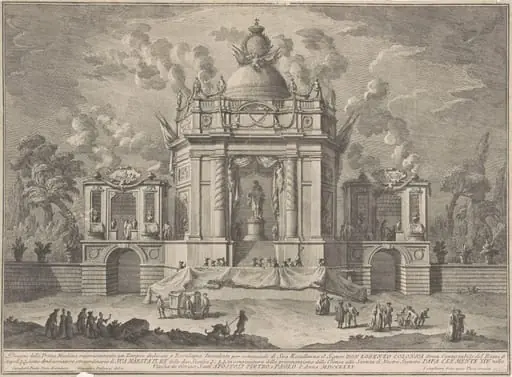 The Prima Macchina for the Chinea of 1771: The Temple of Asclepius
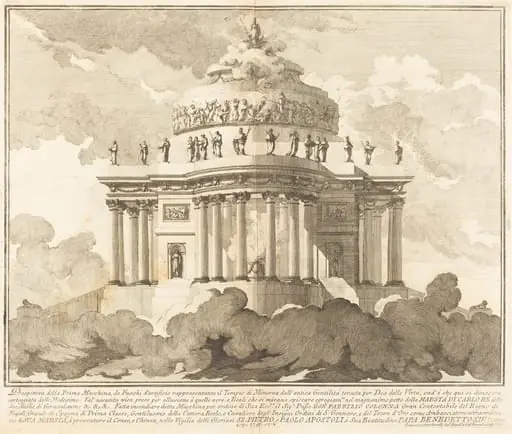 The Prima Macchina for the Chinea of 1746: The Temple of Minerva
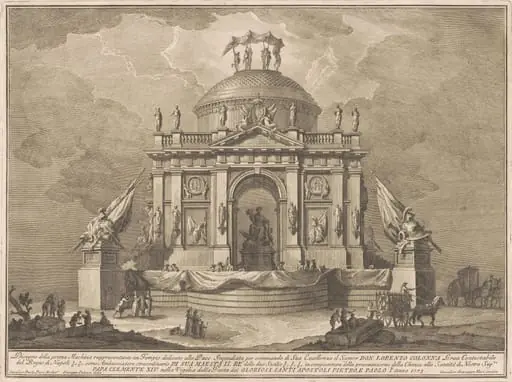 The Prima Macchina for the Chinea of 1773: The Temple of Peace
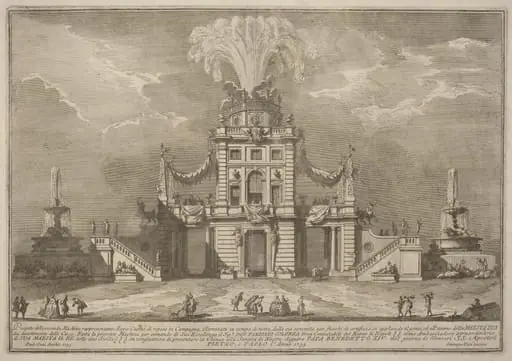 The Seconda Macchina for the Chinea of 1755: A Royal Hunting Lodge
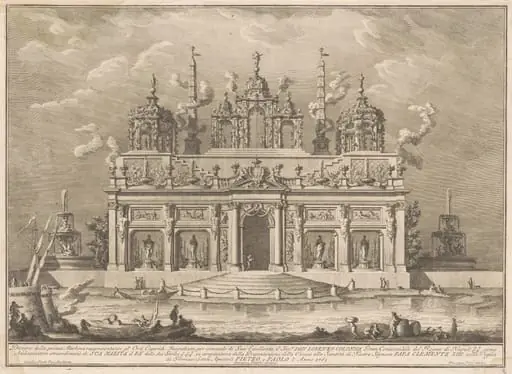 The Prima Macchina for the Chinea of 1765: The Garden of the Hesperides
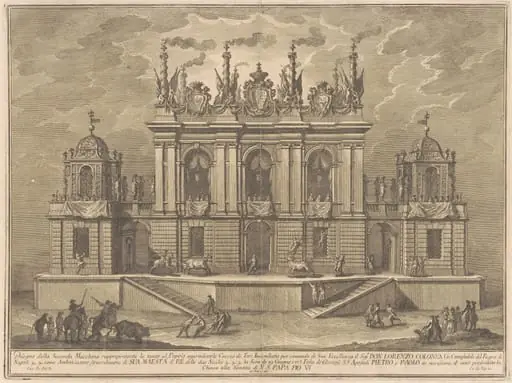 The Seconda Macchina for the Chinea of 1775: A Bull-fight
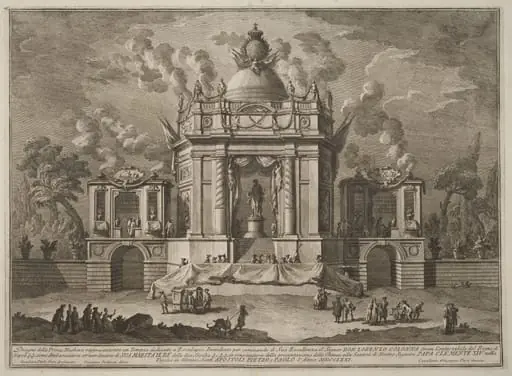 The Prima Macchina for the Chinea of 1771: The Temple of Asclepius
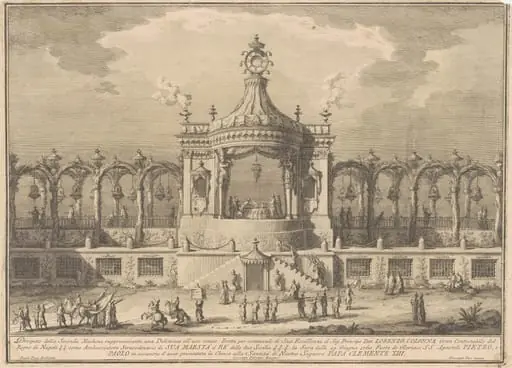 The Seconda Macchina for the Chinea of 1760: A Chinoiserie Pavilion