Artwork
The Prima Macchina for the Chinea of 1771: The Temple of Asclepius
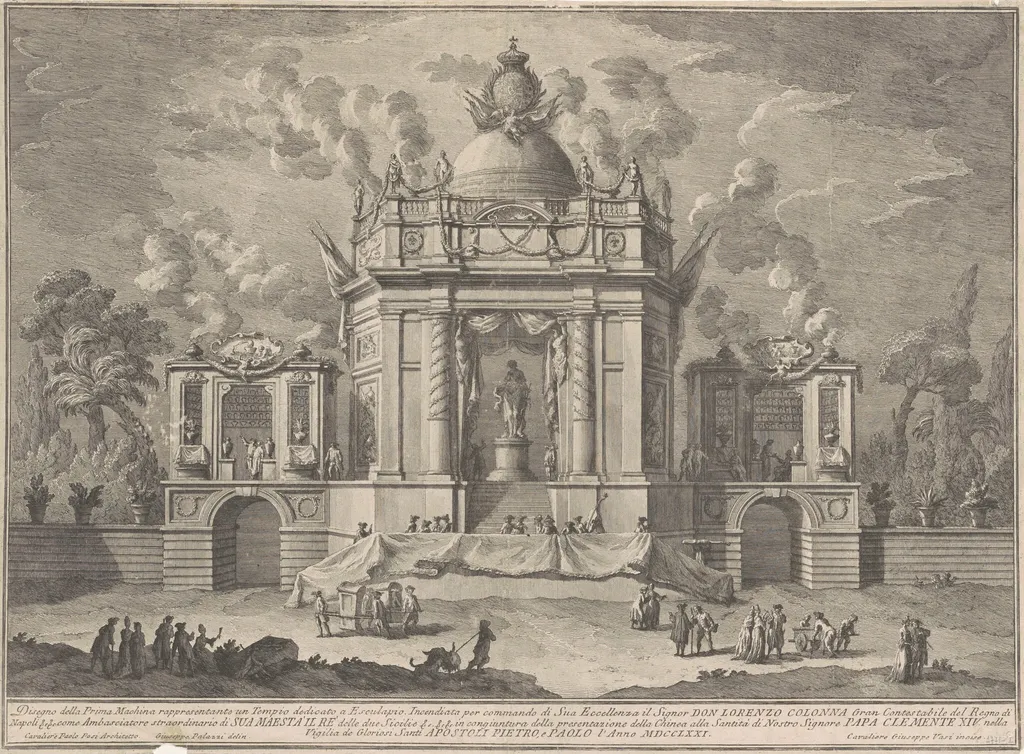
The Prima Macchina for the Chinea of 1771: The Temple of Asclepius is an ink print by the Romanticist artist Giuseppe Vasi. It dates from 1771 and is held in the collection of the National Gallery of Art.
About this work
Overview
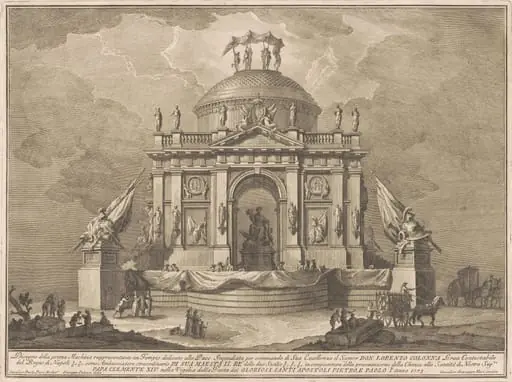
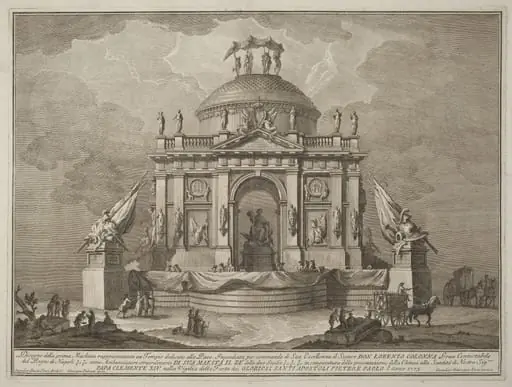
Giuseppe Vasi’s 1771 etching titled *Prima Macchina for the Chinea of 1771: The Temple of Asclepius* presents a monumental architectural composition.
Giuseppe Vasi’s 1771 etching titled *Prima Macchina for the Chinea of 1771: The Temple of Asclepius* presents a monumental architectural composition. Central to the image is a richly decorated building crowned by a dominant dome, flanked by columns and statues, with a large ceremonial curtain suspended across its façade. The scene unfolds beneath a cloudy sky, framed by trees, and populated by figures engaged in the structure’s preparation.
Subject & Meaning
The work records a specific ceremonial occasion linked to the Chinea, a historic tribute from the Kingdom of Naples to the Pope. By depicting the Temple of Asclepius, Vasi alludes to the classical patron of healing, perhaps symbolising the hoped‑for health and prosperity of the city. The gathered workers and onlookers emphasize the communal effort and public significance of the event.
Technique & Style
Executed as an etching, the image relies on fine incised lines to render intricate architectural details and atmospheric effects. Vasi’s handling of hatching creates depth in the dome’s curvature and the surrounding foliage, while the contrast between illuminated stone and shadowed sky enhances the sense of drama. The composition balances precise linear drawing with a lively representation of human activity.
History & Provenance
Created in 1771, the print was part of a series documenting the annual Chinea procession. Vasi, a prolific Roman vedutista, produced the plate for distribution among patrons and officials connected to the ceremony. Surviving copies are held in several European print collections, reflecting the work’s role as both a visual record and a collectible souvenir of the 18th‑century papal tribute.
Artist & collection

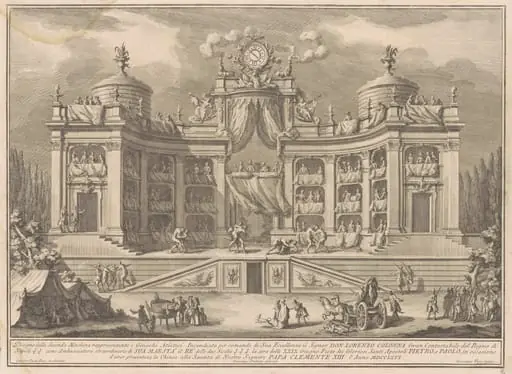 The Seconda Macchina for the Chinea of 1766: A Theater for Athletic Games
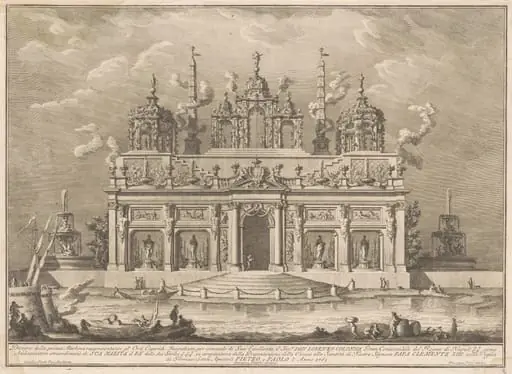 The Prima Macchina for the Chinea of 1765: The Garden of the Hesperides
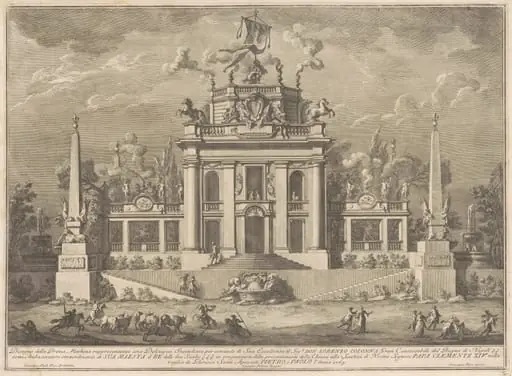 The Prima Macchina for the Chinea of 1769: A "Deliziosa"
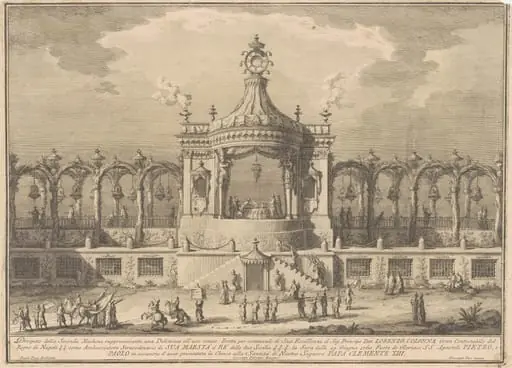 The Seconda Macchina for the Chinea of 1760: A Chinoiserie Pavilion
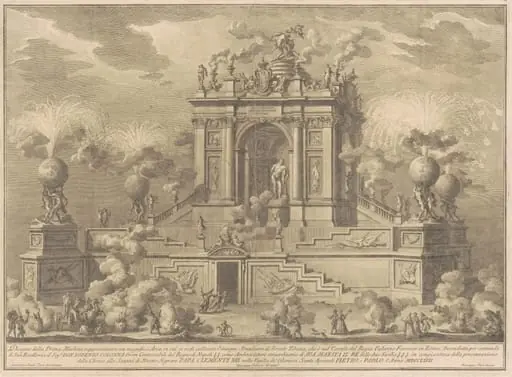 The Prima Macchina for the Chinea of 1767: A Triumphal Arch with the Farnese Hercules
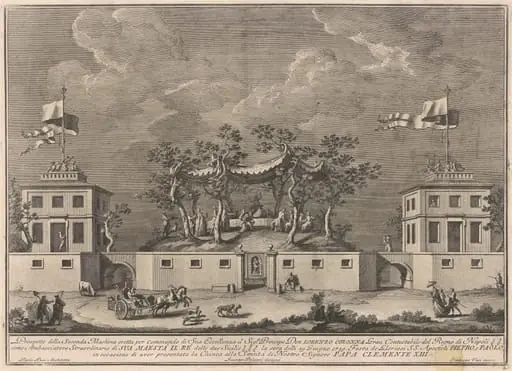 The Seconda Macchina for the Chinea of 1759: A "Deliziosa" with a Bacchanal
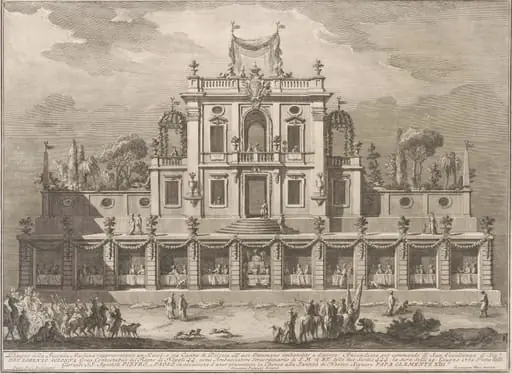 The Seconda Macchina for the Chinea of 1762: A Kiosk, or Pleasure-House in Ottoman Style
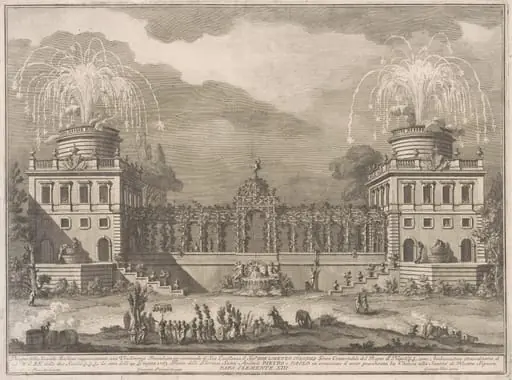 The Seconda Macchina for the Chinea of 1763: The Grape Harvest
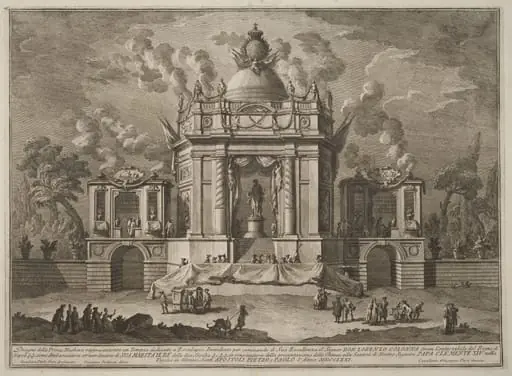 The Prima Macchina for the Chinea of 1771: The Temple of Asclepius
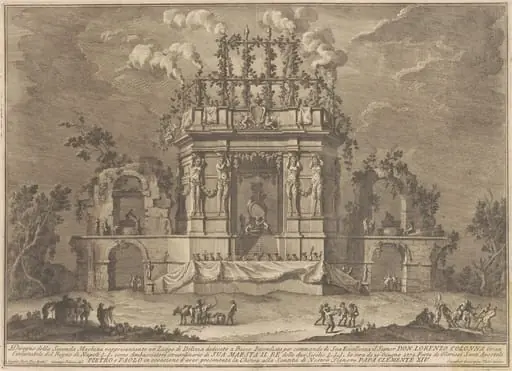 The Seconda Macchina for the Chinea of 1771: A Pleasure Palace Dedicated to Bacchus
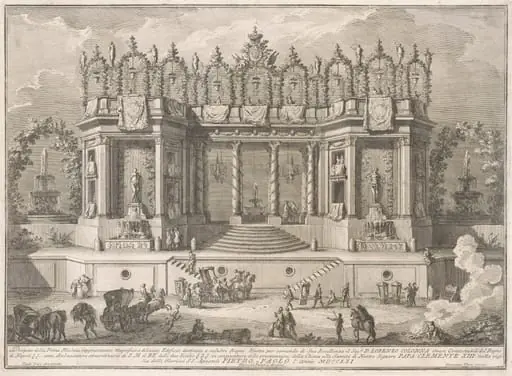 The Prima Macchina for the Chinea of 1761: The Salubrious Baths
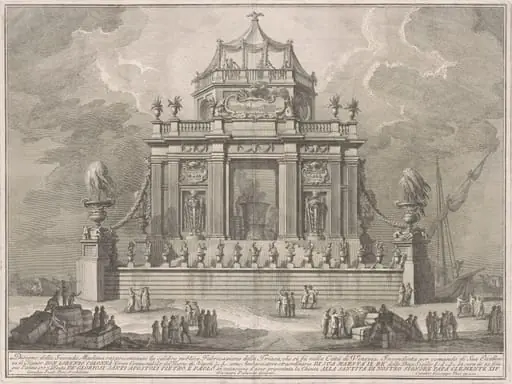 The Seconda Macchina for the Chinea of 1773: The Preparation of Theriac in Venice
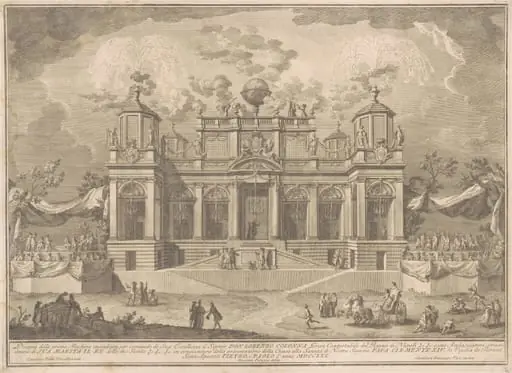 The Prima Macchina for the Chinea of 1770: An Roman Building for Commerce
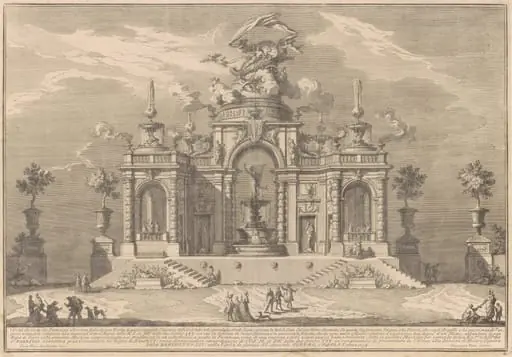 The Prima Macchina for the Chinea of 1754: The Palace of Venus in Cyprus
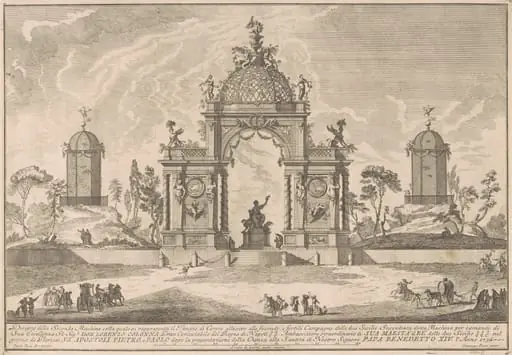 The Seconda Macchina for the Chinea of 1756: The Temple of Ceres
 The Prima Macchina for the Chinea of 1773: The Temple of Peace
 The Prima Macchina for the Chinea of 1773: The Temple of Peace
 The Prima Macchina for the Chinea of 1755: A Triumphal Bridge with Antiquities from Herculaneum