Artwork
A Soldier in Ancient Roman Costume with Pike and Shield
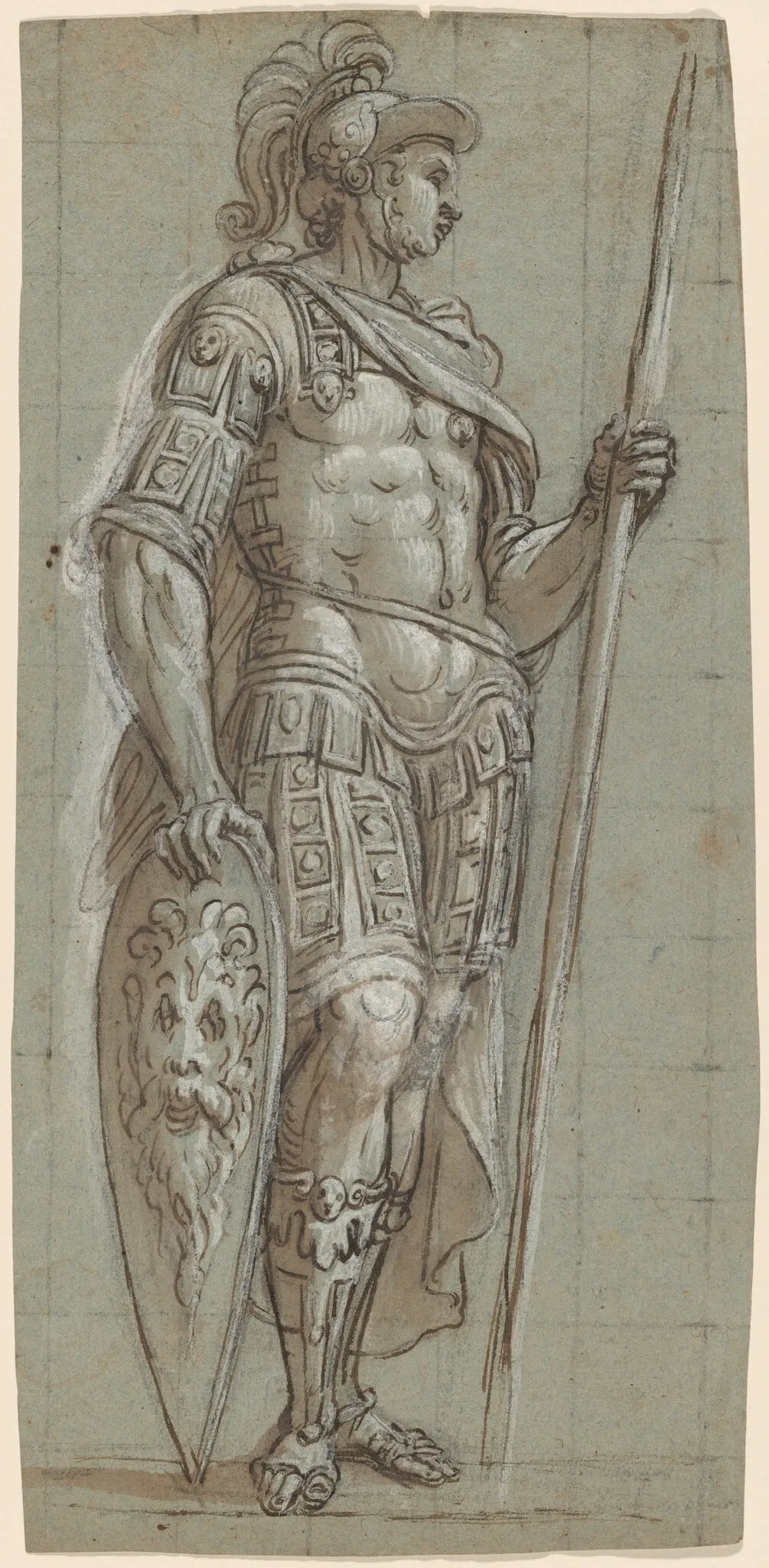
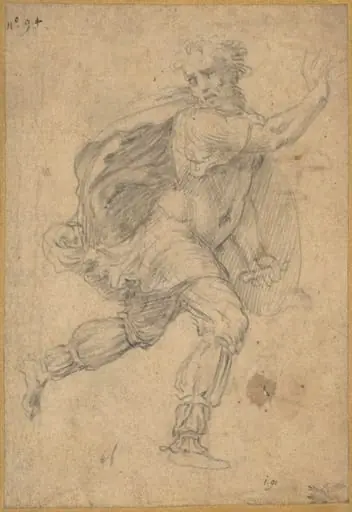
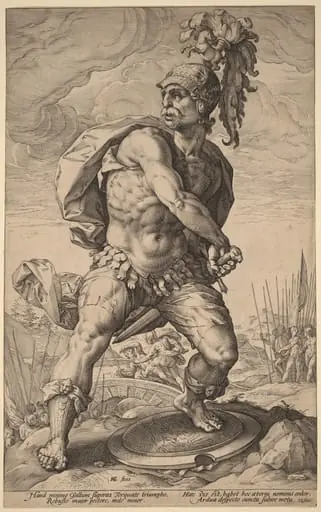
A Soldier in Ancient Roman Costume with Pike and Shield is a gouache drawing by the Renaissance artist Lattanzio Gambara. It dates from 1572 and is held in the collection of the National Gallery of Art.
About this work
Overview
A Soldier in Ancient Roman Costume with Pike and Shield is a drawing by Lattanzio Gambara, dated to 1572, now in the collection of the National Gallery of Art, Washington.
Subject & Meaning
The drawing portrays a figure clad in meticulously detailed ancient Roman armor, armed with a pike and a shield adorned with a bearded face and intricate patterns. The subject's attire includes a plumed helmet, emphasizing historical or thematic inspiration.
Technique & Style
Executed in pen, brown ink, and brown wash over black chalk on blue laid paper, the work features white gouache highlights. The composition is squared in black chalk, suggesting its origin as a study or preparatory sketch, showcasing Gambara's skill in draftsmanship and attention to textural detail.
History & Provenance
Created in 1572 by Lattanzio Gambara, the drawing's ownership history prior to its acquisition by the National Gallery of Art, Washington, is not detailed here.
Context
The piece reflects 16th-century artistic interest in classical antiquity, with Gambara's detailed rendering of Roman armor and weaponry indicating a focus on historical accuracy or revivalist themes prevalent during the Renaissance.
Legacy
While specific influence or notable exhibitions of this piece are not highlighted, it contributes to the understanding of Gambara's oeuvre and the broader Renaissance fascination with ancient Roman imagery.
Artist & collection


![Mars and Diana [recto], by Zanguidi, called Bertoia, Jacopo](https://artifactworldgallery.com/img/zanguidi-called-bertoia-jacopo--mars-and-diana-recto--a528dea7036b44d0-w320.webp)