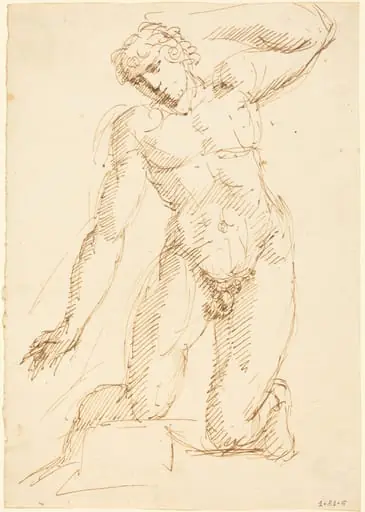
Artwork
Study for a Prophet
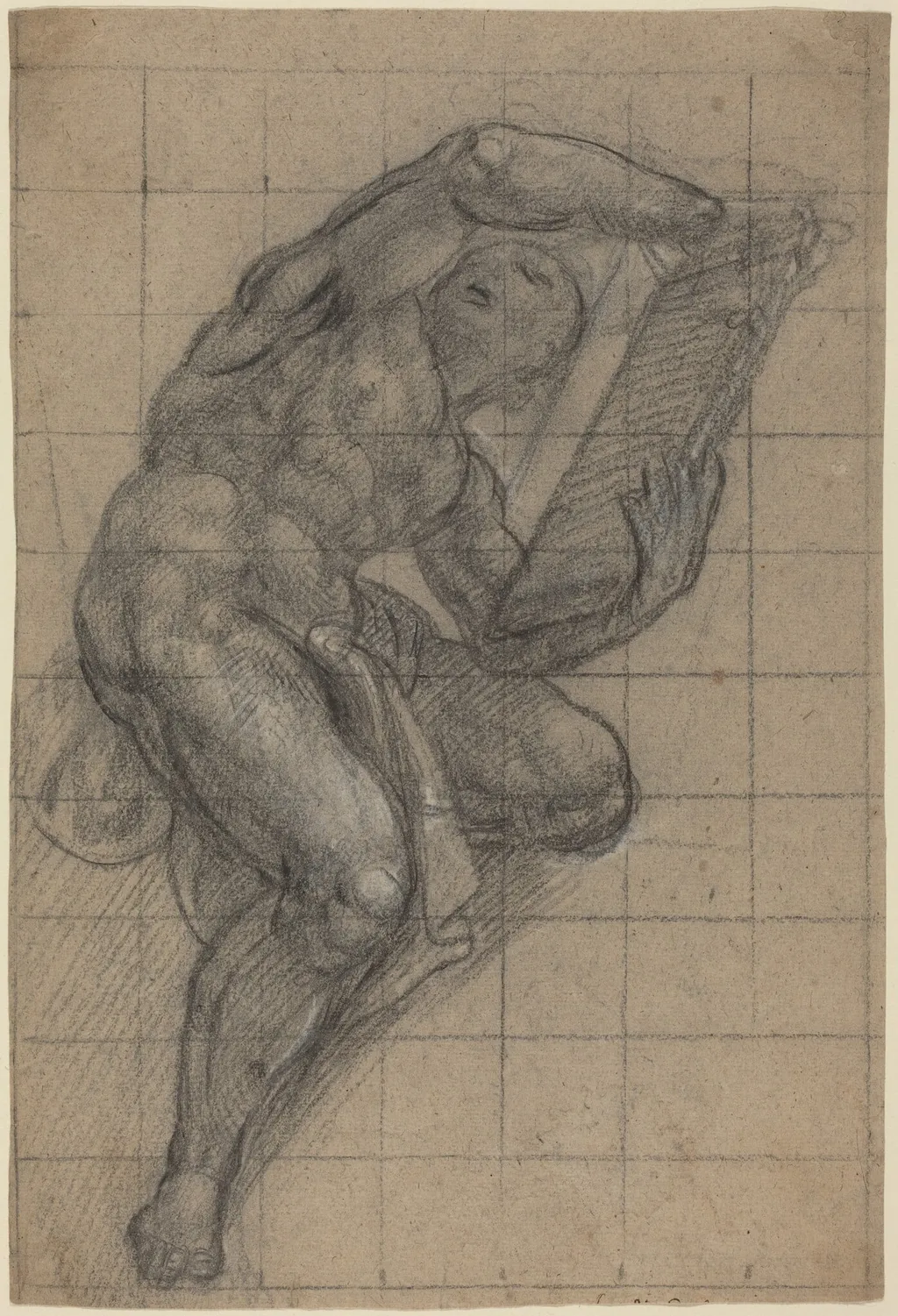
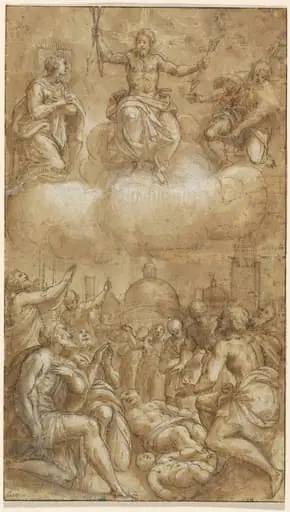
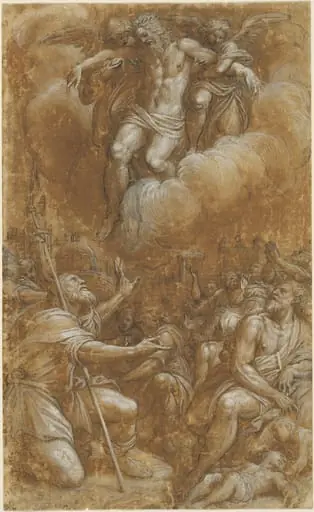
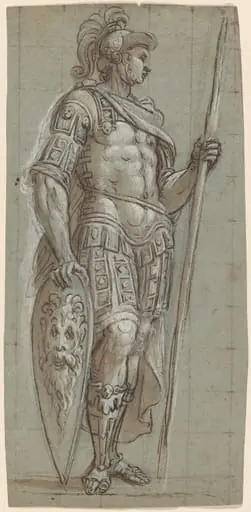
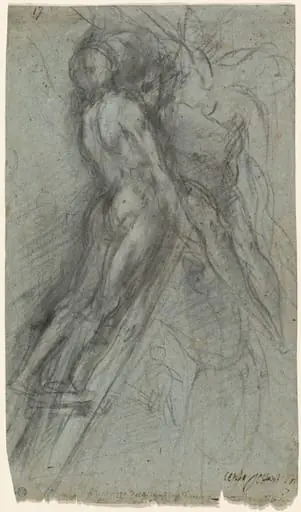
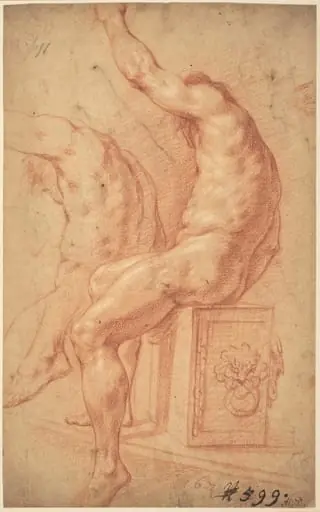
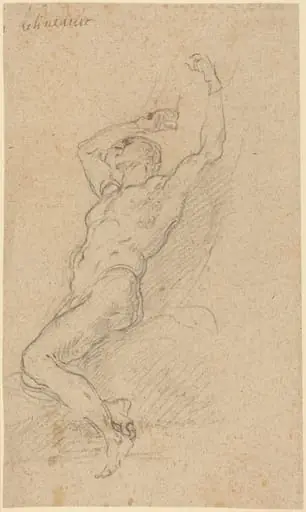
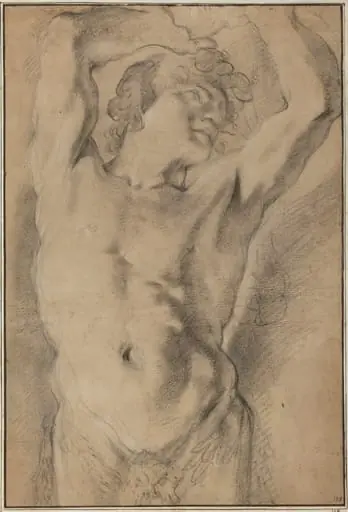
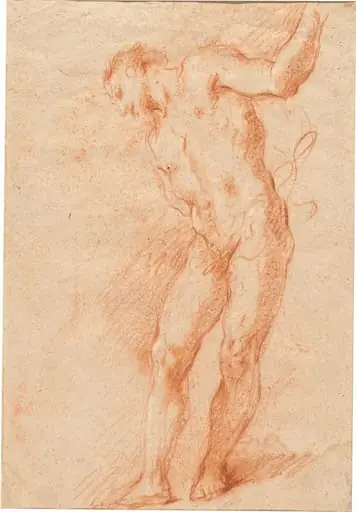
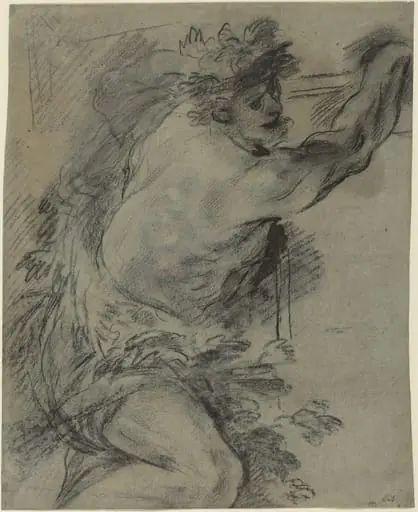
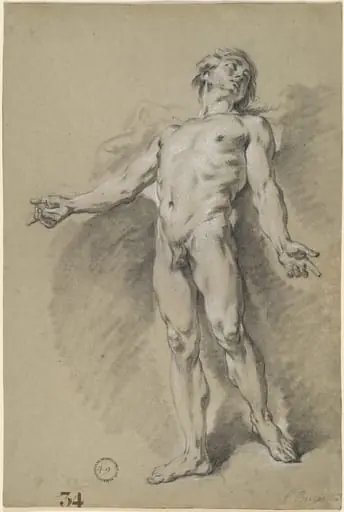
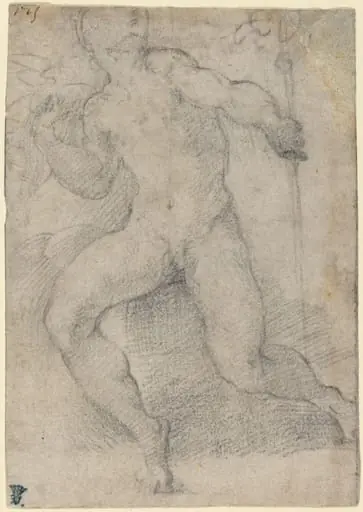
Study for a Prophet is a chalk drawing by the Renaissance artist Lattanzio Gambara. It dates from 1570 and is held in the collection of the National Gallery of Art.
About this work
Overview
Created around 1570 by Lattanzio Gambara, this drawing is a preparatory study executed in black chalk and white heightening on laid paper.
Created around 1570 by Lattanzio Gambara, this drawing is a preparatory study executed in black chalk and white heightening on laid paper. The figure is rendered with loose, fluid strokes and a grid of squared lines drawn across the surface, indicating its function as a model for transfer to a larger composition. The paper’s edges show signs of wear, suggesting frequent handling during the artist’s process.
Subject & Meaning
The subject is a reclining male nude, arms folded behind the head, positioned in a relaxed yet anatomically precise pose. Though not tied to a specific narrative, the figure’s posture and muscular definition suggest it was intended as a study of human form for a prophetic or biblical figure in a larger fresco or altarpiece, emphasizing naturalism over symbolic detail.
Technique & Style
Gambara employed black chalk for broad tonal areas and fine contours, supplementing it with white chalk highlights to suggest light striking the body’s curves. The loose, rapid strokes convey movement and volume, while the squared grid reveals a methodical approach to scaling the composition. Chiaroscuro is subtly applied to model the torso and limbs, enhancing three-dimensionality without heavy contrast.
History & Provenance
The drawing remains in private hands, with no documented public exhibition history prior to the 20th century. Its survival in relatively intact condition, despite the fragile medium and worn edges, suggests careful preservation by later collectors or institutions familiar with Renaissance draftsmanship.
Context
In late 16th-century Italy, artists routinely produced figure studies to refine anatomy and composition before executing major works. Gambara, active in Brescia, worked within a tradition that valued preparatory drawing as essential to mural and panel painting. This piece reflects the academic discipline of the time, where the nude was central to artistic training.
Legacy
Though not widely known outside scholarly circles, the drawing exemplifies the quiet rigor of Mannerist draftsmanship. It stands as a testament to the artist’s commitment to anatomical accuracy and the practical methods used to translate studies into monumental works, influencing later generations of figure draftsmen in northern Italy.
Artist & collection