Artwork
Design for a military monument celebrating British victory after the Battle of Waterloo
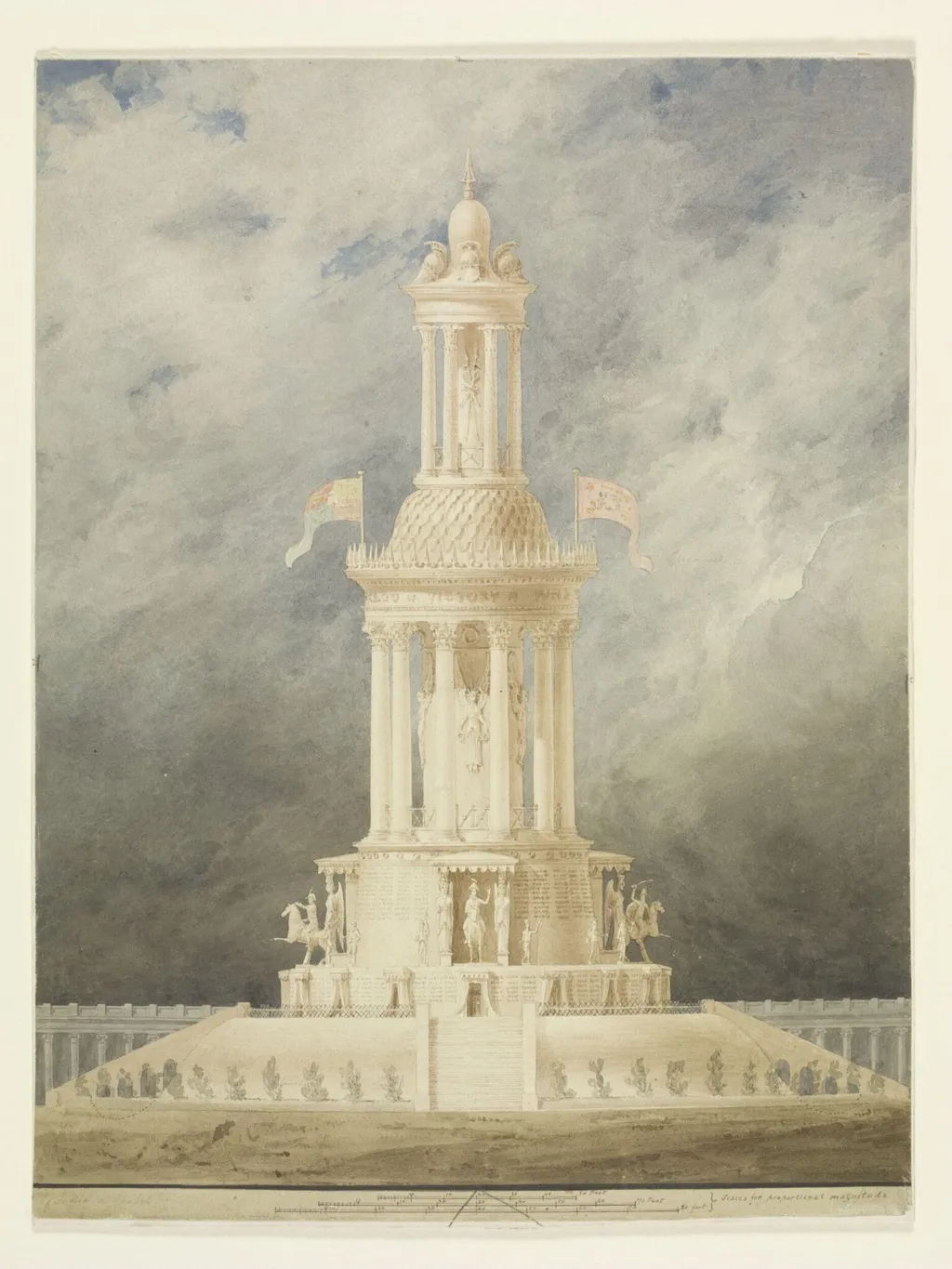
Design for a military monument celebrating British victory after the Battle of Waterloo is a drawing by the Romanticist artist Joseph Michael Gandy. It dates from 1815 and is held in the collection of the Victoria and Albert Museum.
About this work
Overview
Joseph Michael Gandy's 1815 drawing proposes a monumental tribute to British victory at the Battle of Waterloo. The design combines classical elements with contemporary flourishes, set amidst a landscaped backdrop.
Subject & Meaning
The monument commemorates the British triumph at Waterloo, symbolizing national pride and military achievement. Its classical form invokes timeless grandeur, while the base's relief of soldiers and horses grounds the structure in the realities of war.
Technique & Style
Gandy's drawing blends neoclassical architecture (evident in the columned, temple-like structure) with early 19th-century sensibilities. The inclusion of flags, statues, and a landscaped setting reflects a harmonious balance between monumentality and naturalistic detail.
History & Provenance
Created in 1815, the year of the Battle of Waterloo, the drawing was accompanied by an inscription (now lost or not specified). Its current location is the Victoria and Albert Museum.
Context
Commissioned in the aftermath of Waterloo, the design reflects the era's penchant for classical revivals in monumental architecture, tailored to celebrate a pivotal British military success.
Legacy
While the monument was not built as designed, Gandy's work provides insight into early 19th-century commemorative aesthetics and the immediate aftermath of the Battle of Waterloo.
Artist & collection
Artist
Joseph Michael Gandy loved to draw grand buildings. He was really into ancient ruins. Check out his "A Temple of Victory" - it's like a peek into his imagination. You can see how his ideas might have been inspired by…

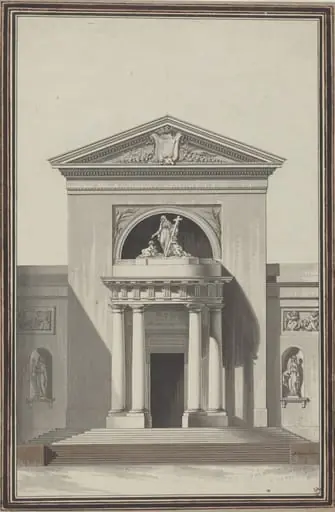 Facade for a Church with a Sculpture Representing Faith
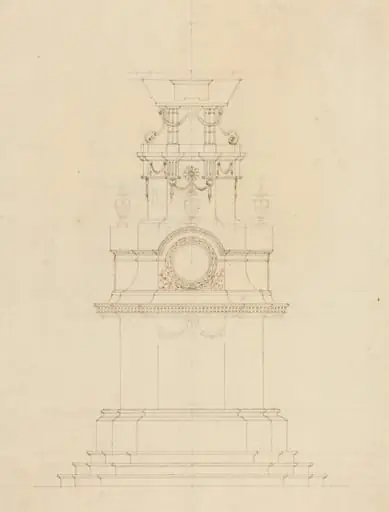 Design for a Catafalque
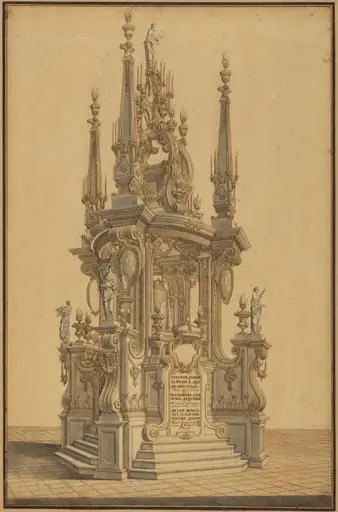 Magnificent Catafalque in Honor of John III, King of Poland
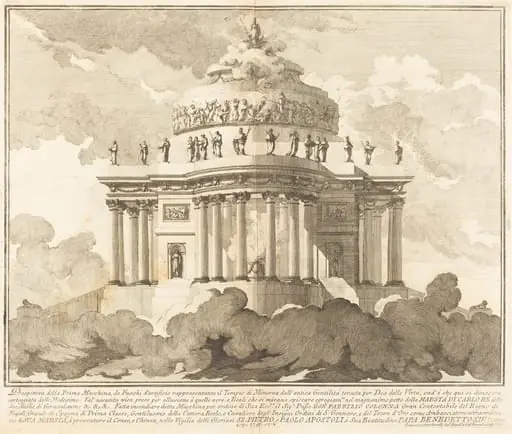 The Prima Macchina for the Chinea of 1746: The Temple of Minerva
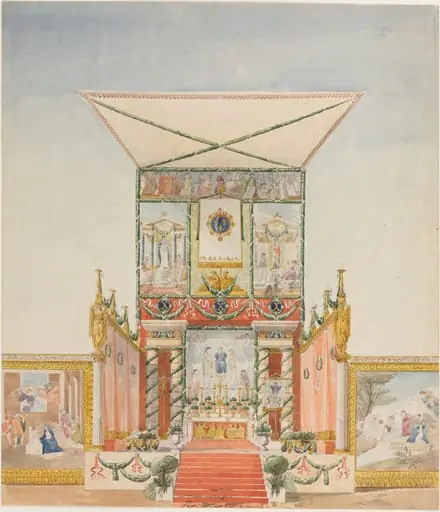 Portable Field Altar for Charles X
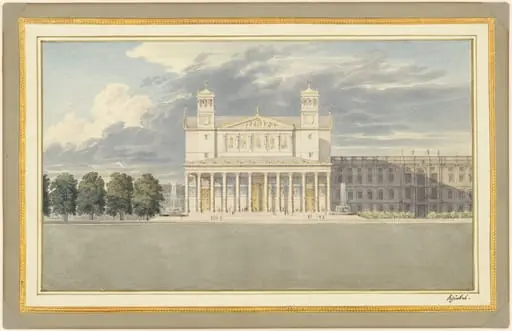 The Façade and Suroundings of a Cathedral for Berlin
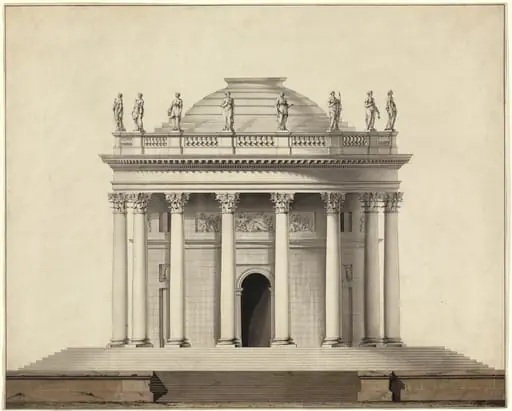 A Classical Temple
 Design for a Baldaquin
 Canterbury Cathedral Font Design
 Campanile of a Cathedral for Berlin