Artwork
The Prima Macchina for the Chinea of 1746: The Temple of Minerva
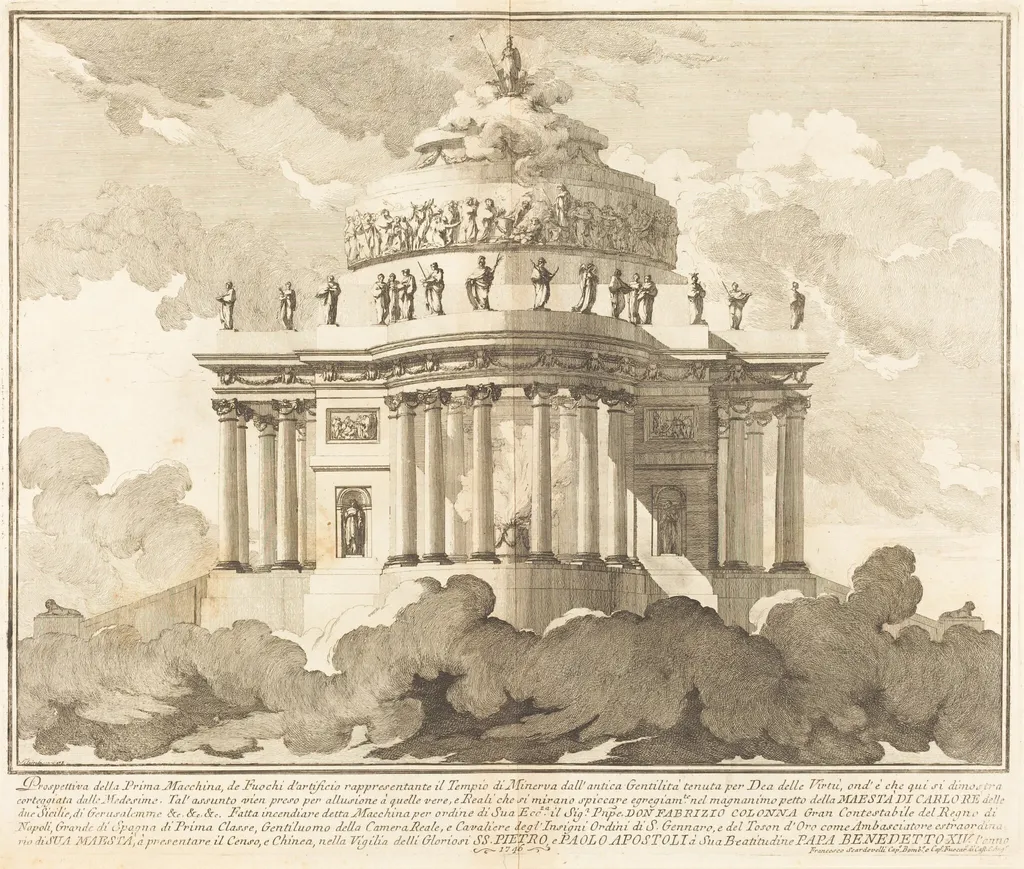
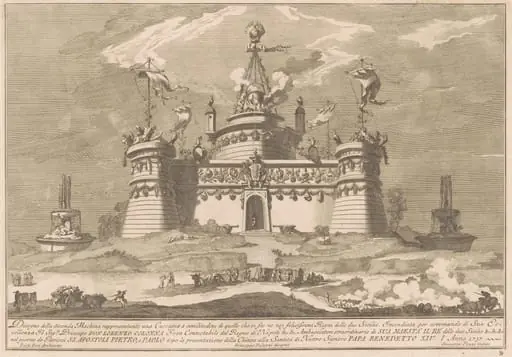
The Prima Macchina for the Chinea of 1746: The Temple of Minerva is an ink print by the Baroque artist Louis-Joseph Le Lorrain. It dates from 1746 and is held in the collection of the National Gallery of Art.
About this work
The artist used lines to make the scene look three-dimensional, even though it’s just paper.
This drawing shows a grand, cloud-covered stage set shaped like a temple. Columns line the front, and people in old-fashioned clothes stand on a platform above. On the temple’s roof, more figures pose like statues, while clouds swirl around the base.
The tiny text at the bottom hints this was built for a royal event in 1746. The artist used lines to make the scene look three-dimensional, even though it’s just paper.
Next, look up etching to see how artists like this carved images into metal.
Overview
The Prima Macchina for the Chinea of 1746: The Temple of Minerva is an etching on laid paper by Louis-Joseph Le Lorrain, dated to 1746. It depicts a grandiose, cloud-enshrouded stage set in the form of a temple, replete with columnar architecture, figurative elements, and dynamic cloud motifs.
Subject & Meaning
The etching illustrates a mythologically themed temporary structure, specifically designed for the Chinea of 1746, a royal event. The Temple of Minerva theme suggests an invocation of wisdom and classical ideals, fitting for a ceremonial context honoring royalty.
Technique & Style
Le Lorrain employed etching techniques to achieve a three-dimensional illusion on a two-dimensional medium. The use of lines and shading created depth, while the composition's grandeur and figural poses reflect a Baroque influence adapted to 18th-century tastes.
History & Provenance
Created in 1746 for the Chinea, a specific royal occasion, the etching's historical context is tightly linked to this event. Provenance details are not provided, indicating the work's current or past ownership history is either unknown or not highlighted in available information.
Context
The Chinea of 1746, for which this etching was made, was a ceremonial event of significance, though the exact nature (e.g., its location, the royal figure honored) is not specified here. The work reflects the era's penchant for ephemeral architectural constructions for royal celebrations.
Artist & collection


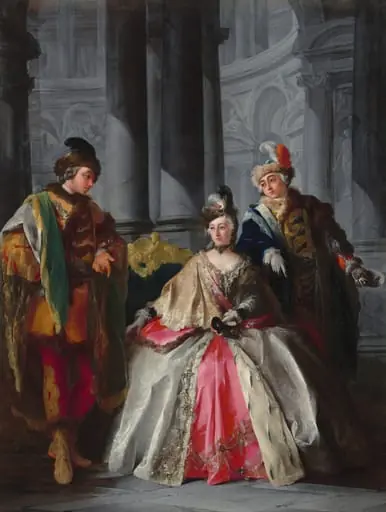 Three Figures Dressed for a Masquerade
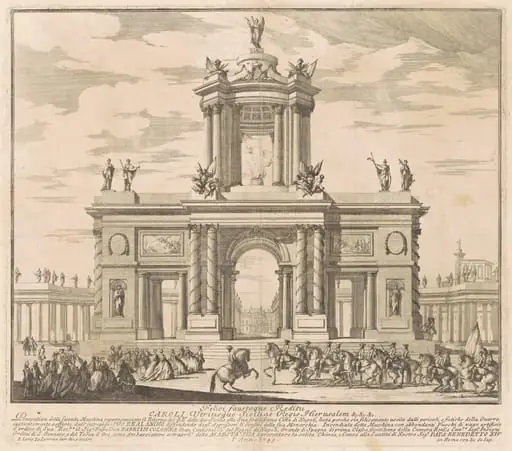 The Seconda Macchina for the Chinea of 1745: Triumphal Arch for the Return of King Charles of Bourbon to Naples
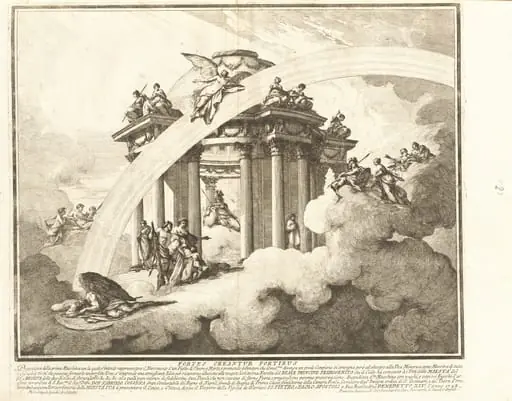 The Prima Macchina for the Chinea of 1748: The Son of Venus and Mars Presented to the Temple of Minerva
 Architectural Fantasy with an Obelisk and Arcade
 The Prima Macchina for the Chinea of 1744: The Glorification of Virgil
 The Prima Macchina for the Chinea of 1771: The Temple of Asclepius
 The Prima Macchina for the Chinea of 1771: The Temple of Asclepius
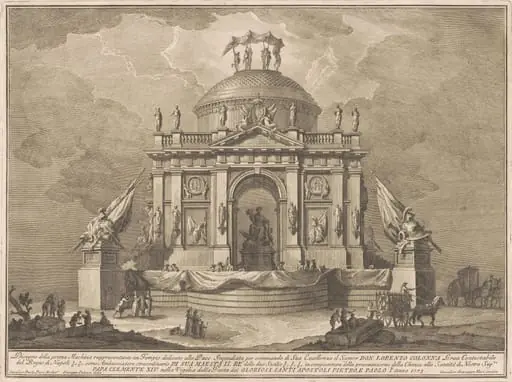 The Prima Macchina for the Chinea of 1773: The Temple of Peace
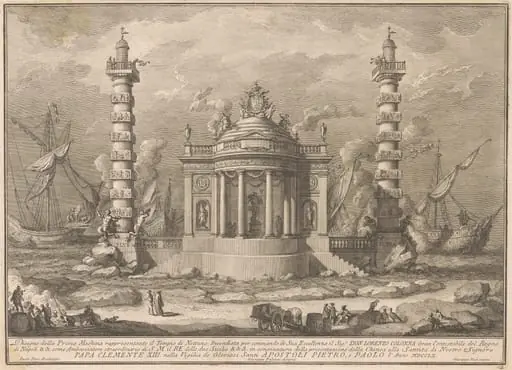 The Prima Macchina for the Chinea of 1760: The Temple of Neptune
 The Prima Macchina for the Chinea of 1760: The Temple of Neptune
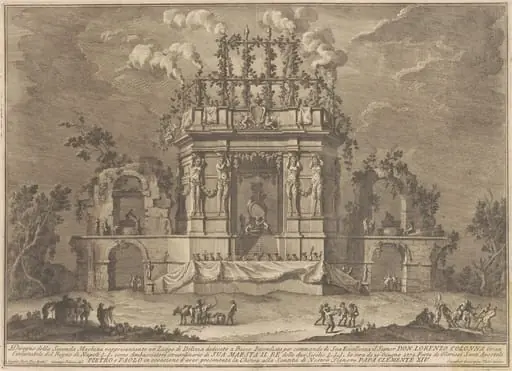 The Seconda Macchina for the Chinea of 1771: A Pleasure Palace Dedicated to Bacchus
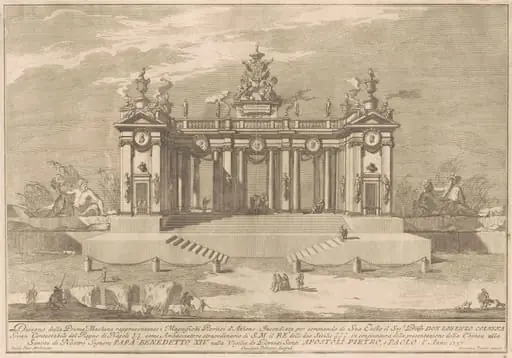 The Prima Macchina for the Chinea of 1757: The Colonnade of the Athenian Lyceum
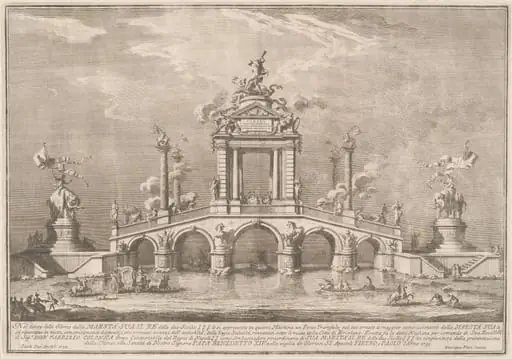 The Prima Macchina for the Chinea of 1755: A Triumphal Bridge with Antiquities from Herculaneum
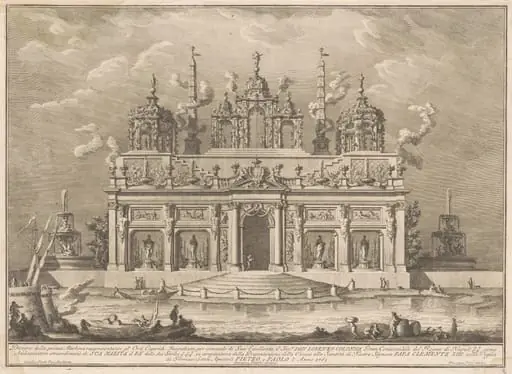 The Prima Macchina for the Chinea of 1765: The Garden of the Hesperides
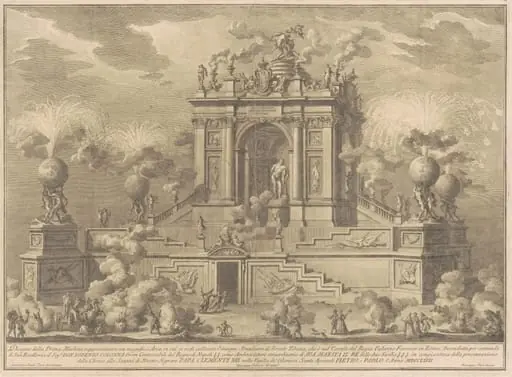 The Prima Macchina for the Chinea of 1767: A Triumphal Arch with the Farnese Hercules
 The Seconda Macchina for the Chinea of 1757: The Fortress of Cockaigne