Artwork
Bolton Abbey
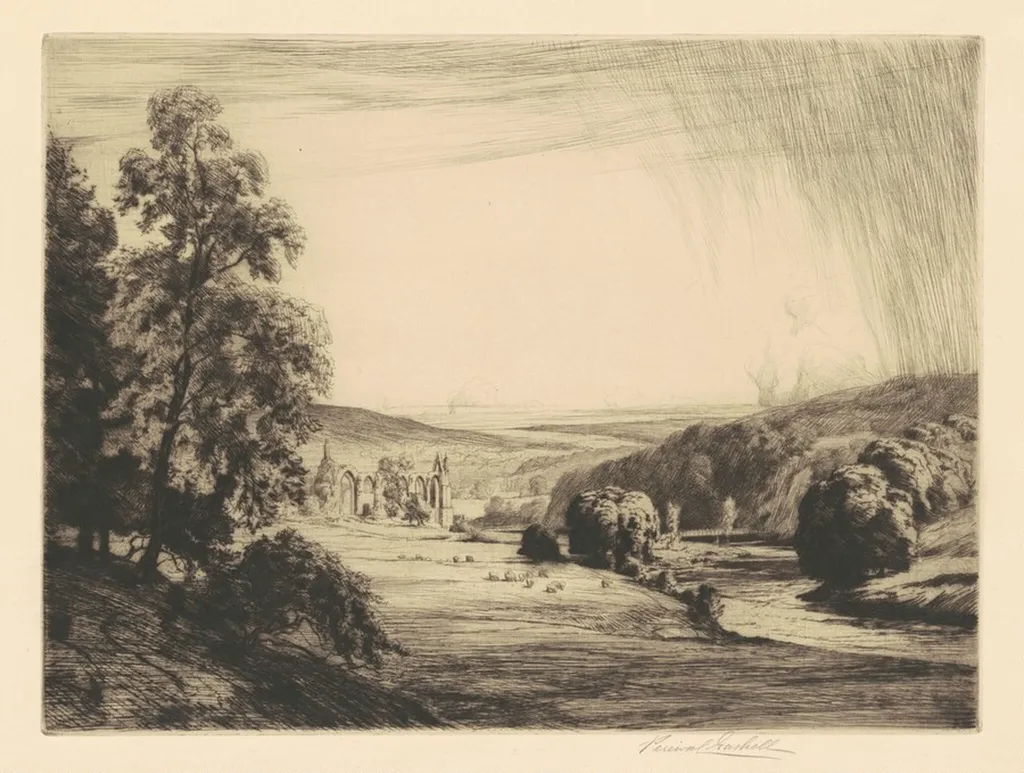
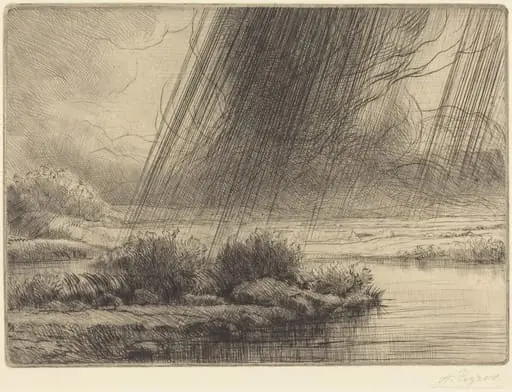
Bolton Abbey is an ink print by Percival Gaskell. It dates from 1900 and is held in the collection of the National Gallery of Art.
About this work
Overview
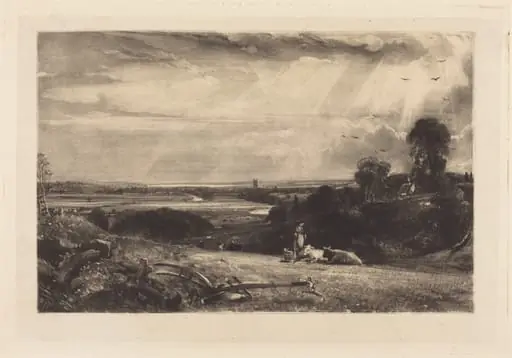
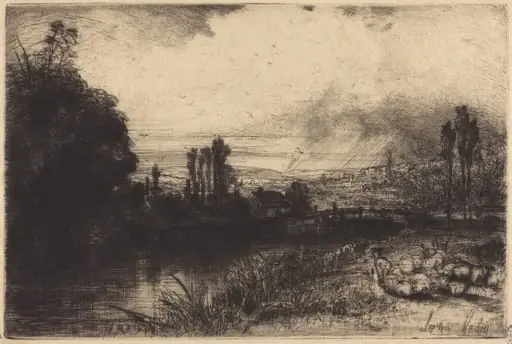
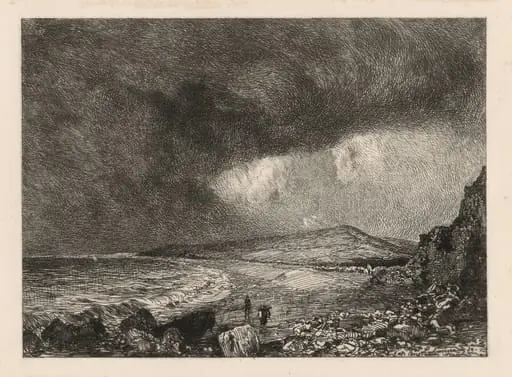
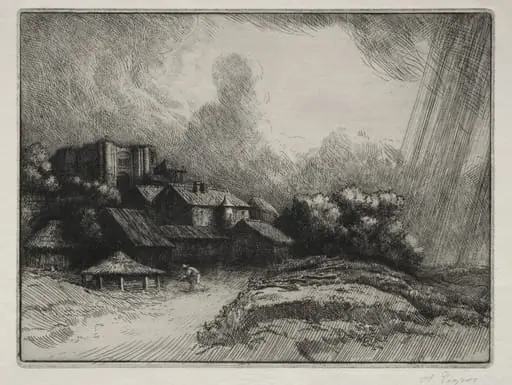
Percival Gaskell’s drypoint entitled Bolton Abbey, executed around the turn of the twentieth century, presents a quiet river landscape rendered entirely in black on laid paper. The composition balances natural elements—water, foliage, and distant hills—with an architectural focal point that suggests an abbey or church, all conveyed through a restrained palette of grays.
Subject & Meaning
The image captures a tranquil scene where a river winds between banks lined with trees and low shrubs. Beyond the water, a solitary building rises amid rolling terrain beneath a cloud‑filled sky. The placement of the structure at the horizon invites contemplation of solitude and the passage of time within a pastoral setting.
Technique & Style
Created with drypoint, Gaskell incised fine lines directly onto the paper’s surface, allowing the burr to hold ink and produce rich, velvety tones. The artist exploits the medium’s capacity for subtle gradations, using darker strokes for foliage and lighter washes for sky and water, thereby achieving depth and atmospheric perspective without color.
History & Provenance
Bolton Abbey dates to approximately 1900, a period when Gaskell was actively exploring printmaking methods. The work remains on laid paper, a traditional support that enhances the texture of the drypoint marks. Its provenance traces to private collections before entering the museum’s holdings, where it serves as an example of early twentieth‑century British printmaking.
Artist & collection