Artwork
Nave Nave Fenua (Fragrant Isle)
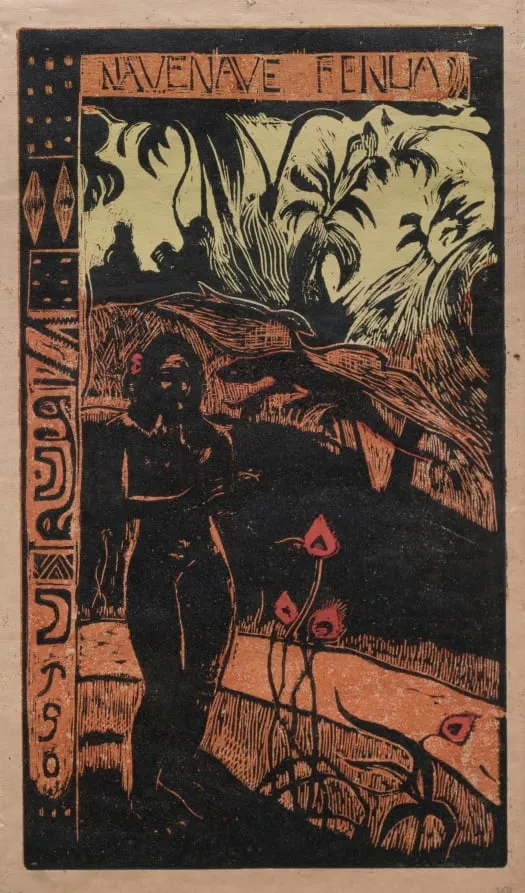
Nave Nave Fenua (Fragrant Isle) is a print by the Impressionist artist Paul Gauguin. It dates from 1894 and is held in the collection of the Cleveland Museum of Art.
About this work
Overview
Gauguin used carved wood to evoke the tactile quality of indigenous carvings, rejecting European naturalism in favor of symbolic form and emotional resonance.
Created in 1893, Nave Nave Fenua (Fragrant Isle) is a woodcut print by Paul Gauguin, produced after his first stay in Tahiti. Though part of his unfinished illustrated book Noa Noa, the work stands as a self-contained vision of an idealized Polynesian landscape. Gauguin used carved wood to evoke the tactile quality of indigenous carvings, rejecting European naturalism in favor of symbolic form and emotional resonance.
Subject & Meaning
Two female figures emerge from a dense, stylized forest, their forms harmonizing with the curving trees and flowing lines of the composition. The scene is not a documentary record but a poetic construct, blending memory, myth, and desire. The title, meaning 'Fragrant Isle,' suggests an earthly paradise, yet the absence of depth and light renders it ethereal—an inner landscape rather than a physical place.
Technique & Style
Gauguin carved directly into a woodblock, leaving deliberate, uneven grooves that mimic the rough textures of Oceanic sculpture. He applied flat, non-naturalistic colors—pink earth, blue water, crimson foliage—without shading or perspective. This approach prioritized symbolic expression over optical realism, aligning with his broader rejection of academic conventions and his pursuit of a more primal visual language.
History & Provenance
The print originated during Gauguin’s efforts to document his Tahitian experiences for Noa Noa, a project he began after returning to Paris in 1893. Though the book was never fully realized, several woodcuts from this period survive. Nave Nave Fenua was likely printed in small editions, circulating among avant-garde circles and later entering institutional collections as a key example of Synthetist printmaking.
Context
Gauguin’s work in Tahiti emerged from a broader late-19th-century fascination with non-Western cultures, often filtered through colonial fantasies. His departure from Paris was both aesthetic and philosophical—a rejection of industrial modernity and academic tradition. In Tahiti, he sought spiritual and artistic renewal, though his representations reflect more his own yearnings than the realities of Polynesian life.
Legacy
Nave Nave Fenua influenced later modernists who valued expressive form over illusionistic detail. Its emphasis on flat planes, symbolic color, and hand-carved texture contributed to the development of Expressionism and Primitivism in 20th-century art. Though criticized for cultural appropriation, the print remains a significant artifact of Gauguin’s quest to redefine art beyond European norms.
Artist & collection
Artist
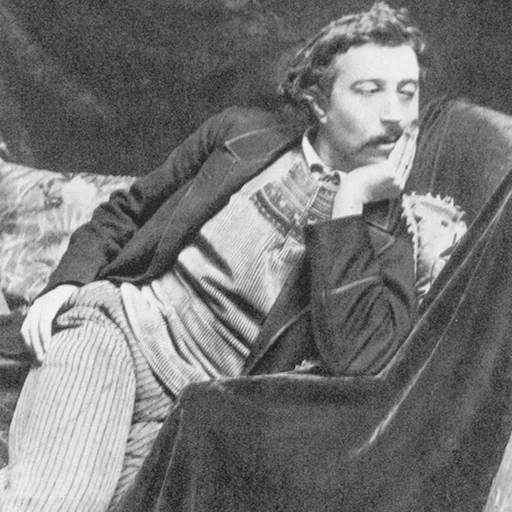
Eugène Henri Paul Gauguin (; French: ; 7 June 1848 – 8 May 1903) was a French painter, sculptor, printmaker, ceramist, and writer, whose work has been primarily associated with the Post-Impressionist and Symbolist movements.

 Untitled
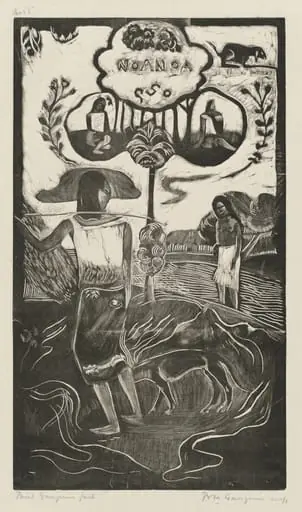 Noa Noa (Fragrant, Fragrant)
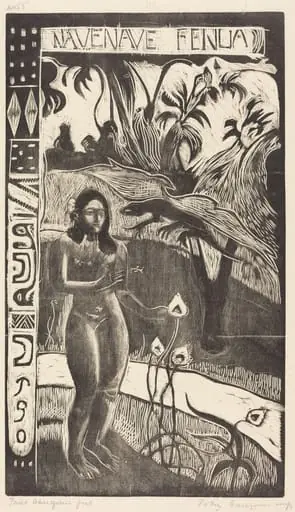 Nave Nave Fenua (Delightful Land)
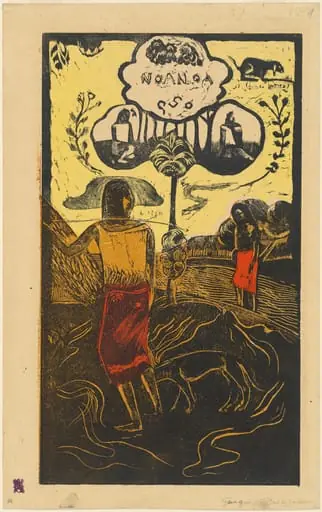 Noa Noa (Fragrant, Fragrant)
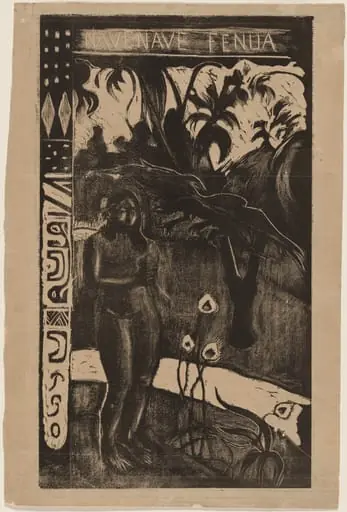 Nave Nave Fenua (Delightful Land)
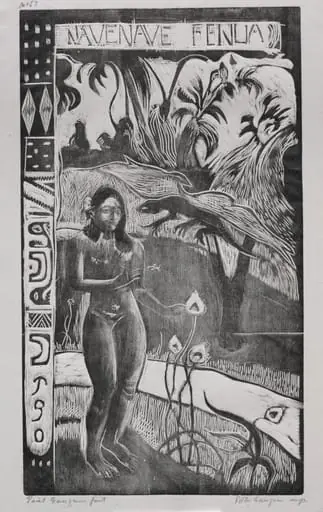 Tahitian Series: Land of Delights
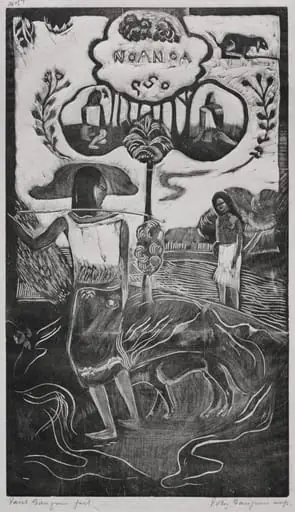 Noa Noa: Noa Noa (Fragrant Scent)
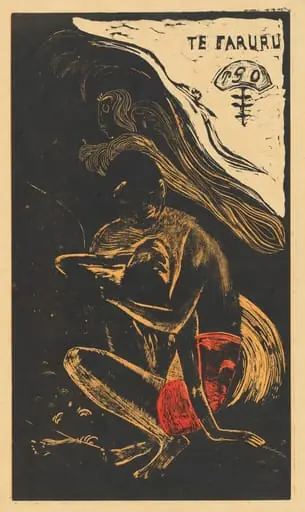 Te Faruru (They are Making Love Here)
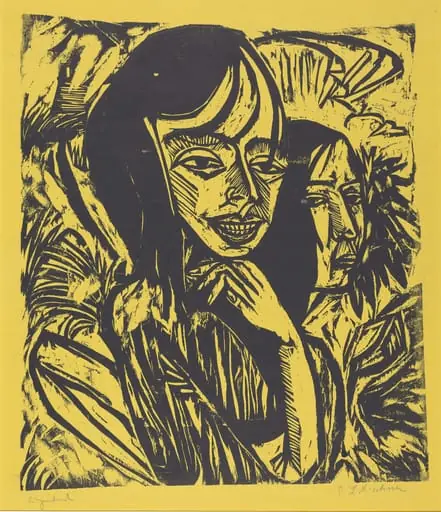 Fehmarn Girls
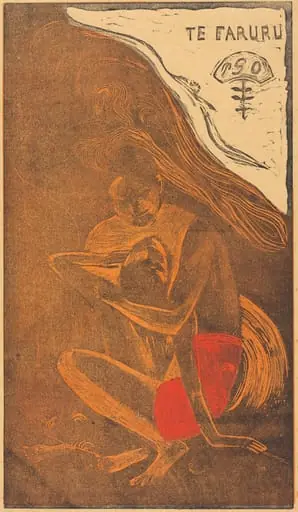 Te Faruru (They are Making Love Here)
 Woman in the Bathtub
 Te burao (The Hibiscus Tree)