Artwork
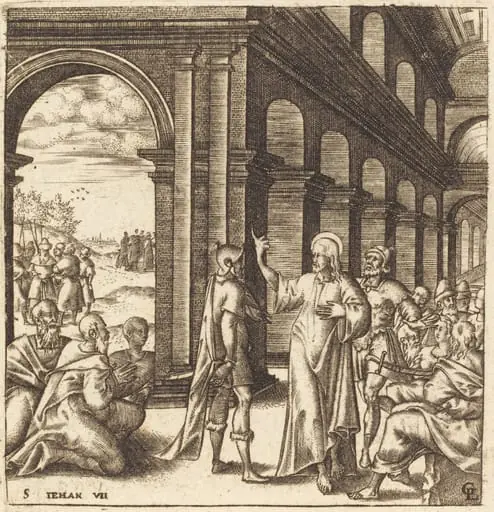
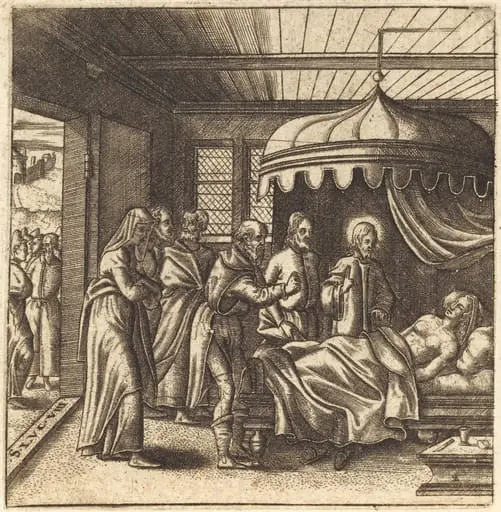
Christ Heals the Paralyzed Man
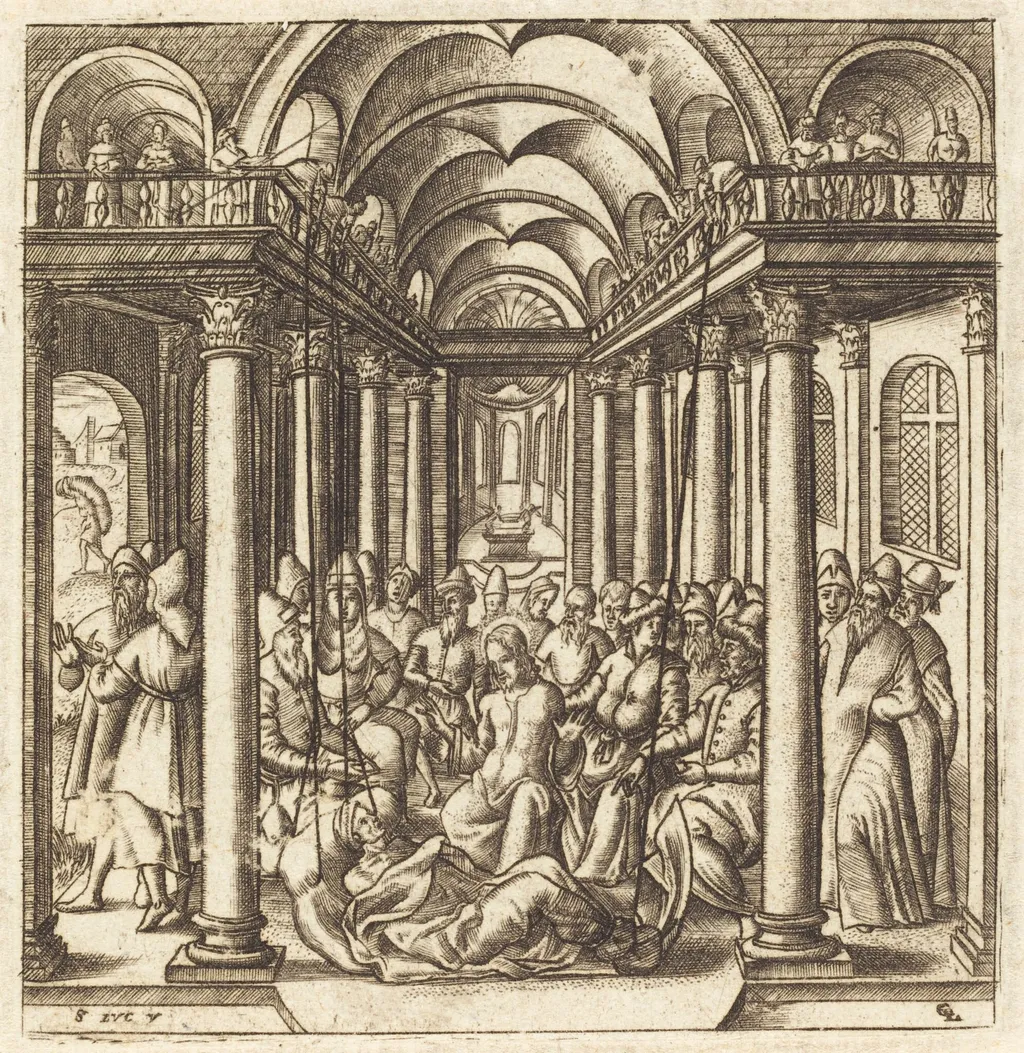
Christ Heals the Paralyzed Man is an ink print by the Renaissance artist Léonard Gaultier. It dates from 1578 and is held in the collection of the National Gallery of Art.
About this work
Overview
Léonard Gaultier, a French engraver active in Paris from the late 16th to early 17th century, produced this religious print around 1578.
Léonard Gaultier, a French engraver active in Paris from the late 16th to early 17th century, produced this religious print around 1578. Born in Mainz, he worked primarily with the burin to create intricate monochrome images. This engraving is one of many biblical scenes he rendered with meticulous line work, reflecting the Northern European tradition of printmaking that emphasized clarity and detail over painterly effects.
Subject & Meaning
The scene depicts Christ restoring mobility to a paralyzed man, a miracle recorded in the Gospels. Surrounding figures react with varied expressions—some in awe, others in prayer or disbelief—emphasizing the transformative moment. The composition centers the healing act within a monumental architectural space, suggesting divine authority manifest in a sacred setting. The inclusion of bystanders underscores the communal witness to the event.
Technique & Style
Gaultier employed fine, controlled engraving lines to model form and depth, particularly in the stone architecture and draped garments. Shading is achieved through cross-hatching and varying line density, not tone or wash. Figures are rendered with angular postures and stylized faces, conveying emotional intensity through gesture rather than naturalism. The background repeats smaller figures in similar poses, reinforcing narrative repetition common in print cycles of the period.
History & Provenance
Created during Gaultier’s early career, the print aligns with his output of religious subjects intended for devotional or educational use. It was likely circulated among collectors and clergy in France and beyond, as engraved biblical scenes were widely distributed in this era. No specific early ownership records are documented, but its technical precision suggests it was produced for a literate, religious audience familiar with scriptural imagery.
Context
Gaultier worked in a period when printmaking was a primary medium for disseminating religious imagery, especially in Protestant regions where church decoration was restricted. His style shows the influence of Flemish engravers like the Wierixes, who specialized in detailed biblical narratives. This print reflects the Counter-Reformation’s emphasis on visual storytelling to reinforce faith, even as it retained the formal rigor of Northern Mannerist aesthetics.
Legacy
Gaultier’s engravings, including this one, contributed to the standardization of biblical iconography in early modern Europe. Though not widely celebrated in his lifetime, his technical discipline influenced later generations of printmakers. His works remain in institutional collections as examples of precise, narrative-driven engraving, valued for their historical documentation of religious visual culture rather than artistic innovation.
Artist & collection
Artist
Léonard Gaultier, or, as he sometimes signed himself, Galter, a French engraver, was born at Mainz about 1561, and died in Paris in 1641.

 Christ Raises the Daughter of Jairus
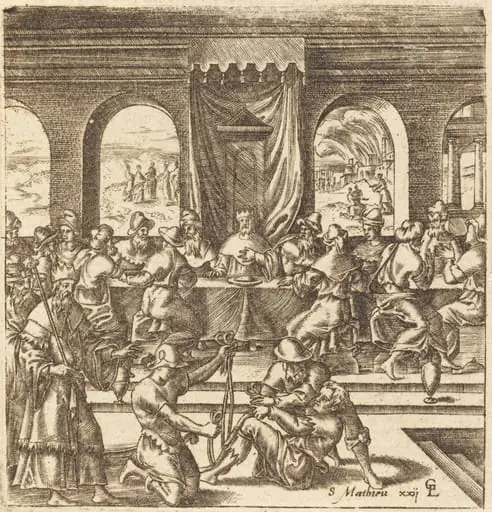 The Parable of the Marriage Feast
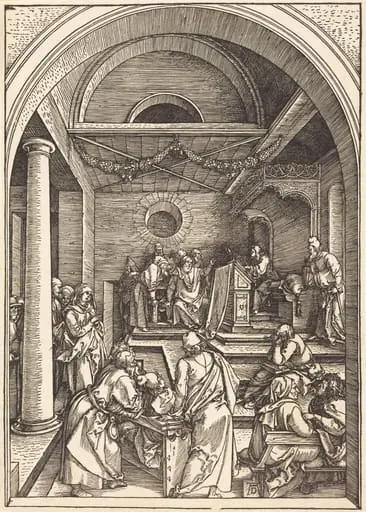 Christ among the Doctors
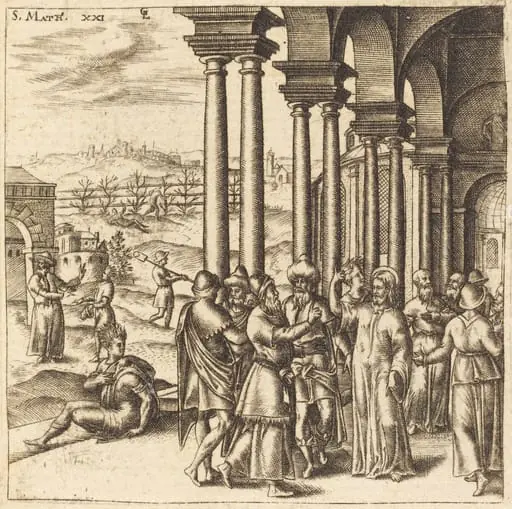 Christ in the Temple
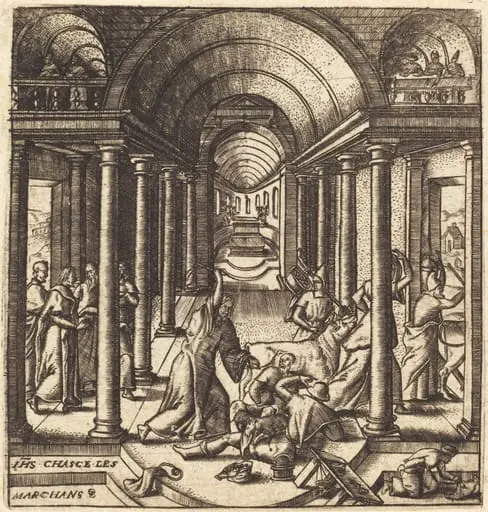 Christ Driving the Money Changers from the Temple
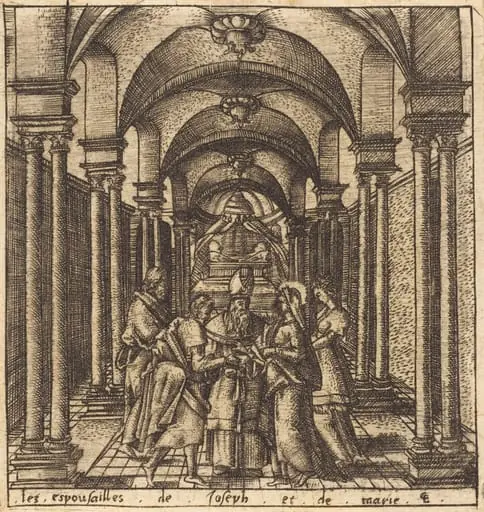 The Marriage of the Virgin
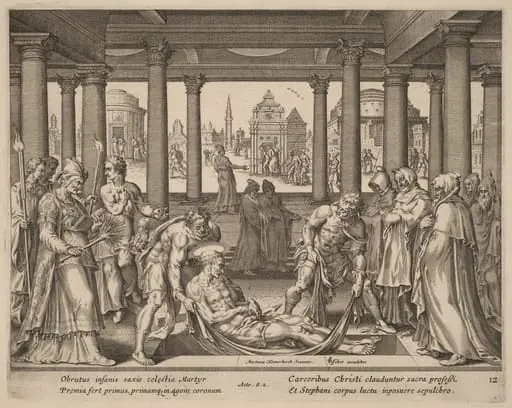 Devout Men Carrying Saint Stephen to His Burial
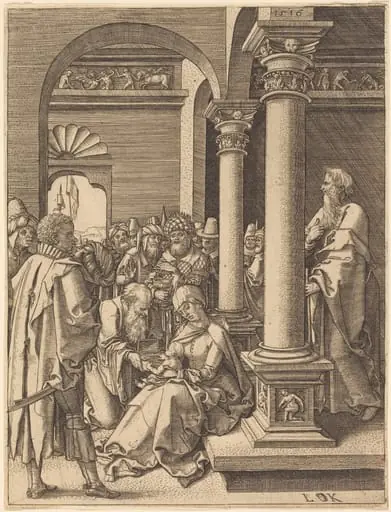 The Adoration of the Magi
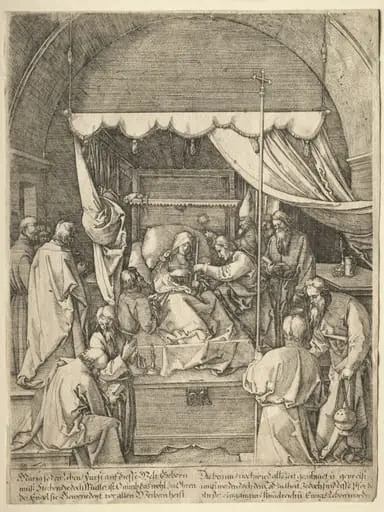 The Death of the Virgin
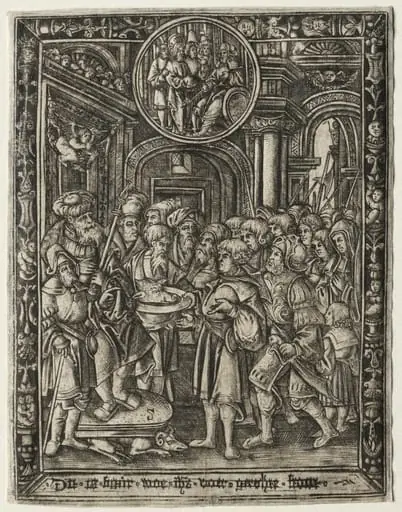 The Old King on His Throne
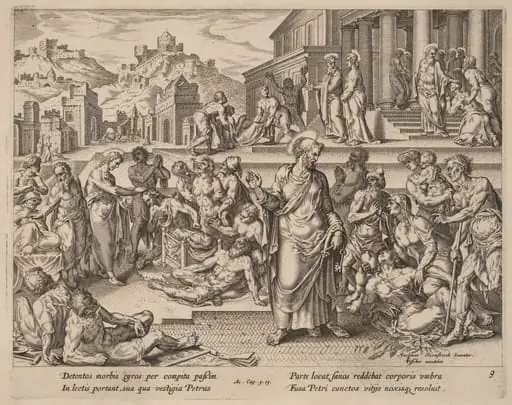 Saint Peter Healing the Sick with His Shadow
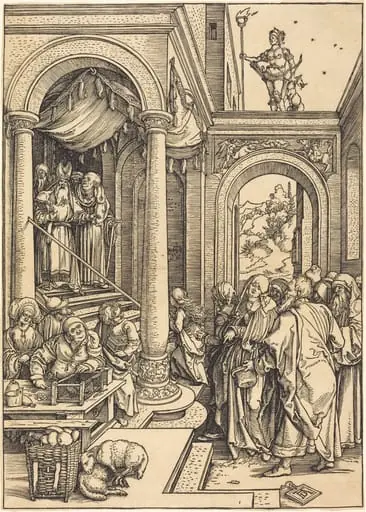 The Presentation of the Virgin in the Temple