Artwork
Christ Raises the Daughter of Jairus
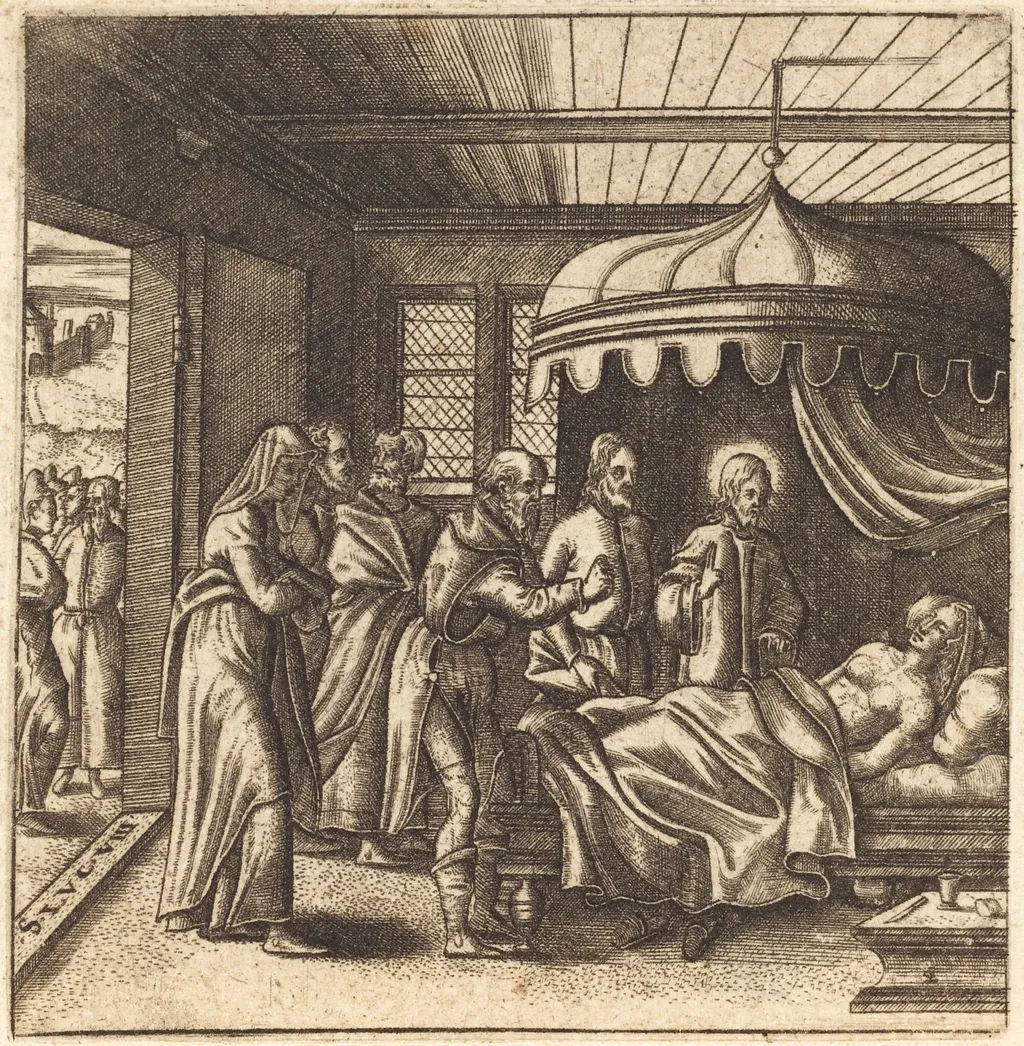
Christ Raises the Daughter of Jairus is an ink print by the Renaissance artist Léonard Gaultier. It dates from 1578 and is held in the collection of the National Gallery of Art.
About this work
Overview
Léonard Gaultier, a French engraver active in Paris from the late 16th to early 17th century, created this print around 1578.
Léonard Gaultier, a French engraver active in Paris from the late 16th to early 17th century, created this print around 1578. Born in Mainz, he became known for his meticulous use of the burin to produce detailed religious imagery. This work is one of many engravings in which he translated biblical narratives into intimate, finely rendered scenes, often drawing on the stylistic conventions of Northern European printmakers of his time.
Subject & Meaning
The scene depicts the miracle from the Gospel of Mark in which Jesus restores the daughter of Jairus, a synagogue official, to life. Gaultier captures the moment of intervention: Christ, though not centrally positioned, is the focal point of the group’s attention. The figures around the bed express varied reactions—grief, awe, and anticipation—emphasizing the emotional weight of the miracle and the tension between human despair and divine power.
Technique & Style
Executed entirely with a burin, the engraving relies on fine, controlled lines to model form and texture. Delicate hatching defines the folds of fabric, the grain of wood, and the softness of skin, while the faint cityscape beyond the window is rendered with minimal strokes. The composition is tightly framed, drawing focus to the bed and its occupants, and the emotional expressions are conveyed through subtle facial contours rather than exaggerated gestures.
History & Provenance
Gaultier produced this print during his early career in Paris, a period when religious imagery remained in high demand despite growing secular interests. While the specific early ownership of this impression is undocumented, it aligns with the broader circulation of devotional prints in Catholic Europe. His works were often reprinted and collected, contributing to the dissemination of biblical stories among literate lay audiences.
Context
In late 16th-century France, engraving served both devotional and educational purposes. Gaultier’s work reflects the influence of Flemish and Dutch printmakers like the Wierix family, whose detailed compositions were widely admired. The emphasis on emotional realism and domestic setting in this scene mirrors Counter-Reformation ideals, encouraging personal engagement with sacred narratives through relatable, humanized imagery.
Legacy
Gaultier’s engravings, including this one, contributed to the continuity of religious printmaking in France during a time of religious upheaval. Though less celebrated than some of his contemporaries, his precise technique and consistent output helped sustain the tradition of hand-engraved devotional imagery into the early Baroque period, influencing later generations of printmakers focused on narrative clarity and emotional restraint.
Artist & collection
Artist
Léonard Gaultier, or, as he sometimes signed himself, Galter, a French engraver, was born at Mainz about 1561, and died in Paris in 1641.

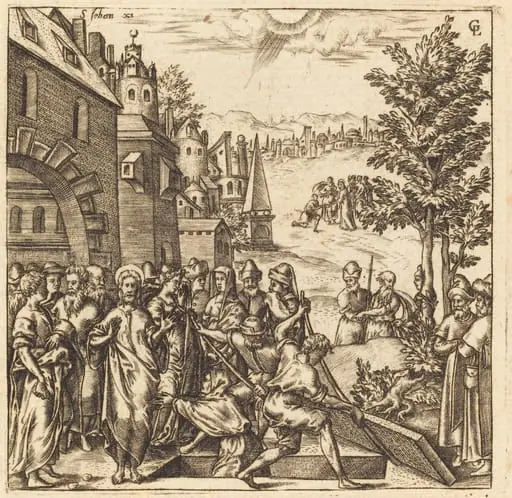 The Raising of Lazarus
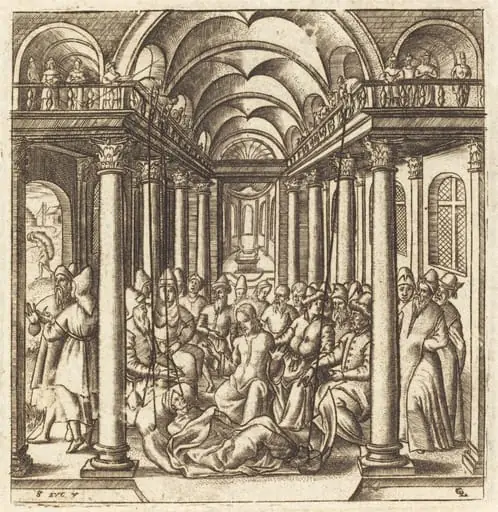 Christ Heals the Paralyzed Man
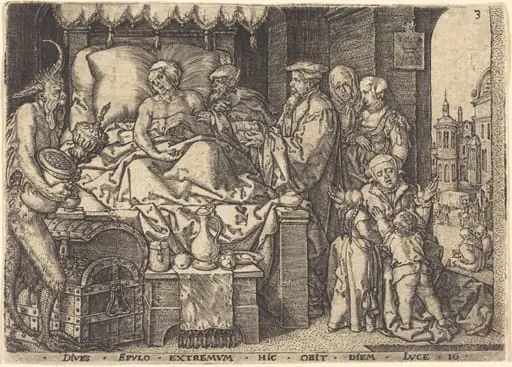 The Rich Man on His Death Bed
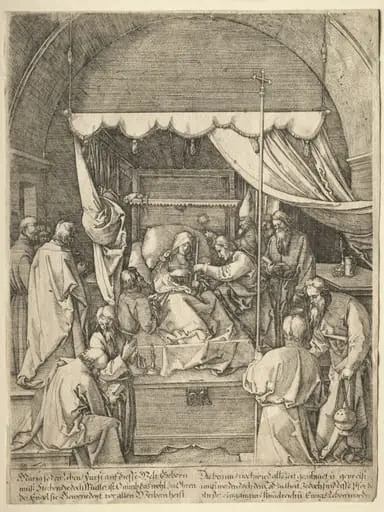 The Death of the Virgin
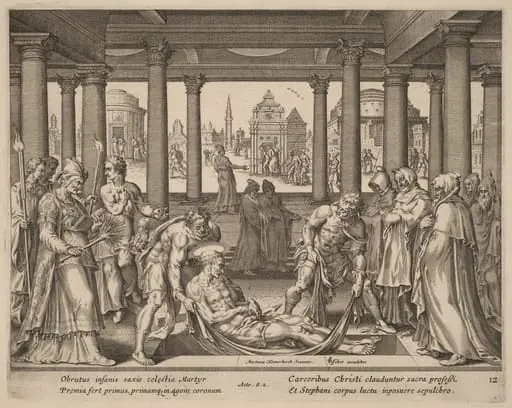 Devout Men Carrying Saint Stephen to His Burial
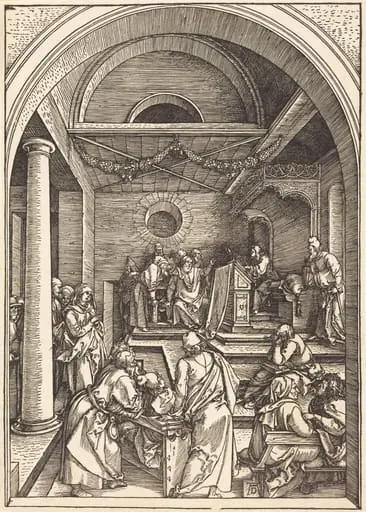 Christ among the Doctors
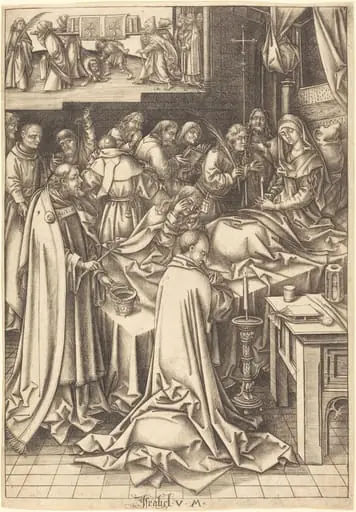 The Death of the Virgin
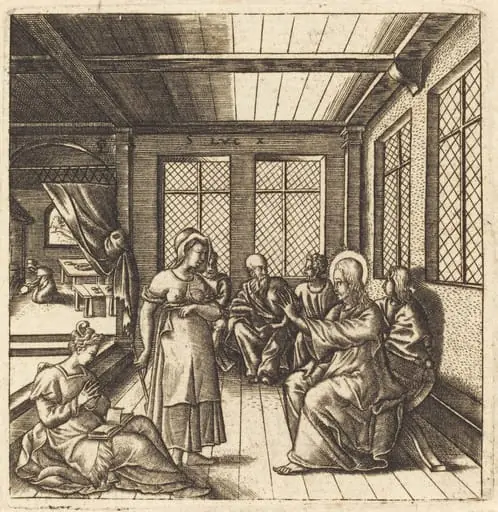 Christ in the House of Mary and Martha
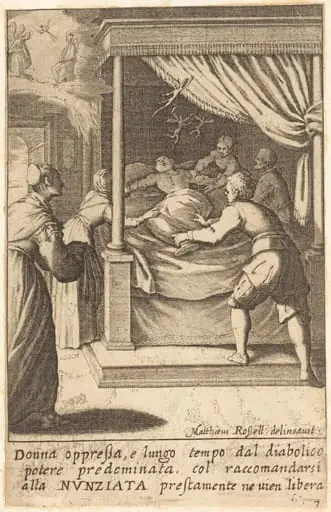 The Oppressed Woman
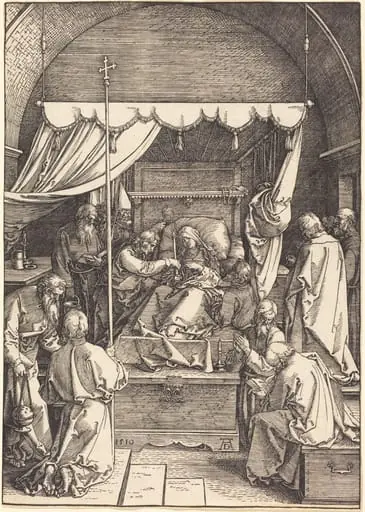 The Death of the Virgin
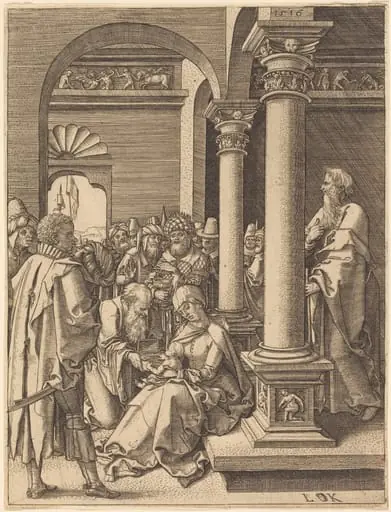 The Adoration of the Magi
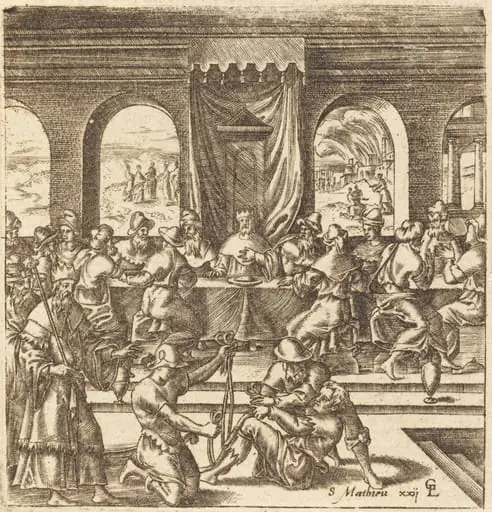 The Parable of the Marriage Feast