Artwork
The Parable of the Marriage Feast
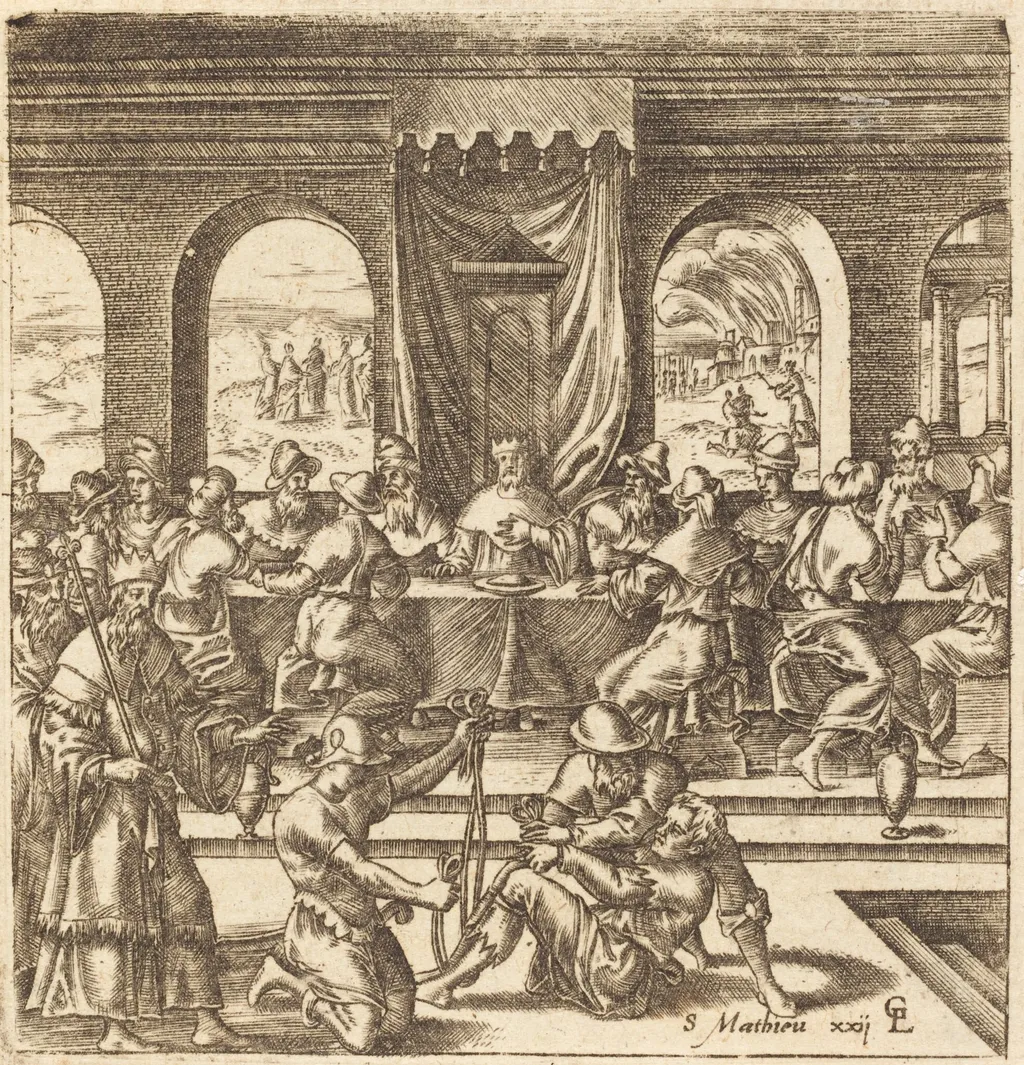
The Parable of the Marriage Feast is an ink print by the Renaissance artist Léonard Gaultier. It dates from 1578 and is held in the collection of the National Gallery of Art.
About this work
Overview
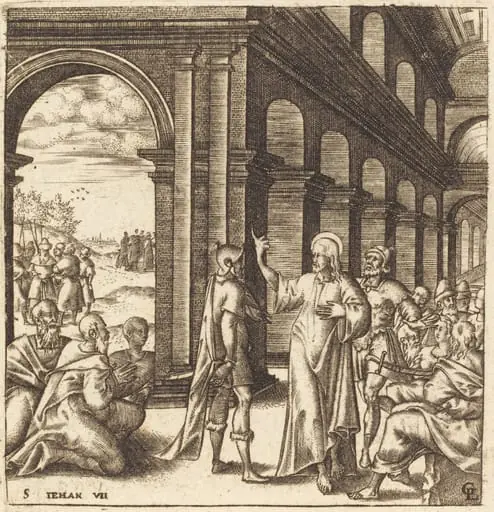
Leonard Gaultier’s engraving *The Parable of the Marriage Feast* dates to roughly 1578. Executed entirely with a graver on a metal plate, the print presents a densely populated interior scene that references the biblical invitation to a wedding banquet, a narrative drawn from the Gospel of Matthew.
Subject & Meaning
The composition centers on a dignified figure seated at an elevated table, surrounded by a throng of individuals who scramble, kneel, and reach toward the banquet. The varied gestures—some clutching plates, others pleading—suggest a visual meditation on invitation, exclusion, and the social hierarchy implicit in the parable’s moral lesson.
Technique & Style
Gaultier works in the precise, formal manner characteristic of late‑sixteenth‑century French engravers, echoing the line work of the Wierix brothers and Crispyn van de Passe. The entire image is rendered with incised lines, creating texture in fabrics, facial expressions, and architectural details while maintaining a tightly controlled, almost rigid composition.
History & Provenance
Born in Mainz around 1561, Gaultier spent his professional life in Paris, producing prints until his death in 1641. *The Parable of the Marriage Feast* is among his early works, reflecting the influence of his contemporaries and the market for religious prints in post‑Reformation France.
Context
The engraving belongs to a period when biblical narratives were frequently reproduced for devotional use and moral instruction. Its elaborate interior, with arched windows framing subsidiary scenes, situates the parable within a grand, temple‑like setting, aligning the sacred story with the visual language of courtly architecture.
Legacy
While not as widely cited as the works of his more famous peers, Gaultier’s print exemplifies the meticulous line engraving that would inform later French printmakers. Its dense figuration and careful handling of texture offer a clear illustration of the technical standards and narrative strategies of late Renaissance print culture.
Artist & collection
Artist
Léonard Gaultier, or, as he sometimes signed himself, Galter, a French engraver, was born at Mainz about 1561, and died in Paris in 1641.

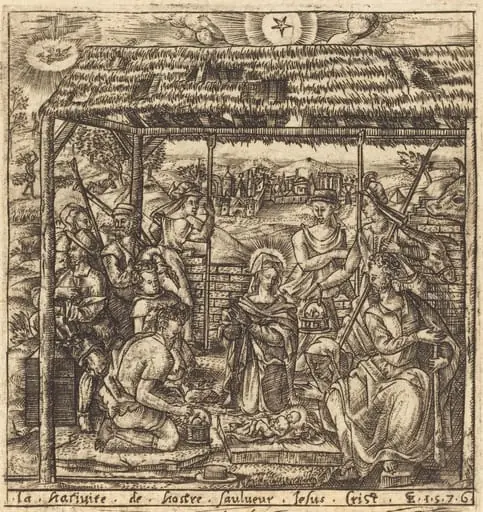
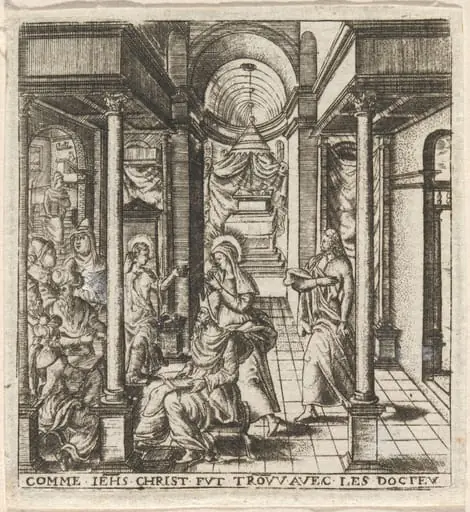
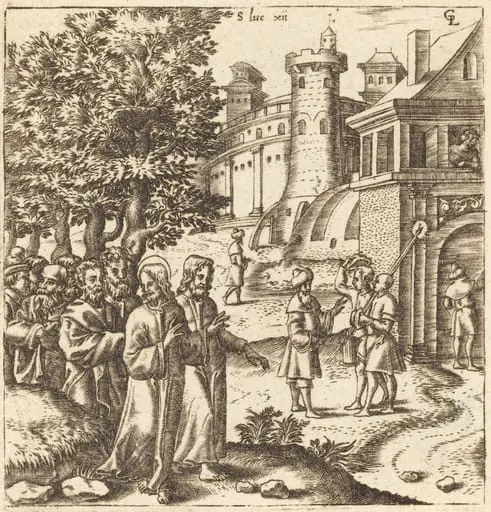
 Christ in the Temple
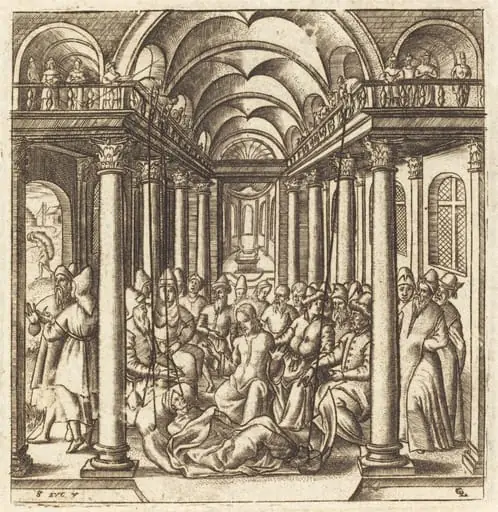 Christ Heals the Paralyzed Man
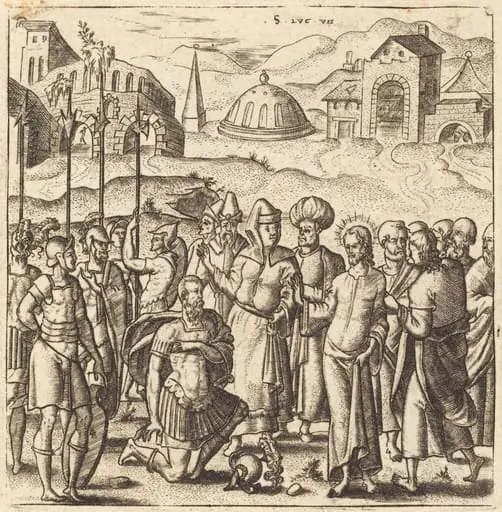 Christ and the Centurion
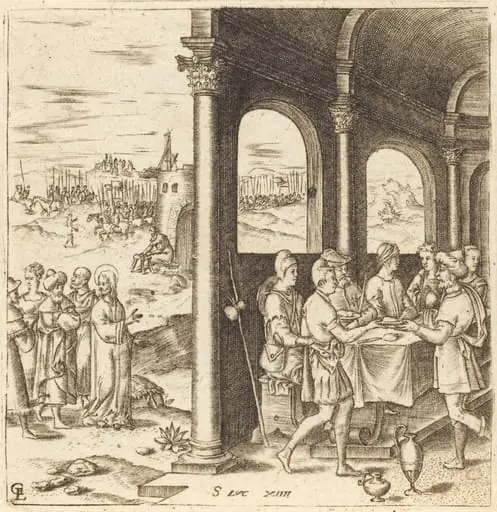 Christ Journeying to the House of a Pharisee
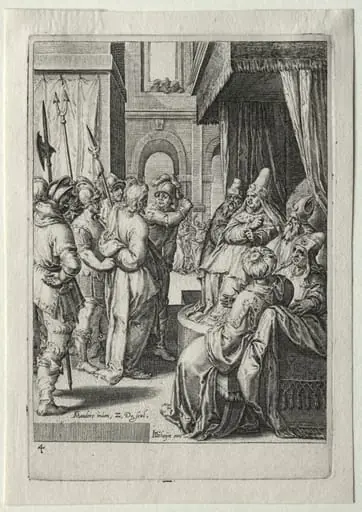 Passion Set: Christ before Herod
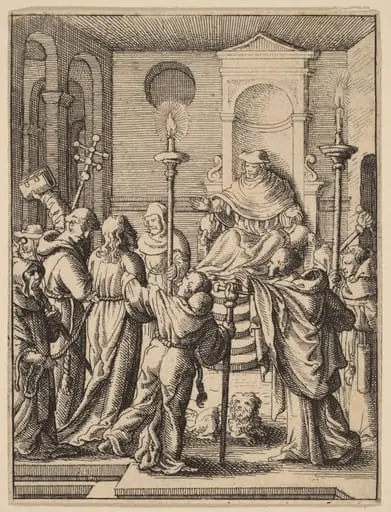 Jesus before Annas
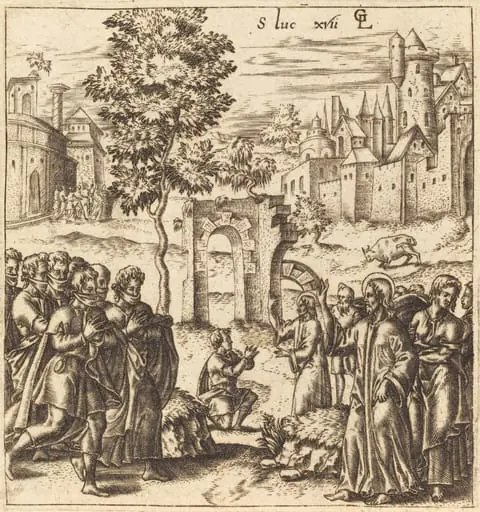 The Ten Lepers are Cleansed
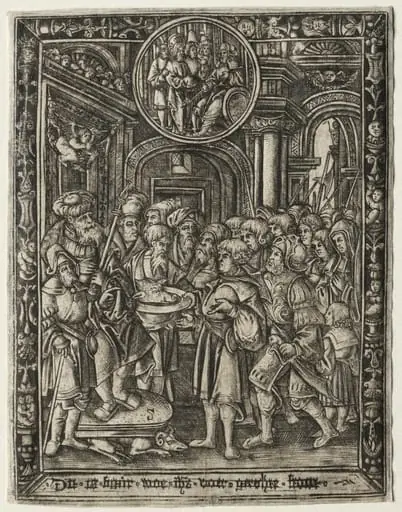 The Old King on His Throne
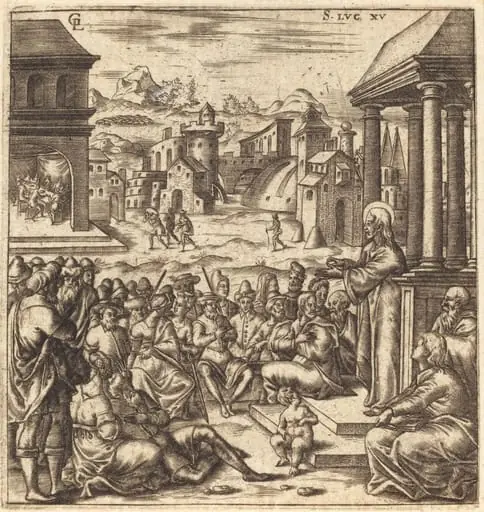 The Parables of the Lost Sheep, the Woman with Pieces of Silver and the Prodigal Son
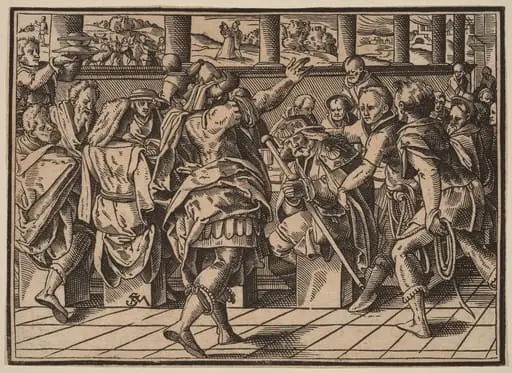 The Martyrdom of Saint James (?)
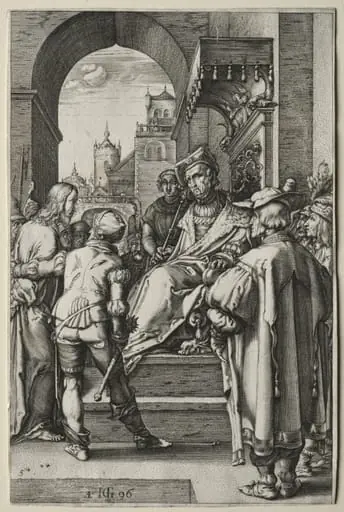 The Passion: Christ before Pilate
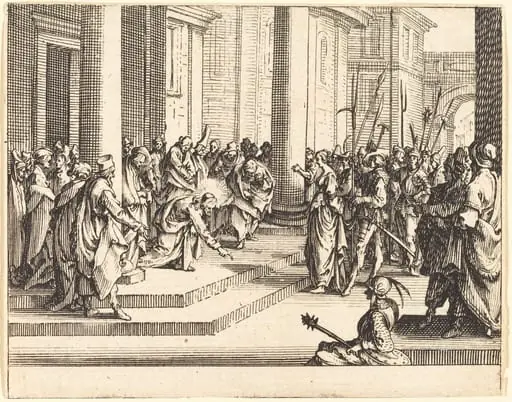 Stoning of Jesus