Artwork
The Entry into Jerusalem
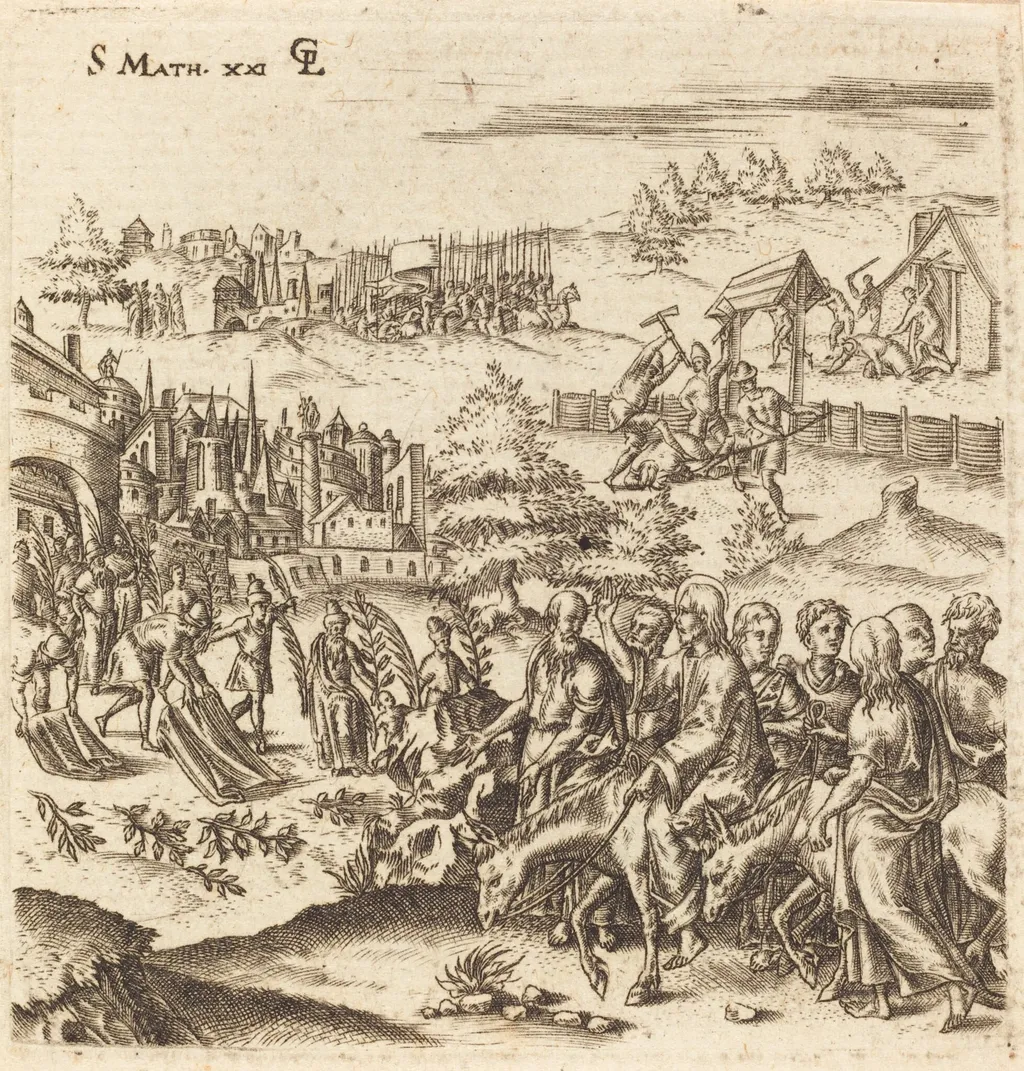
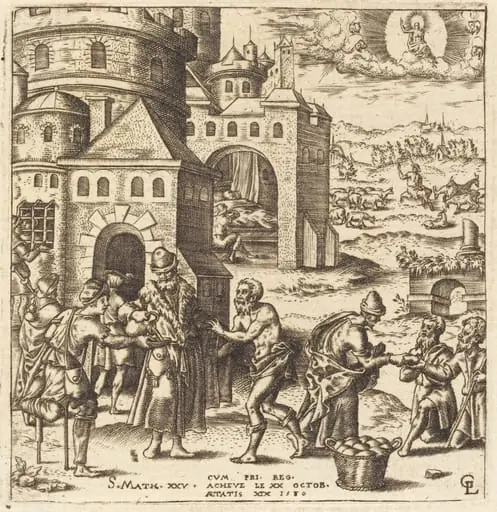
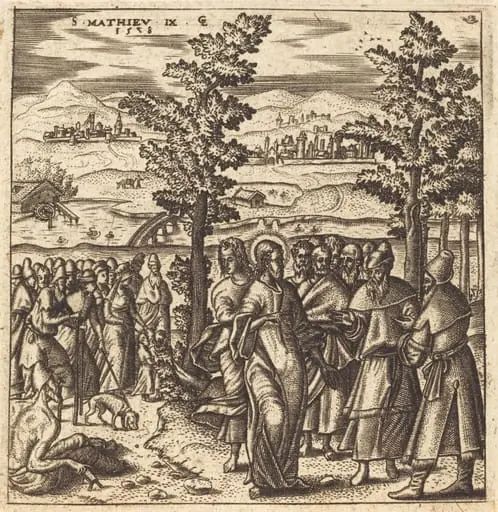
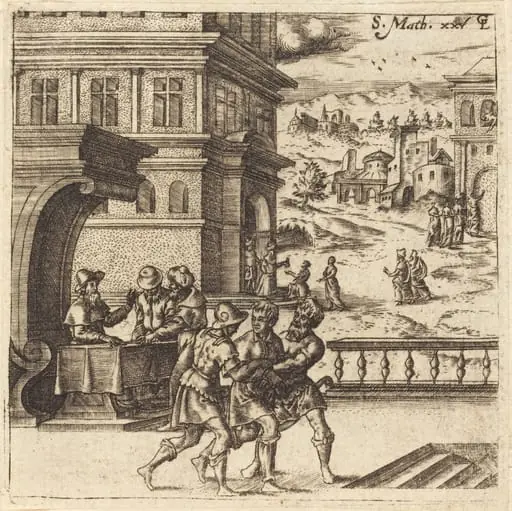
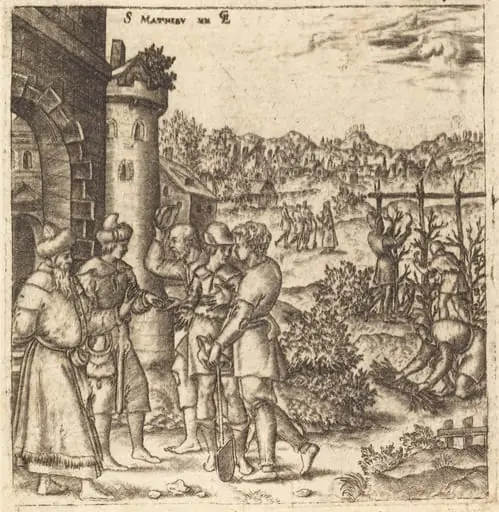
The Entry into Jerusalem is an ink print by the Renaissance artist Léonard Gaultier. It dates from 1578 and is held in the collection of the National Gallery of Art.
About this work
Overview
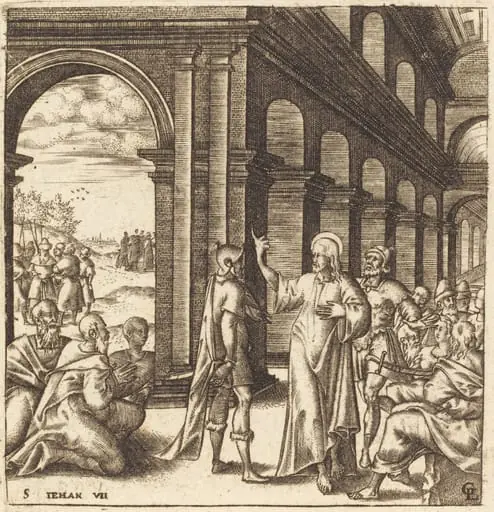
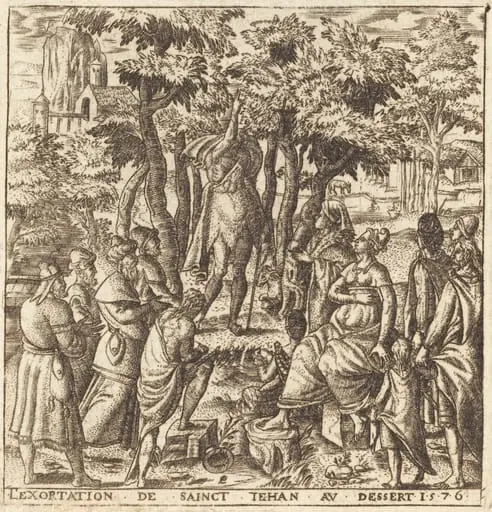
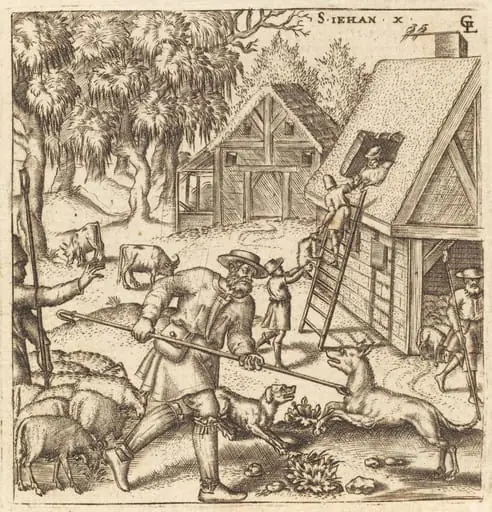
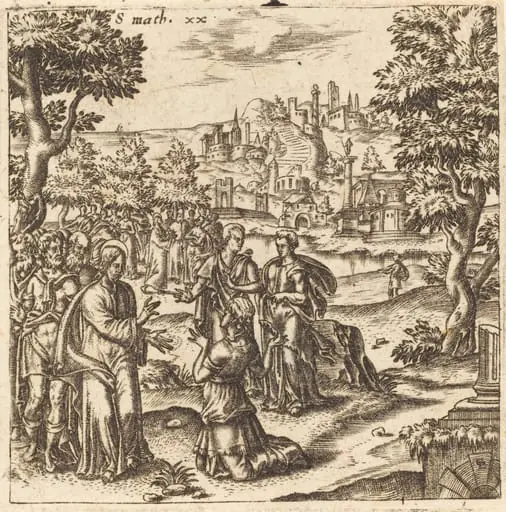
Leonard Gaultier’s engraving *The Entry into Jerusalem* dates to around 1578. Executed with a burin, the print presents the biblical moment of Christ’s arrival in Jerusalem on a donkey, surrounded by a bustling crowd and architectural elements that suggest a vivid urban setting. The work exemplifies the detailed, linear quality typical of late‑sixteenth‑century French printmaking.
Subject & Meaning
The image captures the Gospel narrative of Jesus entering Jerusalem, a scene traditionally associated with triumph and impending sacrifice. By placing the rider on a modest donkey amid a dense assemblage of figures and buildings, Gaultier emphasizes both the humility of the event and its public, communal significance.
Technique & Style
The engraving’s composition is orderly, the detailing precise yet somewhat stiff, reflecting the artist’s preference for clarity over fluidity.
Gaultier employed the graver to produce fine, controlled lines that define figures, architecture, and texture with a formal rigidity. The engraving’s composition is orderly, the detailing precise yet somewhat stiff, reflecting the artist’s preference for clarity over fluidity. This method aligns him with contemporaries such as the Wierix brothers and Crispyn van de Passe, who shared a similarly meticulous approach.
History & Provenance
Born in Mainz circa 1561, Gaultier spent most of his career in France, working primarily in Paris until his death in 1641. The *Entry into Jerusalem* was likely created for the devotional market, a common practice for engravers who often reproduced their own designs for a broad audience.
Context
The print emerges from a period when religious subjects dominated print culture, serving both instructional and meditative purposes. Gaultier’s work reflects the broader Northern European trend of detailed narrative engravings that catered to collectors seeking visual representations of scriptural episodes.
Artist & collection
Artist
Léonard Gaultier, or, as he sometimes signed himself, Galter, a French engraver, was born at Mainz about 1561, and died in Paris in 1641.