Artwork
The Children of Zébédée
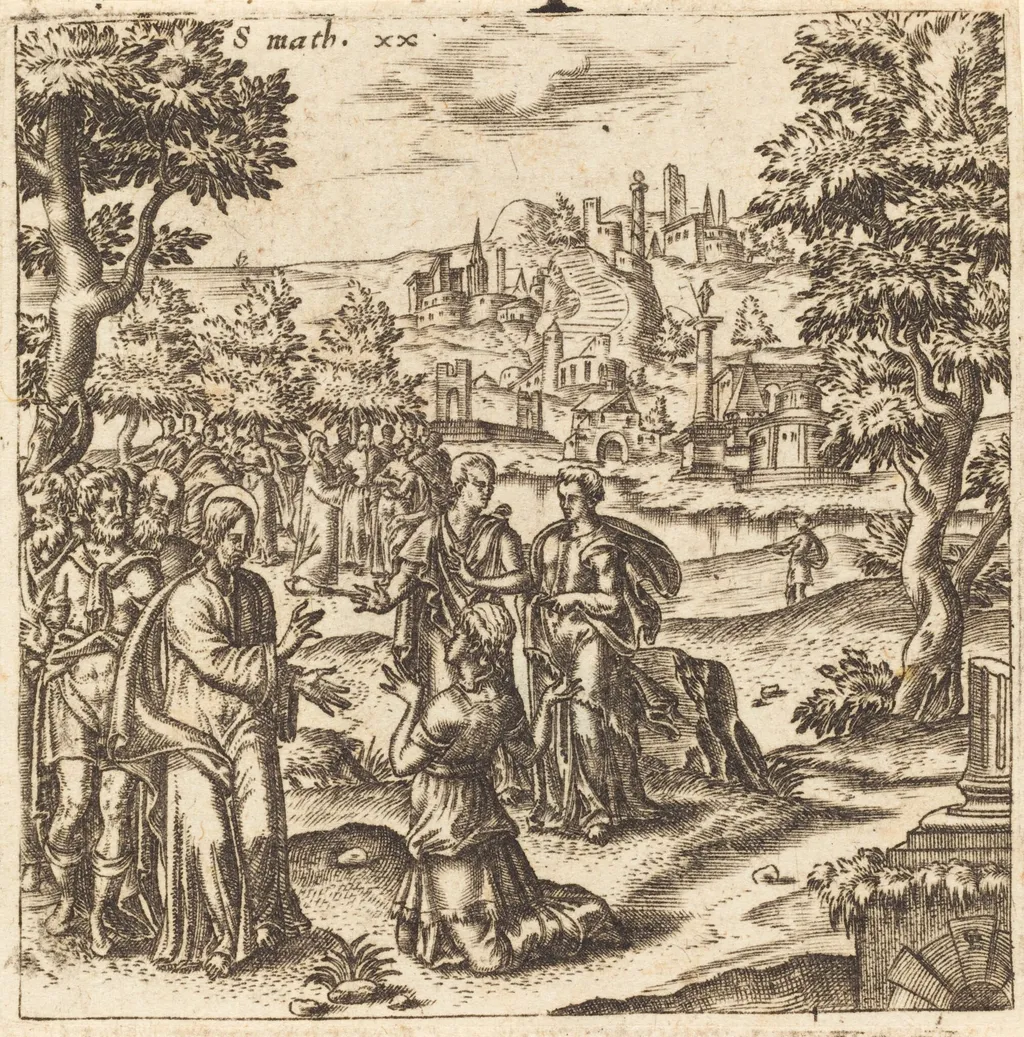
The Children of Zébédée is an ink print by the Renaissance artist Léonard Gaultier. It dates from 1578 and is held in the collection of the National Gallery of Art.
About this work
In the background, there are trees and buildings, which suggest that the scene is taking place in a rural or village setting.
The image depicts a scene from the Bible, with a group of people gathered around a man who is kneeling on the ground. The man is dressed in a long robe and has his hands clasped together in prayer. Behind him, a woman stands with her arms outstretched, as if she is trying to comfort him. In the background, there are trees and buildings, which suggest that the scene is taking place in a rural or village setting.
The engraving is done in a detailed and intricate style, with fine lines and shading that give the image depth and texture. The use of cross-hatching creates a sense of volume and dimensionality, making the figures appear more lifelike.
This image is an example of Renaissance art, specifically from the 16th century. To learn more about this style and period, explore the Renaissance movement.
Overview
Created around 1578 by Léonard Gaultier, this engraving is one of many prints produced in Paris during the late 16th century. Gaultier, born in Mainz and active until 1641, worked exclusively with the burin, crafting detailed images without the aid of etching. His approach aligned with the Northern Renaissance tradition of precise line work, emphasizing clarity and control over expressive brushwork.
Subject & Meaning
The scene illustrates a moment from the Gospels in which the sons of Zebedee approach Jesus with a request, though the focus here is on a kneeling figure, possibly their mother, interceding on their behalf. Her outstretched arms and the central figure’s clasped hands suggest supplication and emotional tension. The setting, with modest architecture and trees, grounds the sacred moment in an earthly, rural context, reinforcing its human dimension.
Technique & Style
Gaultier employed fine, controlled burin lines to build form through cross-hatching and parallel strokes, creating subtle gradations of light and shadow. The figures are rendered with anatomical restraint, their drapery defined by crisp folds rather than fluid motion. Background elements like trees and buildings are suggested with minimal but deliberate strokes, maintaining compositional balance without distraction.
History & Provenance
The print was made during Gaultier’s early career in Paris, where he established himself as a prolific engraver of religious and mythological subjects. Though few records of its early ownership survive, its style places it within a network of Northern European printmakers, including the Wierix and van de Passe families, whose works circulated widely across Protestant and Catholic regions.
Context
In late 16th-century France, religious imagery remained in demand despite the upheavals of the Reformation. Engravings like this served devotional and educational purposes, offering accessible visual narratives to a literate urban public. Gaultier’s formal style reflected a preference for order and clarity, aligning with Counter-Reformation ideals that favored legibility and emotional restraint in sacred art.
Legacy
Gaultier’s work contributed to the transmission of biblical iconography through print, influencing later engravers in France and the Low Countries. His reliance on the burin alone, without etching, marked him as a traditionalist in an era increasingly embracing mixed techniques. While not widely celebrated today, his prints remain valuable for understanding the technical discipline and devotional priorities of late Renaissance print culture.
Artist & collection
Artist
Léonard Gaultier, or, as he sometimes signed himself, Galter, a French engraver, was born at Mainz about 1561, and died in Paris in 1641.


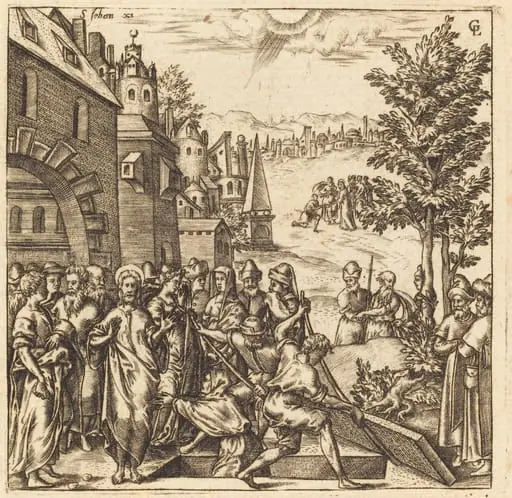 The Raising of Lazarus
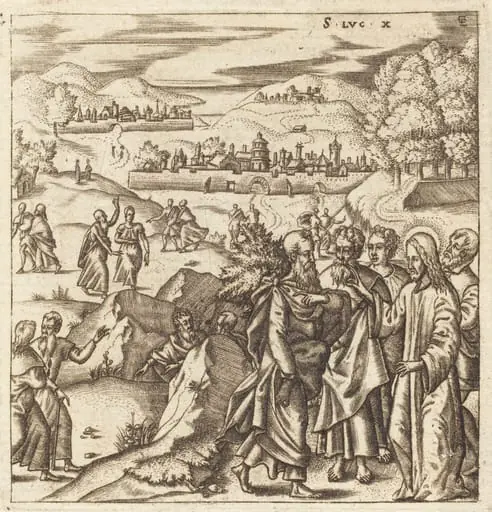 The Mission of the Seventy
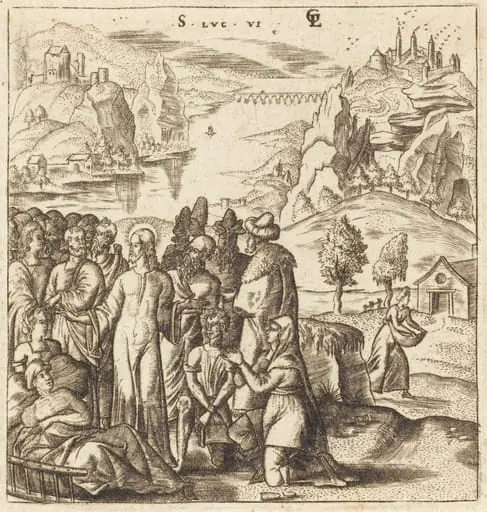 Christ Heals the Sick
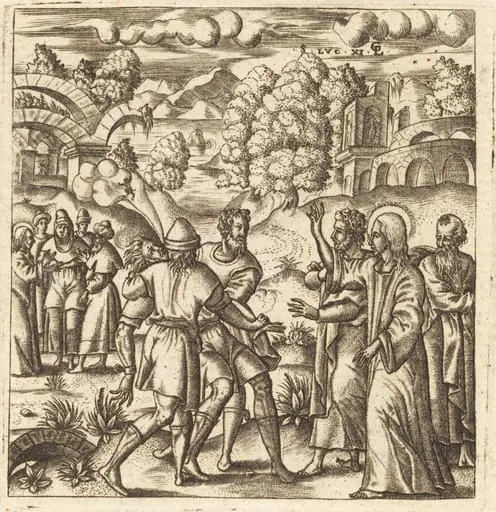 Christ Heals a Dumb Man
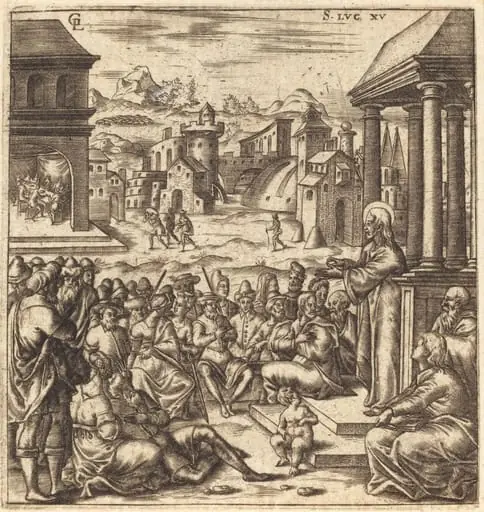 The Parables of the Lost Sheep, the Woman with Pieces of Silver and the Prodigal Son
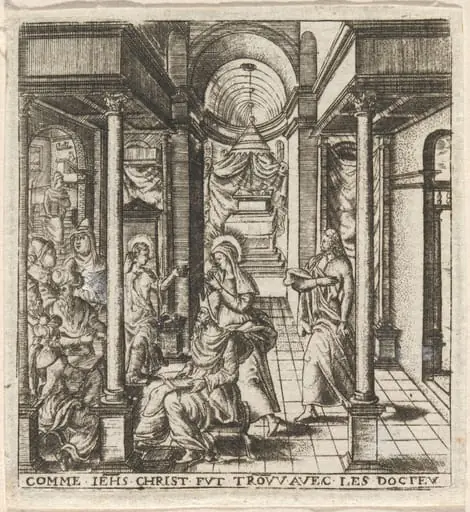
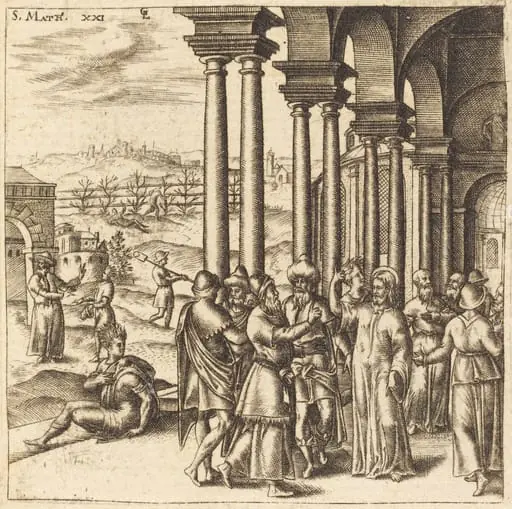 Christ in the Temple
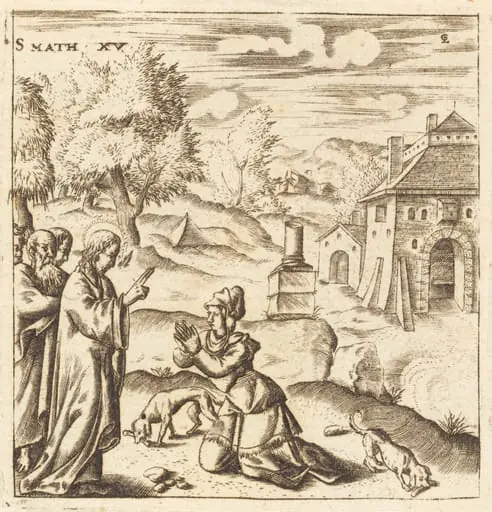 The Canaanite Woman
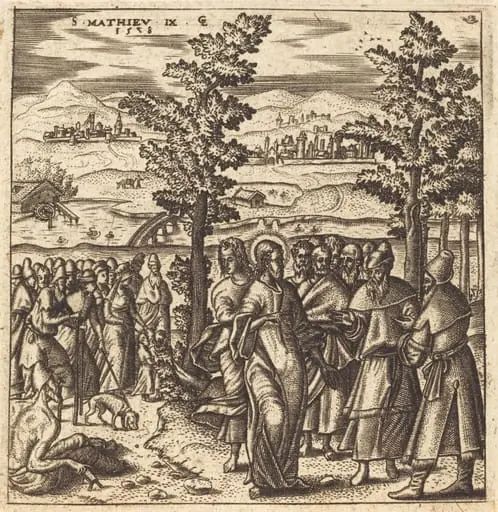 If I only Touch His Garments, I shall be Made Well
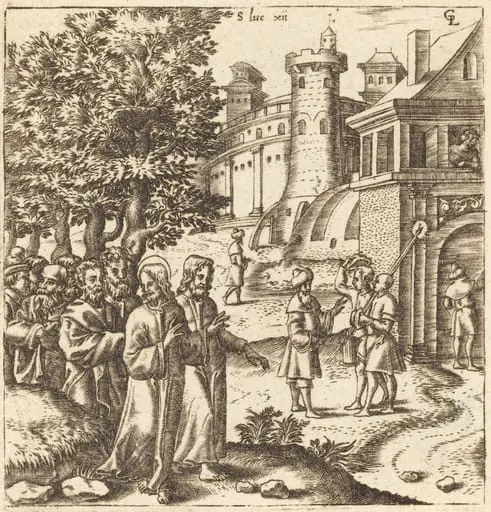
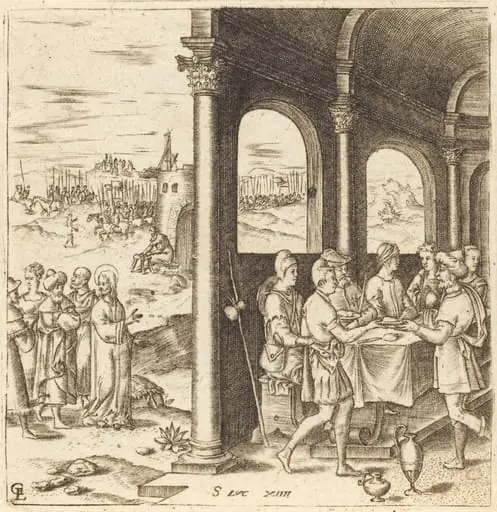 Christ Journeying to the House of a Pharisee
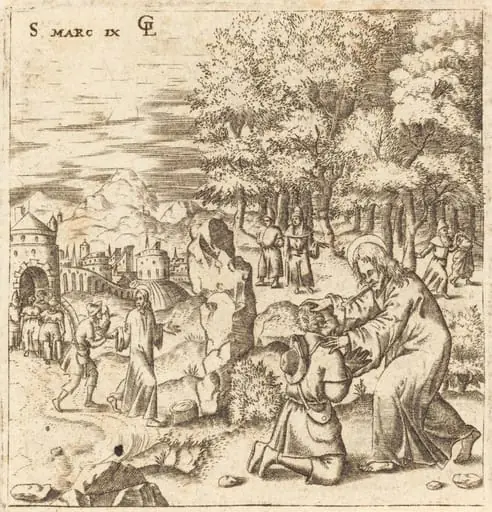 The Epileptic Child Healed