Artwork
Ph. Cl. A. de Thubières, Comte de Caylus
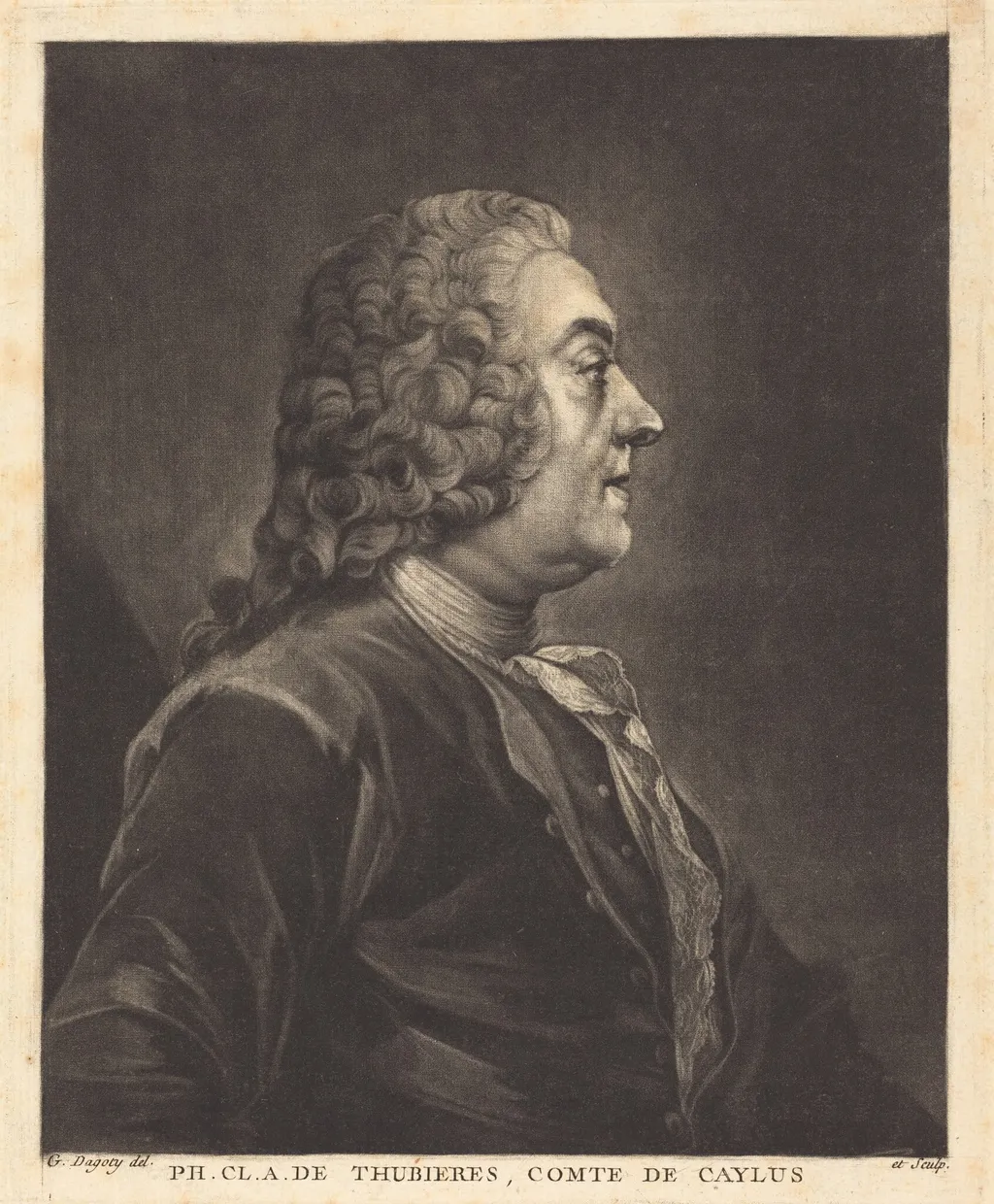
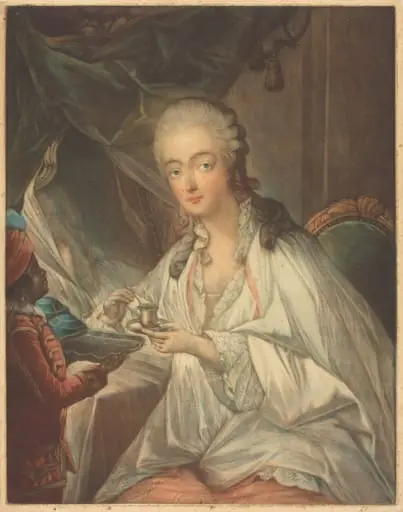
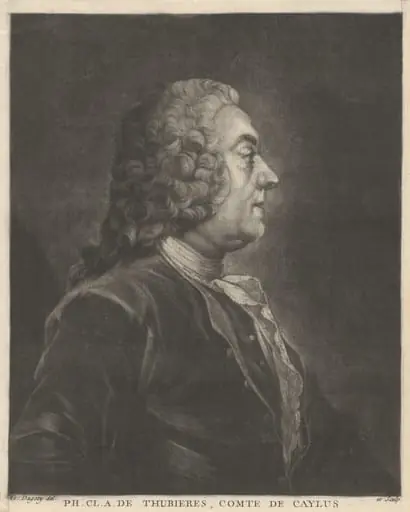
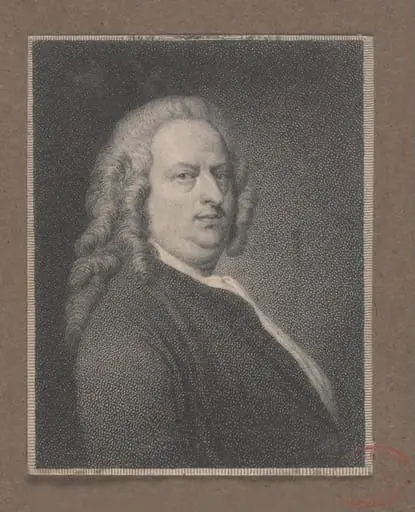
Ph. Cl. A. de Thubières, Comte de Caylus is an ink print by the Baroque artist Jean-Baptiste André Gautier-Dagoty. It dates from 1770 and is held in the collection of the National Gallery of Art. Around 1770, Jean-Baptiste André Gautier‑Dagoty, a Parisian artist noted for his portraiture, executed a mezzotint of the French noble Ph.
About this work
Overview
Around 1770, Jean-Baptiste André Gautier‑Dagoty, a Parisian artist noted for his portraiture, executed a mezzotint of the French noble Ph. Cl. A. de Thubières, Comte de Caylus. The print, rendered on laid paper, presents the count in a half‑length format against a deep, unlit backdrop, emphasizing his dignified bearing.
Subject & Meaning
The count appears with tightly curled hair, a dark coat, and a white lace collar, his head turned slightly to the right. His solemn gaze, directed beyond the picture plane, conveys a sense of contemplation or authority, typical of aristocratic portrait conventions of the late eighteenth century.
Technique & Style
Gautier‑Dagoty employed the mezzotint process, a labor‑intensive method that allows subtle gradations of tone. By manipulating light and shadow, he achieved a pronounced chiaroscuro effect that models the figure’s features and fabric, recalling the dramatic lighting associated with the Baroque period while retaining the refined finish of an eighteenth‑century print.
History & Provenance
The work originates from the artist’s Paris workshop, where he produced a series of portrait prints for the French elite. Though specific ownership records are sparse, the print has been catalogued in several nineteenth‑century collections of French mezzotints, indicating its circulation among connoisseurs of the genre.
Artist & collection
Artist
Jean-Baptiste André Gautier-Dagoty
Jean-Baptiste André Gautier-Dagoty, or simply Gautier d'Agoty (15 September 1740, in Paris – 1786, in Paris) was a French painter who specialized in portraits.