Artwork
Plantae Selectae: No. 68 - Lycium
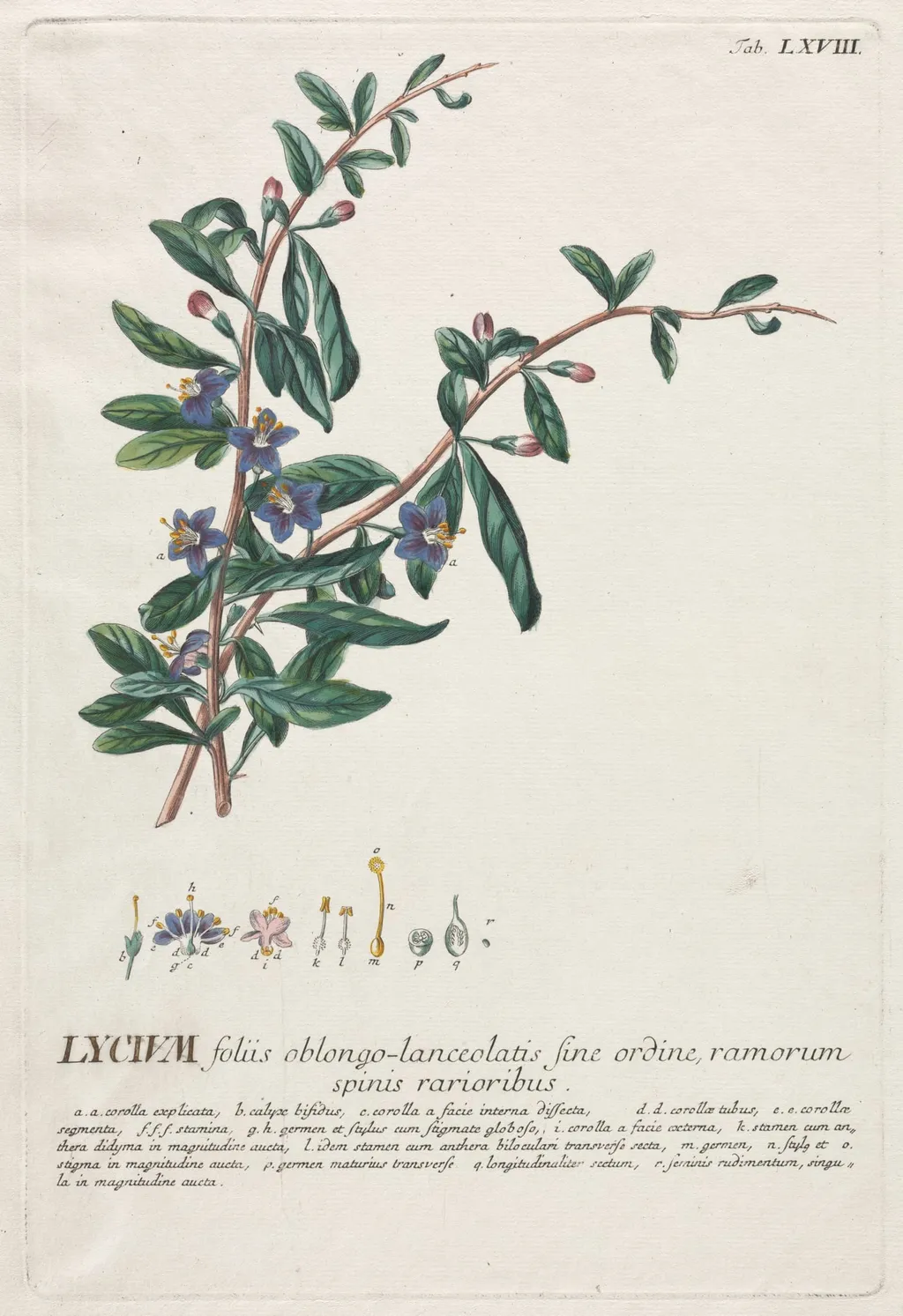
Plantae Selectae: No. 68 - Lycium is a print by the Romanticist artist Georg Dionysius Ehret. It dates from 1762 and is held in the collection of the Cleveland Museum of Art. Plantae Selectae: No.
About this work
Overview
The image depicts a Lycium shrub rendered with green foliage, clusters of purple blossoms bearing yellow throats, and a few unopened red buds.
Plantae Selectae: No. 68 – Lycium is a botanical print executed in 1762 by the German naturalist and illustrator Georg Dionysius Ehret. The image depicts a Lycium shrub rendered with green foliage, clusters of purple blossoms bearing yellow throats, and a few unopened red buds. A muted beige ground provides a neutral field, while small inset sketches labeled with letters illustrate specific plant parts.
Subject & Meaning
The work presents a detailed study of the Lycium species, emphasizing its diagnostic features for identification. The juxtaposition of mature flowers, buds, and leaf fragments offers a comprehensive visual reference, supporting the scientific aim of accurately conveying the plant’s morphology to scholars and collectors.
Technique & Style
Ehret employed fine line work and delicate washes typical of 18th‑century botanical engraving. The print balances precise anatomical detail in the inset diagrams with a more naturalistic rendering of the whole plant, using subtle tonal variations to suggest texture while maintaining clarity for instructional purposes.
History & Provenance
Created as part of the Plantae Selectae series, the print entered the collection of the Cleveland Museum of Art, where it remains on view. The series was compiled to disseminate reliable botanical knowledge during a period of expanding scientific exploration in Europe.
Artist & collection

Artist
Georg Dionysius Ehret was a German botanist and entomologist known for his botanical illustrations.

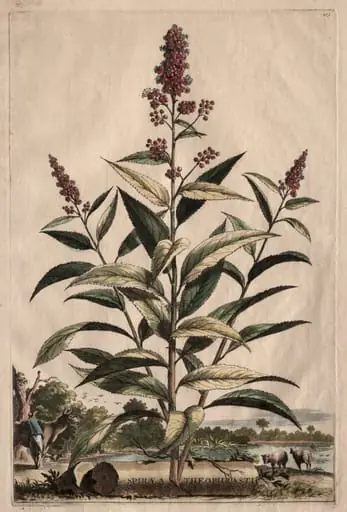 Phytographia Curiosa: Spiraea Theophrasti
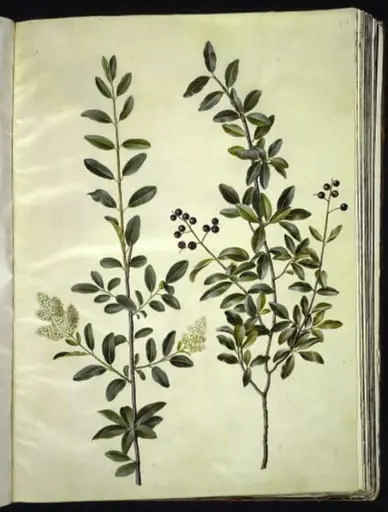 Ligustrum vulgare (almindelig liguster)
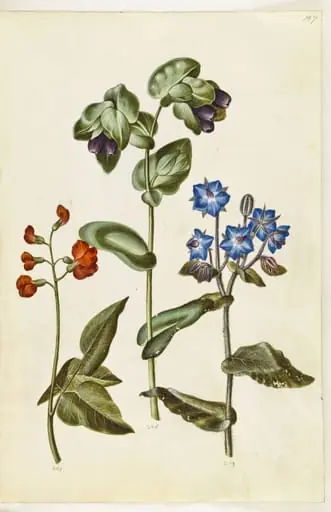 Phaseolus coccineus (pral-bønne); Cerinthe major (stor voksurt); Borago officinalis (almindelig hjulkrone)
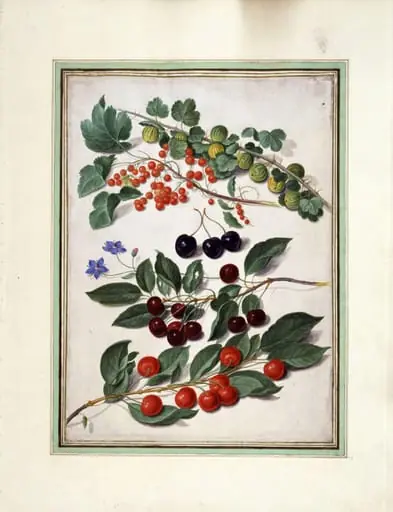 Cherries, redcurrants and gooseberries
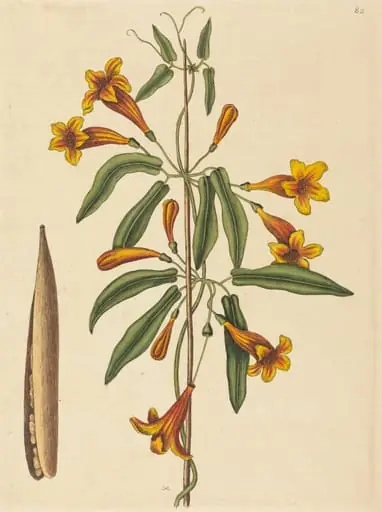 Cross-vine (Bignonia capreolata)
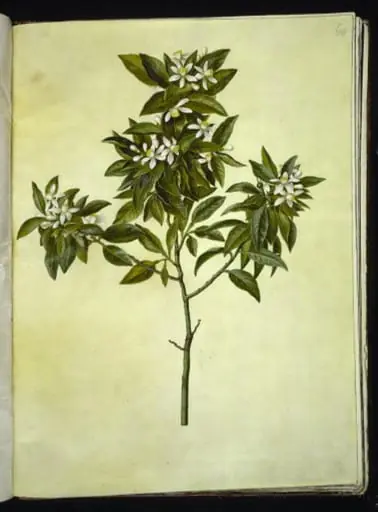 Citrus aurantium (pomerans)
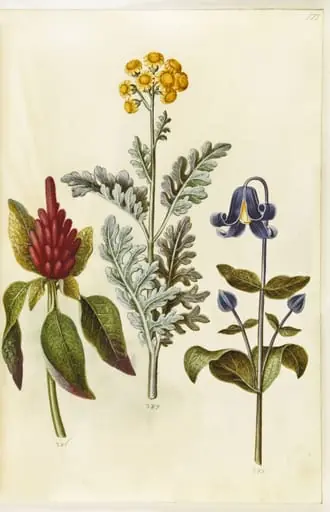 Amaranthus cruentus (rød amarant); Jacobaea maritima (gråblad); Clematis integrifolia (blå staudeklematis)
 Collection des fleurs et des fruits: Branches de Cérises précoce