Artwork
Untitled
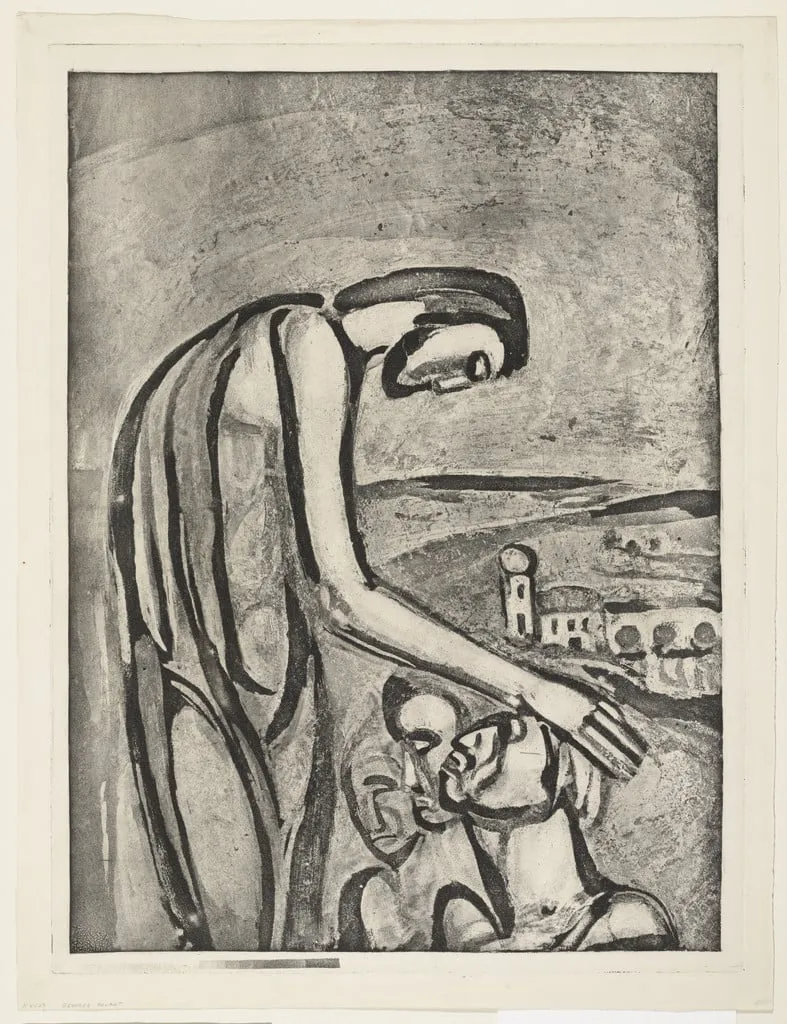
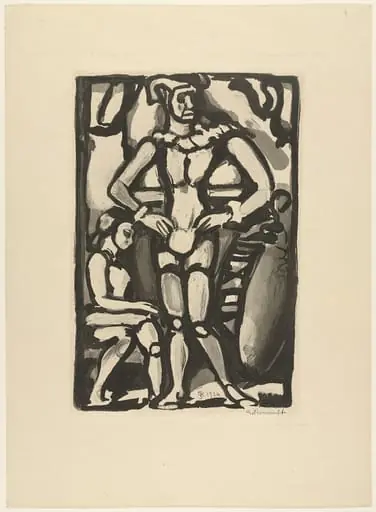
Untitled is an ink print by Georges Rouault. It dates from 1924 and is held in the collection of the Museum of Modern Art. This print, dated around 1924, combines aquatint, drypoint, and roulette techniques over a photogravure base.
About this work
Overview
The composition centers on two figures in intimate proximity, set against a faintly rendered townscape with a distant tower near water.
This print, dated around 1924, combines aquatint, drypoint, and roulette techniques over a photogravure base. It is part of the collection at The Museum of Modern Art. The work’s layered process creates a rich tonal range, with deep shadows and areas of stark white. The composition centers on two figures in intimate proximity, set against a faintly rendered townscape with a distant tower near water.
Subject & Meaning
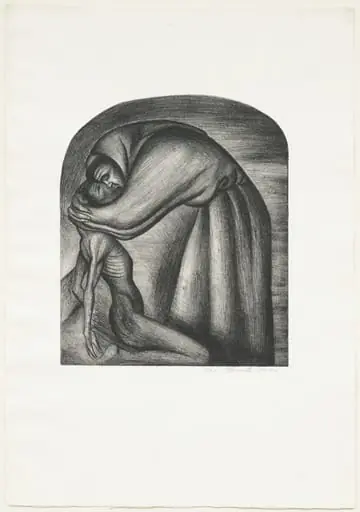
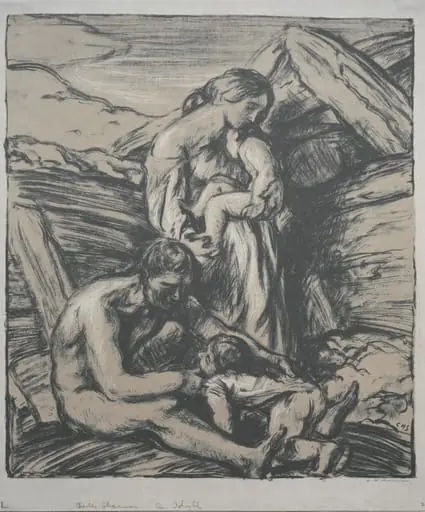
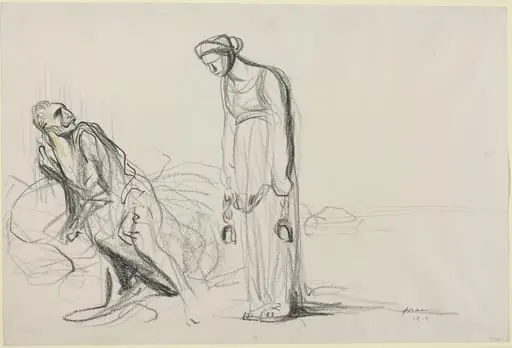
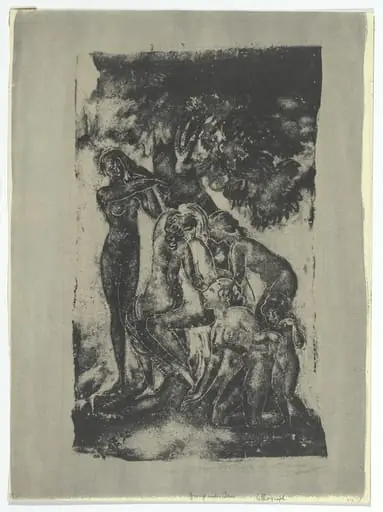
A tall, standing figure leans over a smaller, seated person, their postures suggesting a private exchange. The seated figure looks upward, while the other bends inward, creating a sense of quiet intimacy. The setting—a hazy town with a tower—hints at isolation or contemplation. No narrative is explicit, but the dynamic implies emotional weight, possibly of care, confession, or shared sorrow.
Technique & Style
The artist employed drypoint for bold, incised lines and aquatint to achieve soft gradations of tone. Roulette added textured areas, while the photogravure underlayer provided subtle mid-tones. Scraping and wiping created high contrast between dense blacks and untouched paper. The resulting image is graphic and emotionally charged, emphasizing form through absence as much as presence.
History & Provenance
The work was produced during Rouault’s mature period, when he increasingly focused on spiritual and humanist themes. It entered The Museum of Modern Art’s collection in the mid-20th century, following the institution’s early commitment to modern European prints. Its provenance reflects its recognition within avant-garde print circles, though it was never widely exhibited during the artist’s lifetime.
Context
Created in the 1920s, this print emerged amid postwar European introspection. Rouault, influenced by Fauvism and religious iconography, moved away from pure expressionism toward meditative imagery. His prints often depicted marginalized figures, reflecting his Catholic convictions and empathy for the suffering. This piece aligns with his broader interest in solitude and quiet dignity.
Legacy
Though less known than his paintings, this print exemplifies Rouault’s innovative printmaking. His fusion of traditional etching with experimental techniques influenced later generations of printmakers seeking emotional depth through texture and contrast. The work remains a quiet but significant example of 20th-century printmaking that prioritizes atmosphere over spectacle.
Artist & collection

Artist
Georges-Henri Rouault was a French painter, draughtsman, and printmaker, whose work is often associated with Fauvism and Expressionism.