Artwork
Untitled
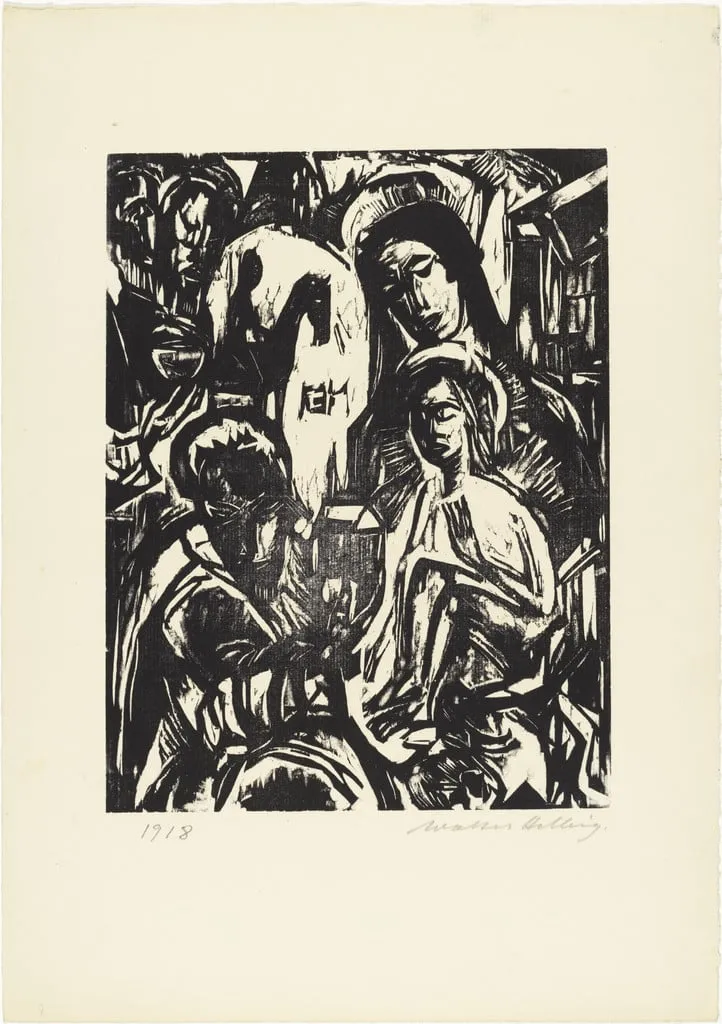
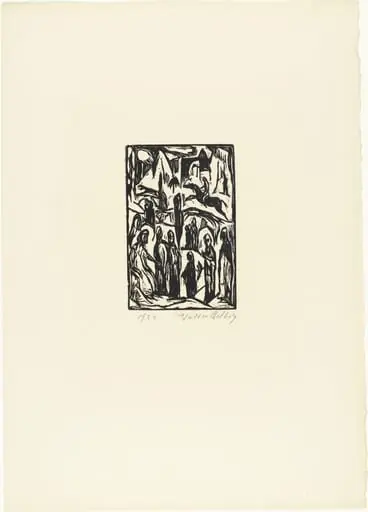
Untitled is an ink print by Walter Helbig. It dates from 1918 and is held in the collection of the Museum of Modern Art.
About this work
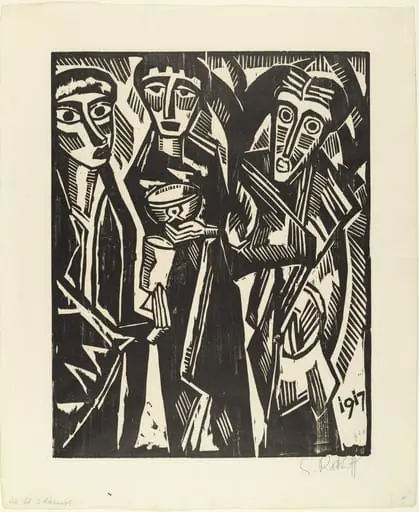
The year 1918 is marked in the corner, but the scene looks like a religious moment, maybe a crowd around a crucifixion.
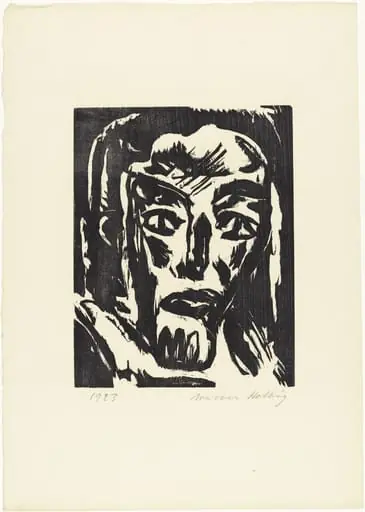
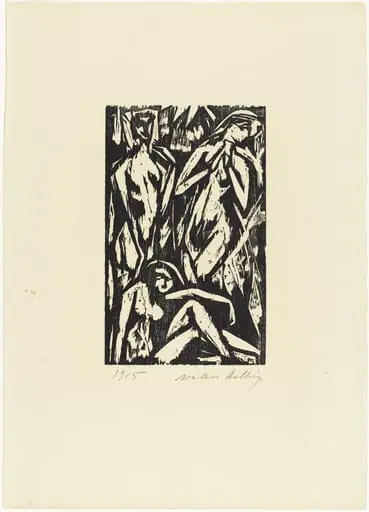
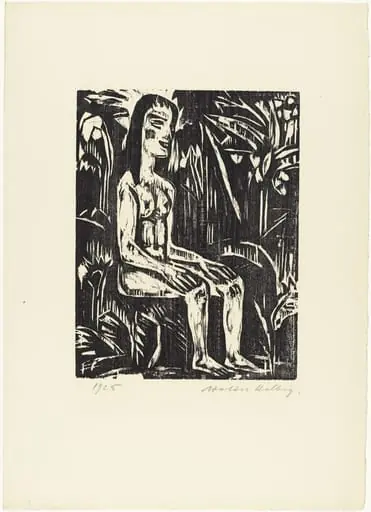
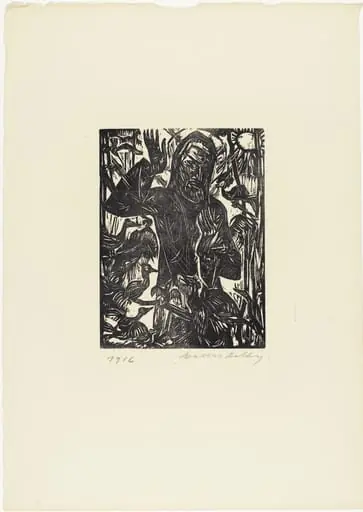
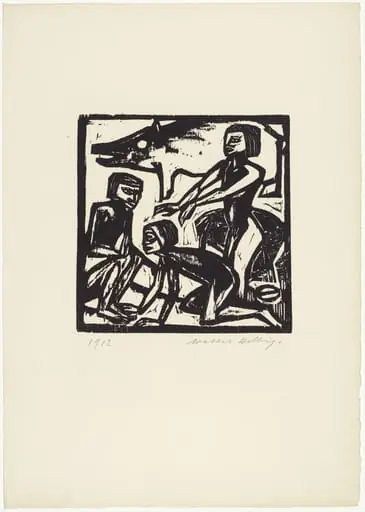
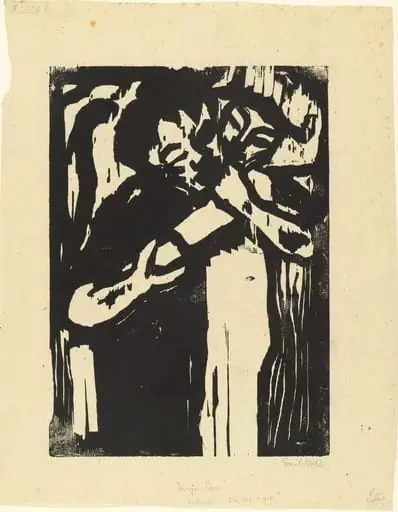
This print shows a group of figures in strong black lines against a plain background. One person holds a tall cross, while others stand close, their faces blurred and shadowy. The style is rough and angular, with no soft edges—just sharp shapes and bold contrasts.
The year 1918 is marked in the corner, but the scene looks like a religious moment, maybe a crowd around a crucifixion. The artist used woodcut, a printmaking method where blocks of wood are carved and inked.
If you like this style, check out woodcut next to see how it works.
Overview
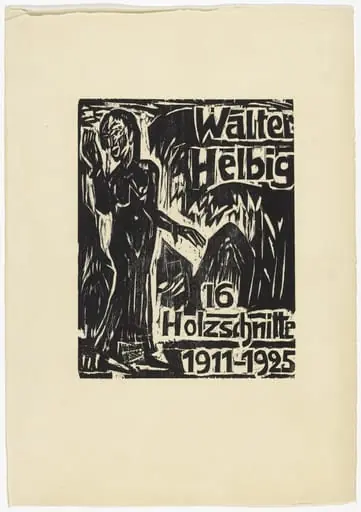
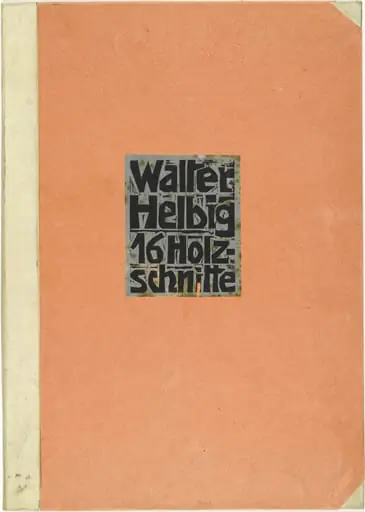
Walter Helbig’s 1918 woodcut, part of a sixteen‑piece portfolio that includes a title page, table of contents, cover, and colophon, is in the collection of the Museum of Modern Art. The print presents a compact grouping of figures rendered in stark black lines against an unadorned background, emphasizing the graphic force of the medium.
Subject & Meaning
The composition centers on a solitary figure bearing a tall cross, surrounded by several indistinct, shadowed individuals. The arrangement suggests a collective, perhaps ritual or devotional, moment, evoking themes of sacrifice or communal reverence without providing a narrative context, leaving interpretation open to the viewer.
Technique & Style
Executed as a woodcut, the work relies on carved wooden blocks to transfer ink onto paper, producing sharp, angular forms and high contrast. Helbig’s handling of the medium yields rough, jagged edges and bold outlines, eschewing subtle gradations in favor of a graphic, almost primitive visual language.
History & Provenance
Created in the final year of World War I, the piece was included in a limited portfolio that combined multiple woodcuts with accompanying textual elements. It entered the Museum of Modern Art’s holdings through acquisition, where it remains an example of early twentieth‑century printmaking practice.
Artist & collection