Artwork
The Banquet of Cleopatra
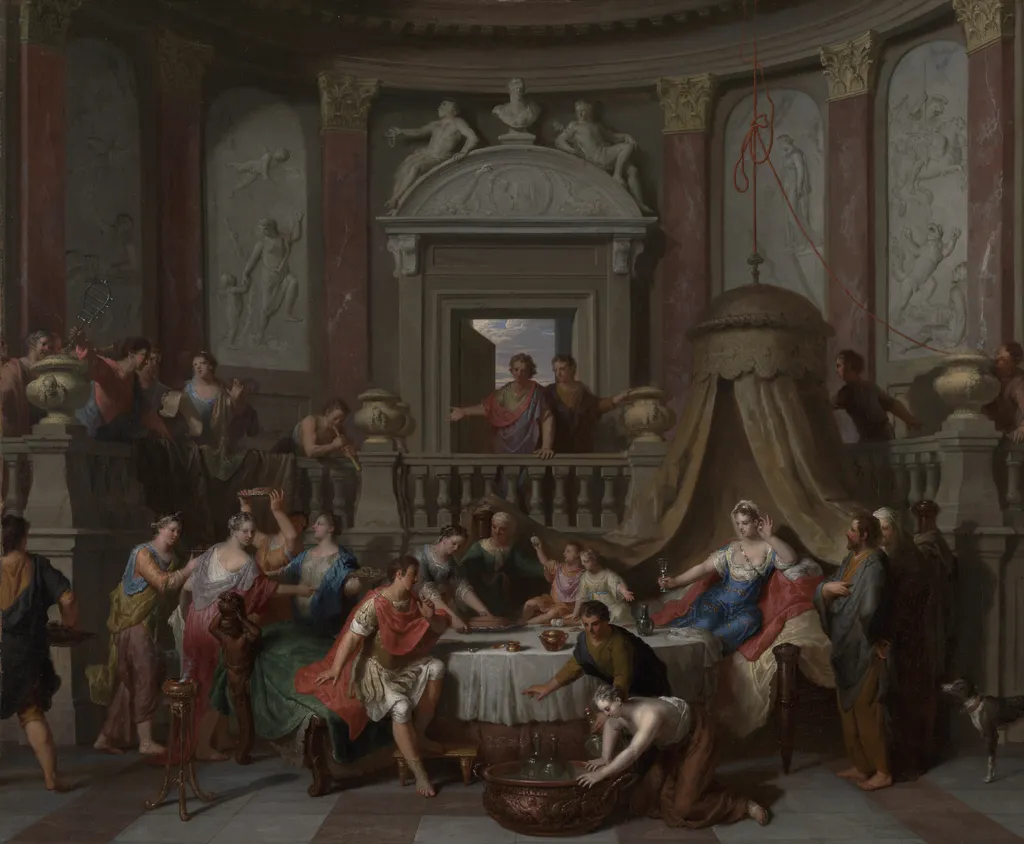
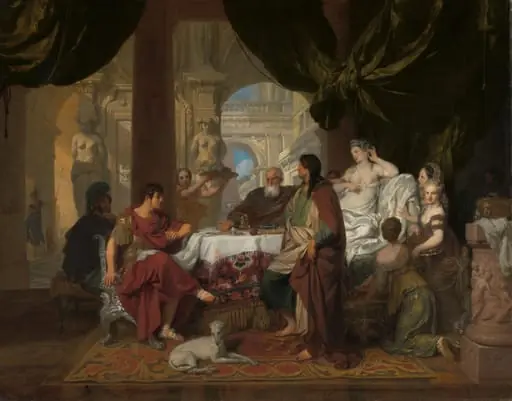
The Banquet of Cleopatra is an oil painting by the Rococo painting artist Gerard Hoet. It dates from 1700 and is held in the collection of the J. Paul Getty Museum.
About this work
Overview
Painted in 1700 by Dutch artist Gerard Hoet, this oil-on-canvas work portrays a scene from ancient history centered on Cleopatra. It belongs to the collection of the J. Paul Getty Museum and exemplifies the Baroque era’s interest in dramatic historical narratives. The composition emphasizes opulence and theatricality, characteristic of Hoet’s approach to mythological and biblical subjects.
Subject & Meaning
The image conveys themes of power, extravagance, and political spectacle.
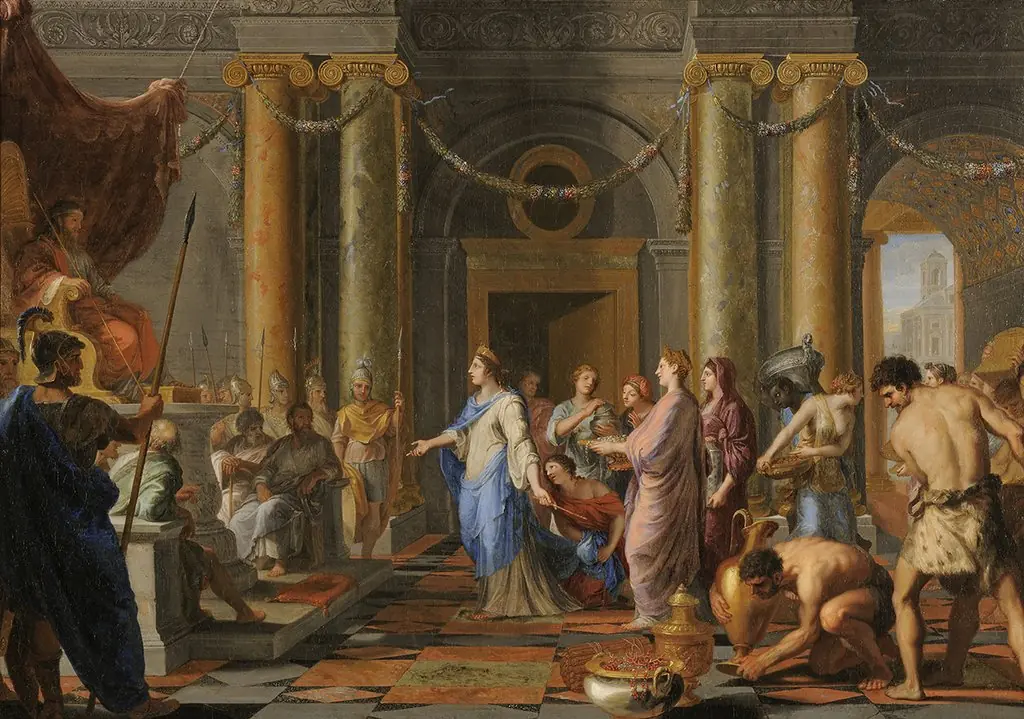
The painting illustrates the legendary banquet in which Cleopatra, queen of Egypt, dissolves a pearl earring in vinegar to demonstrate her wealth to Mark Antony. Though the moment of dissolution is not shown, the scene captures the aftermath—Cleopatra seated in regal attire, surrounded by courtiers in a moment of indulgence. The image conveys themes of power, extravagance, and political spectacle.
Technique & Style
Hoet employs rich, saturated colors and detailed textures to render silk robes, marble surfaces, and gleaming vessels. Figures are arranged in a dynamic, semi-circular formation around the central table, guiding the viewer’s eye toward Cleopatra. Soft lighting enhances the sense of depth and volume, while expressive gestures and facial expressions convey interaction and emotion, typical of late Baroque narrative painting.
History & Provenance
Commissioned during the height of Hoet’s career, the painting entered the Getty Museum’s collection in the 20th century. Prior to that, it remained in private European collections, likely in the Netherlands or France, where Hoet’s works were appreciated for their classical themes and refined execution. Its documented history reflects the continued interest in historical subjects among 18th- and 19th-century collectors.
Context
Created during a period when European courts favored grand historical and mythological scenes, Hoet’s painting aligns with broader trends in Dutch and French art that sought to elevate moral or political allegories through classical antiquity. The depiction of Cleopatra reflects contemporary fascination with her as a symbol of exotic power and feminine authority, filtered through Renaissance and Baroque literary traditions.
Legacy
Though not among Hoet’s most widely reproduced works, the painting contributes to the understanding of how 18th-century artists interpreted ancient history for elite audiences. It stands as an example of how historical narratives were visually codified to reflect contemporary values of luxury, spectacle, and political intrigue, influencing later depictions of Cleopatra in European art.
Own this work as a print
Artist & collection


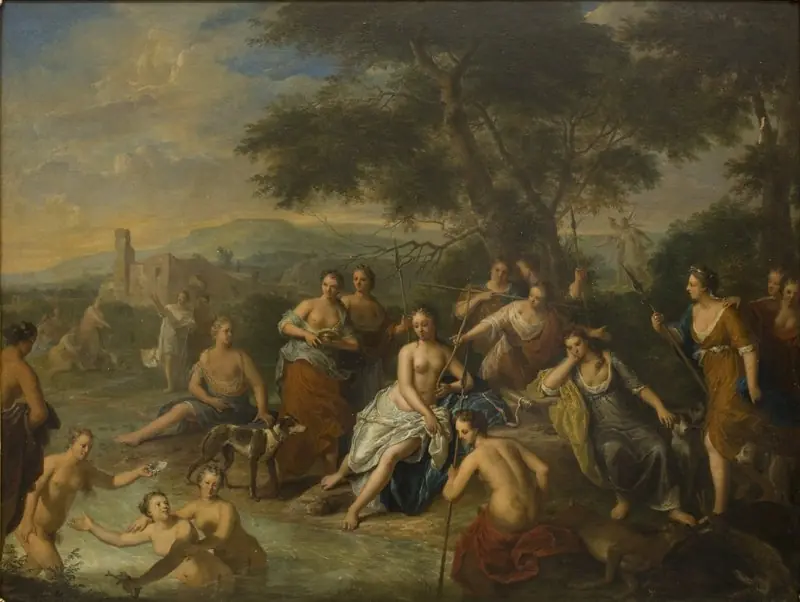 Diana and her Nymphs
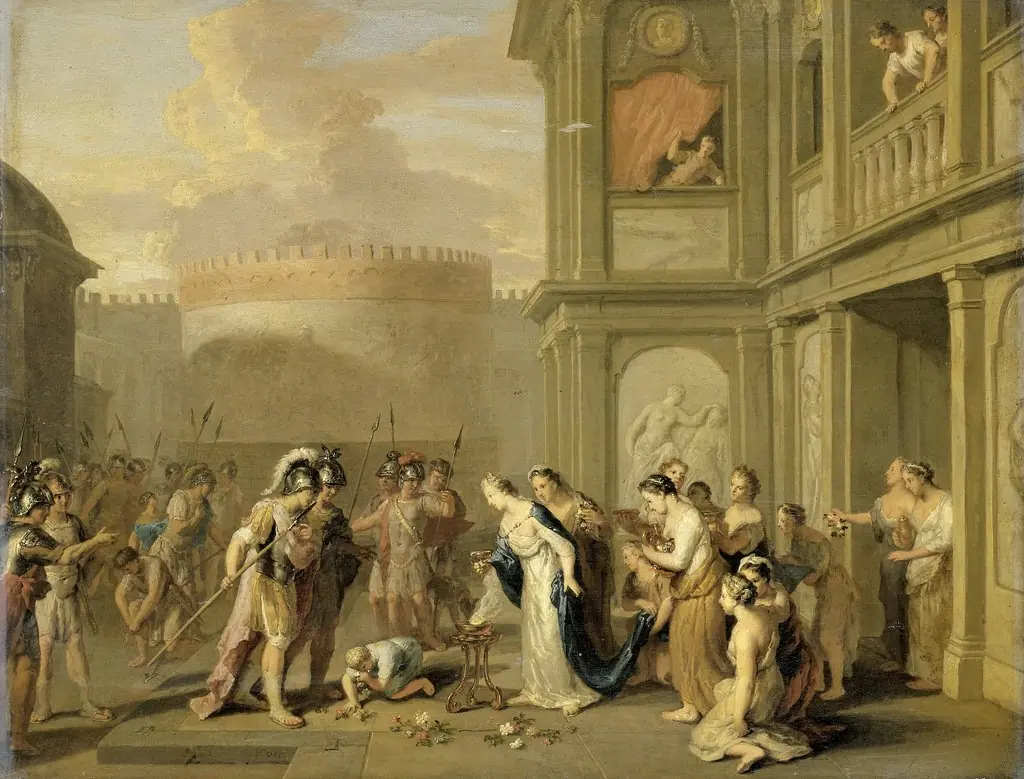 Queen Cleophis Offers Alexander the Great Wine after Conquering Massaga
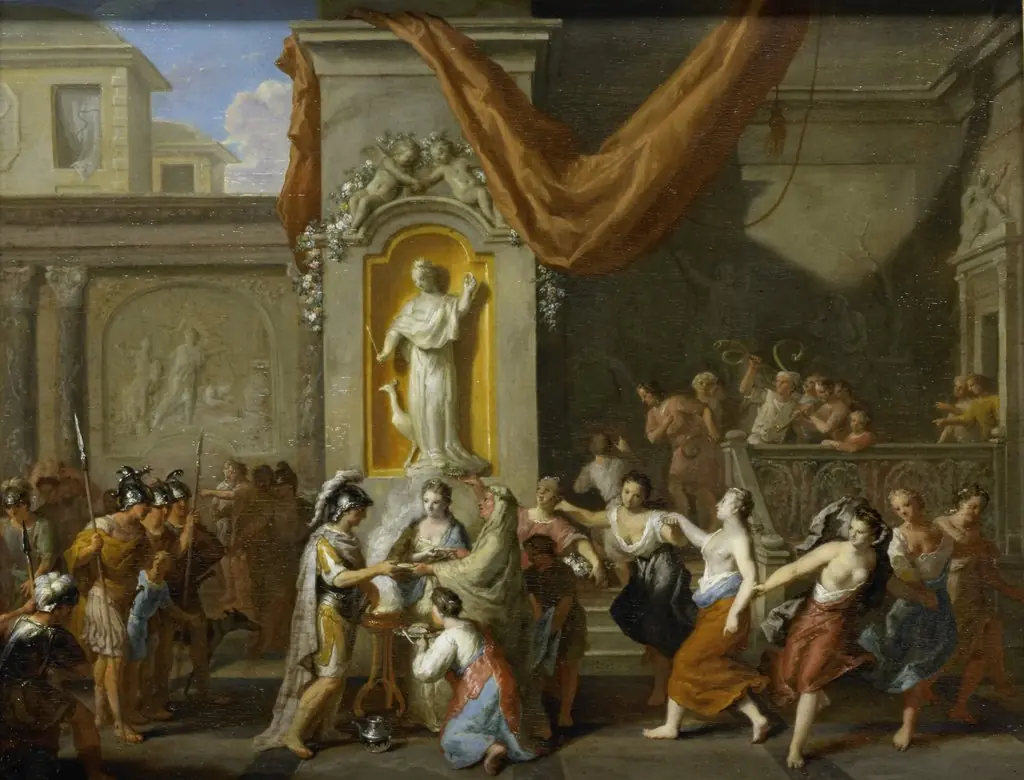 Marriage of Alexander the Great, King of Macedonia, with Roxana of Bacteriane
 Family Portrait of Willem Hadriaan of Nassau, Lord of Odijk, with his Wife and Children
 Schindung des Marsyas (?)
 Death of Dido
 Idyllic Landscape with Fortress
 Idyllic Landscape with Watch-tower