Artwork
The Magnanimity of Lycurgus
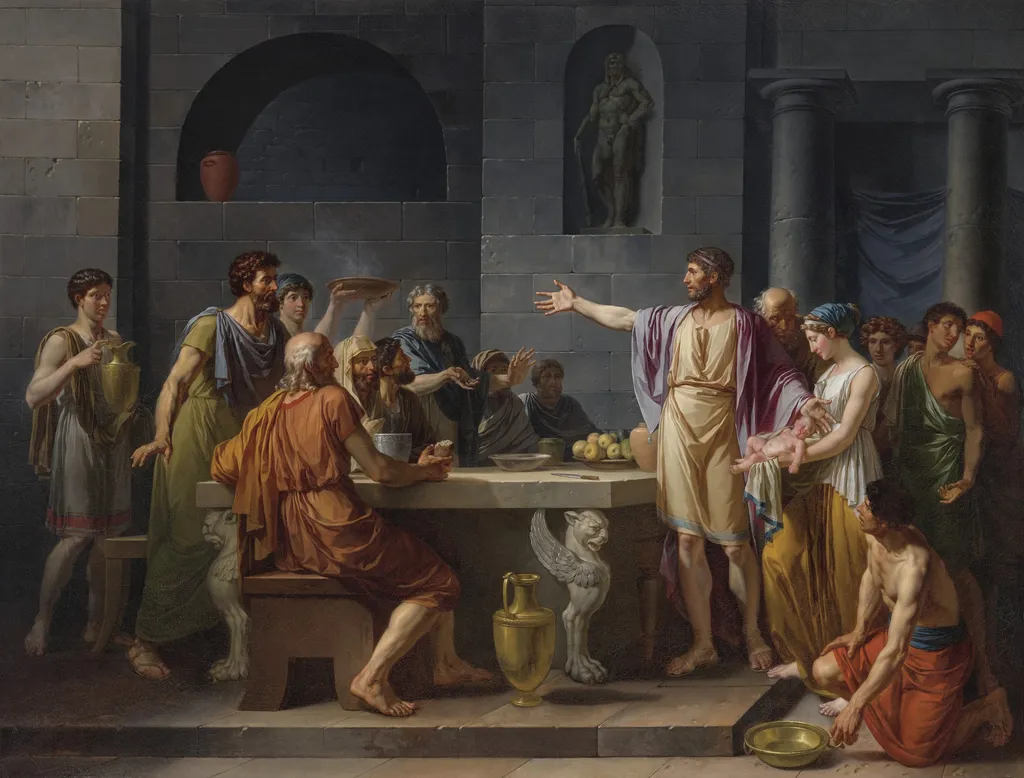
The Magnanimity of Lycurgus is an oil painting by the Neoclassicist artist Jean-Jacques-François Le Barbier. It dates from 1796 and is held in the collection of the Museum of Fine Arts Boston.
About this work
Overview
Painted in 1796 by Jean-Jacques-François Le Barbier, this oil-on-canvas work belongs to the neoclassical tradition of historical narrative painting.
Painted in 1796 by Jean-Jacques-François Le Barbier, this oil-on-canvas work belongs to the neoclassical tradition of historical narrative painting. Le Barbier, who held the title of official painter to the French king in the 1780s, turned to classical antiquity for subject matter during the revolutionary period. The painting illustrates a moment from Spartan legend, rendered with architectural precision and restrained emotion, reflecting the era’s fascination with civic virtue and moral clarity.
Subject & Meaning
The scene portrays Lycurgus, the legendary lawgiver of Sparta, engaged in a moment of moral authority. He gestures toward a woman holding an infant, symbolizing the Spartan practice of exposing weak or deformed newborns. The figures surrounding the table—some in debate, others in quiet observation—suggest a deliberative assembly. The composition frames Lycurgus not as a tyrant, but as a stoic architect of societal order, aligning with Enlightenment ideals of rational governance and public duty.
Technique & Style
Le Barbier employs clear linear perspective and muted earth tones to ground the scene in architectural realism. Figures are arranged with formal symmetry, their drapery rendered with precise folds that echo classical sculpture. The lighting is even and diffuse, minimizing dramatic contrast in favor of clarity. Objects like the fruit bowl and statue in the background serve as symbolic props, reinforcing themes of abundance and cultural continuity without overwhelming the narrative focus.
History & Provenance
Completed in 1796, the painting emerged during a period of political upheaval in France, when classical antiquity offered a model for civic renewal. Le Barbier, already established as a royal painter, turned to ancient Sparta as a neutral, morally instructive subject. The work entered the collection of the Museum of Fine Arts, Boston, in the early 20th century, where it remains as part of its European painting holdings, representing French neoclassical interests beyond the more familiar Roman themes.
Context
In the wake of the French Revolution, artists sought historical narratives that emphasized discipline, sacrifice, and civic virtue. Sparta, often idealized as a society governed by law rather than monarchy, provided a compelling alternative to the decadence associated with the ancien régime. Le Barbier’s choice of Lycurgus reflects this cultural shift, aligning with contemporary intellectual currents that valued rational law over inherited privilege, even as the political landscape continued to evolve.
Legacy
Though less widely known than contemporaries like David, Le Barbier’s work contributed to the broader neoclassical project of using antiquity to frame modern moral questions. His focus on Spartan ethics, rendered with academic precision, influenced later historical painters interested in non-Roman antiquity. The painting endures as a quiet example of how art in revolutionary France engaged with ancient models to articulate ideals of order, justice, and collective responsibility.
Own this work as a print
Artist & collection
Artist
Jean-Jacques-François Le Barbier
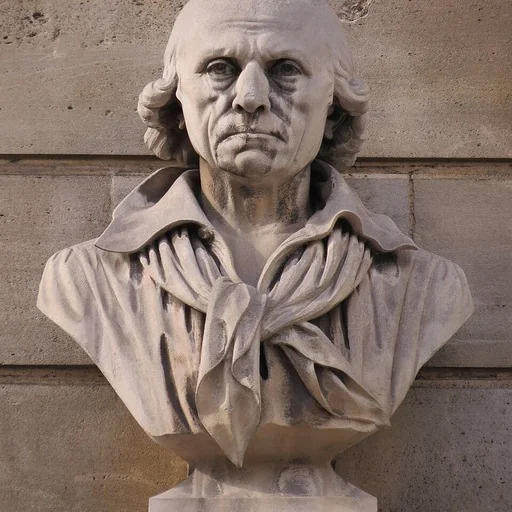
Jean-Jacques-François Le Barbier (French pronunciation: ; 11 November 1738 – 7 May 1826) was a writer, illustrator and painter of French history.

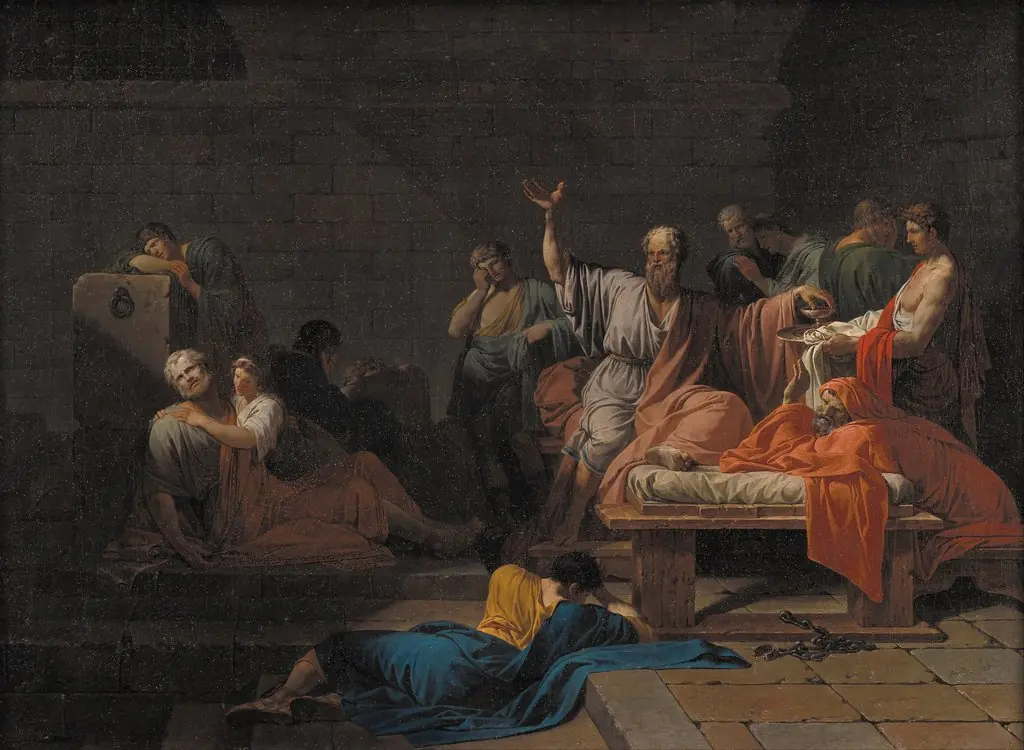 The Death of Socrates
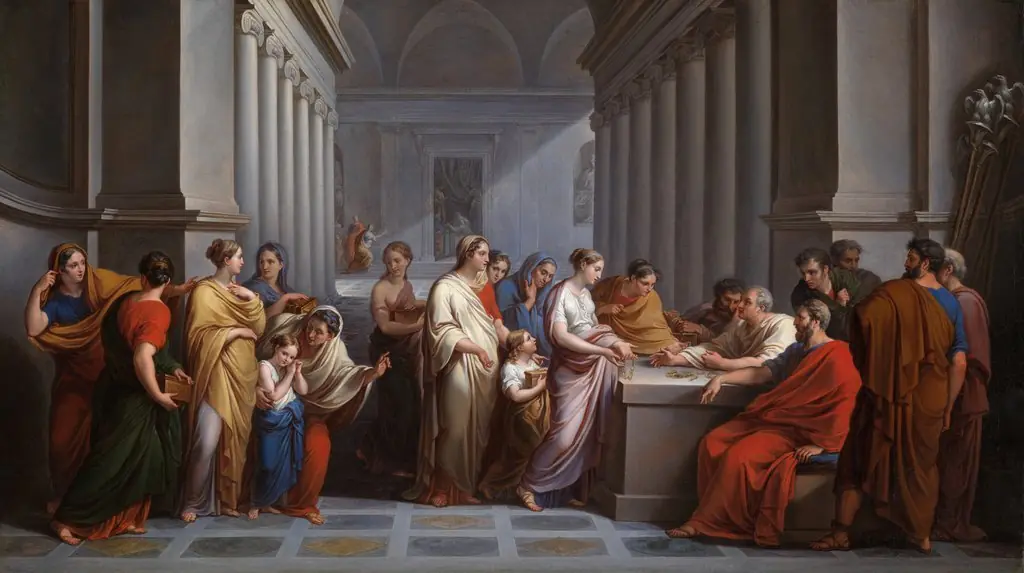 Roman Women Offering Their Jewellery in Defence of the State
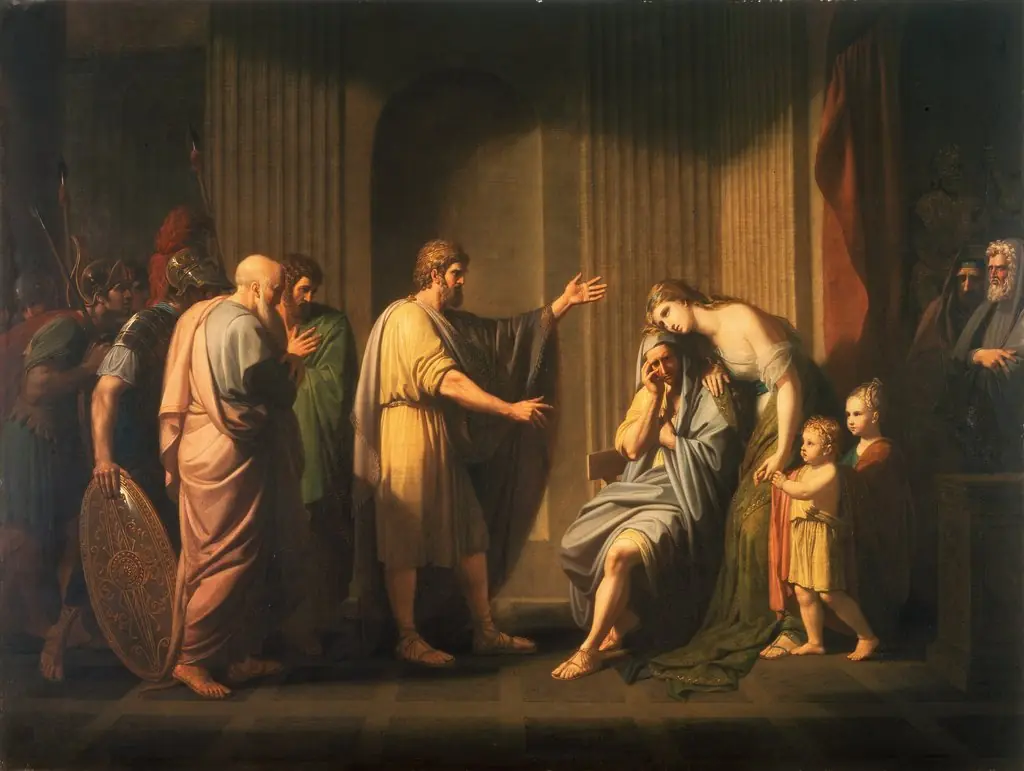 Cleombrotus Ordered into Banishment by Leonidas II, King of Sparta
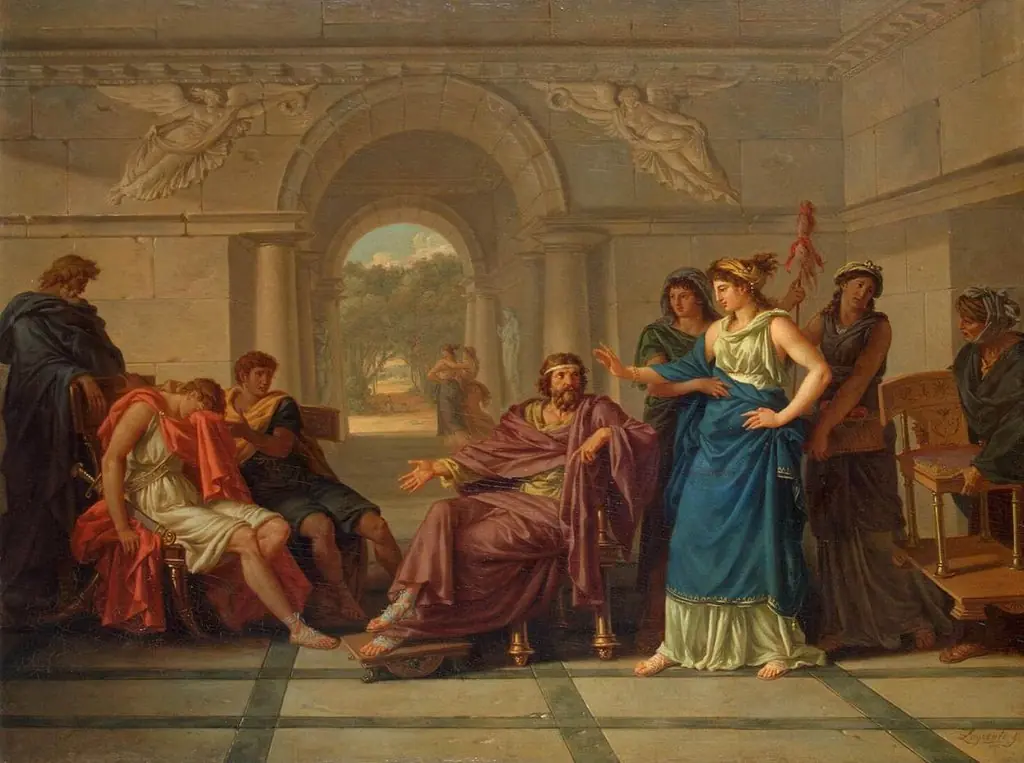 Helen Recognising Telemachus, Son of Odysseus
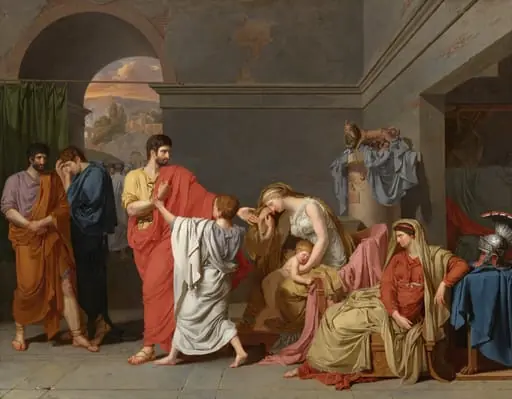 Coriolanus Taking Leave of his Family
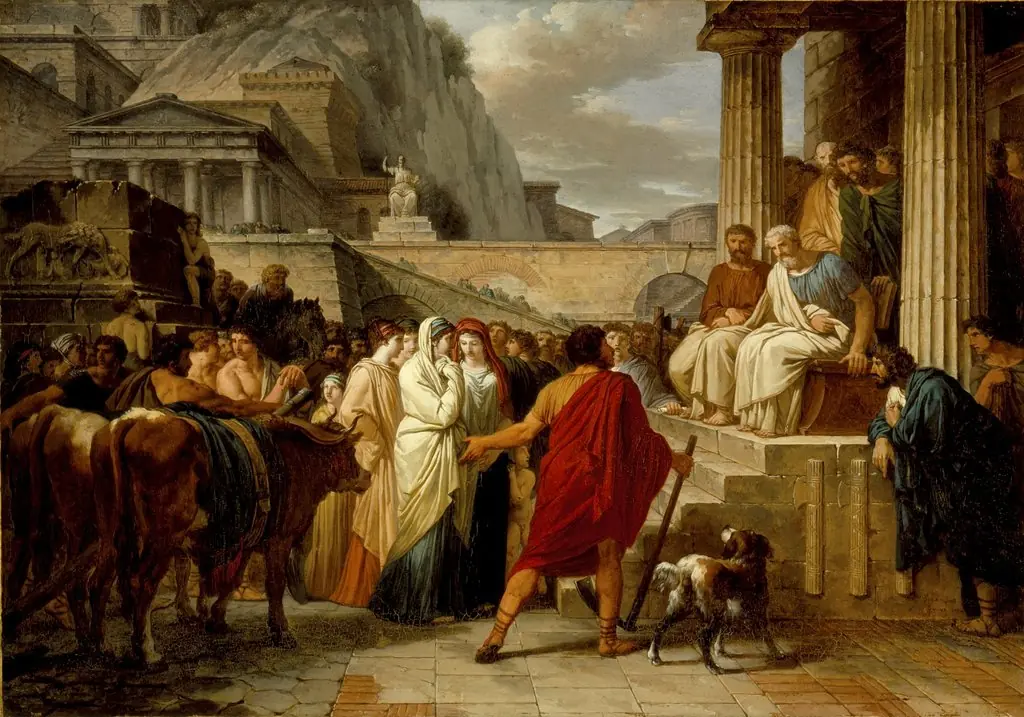 Caius Furius Cressinus Accused of Sorcery
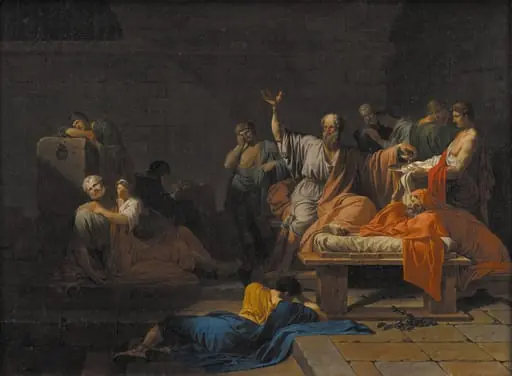 The Death of Socrates
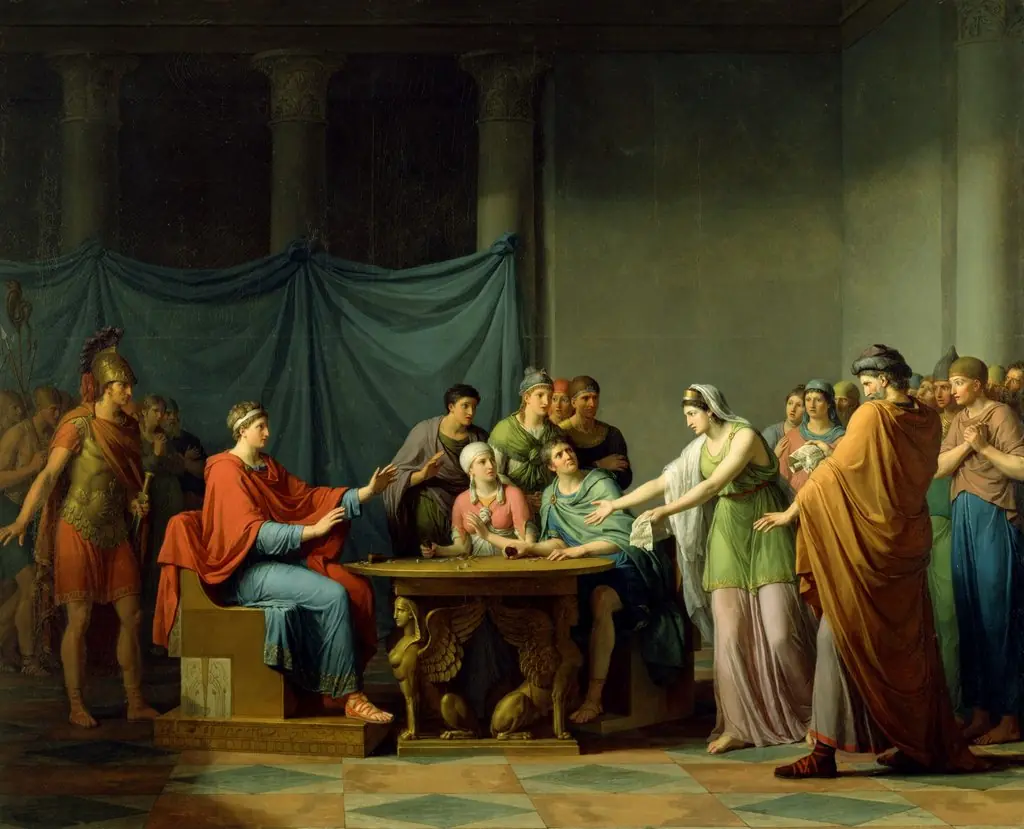 Berenice Reproaching Ptolemy
 Cincinnatus abandons the Plough to dictate Laws to Rome
 Brutus entdeckt die Namen seiner Söhne auf der Liste der Verschwörer und verurteilt sie zum Tode
 Cleopatra’s Banquet
 Sermon of St Paul amidst the Ruins