Artwork
Initials V and D
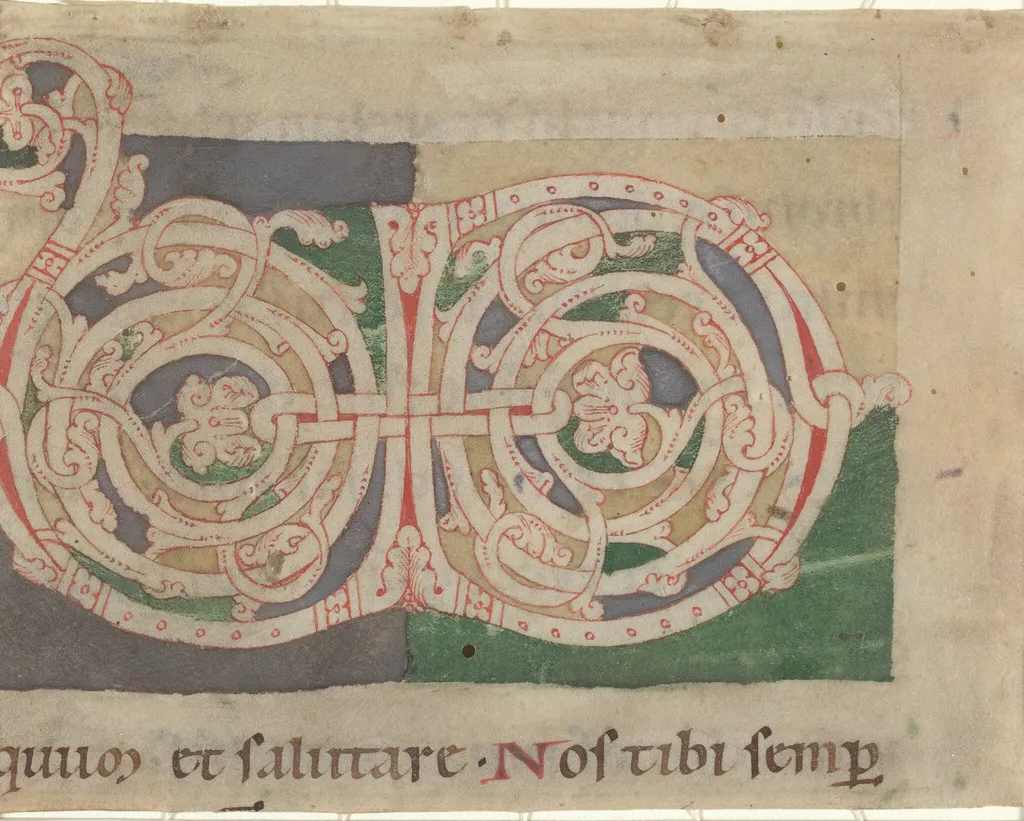
Initials V and D is a drawing by German 12th Century. It dates from 1101 and is held in the collection of the National Gallery of Art.
About this work
The lines are red and black, and the colors are mostly faded golds, greens, and blues.
This page shows two big circles with swirling patterns inside. Each circle has a small figure at the center, dressed in robes. The lines are red and black, and the colors are mostly faded golds, greens, and blues. The background is plain, but the circles stand out.
The letters at the bottom are old-style writing. These designs were likely part of a book, not a standalone painting. The artist filled tiny spaces with lots of detail.
Look up German 12th Century to see more art from this time.
Overview
The work entitled “Initials V and D” is a miniature drawing executed on vellum. It consists of two large circular motifs, each containing a central figure clad in robes. The composition is rendered with fine linear work in red and black, set against a muted palette of faded gold, green and blue, while the surrounding surface remains plain.
Subject & Meaning
At the heart of each circle a diminutive, robed figure occupies the space, suggesting a symbolic or heraldic role often associated with initials in medieval manuscripts. The swirling decorative patterns surrounding the figures serve to frame and emphasize the initials, likely representing the names of a patron or scribe.
Technique & Style
The artist employed the delicate medium of vellum, allowing for intricate line work and precise coloration. Red and black inks delineate the swirling motifs, while washes of gold, green and blue provide subtle tonal variation. The miniature exemplifies the high level of detail characteristic of German manuscript illumination in the twelfth century.
History & Provenance
The piece appears to be a folio from a larger codex rather than an independent artwork, as indicated by the presence of marginal initials and the compact format. Its origin is traced to the German cultural sphere of the 1100s, a period noted for richly decorated liturgical and secular books.
Context
During the twelfth century, German scriptoria produced manuscripts that combined textual function with ornamental initials, often used to mark the beginning of sections or to honor patrons. The use of vivid yet faded pigments reflects contemporary material constraints and aesthetic preferences.
Legacy
While the miniature is a modest component of a manuscript, it illustrates the broader medieval practice of integrating art and text. Such initials provide insight into the visual language of the era and continue to inform studies of medieval book production and iconography.
Artist & collection

Artist
These 12th-century German artists painted tiny, glowing scenes on animal skin. Their brushes traced saints in gold-streaked robes and dramatic moments like Jesus on the cross. Every inch bristles with detail—swirling…

 Manuscript Illumination with Initial V, from a Bible
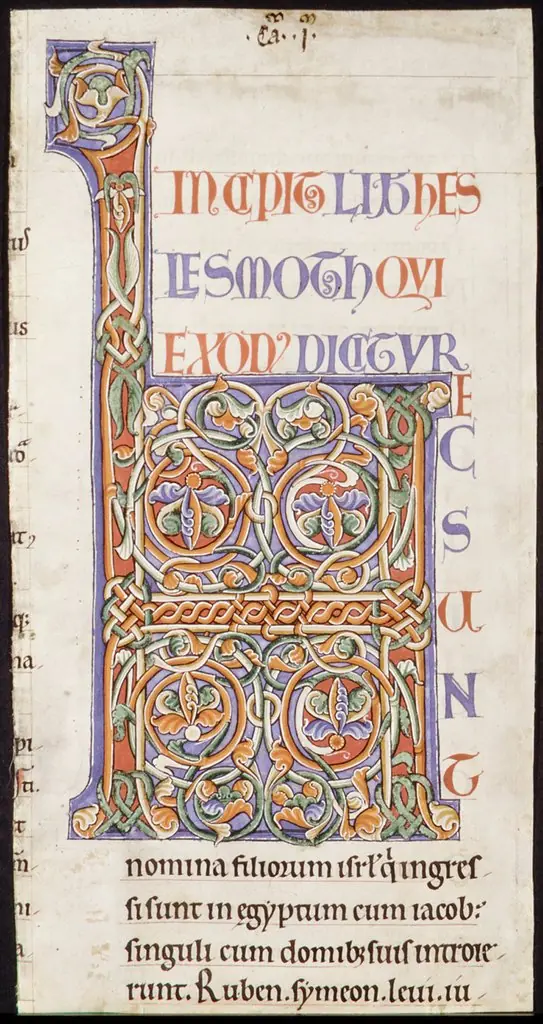 Manuscript Illumination with Initial H, from a Bible
![Christ in Majesty [recto], by French 12th Century](https://artifactworldgallery.com/img/french-12th-century--christ-in-majesty-recto--312aa8dd5634bdac-w320.webp) Christ in Majesty [recto]
Christ in Majesty [recto]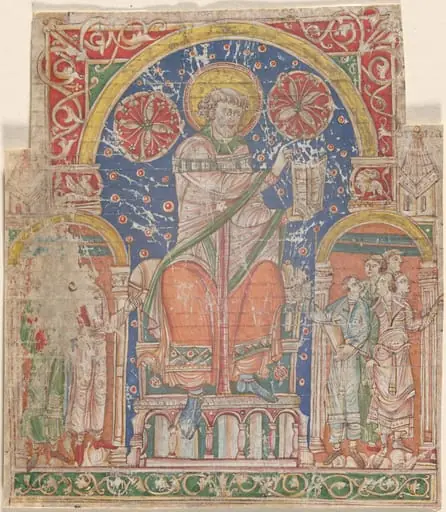 Saint Augustine
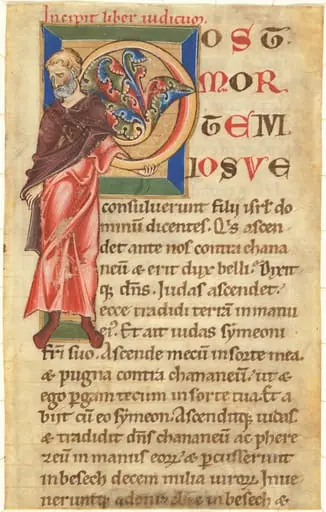 The Judge Judah (?)
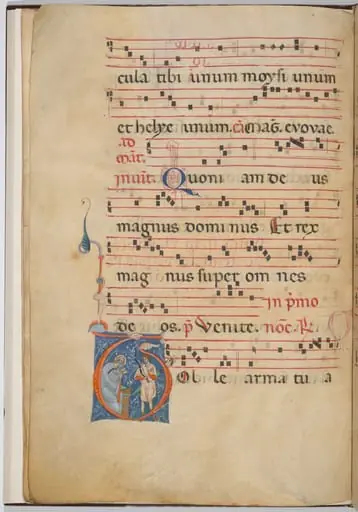 Isaac Sending Esau Out to Hunt
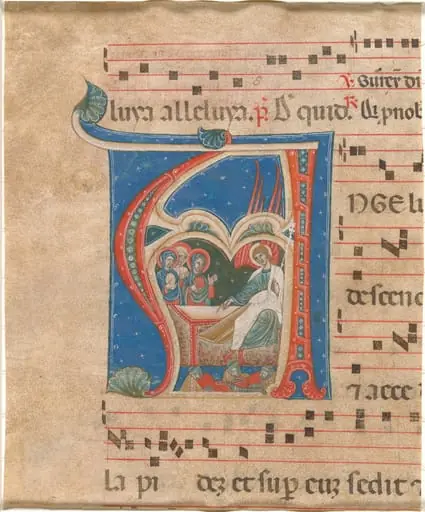 The Three Holy Women at the Tomb
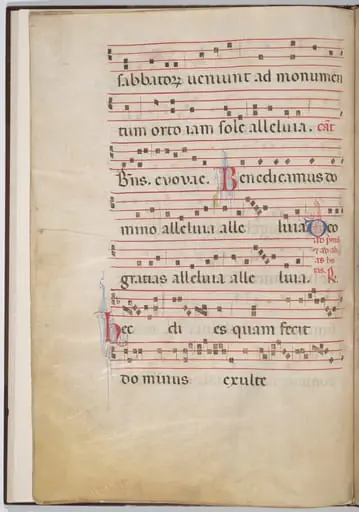 Leaf 4 from an antiphonal fragment (verso)
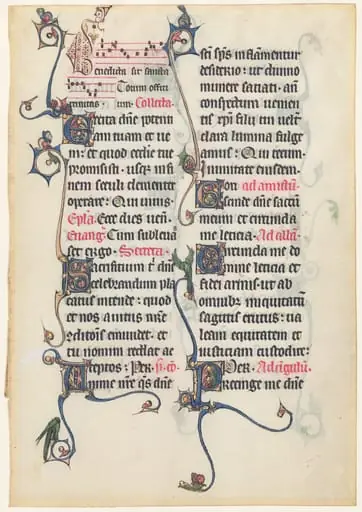 Manuscript Leaf from the Beauvais Missal
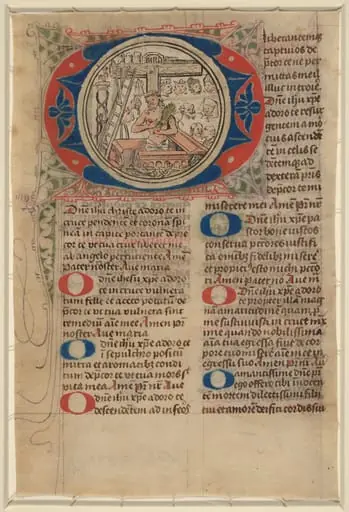 Christ as the Man of Sorrows
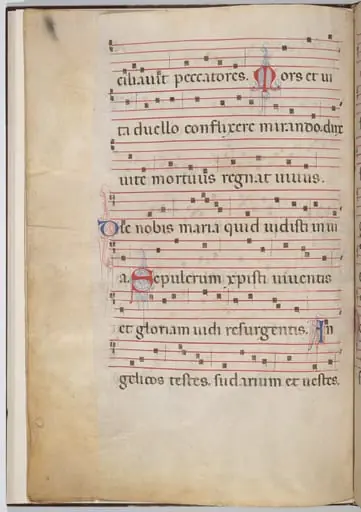 Leaf 6 from an antiphonal fragment (verso)
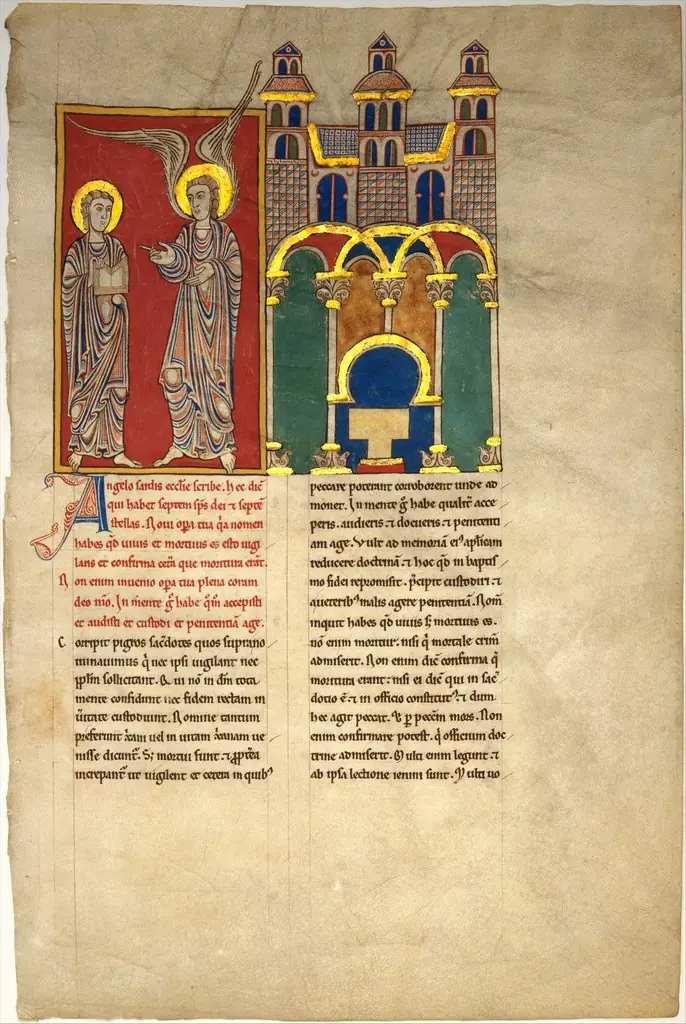 Leaf from a Beatus Manuscript: the Angel of the Church of Sardis with Saint John