Artwork
A Monstrance Held by Two Angels
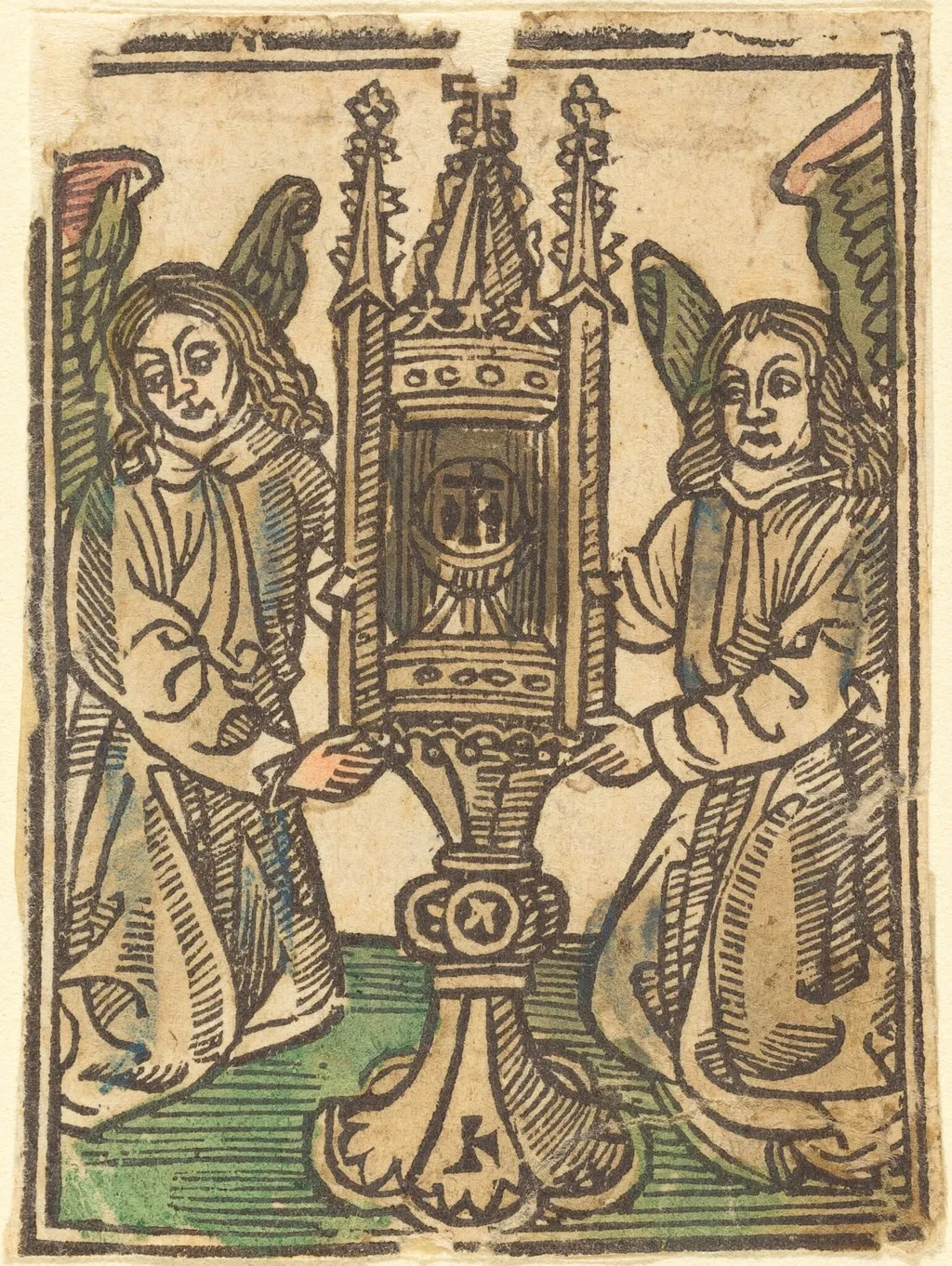
A Monstrance Held by Two Angels is an ink print by the Renaissance artist German 15th Century. It dates from 1498 and is held in the collection of the National Gallery of Art. The work is a hand‑colored woodcut depicting two winged figures supporting an elaborate, tall stand that crowns a circular object.
About this work
Overview
The work is a hand‑colored woodcut depicting two winged figures supporting an elaborate, tall stand that crowns a circular object. The composition is rendered with precise linear incisions, while the surface is tinted in muted greens, browns, rose and olive hues, giving the scene an earthy, devotional atmosphere.
Subject & Meaning
The two angels, rendered with simple facial features and flowing robes, appear to bear a monstrance—a liturgical vessel traditionally used to display the consecrated host. The central circular element suggests the presence of the sacred host, emphasizing themes of reverence and the celestial guardianship of the Eucharist.
Technique & Style
Executed as a woodcut, the image was created by carving the design into a wooden block, inking the raised surfaces, and pressing paper onto it. After printing, the artist applied hand‑applied pigments in a limited palette of green, brown, rose and olive, a common practice that added depth and color variation to otherwise monochrome prints.
Context
Monstrances and angelic figures were frequent motifs in late medieval and early modern devotional art, reflecting the importance of the Eucharist in liturgical practice. The use of woodcut allowed for relatively inexpensive reproduction, making such religious imagery accessible for private contemplation or church decoration.
Legacy
Hand‑colored woodcuts like this one illustrate the intersection of print technology and devotional art, demonstrating how artisans extended the reach of sacred iconography beyond painted panels and illuminated manuscripts. The piece remains a representative example of the medium’s capacity to convey complex religious symbolism through modest means.
Artist & collection

Artist
This 15th-century German artist carved vivid religious scenes into metal and wood, then hand-painted them in bright, symbolic colors.

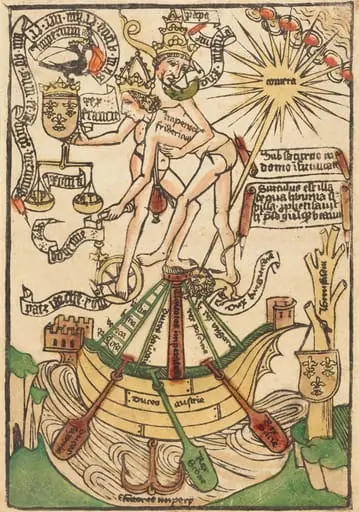 Allegory of the Meeting of Pope Paul II and Emperor Frederick III
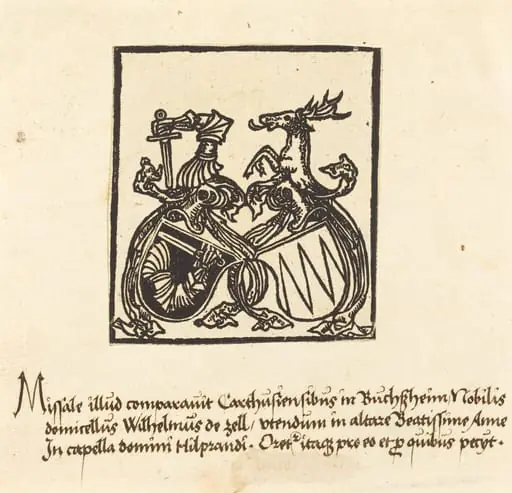 Bookplate of Wilhelm von Zell
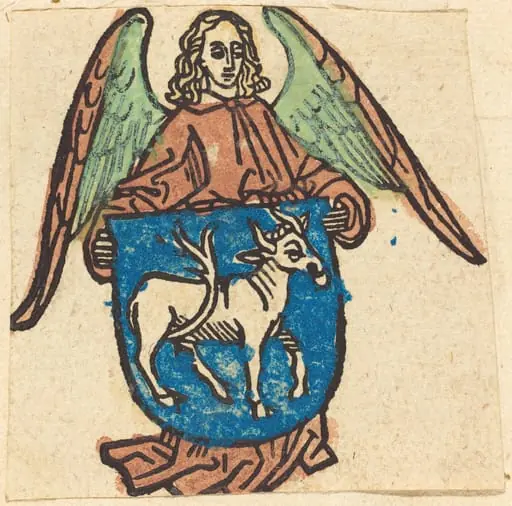 Bookplate of Hilprand Brandenburg of Bibrach
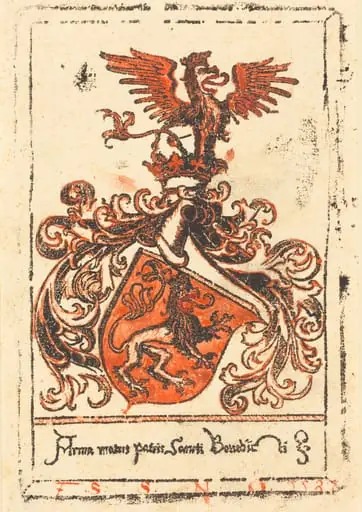 Bookplate of the Abbey of Ottobeuren
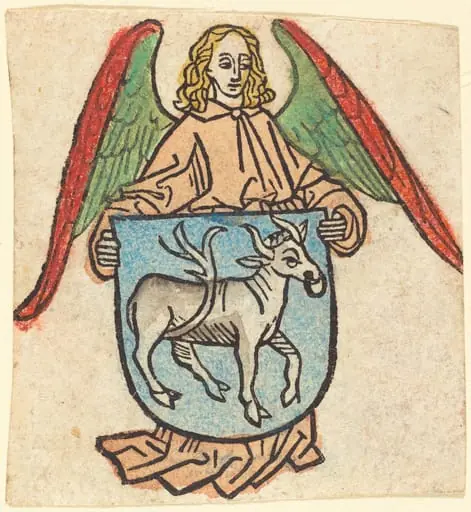 Bookplate of Hilprand Brandenburg of Bibrach
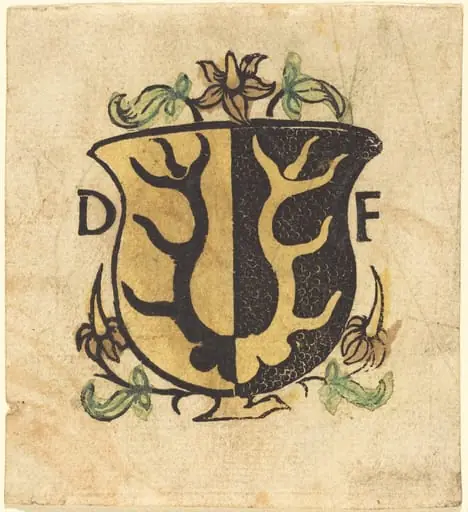 Bookplate of Dominicus Frauenfelder
![Studies for Six Figures (sheet from a model book) [recto], by German 15th Century](https://artifactworldgallery.com/img/german-15th-century--studies-for-six-figures-sheet-from-a-model-book-recto--4837429e0755bc3f-w320.webp) Studies for Six Figures (sheet from a model book) [recto]
Studies for Six Figures (sheet from a model book) [recto]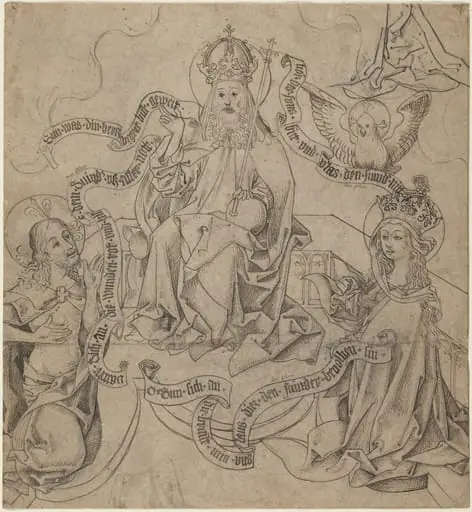 Christ and Mary Interceding with God the Father
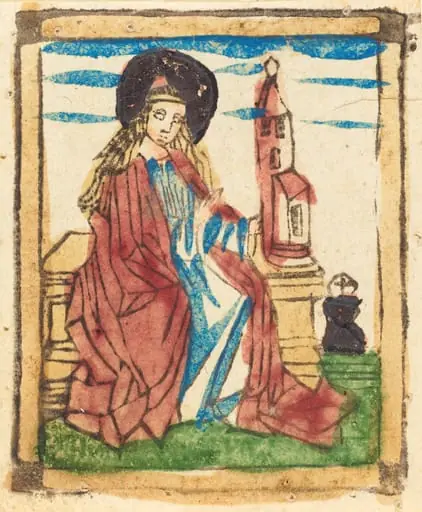 Saint Barbara
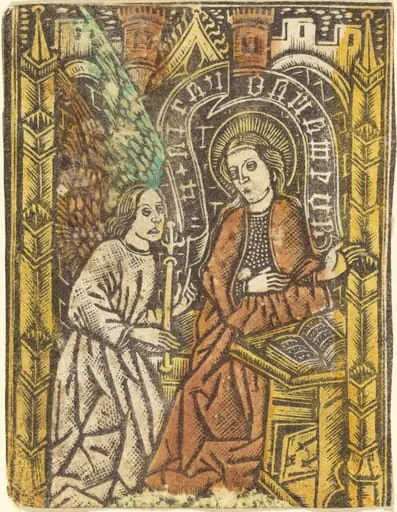 The Annunciation
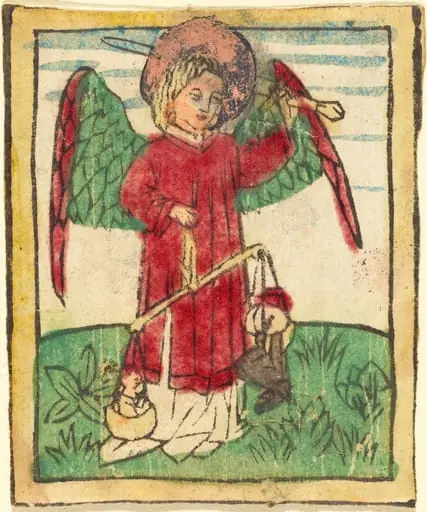 Saint Michael
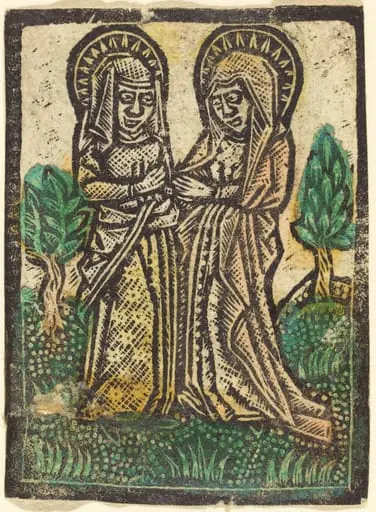 The Visitation
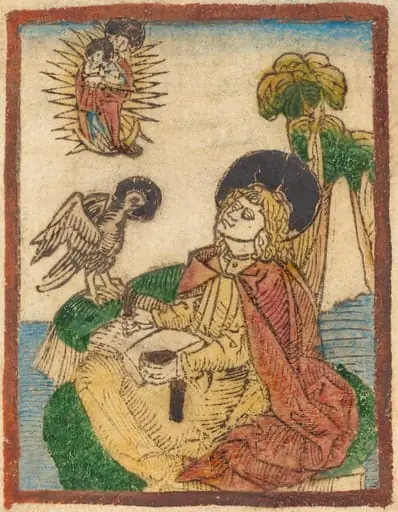 Saint John on the Island of Patmos
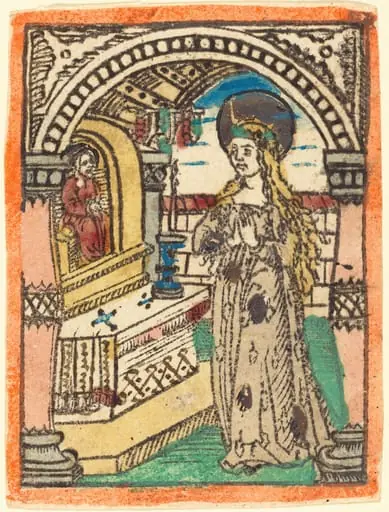 The Virgin in a Robe Embroidered with Ears of Corn
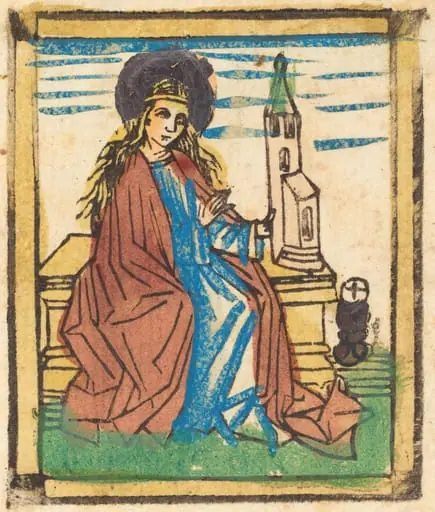 Saint Barbara
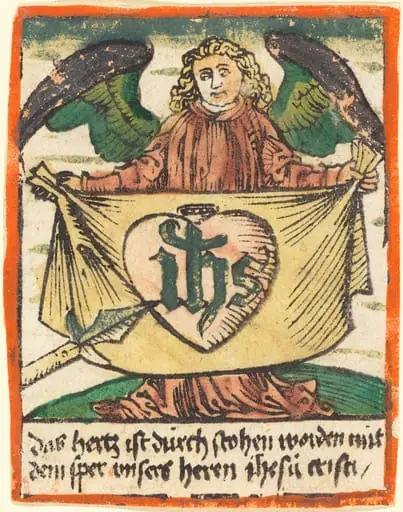 Sacred Monogram in a Sacred Heart on a Cloth Held by an Angel
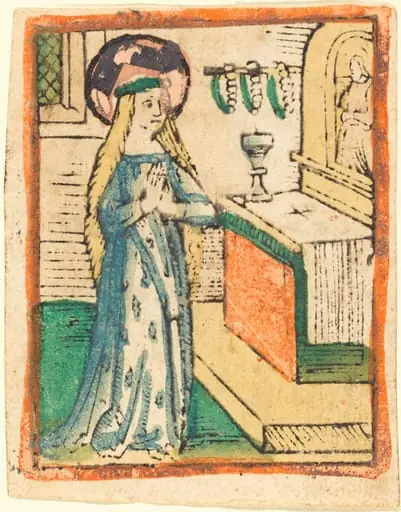 The Virgin in a Robe Embroidered with Ears of Corn
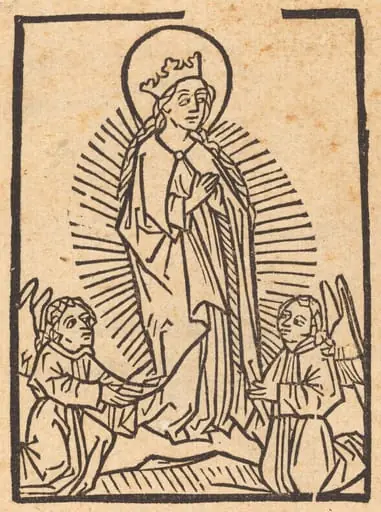 The Assumption of the Virgin
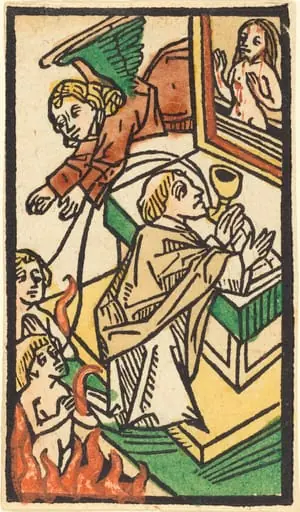 The Mass of Saint Gregory
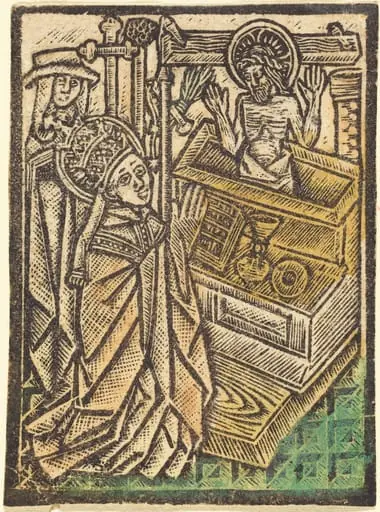 Saint Gregory