Artwork
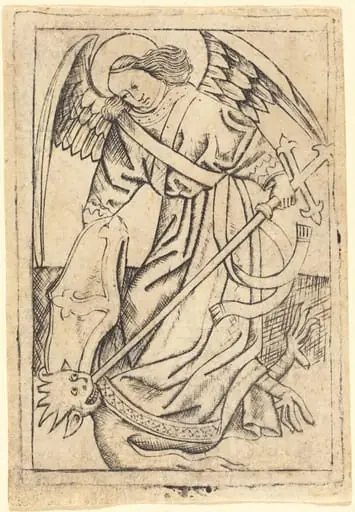
Saint Michael
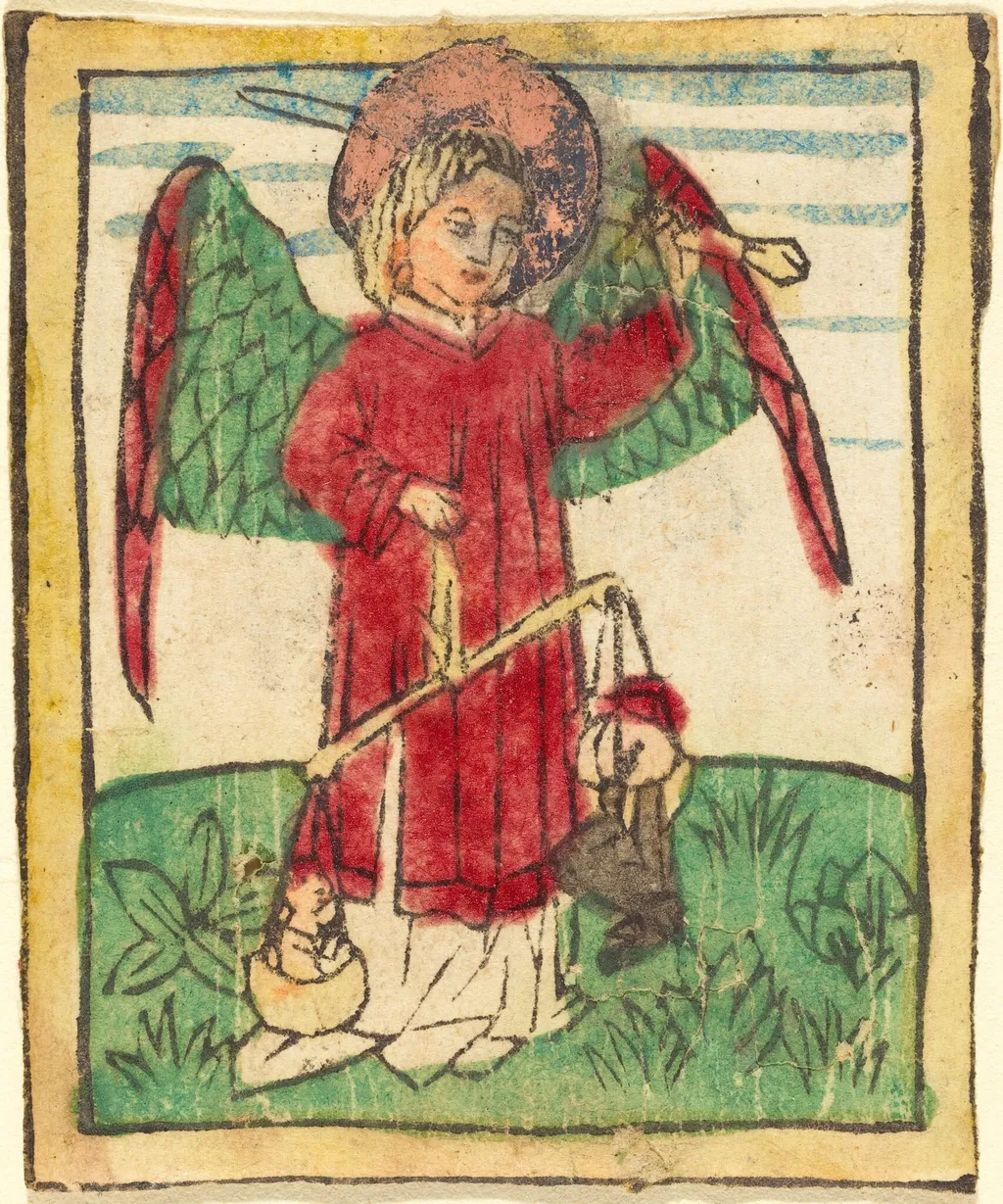
Saint Michael is an ink print by the Renaissance artist German 15th Century. It dates from 1460 and is held in the collection of the National Gallery of Art.
About this work
Overview
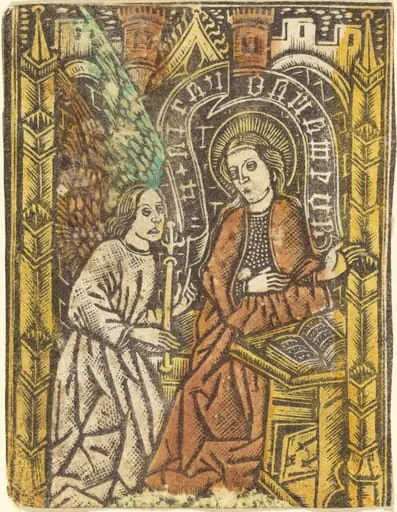
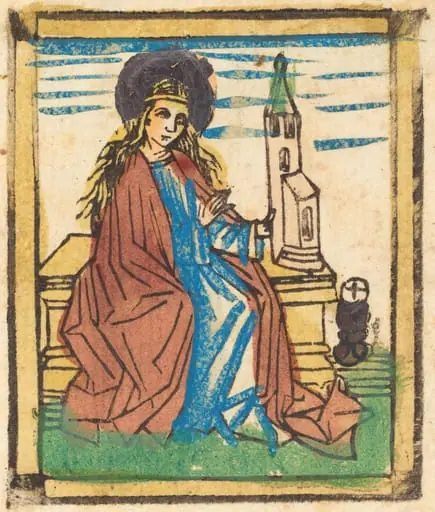
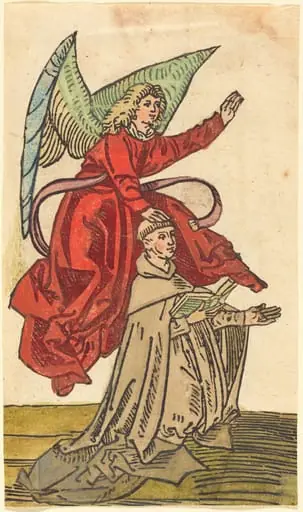
Saint Michael is a hand-colored woodcut print depicting the saint in a dynamic pose, set against a vibrant, multi-colored background. The image features a mix of symbolic elements and figures, conveying a sense of protection and triumph.
Subject & Meaning
The central figure, Saint Michael, is identifiable by his red robe, halo, and sword, symbolizing his role as a protector. The kneeling man in white and the background figure in brown may represent the saved and the damned, respectively, underscoring the theme of divine intervention.
Technique & Style
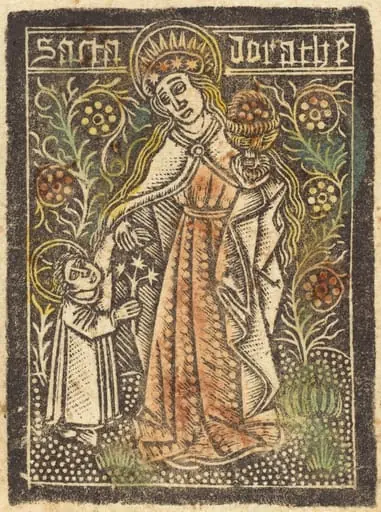
Executed as a woodcut with subsequent hand-coloring in six colors, the piece showcases a blend of printmaking technique and manual embellishment. The bold, flat areas of color and the textured woodcut lines contribute to its distinctive visual identity.
Context
This work reflects the artistic practices of the Renaissance, where woodcuts were a popular medium for disseminating religious imagery. The use of bright, symbolic colors aligns with the period's aesthetic sensibilities.
Legacy
As a representative of Renaissance printmaking, Saint Michael demonstrates the enduring appeal of woodcuts in conveying religious narratives through accessible, colorful imagery.
Artist & collection

Artist
This 15th-century German artist carved vivid religious scenes into metal and wood, then hand-painted them in bright, symbolic colors.

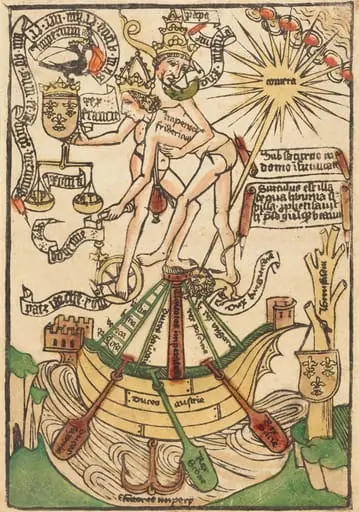 Allegory of the Meeting of Pope Paul II and Emperor Frederick III
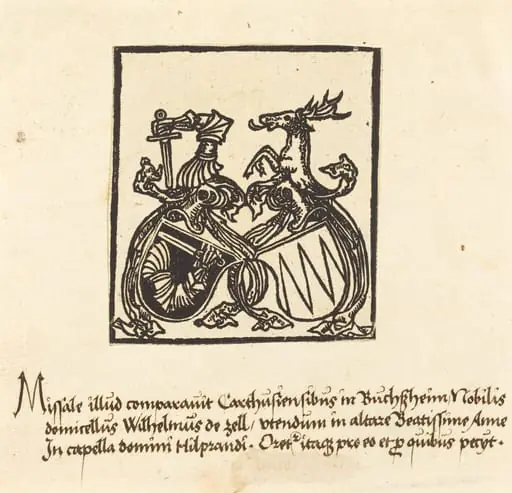 Bookplate of Wilhelm von Zell
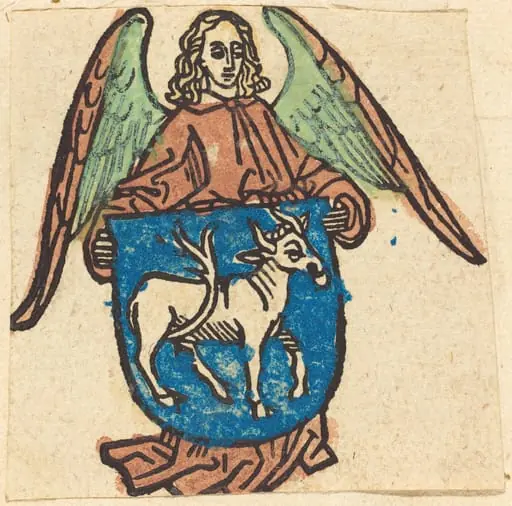 Bookplate of Hilprand Brandenburg of Bibrach
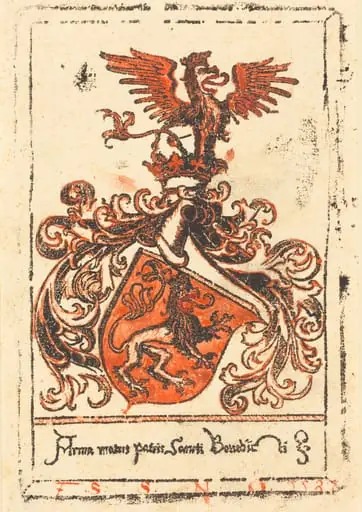 Bookplate of the Abbey of Ottobeuren
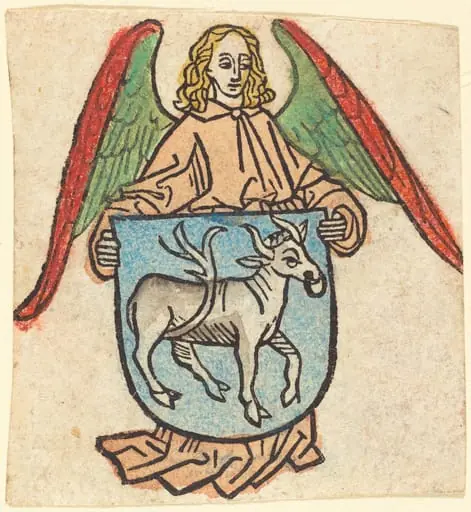 Bookplate of Hilprand Brandenburg of Bibrach
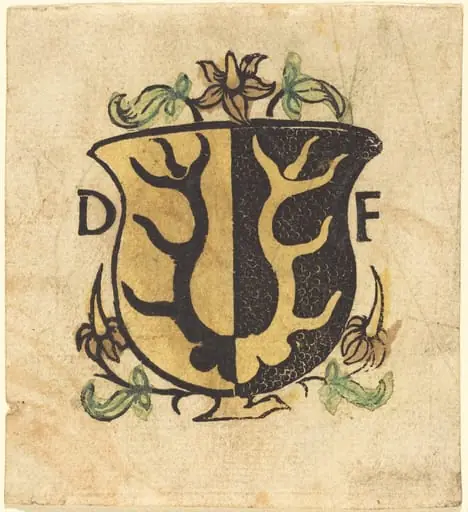 Bookplate of Dominicus Frauenfelder
![Studies for Six Figures (sheet from a model book) [recto], by German 15th Century](https://artifactworldgallery.com/img/german-15th-century--studies-for-six-figures-sheet-from-a-model-book-recto--4837429e0755bc3f-w320.webp) Studies for Six Figures (sheet from a model book) [recto]
Studies for Six Figures (sheet from a model book) [recto]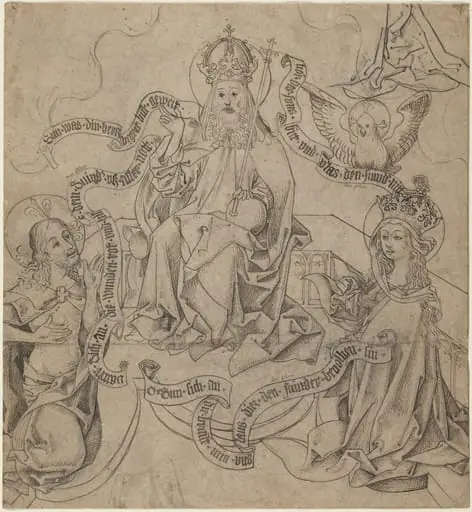 Christ and Mary Interceding with God the Father