Artwork
Christ on the Cross
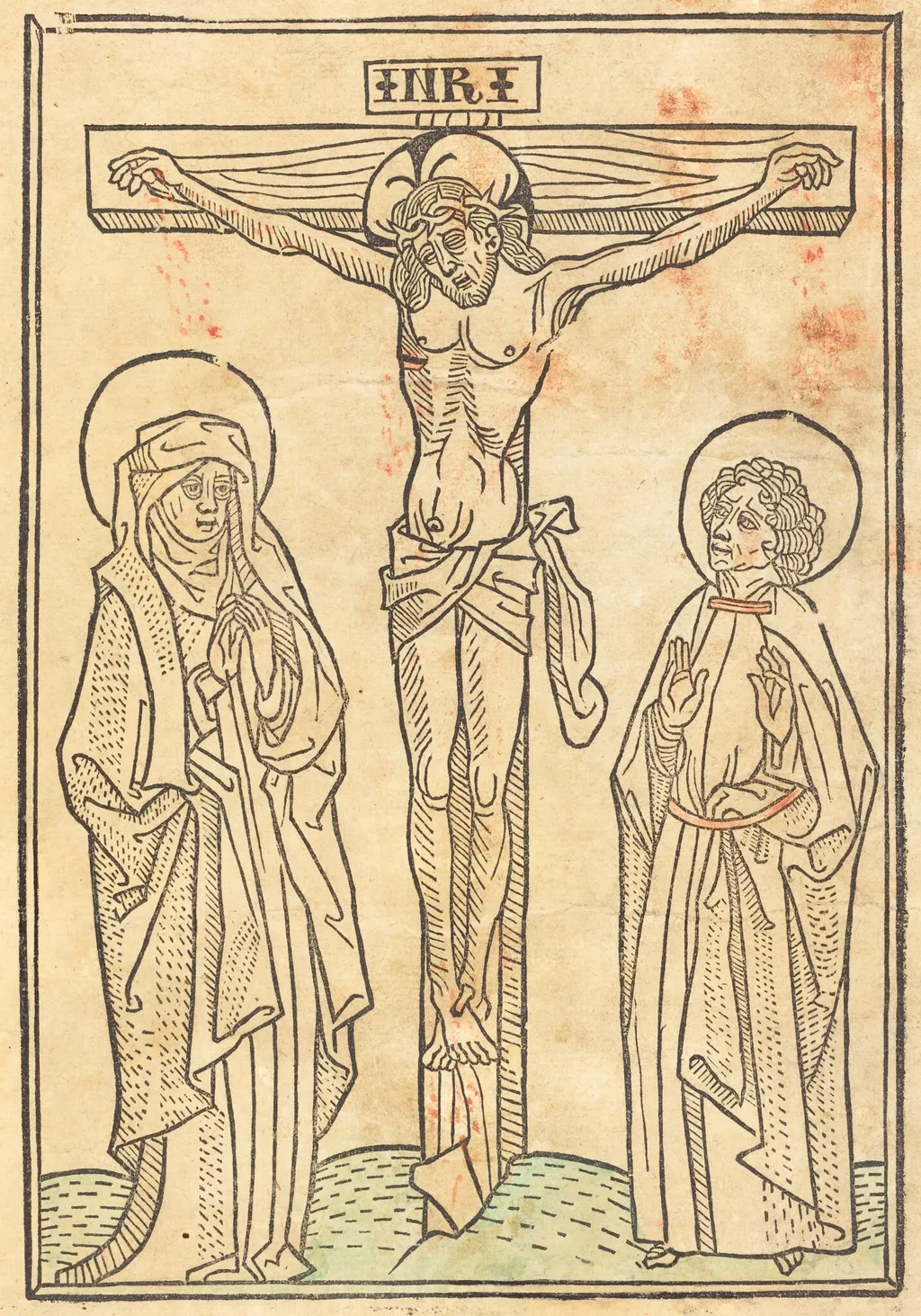
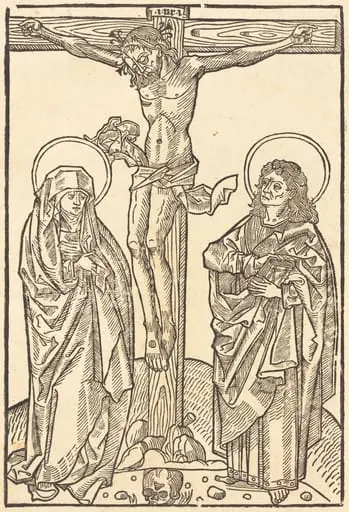
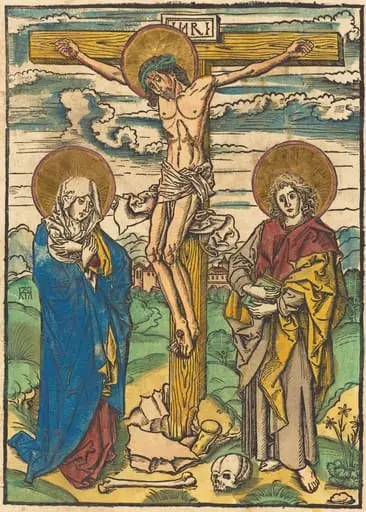
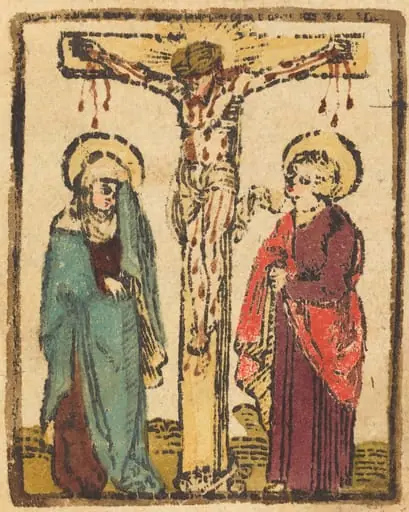
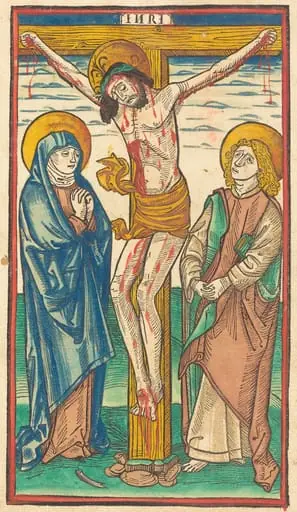
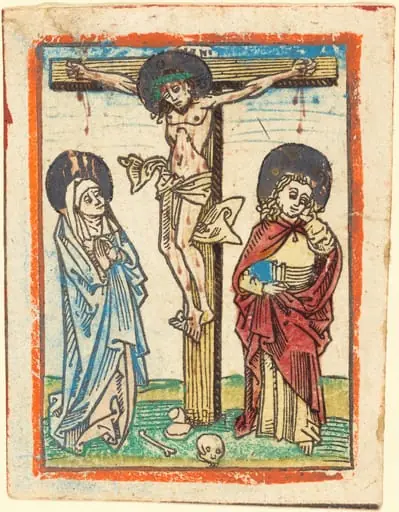
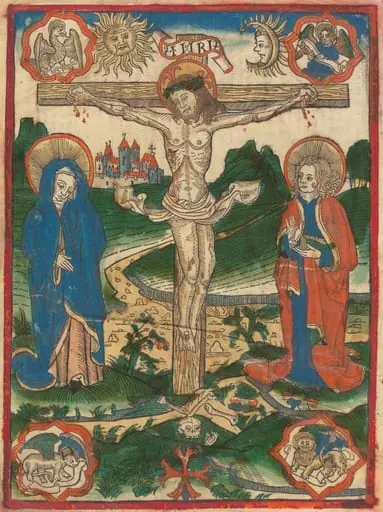
Christ on the Cross is an ink print by the Renaissance artist German 15th Century. It dates from 1483 and is held in the collection of the National Gallery of Art. This woodcut depicts Christ crucified, rendered in the stark, linear style typical of early printmaking.
About this work
Overview
The image focuses on the central figure of Jesus, his body elongated and simplified, with minimal detail to emphasize spiritual gravity.
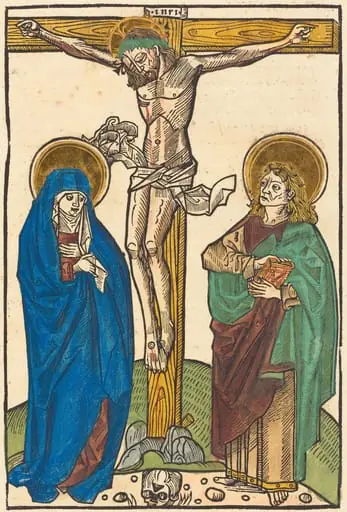
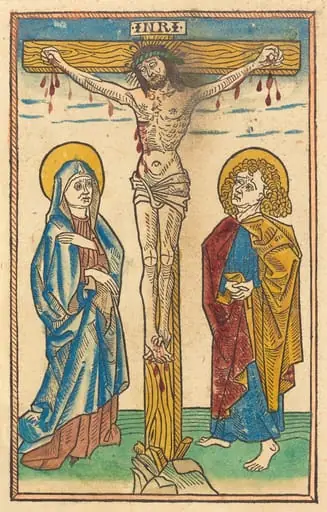
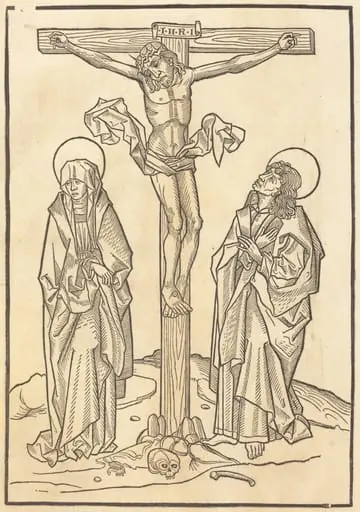
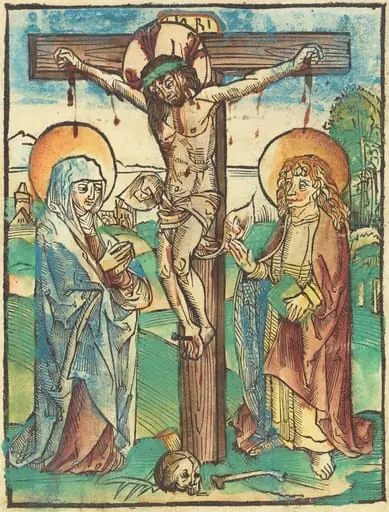
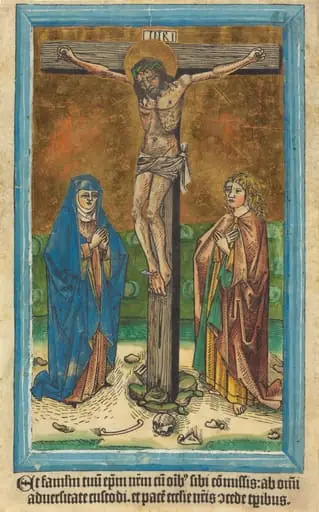
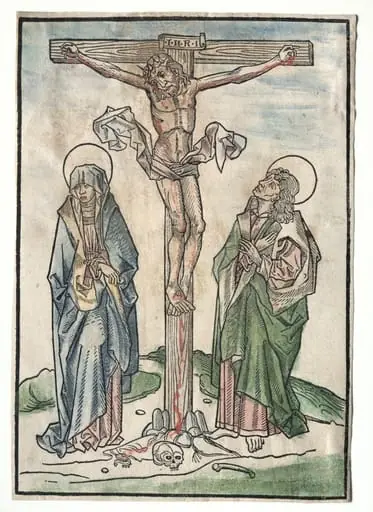
This woodcut depicts Christ crucified, rendered in the stark, linear style typical of early printmaking. The image focuses on the central figure of Jesus, his body elongated and simplified, with minimal detail to emphasize spiritual gravity. Two figures flank the cross, their postures suggesting prayerful devotion. The muted background and textured surface reflect the carved woodblock technique, reinforcing the work’s quiet, meditative tone.
Subject & Meaning
The scene portrays the moment of Christ’s crucifixion, a central event in Christian theology. His crowned head and outstretched arms convey suffering and sacrifice, while the two attendants, likely Mary and John, embody silent witness and reverence. Their clasped hands and stillness invite contemplation rather than drama, aligning with devotional practices that valued inner reflection over theatrical expression.
Technique & Style
Executed as a woodcut, the image relies on bold, incised lines and tonal contrasts achieved through inked relief printing. The lack of shading and flattened perspective are characteristic of the medium’s constraints and aesthetic. The texture of the wood grain subtly emerges in the background, adding a tactile quality that grounds the sacred subject in the physical process of its making.
History & Provenance
Though the exact origin and maker are unrecorded, the style suggests production in late medieval or early Renaissance Europe, possibly in Germany or the Low Countries. Such prints were widely distributed for private devotion, often bound into prayer books or hung in domestic altars. Its survival indicates it was valued as a tool for personal piety rather than public display.
Context
During the late 15th century, woodcuts became a primary medium for religious imagery due to their affordability and reproducibility. As literacy grew among laypeople, printed devotional images like this one allowed individuals to engage with sacred narratives outside church settings. The emphasis on stillness and prayer reflects a broader spiritual shift toward introspective worship.
Legacy
This woodcut exemplifies how early print technology democratized access to religious imagery, shaping personal piety across social classes. Its restrained composition influenced later devotional prints and contributed to the visual language of Protestant reformers who favored simplicity over ornament. Though unsigned, it remains a quiet testament to the power of mass-produced sacred art.
Artist & collection

Artist
This 15th-century German artist carved vivid religious scenes into metal and wood, then hand-painted them in bright, symbolic colors.

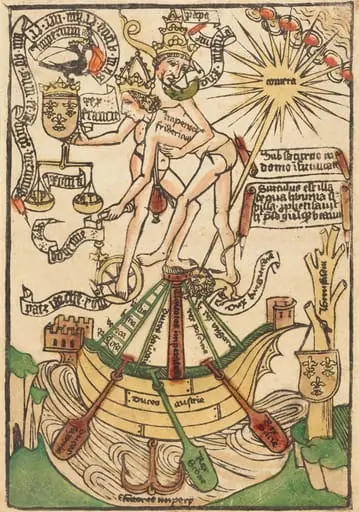 Allegory of the Meeting of Pope Paul II and Emperor Frederick III
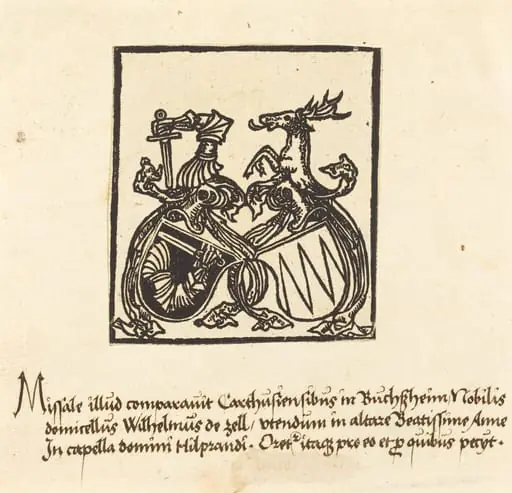 Bookplate of Wilhelm von Zell
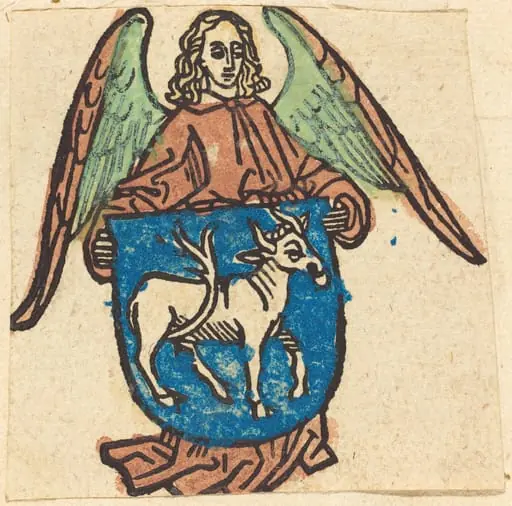 Bookplate of Hilprand Brandenburg of Bibrach
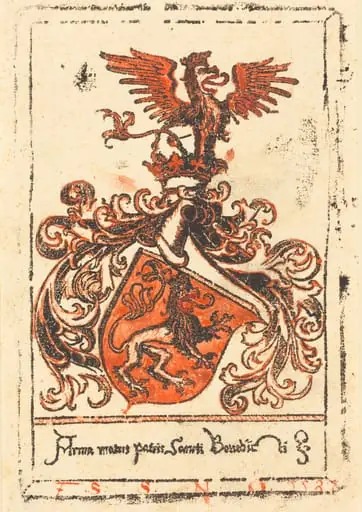 Bookplate of the Abbey of Ottobeuren
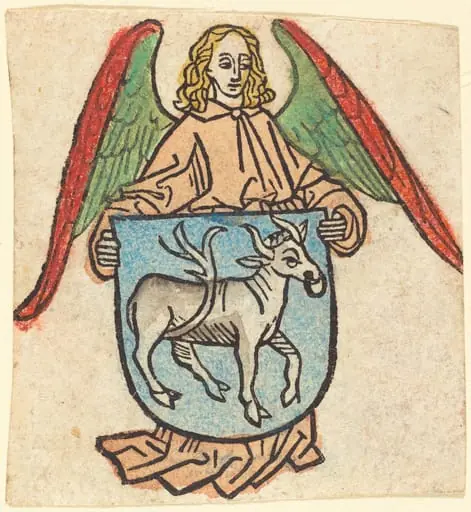 Bookplate of Hilprand Brandenburg of Bibrach
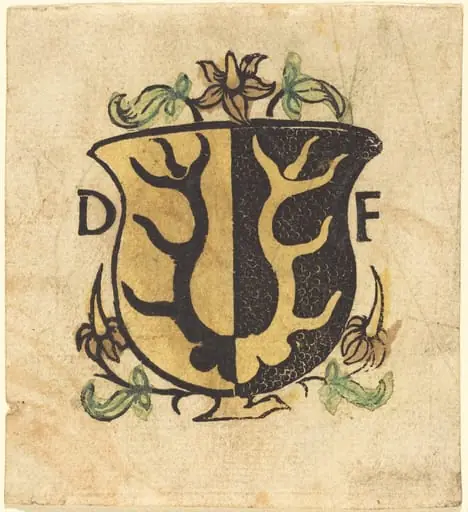 Bookplate of Dominicus Frauenfelder
![Studies for Six Figures (sheet from a model book) [recto], by German 15th Century](https://artifactworldgallery.com/img/german-15th-century--studies-for-six-figures-sheet-from-a-model-book-recto--4837429e0755bc3f-w320.webp) Studies for Six Figures (sheet from a model book) [recto]
Studies for Six Figures (sheet from a model book) [recto]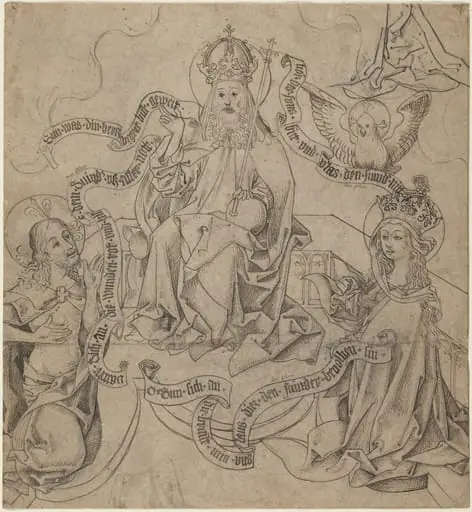 Christ and Mary Interceding with God the Father