Artwork
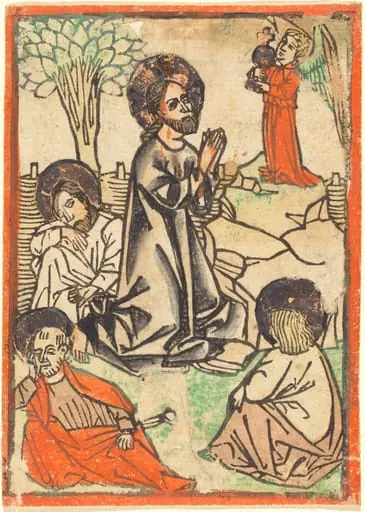
Christ on the Mount of Olives
Christ on the Mount of Olives is an ink print by the Renaissance artist German 15th Century. It dates from 1438 and is held in the collection of the National Gallery of Art.
About this work
Overview
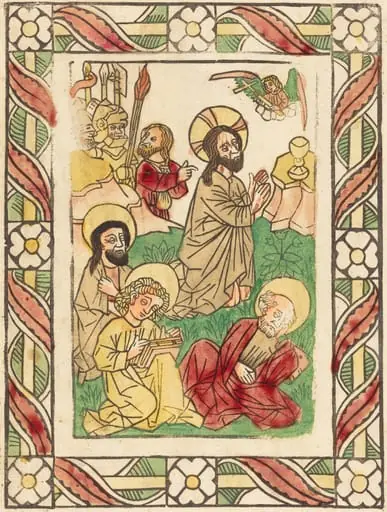
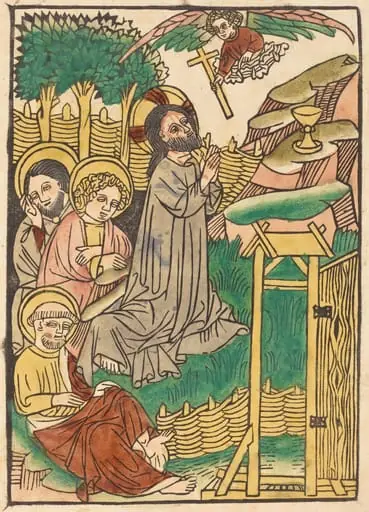
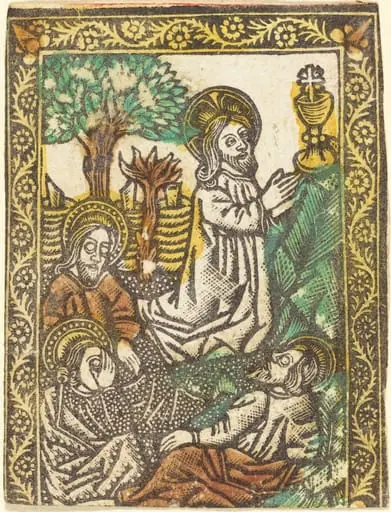
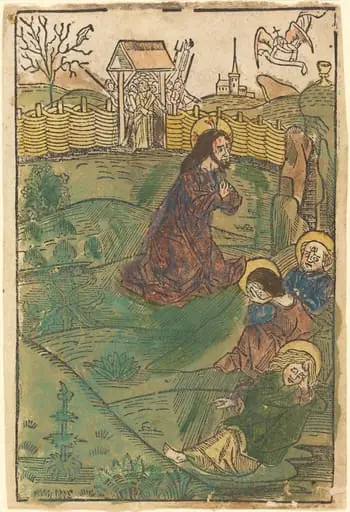
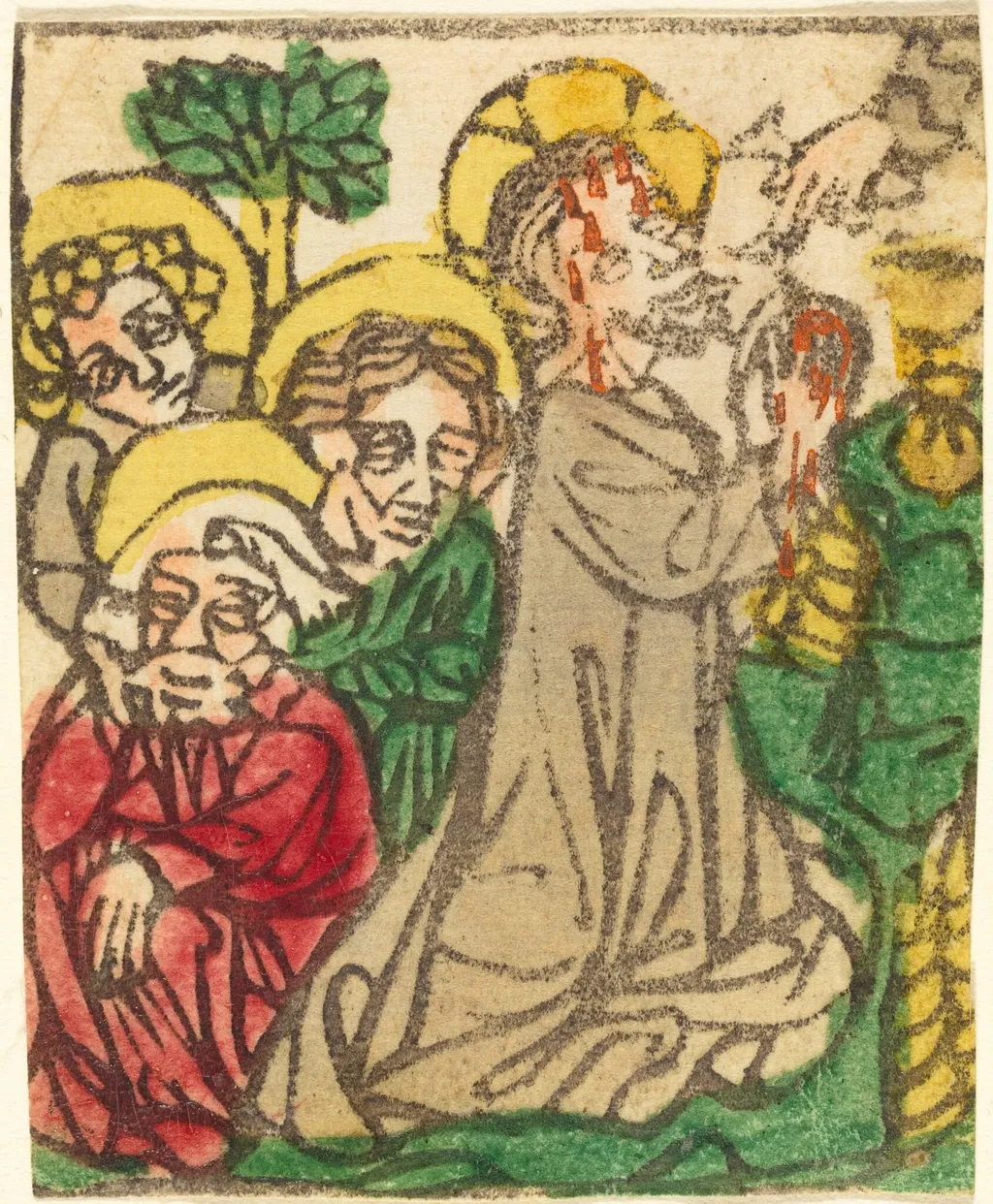
Christ on the Mount of Olives is a hand‑colored woodcut print that depicts three robed figures gathered on a stylized landscape.
Christ on the Mount of Olives is a hand‑colored woodcut print that depicts three robed figures gathered on a stylized landscape. The central figure, distinguished by a pale complexion and a red mark on the forehead, is flanked by two companions. Bright yellow halos hover above their heads, while a green tree with red blossoms appears in the background. The composition relies on bold, flat areas of red, green, yellow and orange, characteristic of early 15th‑century printmaking.
Subject & Meaning
The scene represents the biblical episode of Christ praying on the Mount of Olives before his arrest, a moment traditionally associated with sorrow and foreboding. The central figure’s red forehead mark may allude to the crown of thorns or a symbolic wound, emphasizing his suffering. The accompanying figures likely portray his disciples, whose proximity underscores the narrative of abandonment.
Technique & Style
Executed as a woodcut, the image was carved from a single block of wood, producing the stark, linear outlines and simplified forms visible in the print. After printing, the work was hand‑colored using pigments such as red lake, green, yellow, tan and orange, giving it vivid chromatic contrast. The flat, decorative color fields and patterned robes reflect the aesthetic conventions of early 1400s European print art, prior to the advent of more intricate engraving techniques.
History & Provenance
The print originates from the early 15th century, a period when woodcut printing was emerging as a popular medium for disseminating religious imagery. While specific details of its creator or original ownership are not recorded, such works were commonly produced for devotional use or as affordable alternatives to painted panels.
Context
During the early 1400s, the spread of printed religious images corresponded with growing literacy and the demand for accessible visual narratives of biblical events. Woodcuts like this one were often distributed in small devotional booklets or as single sheets, allowing a broader audience to engage with sacred stories.
Legacy
Prints of this type contributed to the visual vocabulary of the Late Middle Ages, influencing later developments in both religious illustration and the technical evolution of printmaking. The use of hand‑applied color on woodcuts set a precedent for later artists who combined print techniques with painterly embellishment.
Artist & collection

Artist
This 15th-century German artist carved vivid religious scenes into metal and wood, then hand-painted them in bright, symbolic colors.

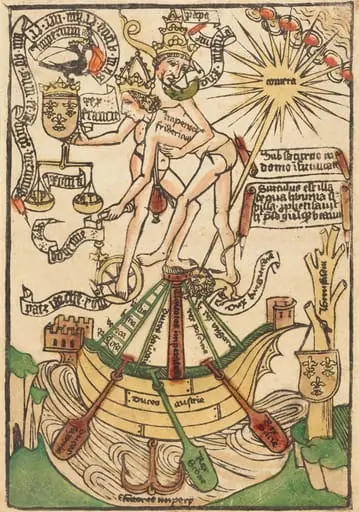 Allegory of the Meeting of Pope Paul II and Emperor Frederick III
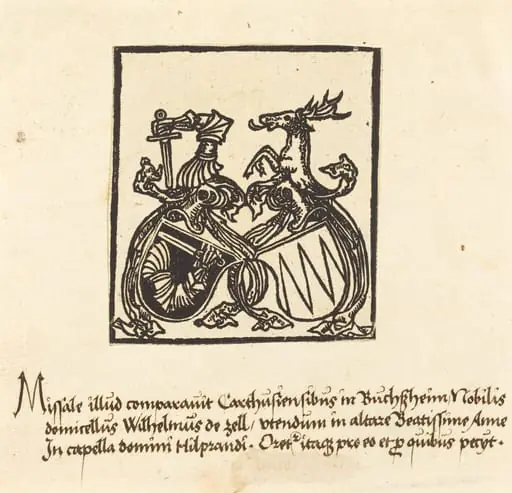 Bookplate of Wilhelm von Zell
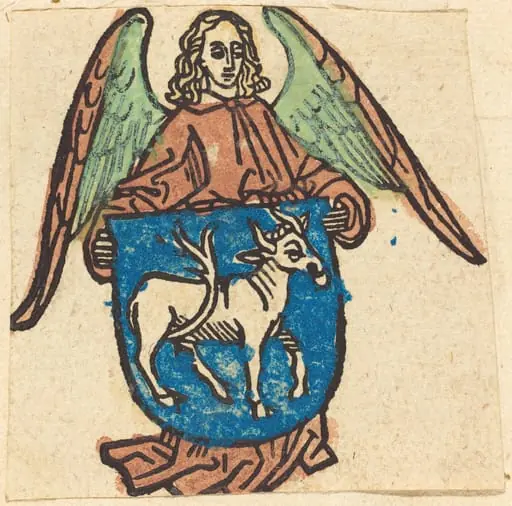 Bookplate of Hilprand Brandenburg of Bibrach
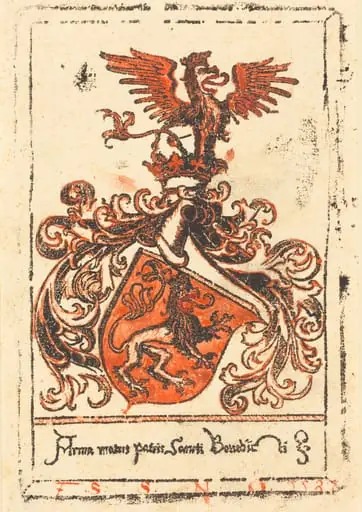 Bookplate of the Abbey of Ottobeuren
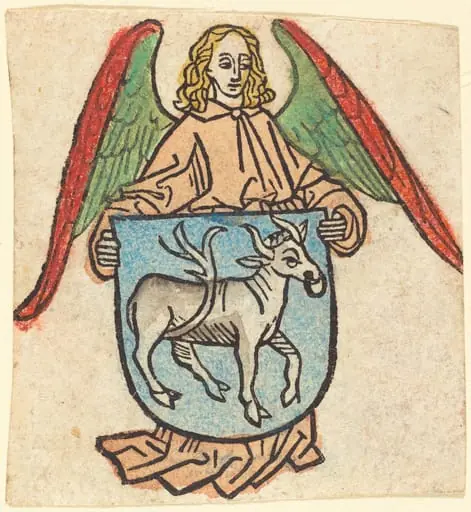 Bookplate of Hilprand Brandenburg of Bibrach
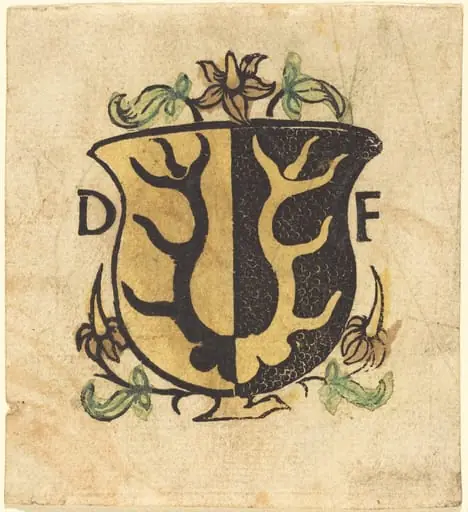 Bookplate of Dominicus Frauenfelder
![Studies for Six Figures (sheet from a model book) [recto], by German 15th Century](https://artifactworldgallery.com/img/german-15th-century--studies-for-six-figures-sheet-from-a-model-book-recto--4837429e0755bc3f-w320.webp) Studies for Six Figures (sheet from a model book) [recto]
Studies for Six Figures (sheet from a model book) [recto]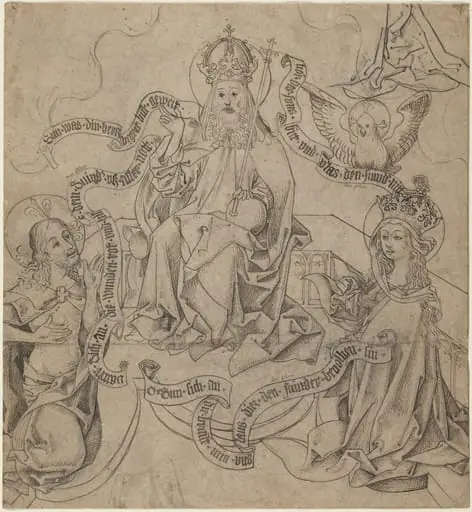 Christ and Mary Interceding with God the Father