Artwork
Descent into Limbo
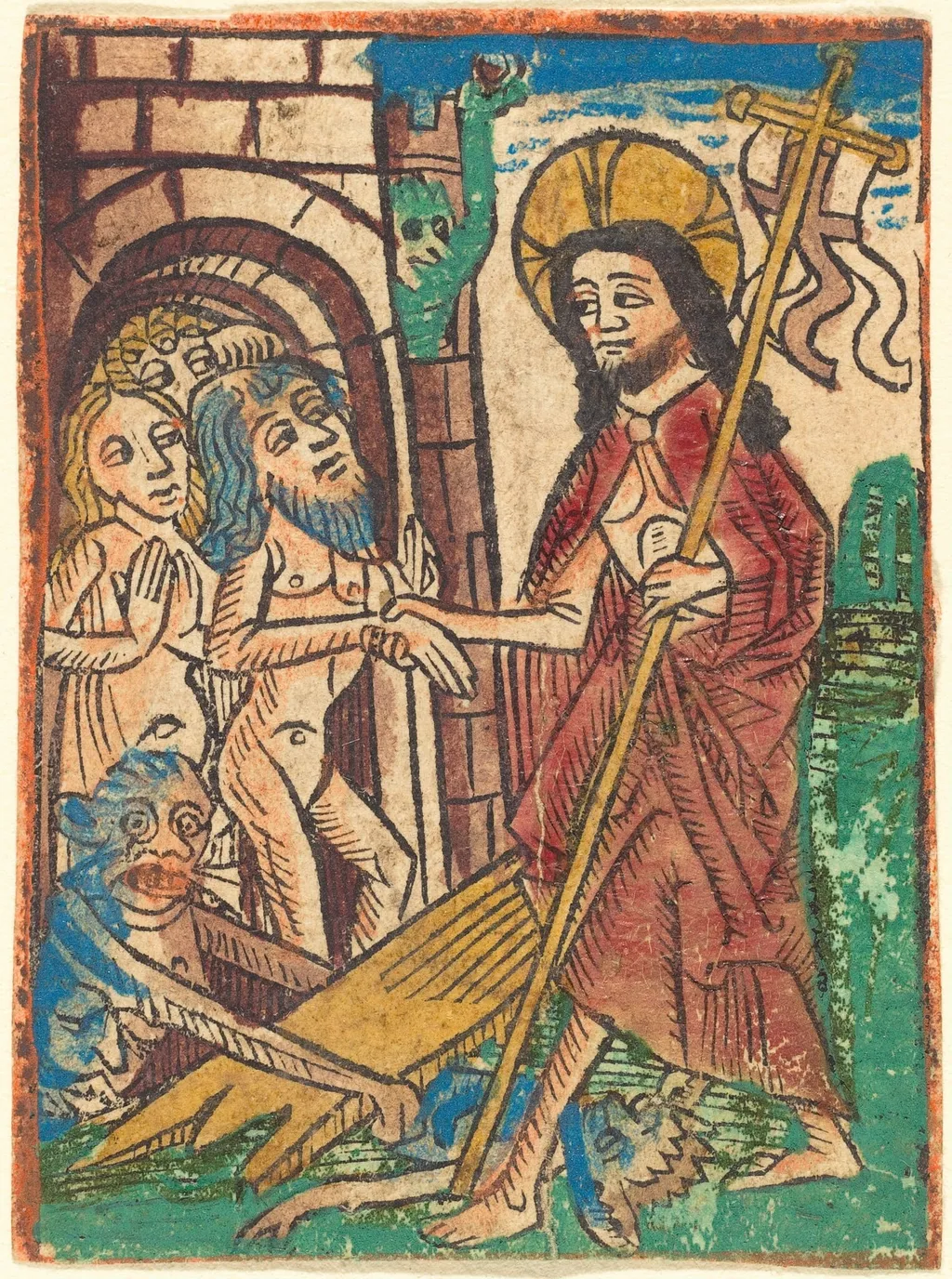
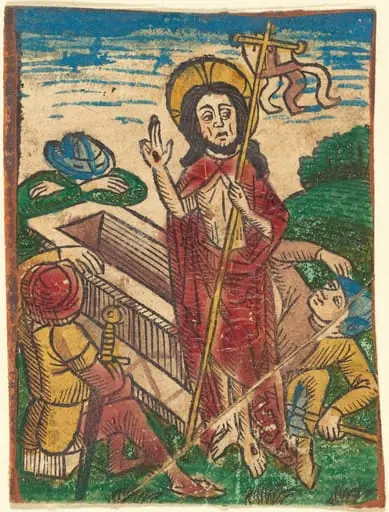
Descent into Limbo is an ink print by the Renaissance artist German 15th Century. It dates from 1490 and is held in the collection of the National Gallery of Art. This hand-colored woodcut depicts a scene from Christian tradition known as the Harrowing of Hell.
About this work
Overview
This hand-colored woodcut depicts a scene from Christian tradition known as the Harrowing of Hell. A bearded figure bearing a cross stands above two figures reaching upward, their postures suggesting supplication. The composition is framed by a rocky archway and rendered in flat, vivid hues of blue, red, and gold, typical of early printed devotional images.
Subject & Meaning
The central figure is Christ, shown descending into Limbo to rescue the righteous souls of the Old Testament. The two figures below, one crowned with leaves and the other bearded, are traditionally interpreted as Adam and Eve, symbolizing humanity’s redemption. The scene illustrates Christ’s victory over death and the opening of salvation to those who lived before his ministry.
Technique & Style
Executed as a hand-colored woodcut, the image relies on bold, linear carving to define forms, with color applied manually after printing. The palette is limited but intense, using symbolic hues—blue for divinity, red for sacrifice, gold for heavenly light. The lack of perspective and flattened space reflect pre-Renaissance conventions common in Northern European religious prints.
History & Provenance
The work likely dates to the late 15th or early 16th century, a period when woodcuts were widely used to disseminate biblical imagery among lay audiences. Its survival in hand-colored form suggests it was owned by a private individual or devotional community, possibly in the Rhineland or Low Countries, where such prints were commonly produced and collected.
Context
During the late Middle Ages, images of Christ’s descent into Limbo were popular in both manuscript illumination and print, reinforcing doctrinal teachings about salvation. This print would have been viewed alongside other devotional images, serving as a visual meditation on redemption, resurrection, and divine mercy within a predominantly Christian cultural framework.
Legacy
As an early example of mass-produced religious imagery, this woodcut reflects the growing role of print in shaping spiritual understanding outside ecclesiastical control. Its stylistic simplicity and symbolic clarity influenced later devotional prints, preserving medieval iconography even as Renaissance naturalism began to emerge in other media.
Artist & collection

Artist
This 15th-century German artist carved vivid religious scenes into metal and wood, then hand-painted them in bright, symbolic colors.

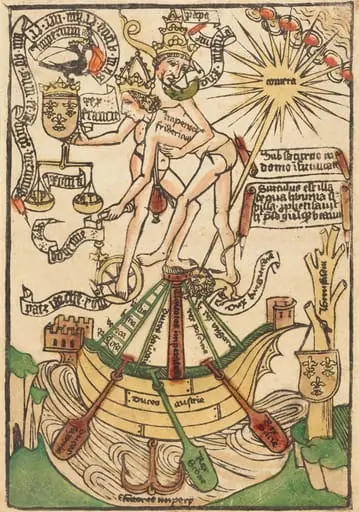 Allegory of the Meeting of Pope Paul II and Emperor Frederick III
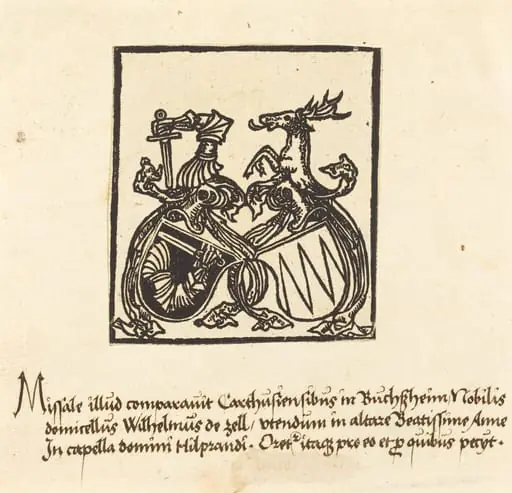 Bookplate of Wilhelm von Zell
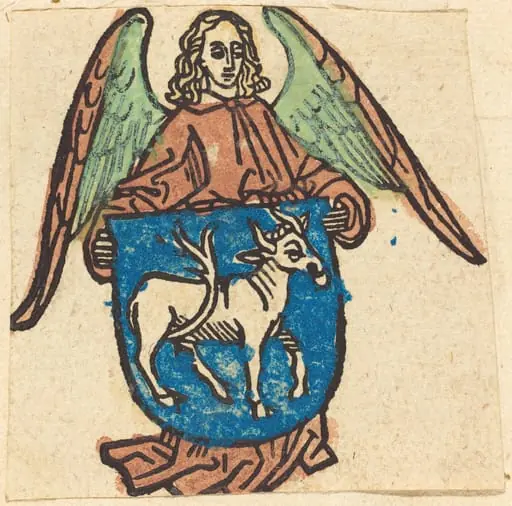 Bookplate of Hilprand Brandenburg of Bibrach
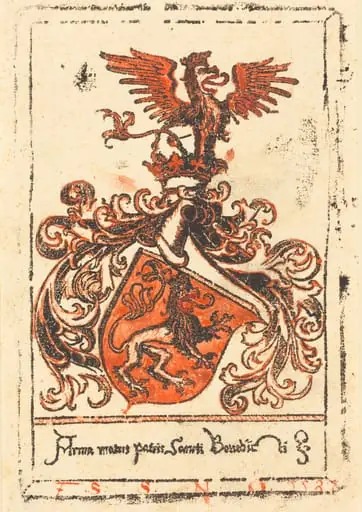 Bookplate of the Abbey of Ottobeuren
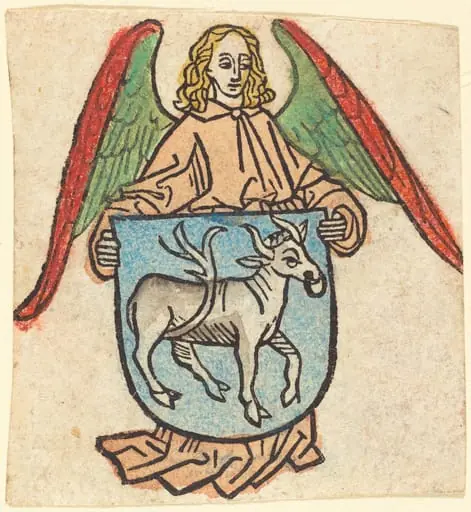 Bookplate of Hilprand Brandenburg of Bibrach
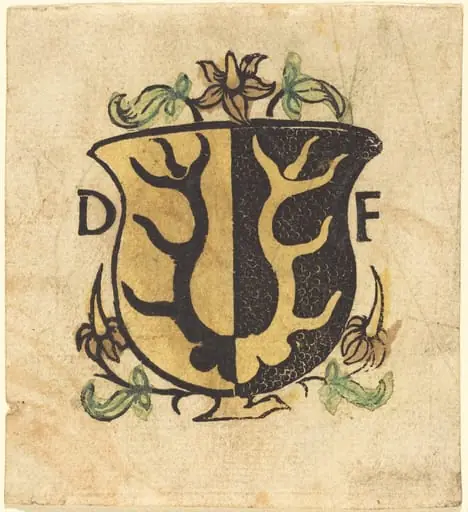 Bookplate of Dominicus Frauenfelder
![Studies for Six Figures (sheet from a model book) [recto], by German 15th Century](https://artifactworldgallery.com/img/german-15th-century--studies-for-six-figures-sheet-from-a-model-book-recto--4837429e0755bc3f-w320.webp) Studies for Six Figures (sheet from a model book) [recto]
Studies for Six Figures (sheet from a model book) [recto]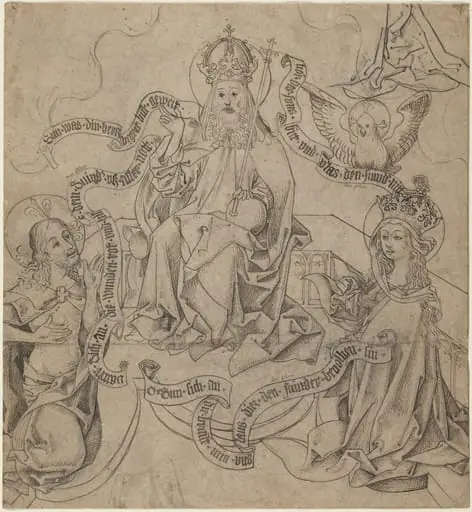 Christ and Mary Interceding with God the Father