Artwork
Last Judgment
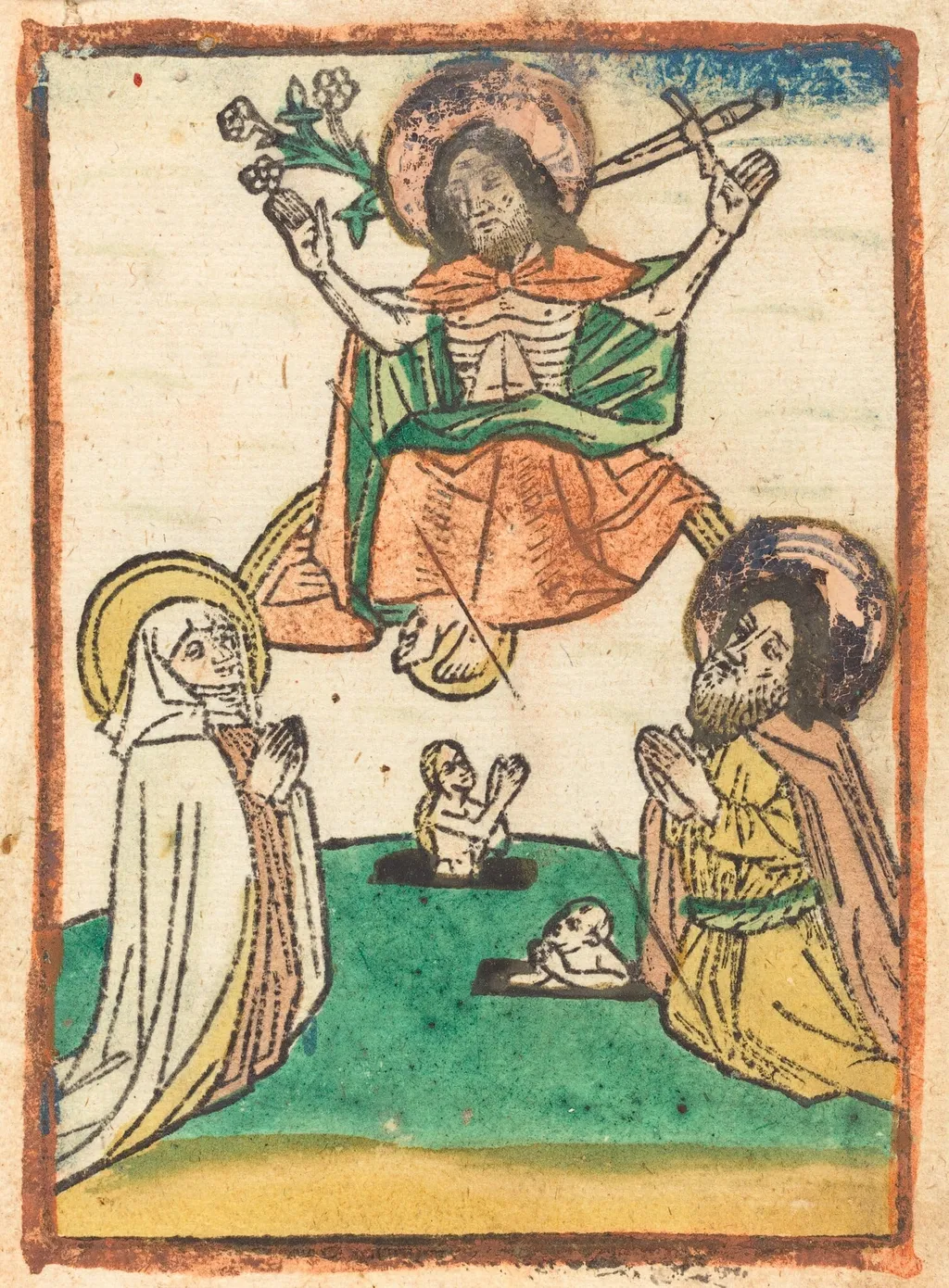
Last Judgment is an ink print by the Renaissance artist German 15th Century. It dates from 1460 and is held in the collection of the National Gallery of Art. The work is a hand‑colored woodcut depicting a scene of divine judgment.
About this work
Overview
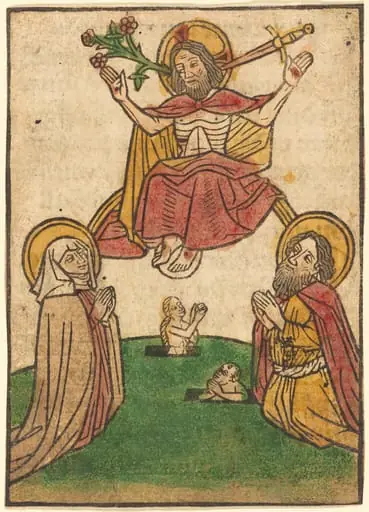
Beneath him, two kneeling figures clasp their hands in supplication, while two smaller figures occupy the foreground near their feet.
The work is a hand‑colored woodcut depicting a scene of divine judgment. Central to the composition is a bearded, haloed figure suspended above the ground, clutching a cross and an orb. Beneath him, two kneeling figures clasp their hands in supplication, while two smaller figures occupy the foreground near their feet. The image is rendered in flat, vivid hues of blue‑green, orange, yellow, rose, and silver, outlined with simple lines.
Subject & Meaning
The central figure represents a celestial judge, his exposed ribs and dramatic posture emphasizing the gravity of the moment. The kneeling pair likely embody humanity’s plea for mercy, while the diminutive figures at their feet may symbolize souls awaiting judgment or attendant angels. The overall iconography aligns with medieval and early‑modern visual conventions that presented the Last Judgment as a decisive, awe‑inspiring event.
Technique & Style
Executed as a woodcut, the image was carved from a single block of wood, inked, and pressed onto paper. After printing, the artist applied hand‑applied pigments in a limited palette of bright colors, a common practice for devotional prints intended for private contemplation. The flat areas of color, bold outlines, and lack of perspective reflect the stylized aesthetic typical of early printmaking before the advent of more sophisticated tonal techniques.
History & Provenance
The print belongs to a period when hand‑colored woodcuts were widely distributed for religious instruction, especially in regions where printed books were scarce. While specific details of its creation, such as the artist’s identity or original patron, are not recorded, the work exemplifies the mass‑produced devotional imagery that circulated in the late medieval to early modern era, serving both as a visual aid to the faithful and as a portable object of piety.
Artist & collection

Artist
This 15th-century German artist carved vivid religious scenes into metal and wood, then hand-painted them in bright, symbolic colors.

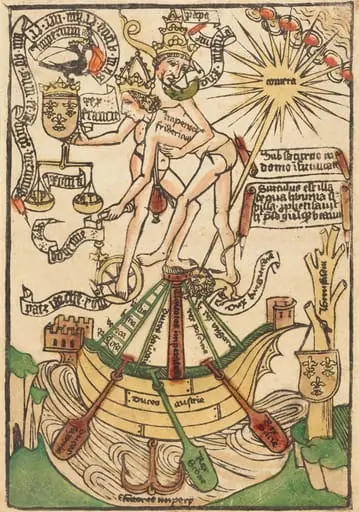 Allegory of the Meeting of Pope Paul II and Emperor Frederick III
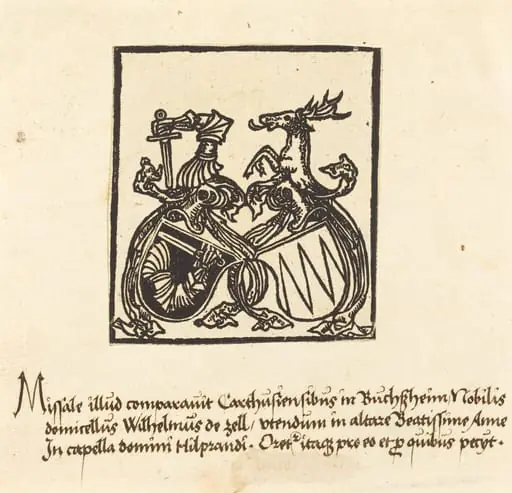 Bookplate of Wilhelm von Zell
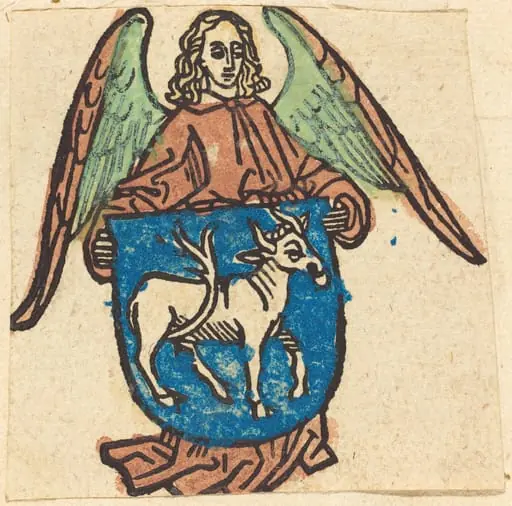 Bookplate of Hilprand Brandenburg of Bibrach
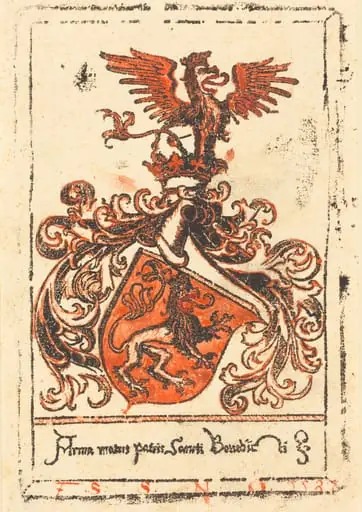 Bookplate of the Abbey of Ottobeuren
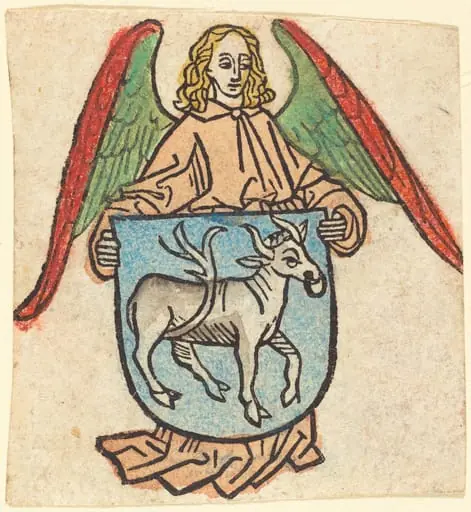 Bookplate of Hilprand Brandenburg of Bibrach
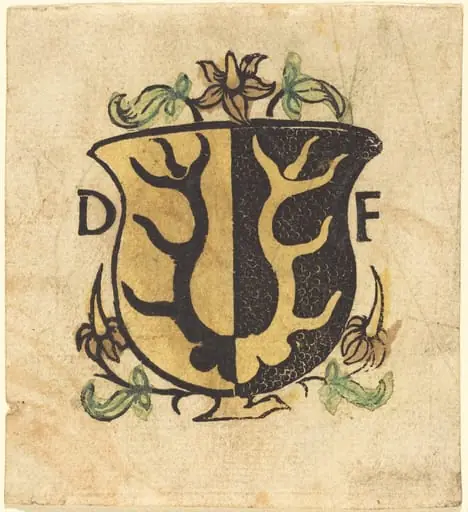 Bookplate of Dominicus Frauenfelder
![Studies for Six Figures (sheet from a model book) [recto], by German 15th Century](https://artifactworldgallery.com/img/german-15th-century--studies-for-six-figures-sheet-from-a-model-book-recto--4837429e0755bc3f-w320.webp) Studies for Six Figures (sheet from a model book) [recto]
Studies for Six Figures (sheet from a model book) [recto]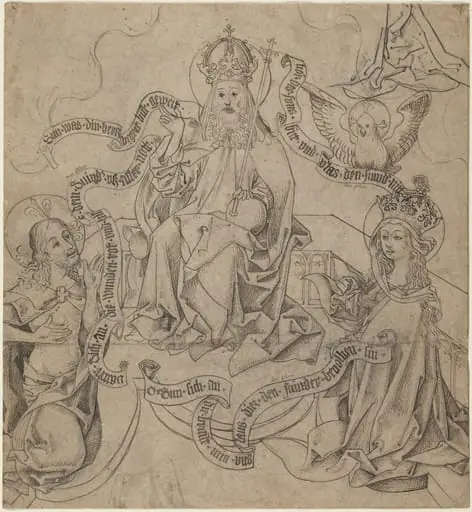 Christ and Mary Interceding with God the Father
![The Last Judgment [right], by Master of St. Erasmus](https://artifactworldgallery.com/img/master-of-st-erasmus--the-last-judgment-right--dcbf9c950423ddb7-w320.webp)