Artwork
Ascension
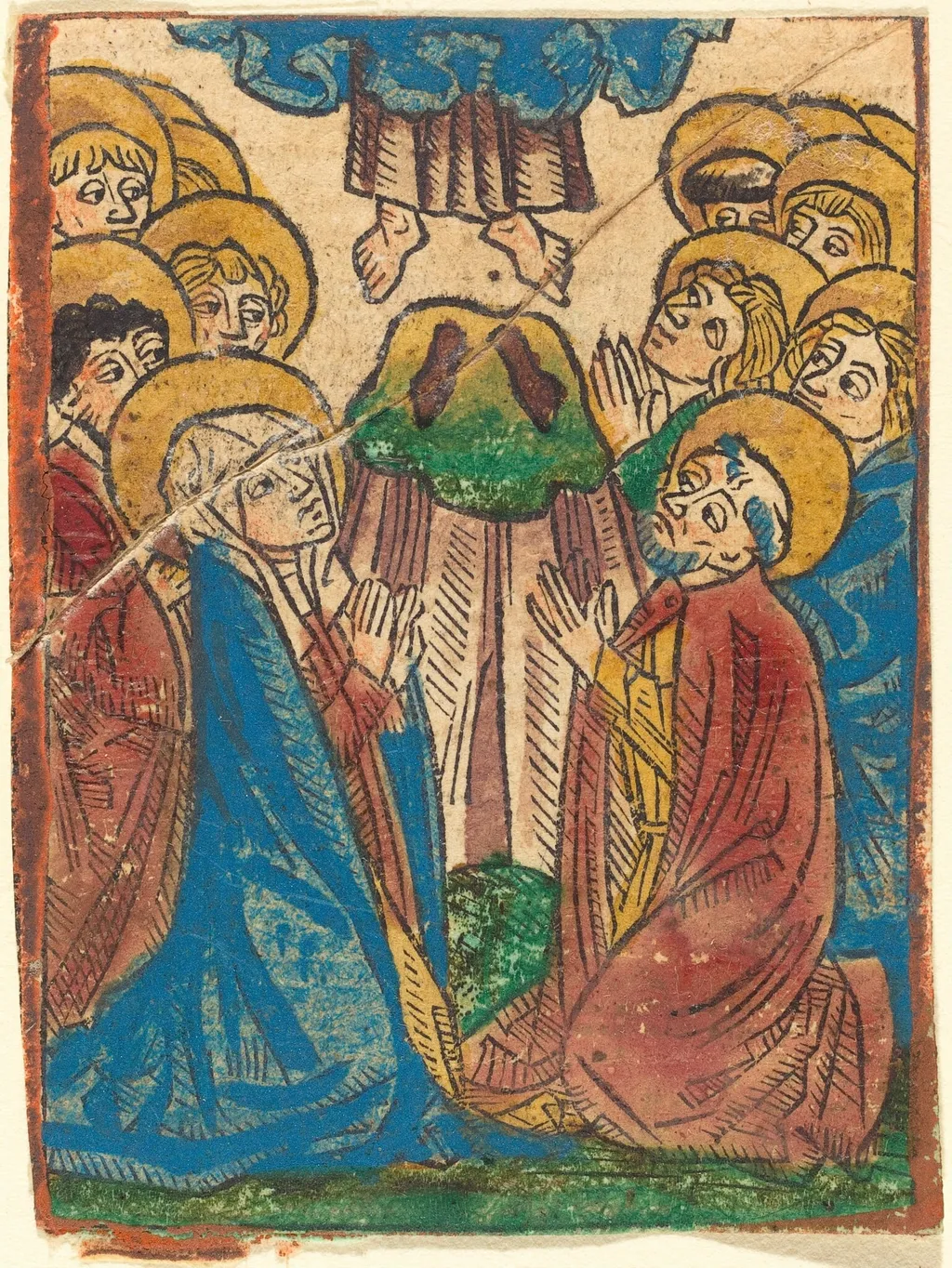
Ascension is an ink print by the Renaissance artist German 15th Century. It dates from 1490 and is held in the collection of the National Gallery of Art.
About this work
Overview
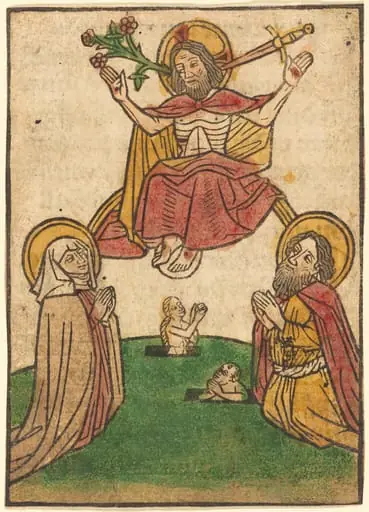
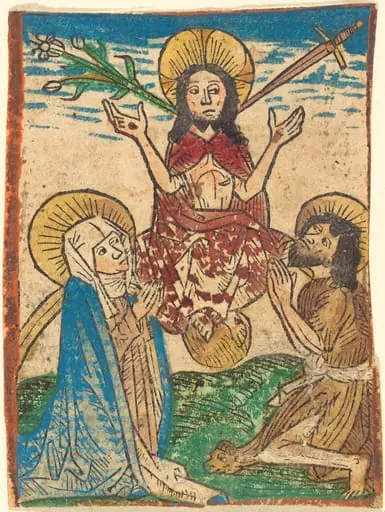
This hand-colored woodcut depicts the Ascension of Christ, a biblical event in which Jesus rises to heaven after his resurrection.
This hand-colored woodcut depicts the Ascension of Christ, a biblical event in which Jesus rises to heaven after his resurrection. Created using a relief printing technique, the image combines carved wooden blocks with manual color application. The composition is structured with clear, bold lines and flat areas of vivid pigment, characteristic of early printed religious imagery from the late medieval or early Renaissance period.
Subject & Meaning
The central figures, robed and gesturing upward, are likely the apostles witnessing Christ’s ascent. Above them, divine hands emerge from clouds, symbolizing divine reception. Surrounding halos mark angels or celestial beings observing the moment. The scene conveys spiritual transition and divine authority, reinforcing the theological significance of Christ’s departure and the apostles’ role as witnesses to his glory.
Technique & Style
The image was produced through woodcut printing, where lines and shapes were carved into a wooden block, inked, and pressed onto paper. Hand-coloring added layers of flat, saturated hues—blue sky, green earth, golden halos—enhancing visual clarity. The style emphasizes strong outlines and simplified forms, prioritizing symbolic legibility over naturalistic detail, typical of early printed devotional works.
History & Provenance
Though the artist and exact date remain undocumented, the work aligns with late 15th- or early 16th-century European printmaking traditions. Such images were often produced in workshops for devotional use, distributed widely through religious networks. Its survival suggests it was valued in private or ecclesiastical collections, though its specific ownership history before modern times is unrecorded.
Context
In an era before widespread literacy, visual religious imagery served as a primary means of teaching doctrine. Woodcuts like this one were affordable and reproducible, making them accessible to communities beyond the clergy. The Ascension was a popular subject in liturgical art, reinforcing beliefs in resurrection and heavenly reward during a time of religious upheaval and reform.
Legacy
This print exemplifies how early print technology democratized religious imagery, enabling consistent visual narratives across regions. Its stylistic simplicity influenced later devotional prints and illustrated Bibles. While overshadowed by more elaborate works, it remains a quiet testament to the role of mass-produced images in shaping spiritual experience in pre-modern Europe.
Artist & collection

Artist
This 15th-century German artist carved vivid religious scenes into metal and wood, then hand-painted them in bright, symbolic colors.

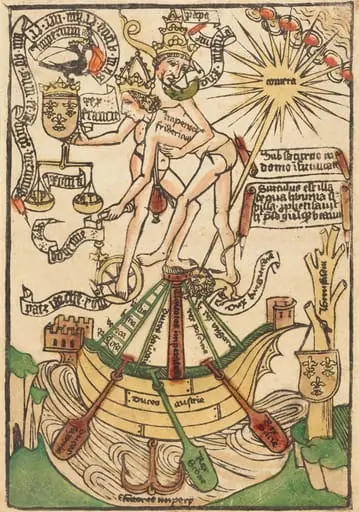 Allegory of the Meeting of Pope Paul II and Emperor Frederick III
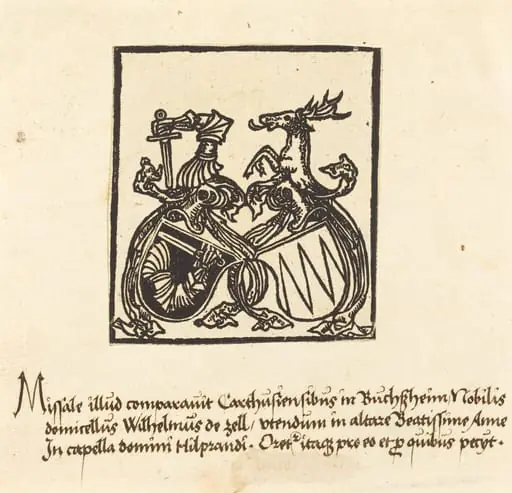 Bookplate of Wilhelm von Zell
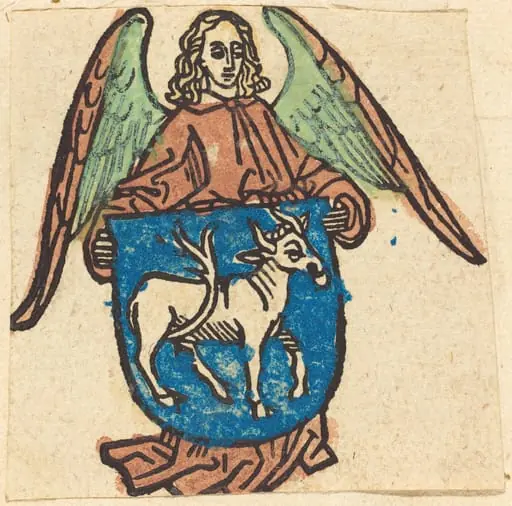 Bookplate of Hilprand Brandenburg of Bibrach
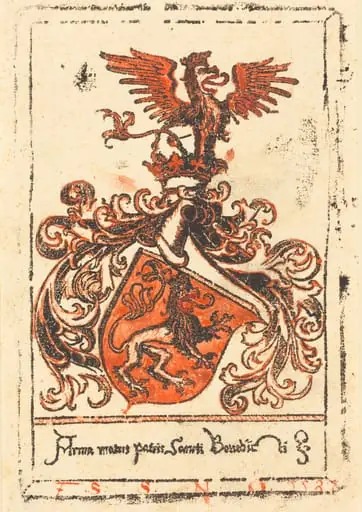 Bookplate of the Abbey of Ottobeuren
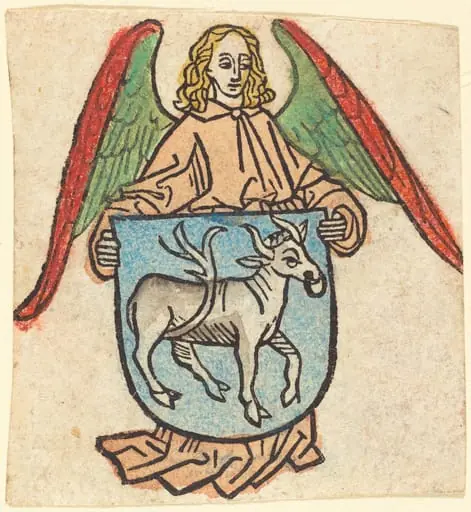 Bookplate of Hilprand Brandenburg of Bibrach
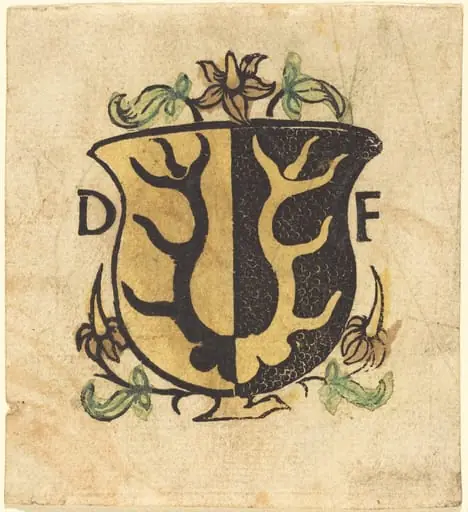 Bookplate of Dominicus Frauenfelder
![Studies for Six Figures (sheet from a model book) [recto], by German 15th Century](https://artifactworldgallery.com/img/german-15th-century--studies-for-six-figures-sheet-from-a-model-book-recto--4837429e0755bc3f-w320.webp) Studies for Six Figures (sheet from a model book) [recto]
Studies for Six Figures (sheet from a model book) [recto]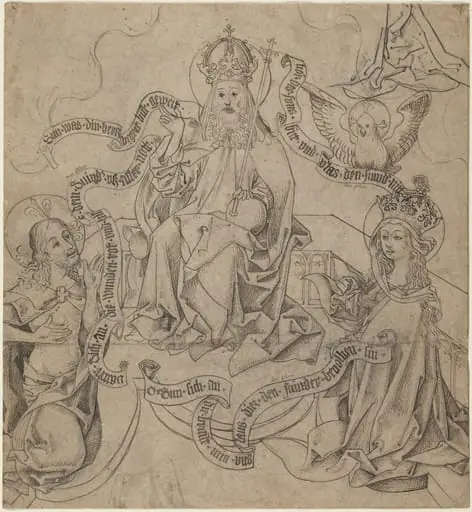 Christ and Mary Interceding with God the Father