Artwork
Madonna between Saints Catherine and Barbara
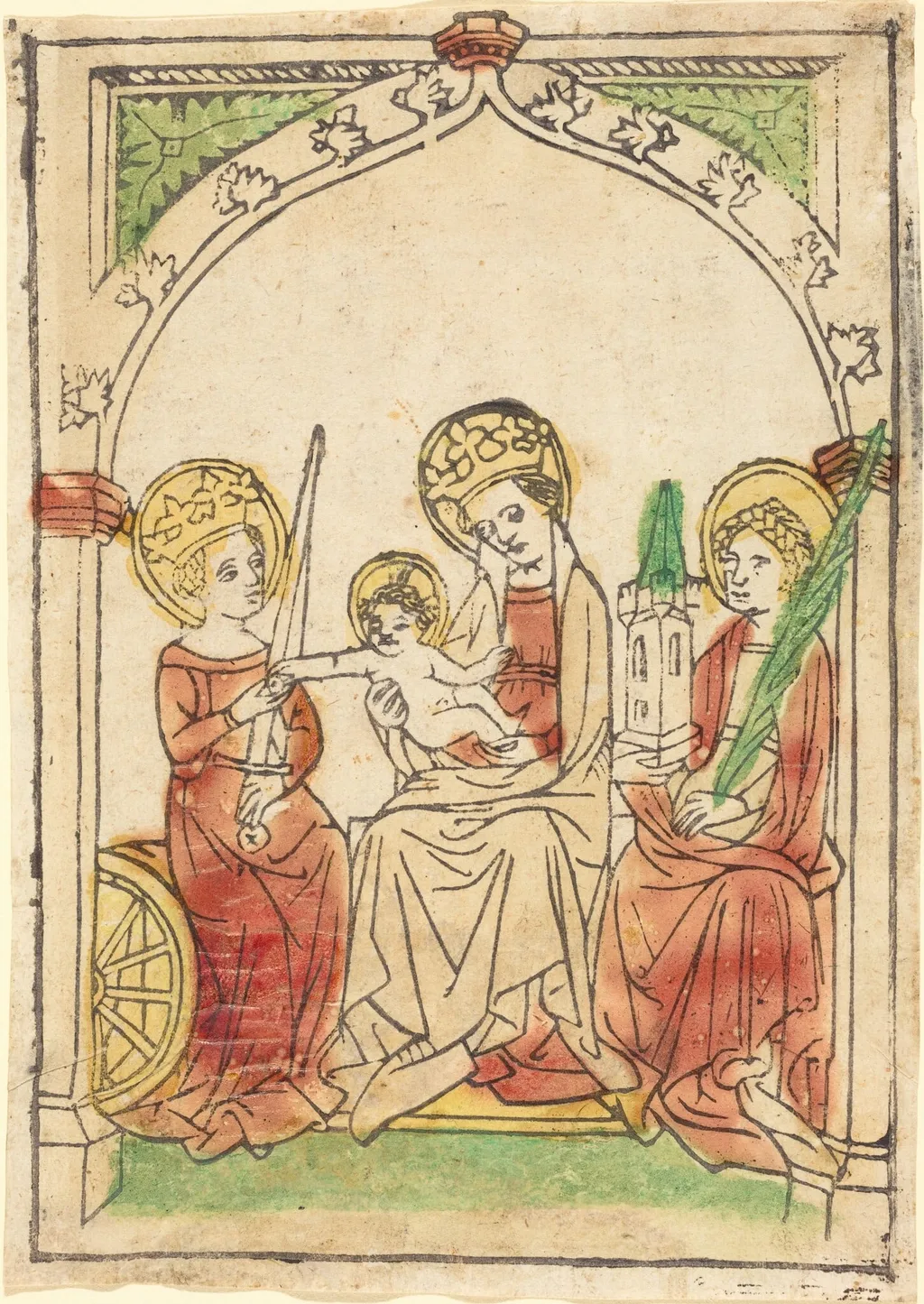
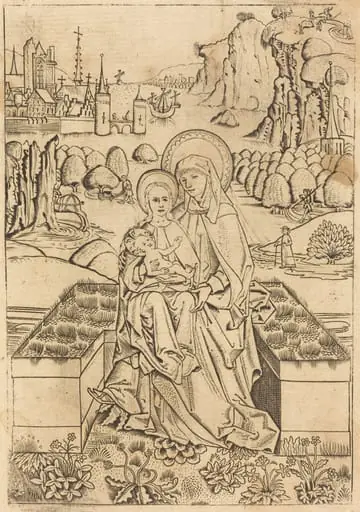
Madonna between Saints Catherine and Barbara is an ink print by the Renaissance artist German 15th Century. It dates from 1450 and is held in the collection of the National Gallery of Art. The work presents a seated female figure cradling an infant, flanked by two standing saints.
About this work
Overview
The work presents a seated female figure cradling an infant, flanked by two standing saints. All three figures are distinguished by golden halos. The central figure is dressed in a vivid red robe, while the companions hold a sword and a tower, respectively. A modest green foliage and a pointed arch frame the scene, rendered in a limited palette of warm reds, yellows, and muted tones.
Subject & Meaning
The central mother and child represent the Virgin Mary and the infant Jesus, a common devotional theme. The adjoining figures are identified as Saints Catherine, symbolized by a tower, and Barbara, associated with a sword, indicating their protective roles and intercessory significance within Christian iconography.
Technique & Style
Executed as a woodcut, the image was carved from a block of wood, inked, and printed in a warm black hue. After printing, the composition was hand‑colored using red lake, buff, green, and yellow pigments, creating contrast between the dark outlines and the bright accents. The style reflects the linear precision of woodcut printing combined with modest painterly coloration.
History & Provenance
The print originates from the early modern period, when woodcut was a primary method for reproducing religious imagery. Specific details of its creation, such as the artist or workshop, are not recorded, and its ownership trail prior to modern collection remains undocumented.
Context
Woodcut prints served both devotional and didactic purposes, allowing widespread distribution of sacred subjects. The inclusion of Saints Catherine and Barbara alongside the Madonna reflects their popularity in medieval and Renaissance piety, often invoked for protection and guidance.
Legacy
While the piece is not widely cited in major art historical surveys, it exemplifies the intersection of print technology and religious art, illustrating how hand‑coloring enhanced the visual impact of mass‑produced devotional images.
Artist & collection

Artist
This 15th-century German artist carved vivid religious scenes into metal and wood, then hand-painted them in bright, symbolic colors.

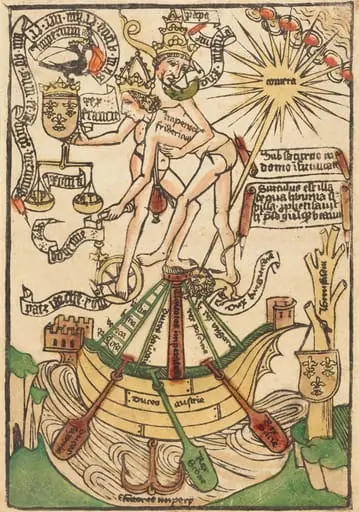 Allegory of the Meeting of Pope Paul II and Emperor Frederick III
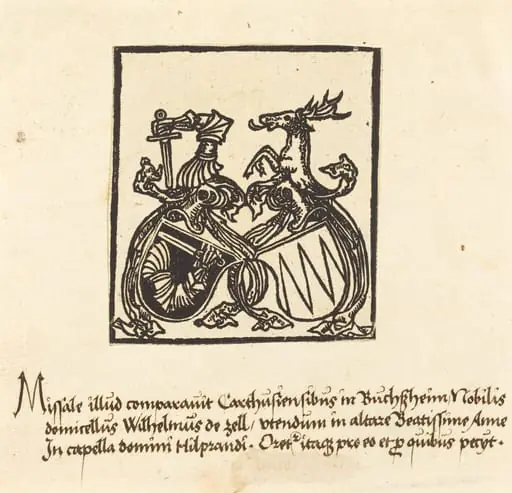 Bookplate of Wilhelm von Zell
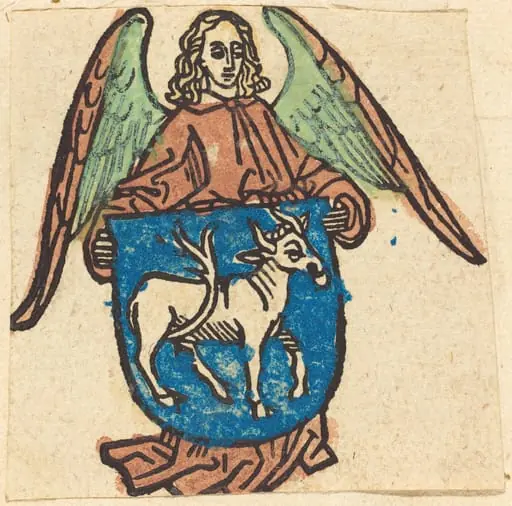 Bookplate of Hilprand Brandenburg of Bibrach
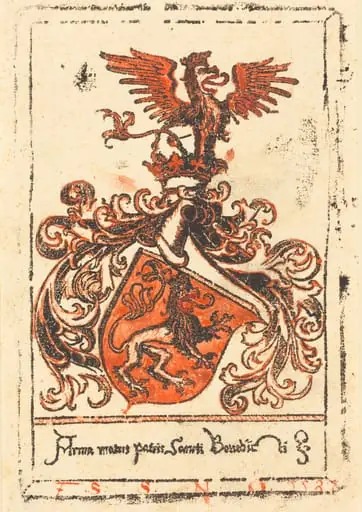 Bookplate of the Abbey of Ottobeuren
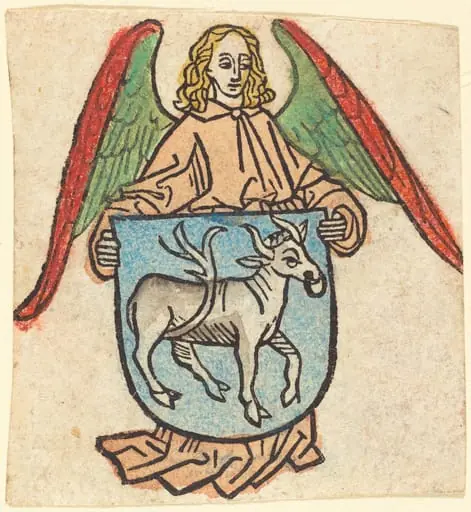 Bookplate of Hilprand Brandenburg of Bibrach
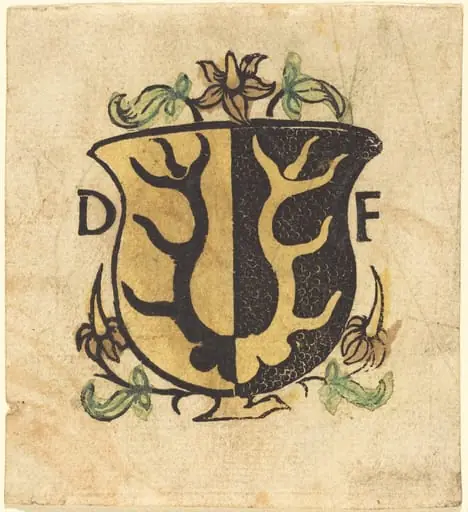 Bookplate of Dominicus Frauenfelder
![Studies for Six Figures (sheet from a model book) [recto], by German 15th Century](https://artifactworldgallery.com/img/german-15th-century--studies-for-six-figures-sheet-from-a-model-book-recto--4837429e0755bc3f-w320.webp) Studies for Six Figures (sheet from a model book) [recto]
Studies for Six Figures (sheet from a model book) [recto]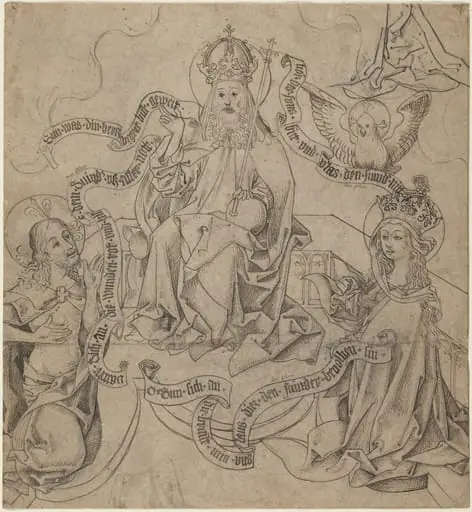 Christ and Mary Interceding with God the Father
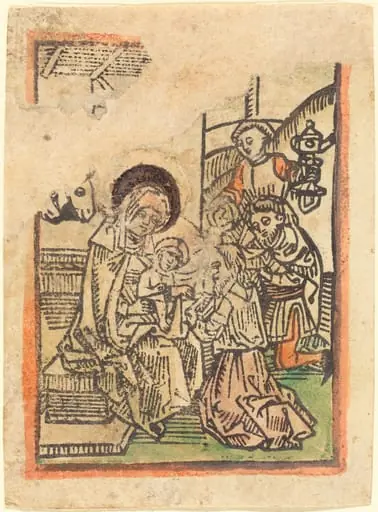 The Adoration of the Magi
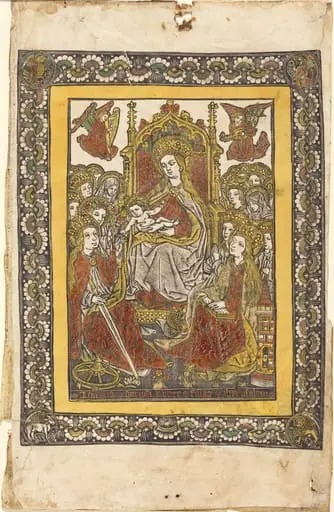 The Madonna Enthroned with Eighteen Holy Women
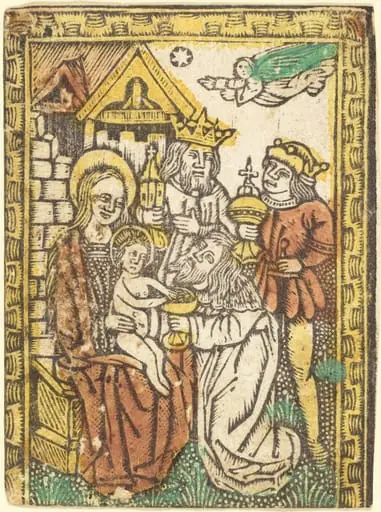 The Adoration of the Magi
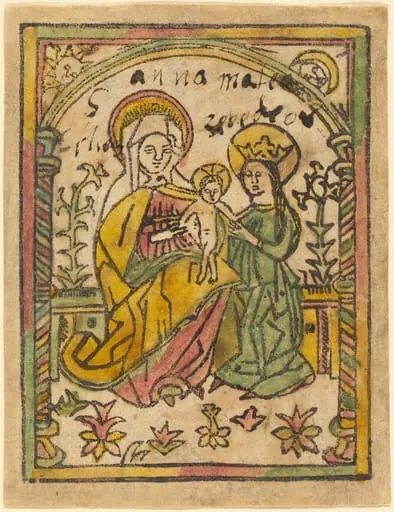 Saint Anne with the Madonna and Child
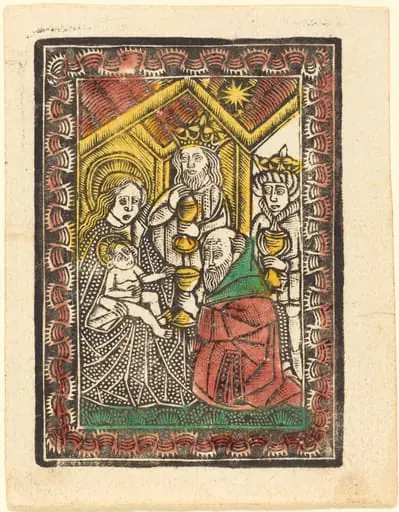 The Adoration of the Magi
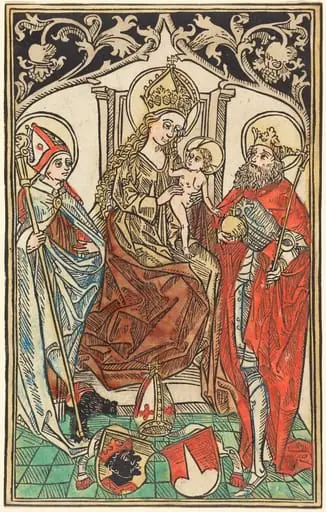 The Madonna and Child Enthroned, with Saints Corbinian and Sigismund
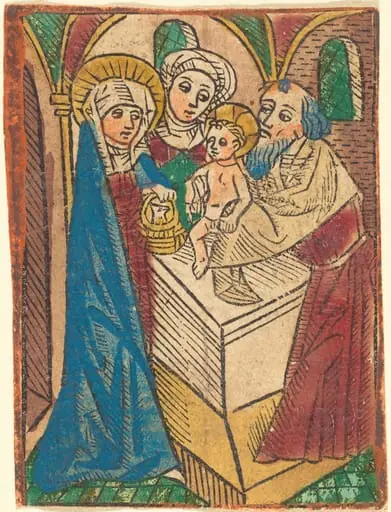 Presentation
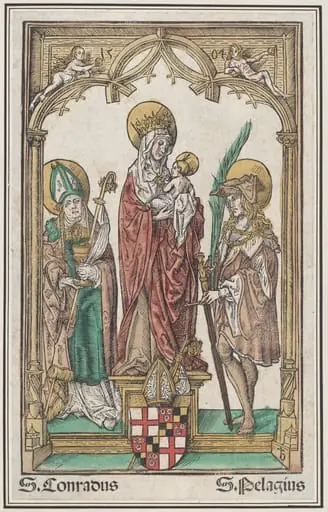 The Virgin and Child with Saint Conrad and Saint Pelagius
 The Madonna and Child with Saint Anne