Artwork
Playing Card
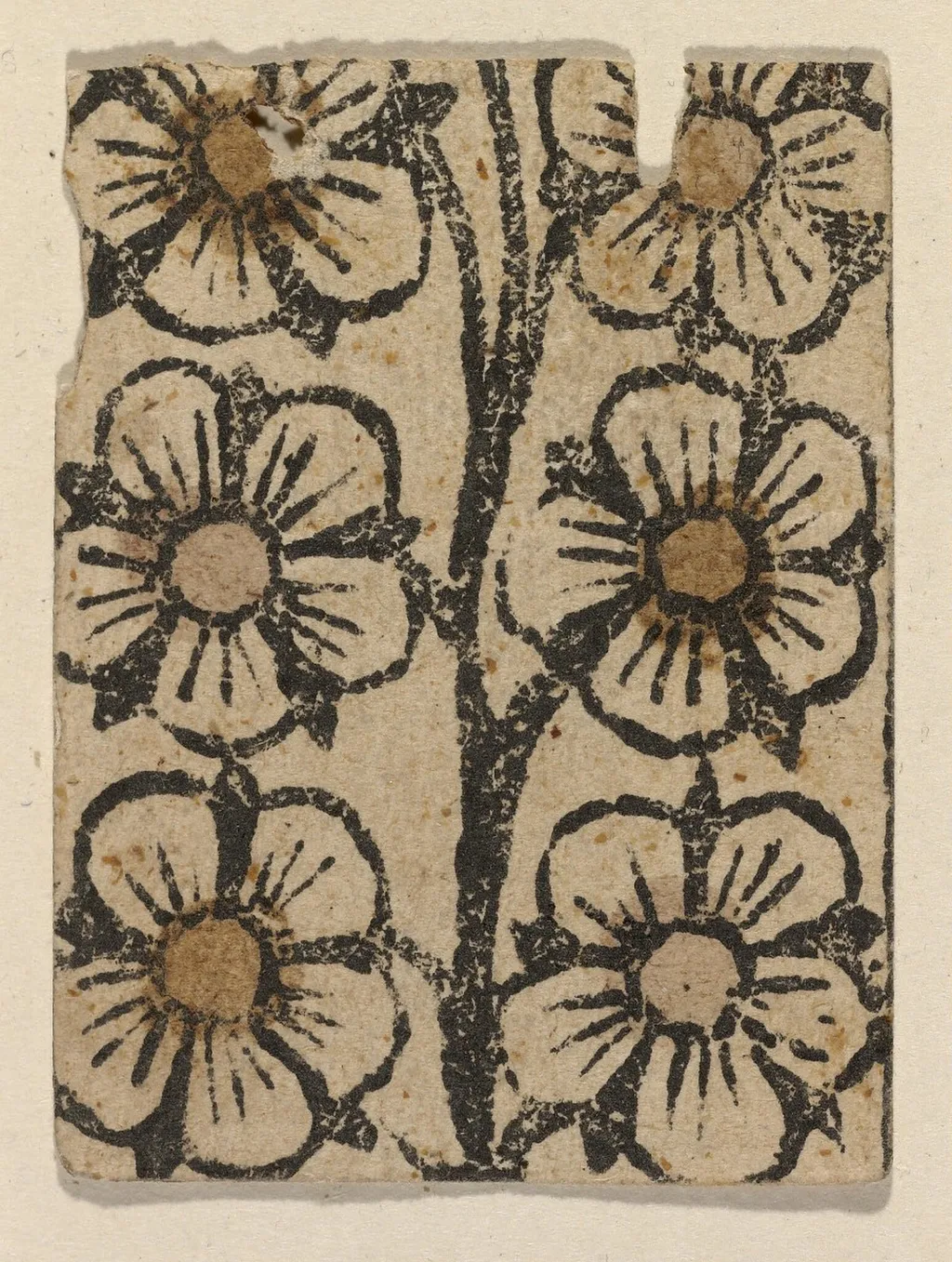
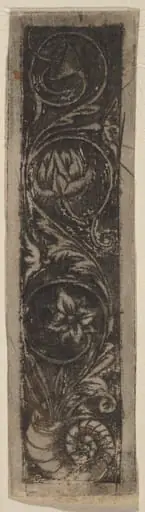
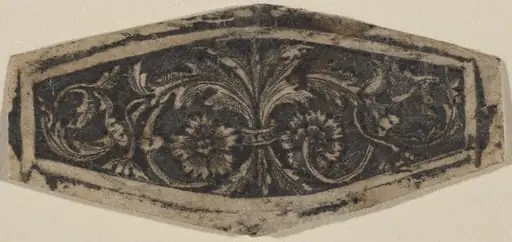
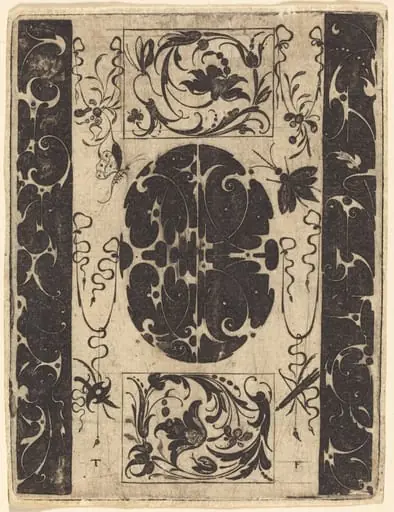
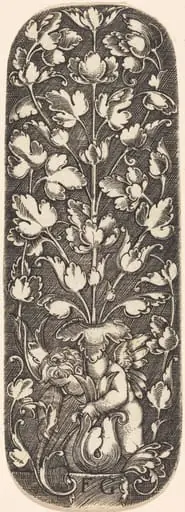
Playing Card is an ink print by the Renaissance artist German 15th Century. It dates from 1401 and is held in the collection of the National Gallery of Art.
About this work
Overview
This hand-colored woodcut depicts a single playing card, rendered in simple, bold lines and tinted by hand. Created during the early period of printmaking, it represents one of the first attempts to reproduce images at scale using carved wooden blocks. The technique allowed for multiple copies to be made efficiently, marking a shift from unique artworks to reproducible visual objects.
Subject & Meaning
The image focuses on a playing card’s suit symbol, stripped of context or narrative. Its simplicity suggests a functional or instructional purpose—perhaps as a template for cardmakers or a sample for colorists. The absence of figures or elaborate design emphasizes the symbol itself, reflecting the growing standardization of playing cards in early modern Europe.
Technique & Style
The image was produced using woodcut printing, where an artist carved a design into a wooden block, inked the surface, and pressed it onto paper. Hand-coloring was added afterward, likely by apprentices, to enhance visual appeal. The style is direct and unadorned, prioritizing clarity and reproducibility over artistic flourish, characteristic of early printed graphics.
History & Provenance
This print likely dates to the late 15th or early 16th century, when woodcut technology spread across Europe alongside the rise of the printing press. While its exact origin and prior ownership are undocumented, similar examples appear in collections of early printed ephemera, suggesting it was part of a commercial or craft-related production chain.
Context
During this period, playing cards were widely used but often regulated due to gambling concerns. The mass production of card designs via woodcut reflects both popular demand and the commercialization of print. This object sits at the intersection of leisure, commerce, and emerging print technology, illustrating how everyday items became vehicles for innovation.
Legacy
As an early example of reproducible imagery, this woodcut contributed to the democratization of visual culture. It helped establish print as a medium for mundane, utilitarian objects—not just religious or scholarly texts. Its existence signals the beginning of a broader shift toward image-based communication accessible beyond elite circles.
Artist & collection

Artist
This 15th-century German artist carved vivid religious scenes into metal and wood, then hand-painted them in bright, symbolic colors.

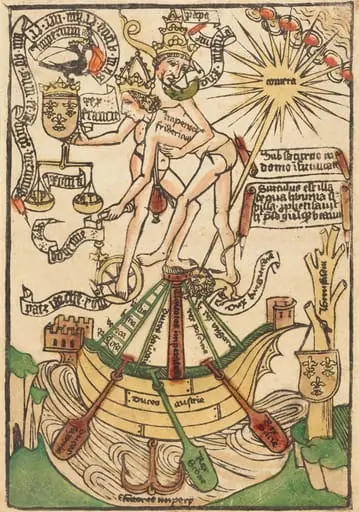 Allegory of the Meeting of Pope Paul II and Emperor Frederick III
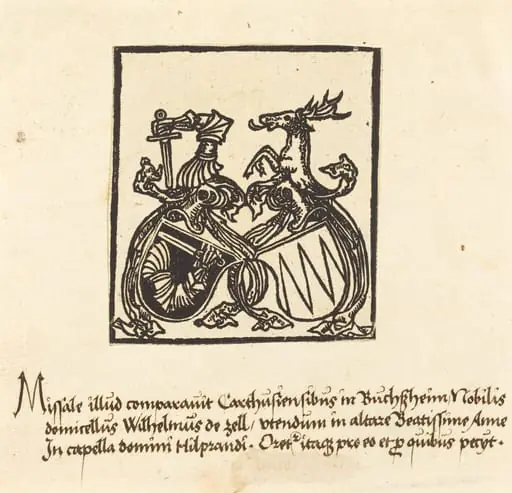 Bookplate of Wilhelm von Zell
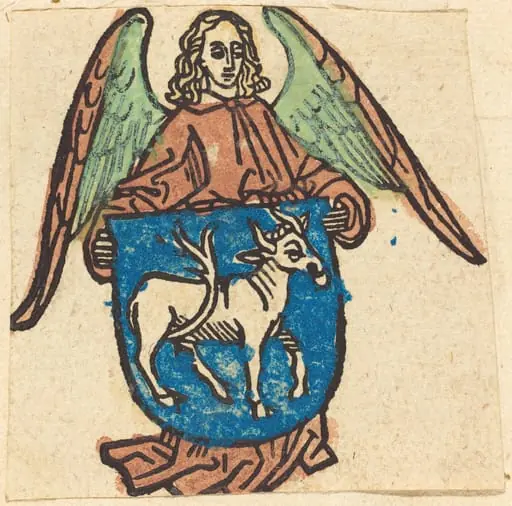 Bookplate of Hilprand Brandenburg of Bibrach
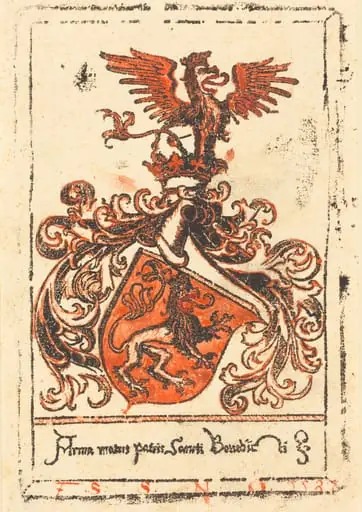 Bookplate of the Abbey of Ottobeuren
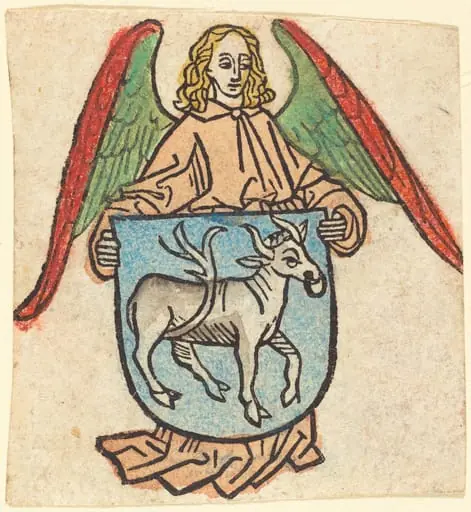 Bookplate of Hilprand Brandenburg of Bibrach
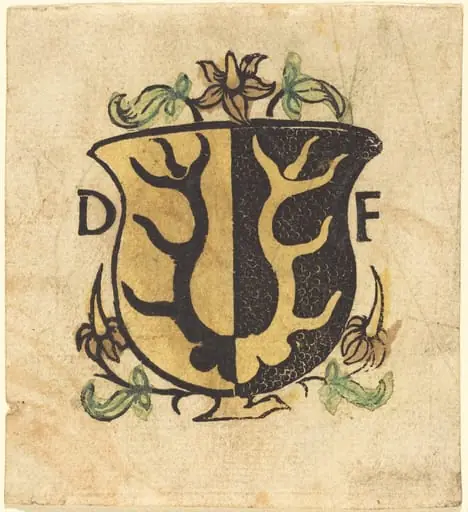 Bookplate of Dominicus Frauenfelder
![Studies for Six Figures (sheet from a model book) [recto], by German 15th Century](https://artifactworldgallery.com/img/german-15th-century--studies-for-six-figures-sheet-from-a-model-book-recto--4837429e0755bc3f-w320.webp) Studies for Six Figures (sheet from a model book) [recto]
Studies for Six Figures (sheet from a model book) [recto]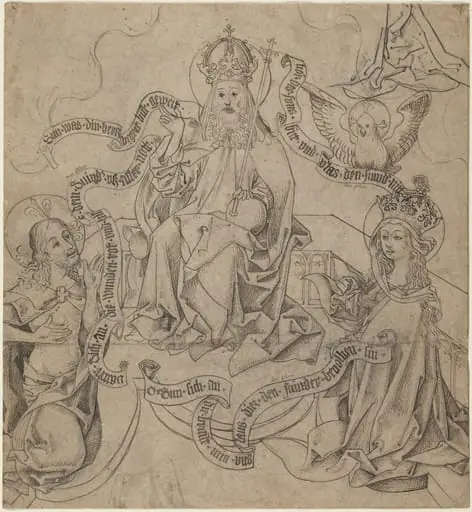 Christ and Mary Interceding with God the Father