Artwork
Saint Catherine
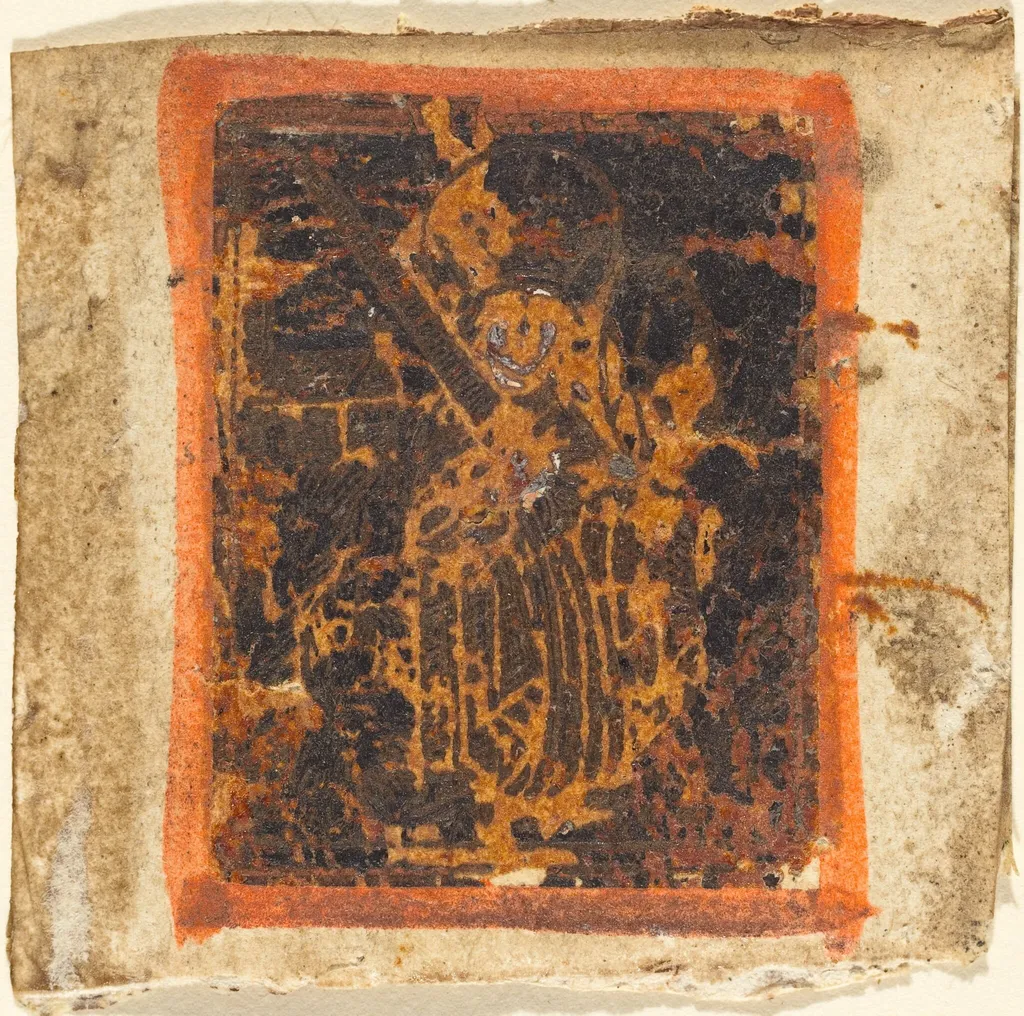
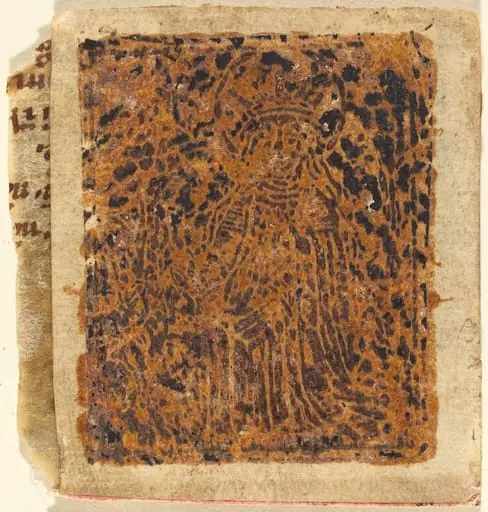
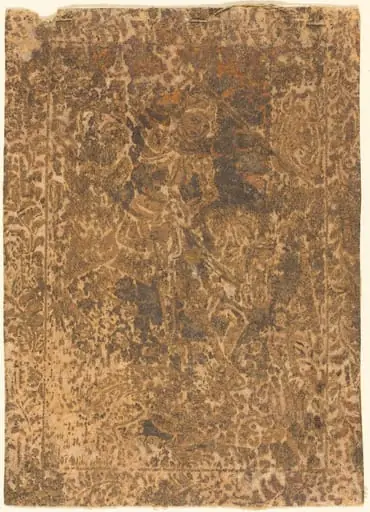
Saint Catherine is a print by the Renaissance artist German 15th Century. It dates from 1480 and is held in the collection of the National Gallery of Art.
About this work
Overview
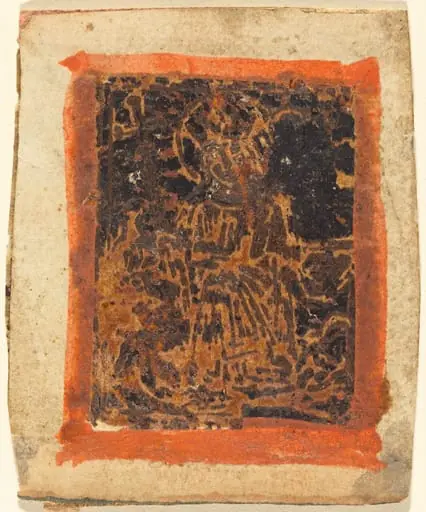
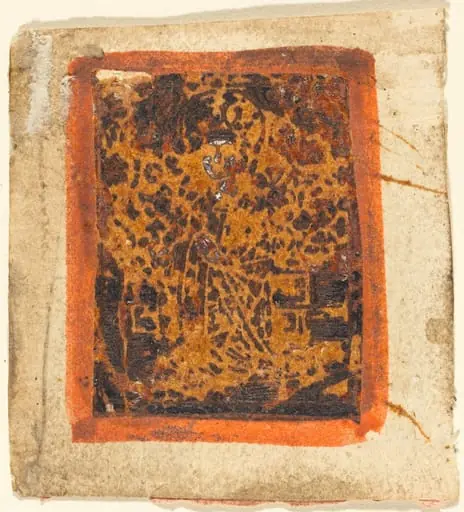
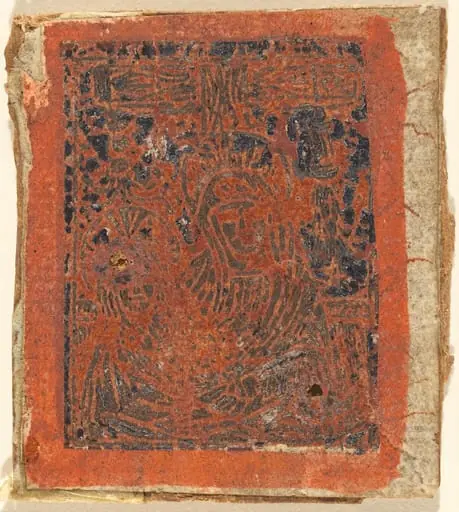
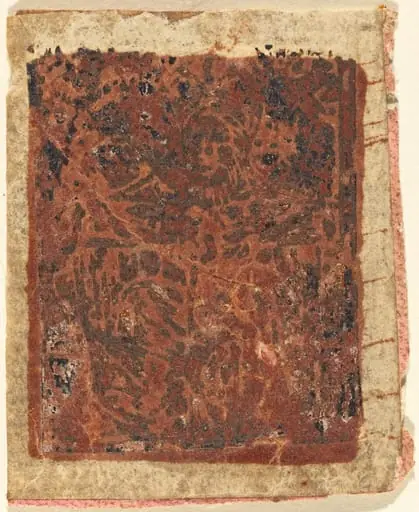
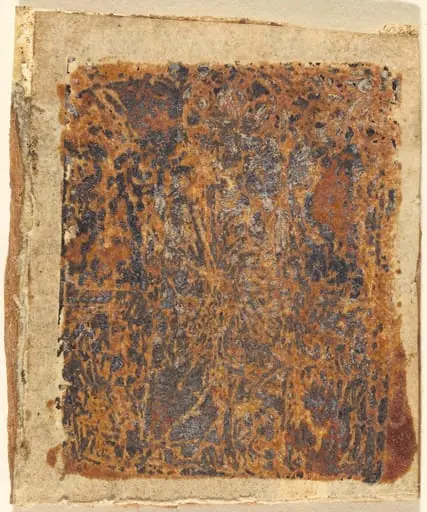
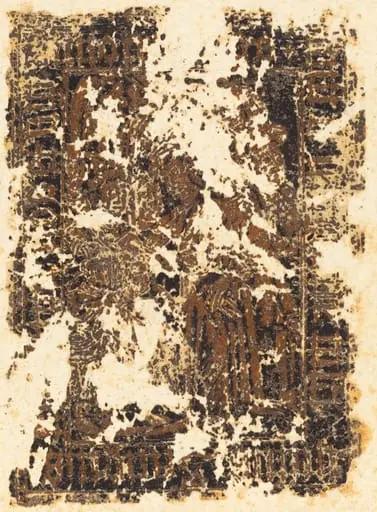
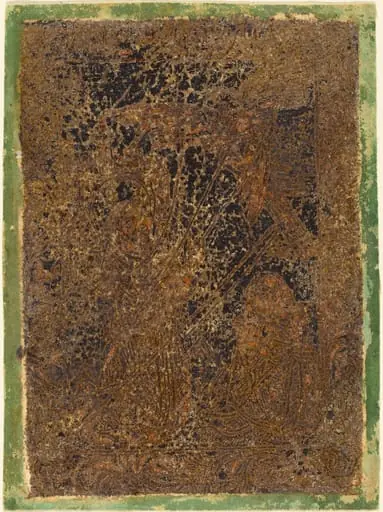
This print depicts Saint Catherine, rendered in a paste-based medium with a heavily worn surface. The image is faint and blurred, suggesting prolonged exposure and physical handling. Thick, uneven pigment application gives the surface a textured, almost sculptural quality. A narrow orange border, now peeling, once framed the composition, hinting at its former use as a devotional object.
Subject & Meaning
The figure likely represents Saint Catherine of Alexandria, identifiable by the broken wheel, her traditional attribute tied to her martyrdom. The obscured details suggest the image was not intended for detailed contemplation but for devotional familiarity. Its worn condition implies repeated use in private or domestic worship, where tactile engagement mattered more than visual clarity.
Technique & Style
The work employs impasto, with pigment applied thickly and irregularly, creating a rough, tactile surface. Brushstrokes remain visible, and the palette is restricted to muted earth tones—browns and blacks—with a thin, fading orange outline. The paste medium, combined with coarse application, results in a crude, almost primitive aesthetic, prioritizing symbolic presence over refinement.
History & Provenance
The object’s physical degradation—fading, peeling edges, and surface abrasion—indicates extensive use over time, likely in a domestic or small-scale religious setting. Its paste print construction suggests it was mass-produced or locally made, possibly as a low-cost devotional item. No documented origin is known, but its condition points to common folk use rather than institutional preservation.
Context
In early modern religious practice, such images served as accessible aids to prayer, especially among communities with limited access to finely crafted altarpieces. The crude execution and durable materials reflect a tradition of vernacular piety, where symbolic recognition outweighed artistic polish. Similar objects were often carried, touched, or hung in homes as protective talismans.
Legacy
Though overlooked in formal art histories, this object exemplifies the widespread use of humble, hand-made religious imagery in everyday spiritual life. Its survival, despite deterioration, underscores the value placed on such objects by their users. Today, it offers insight into non-elite devotional practices, contrasting with the polished aesthetics of ecclesiastical art.
Artist & collection

Artist
This 15th-century German artist carved vivid religious scenes into metal and wood, then hand-painted them in bright, symbolic colors.

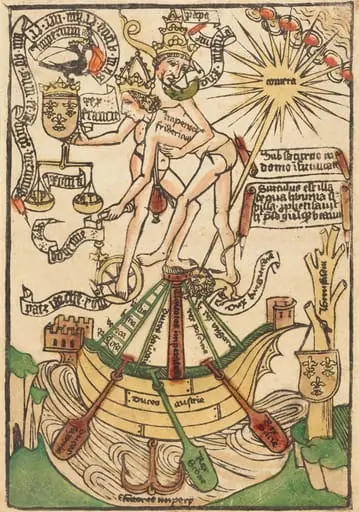 Allegory of the Meeting of Pope Paul II and Emperor Frederick III
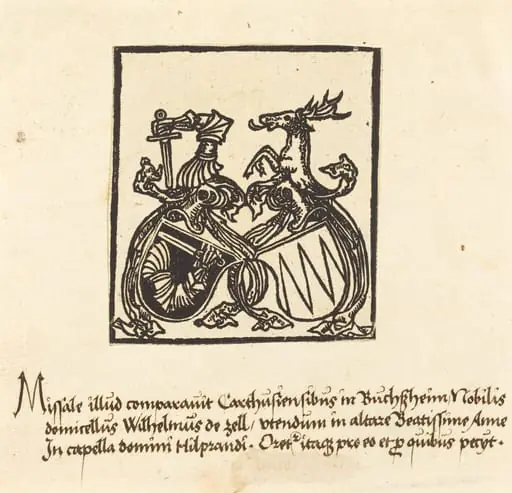 Bookplate of Wilhelm von Zell
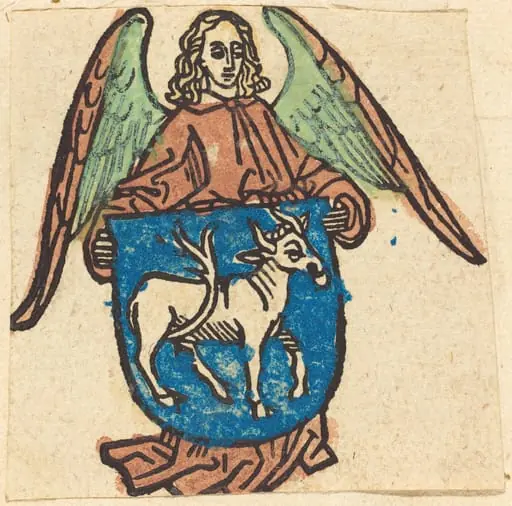 Bookplate of Hilprand Brandenburg of Bibrach
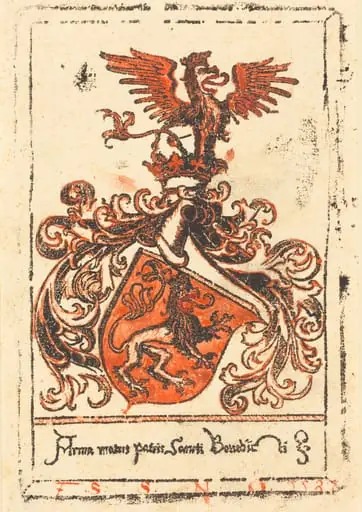 Bookplate of the Abbey of Ottobeuren
 Bookplate of Hilprand Brandenburg of Bibrach
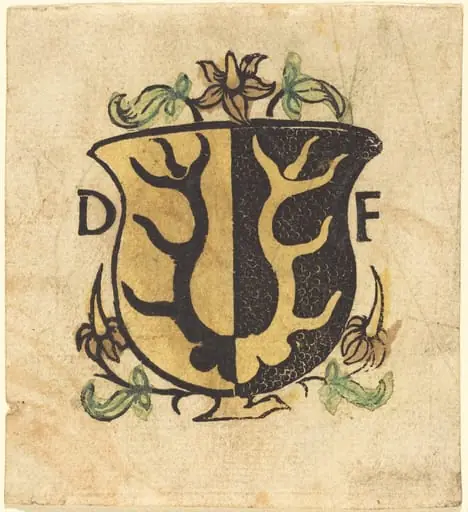 Bookplate of Dominicus Frauenfelder
![Studies for Six Figures (sheet from a model book) [recto], by German 15th Century](https://artifactworldgallery.com/img/german-15th-century--studies-for-six-figures-sheet-from-a-model-book-recto--4837429e0755bc3f-w320.webp) Studies for Six Figures (sheet from a model book) [recto]
Studies for Six Figures (sheet from a model book) [recto]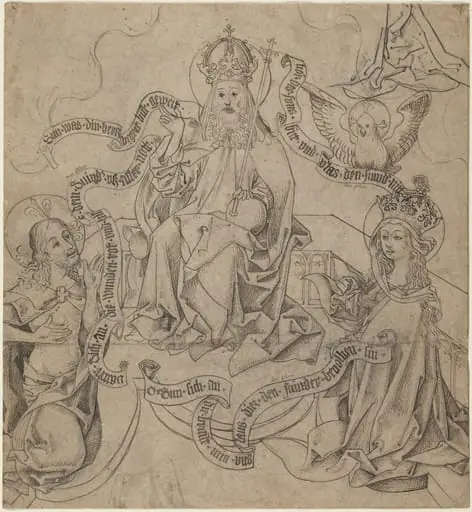 Christ and Mary Interceding with God the Father

![Saint Catherine [verso], by German 15th Century](https://artifactworldgallery.com/img/german-15th-century--saint-catherine-verso--5db2040b17f4b08f-w320.webp)