Artwork
The Deposition from the Cross
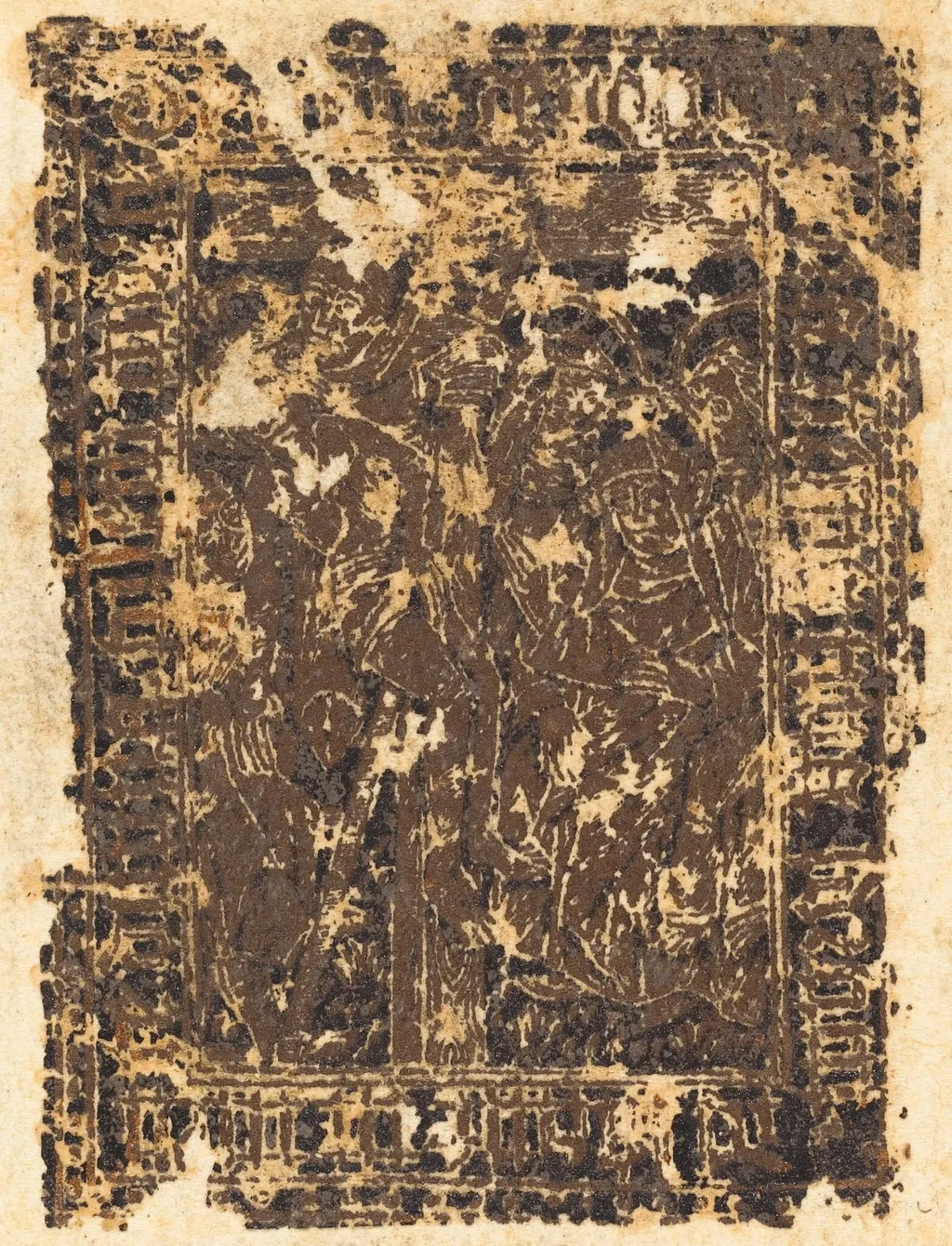
The Deposition from the Cross is a print by the Renaissance artist German 15th Century. It dates from 1484 and is held in the collection of the National Gallery of Art.
About this work
Overview
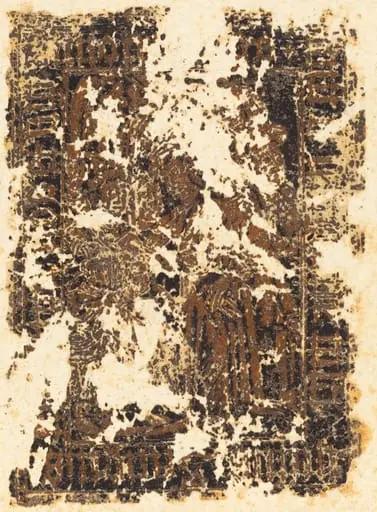
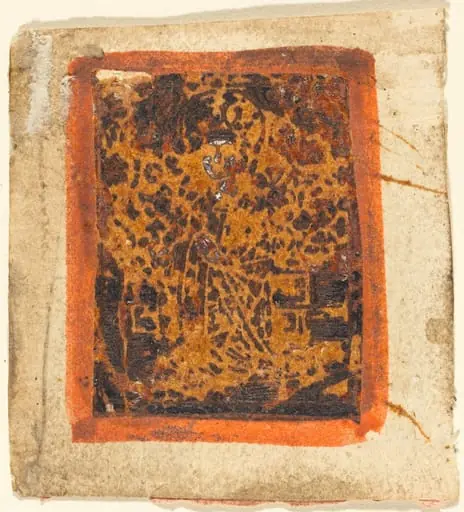
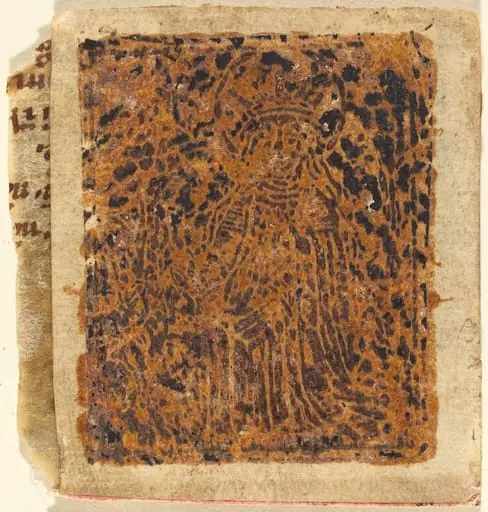
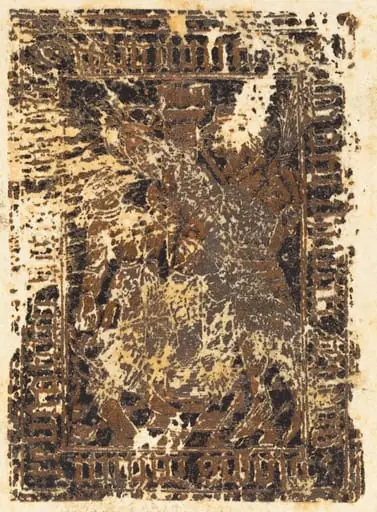
This print on laid paper depicts the Deposition from the Cross, rendered in a faded brown tonality typical of early reproductive techniques.
This print on laid paper depicts the Deposition from the Cross, rendered in a faded brown tonality typical of early reproductive techniques. The composition centers on a crowded scene of figures surrounding Christ’s body, framed by an ornate border of stylized foliage. The paper shows signs of age—yellowing, abrasion, and partial loss of detail—suggesting it was produced in the early period of printmaking and has endured considerable handling or exposure.
Subject & Meaning
The scene illustrates the moment Christ’s body is lowered from the cross, a key event in Christian Passion narratives. Figures include mourners, disciples, and attendants arranged in a tight, emotional grouping. The emphasis on collective grief and physical labor reflects devotional priorities of the time, inviting viewers to contemplate sacrifice and mourning through a shared, humanized moment.
Technique & Style
Executed as a paste print, the image relies on layered pigments applied to paper rather than engraved lines or woodcut relief. The muted palette and soft contours indicate a method suited for mass reproduction, likely derived from a painted model. The border’s repetitive vine motifs echo contemporary decorative traditions, blending sacred imagery with ornamental framing common in early printed devotional objects.
History & Provenance
Though exact origins are unrecorded, the print’s material and aesthetic align with late 15th- to early 16th-century European reproductive prints. Its worn condition suggests it circulated widely, possibly as a devotional aid in private or institutional settings. Similar prints were often bound into prayer books or displayed in homes, indicating its function as a tool for personal meditation rather than public display.
Context
Produced during the Renaissance, this print reflects the period’s growing access to religious imagery through print technology. While painters like Raphael and Caravaggio explored the Deposition in oil, this version catered to a broader audience, translating complex iconography into affordable, portable form. It bridges the gap between elite altarpieces and popular piety, revealing how spiritual themes were democratized through mechanical reproduction.
Legacy
As an early example of reproductive printmaking, it contributes to the historical record of how religious narratives were visually disseminated before photography. Its deterioration underscores the fragility of such objects and the impermanence of mass-produced devotional culture. Today, it serves as evidence of how ordinary people engaged with sacred stories through tactile, everyday media.
Artist & collection

Artist
This 15th-century German artist carved vivid religious scenes into metal and wood, then hand-painted them in bright, symbolic colors.

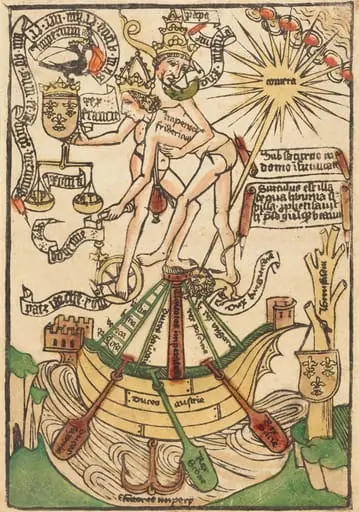 Allegory of the Meeting of Pope Paul II and Emperor Frederick III
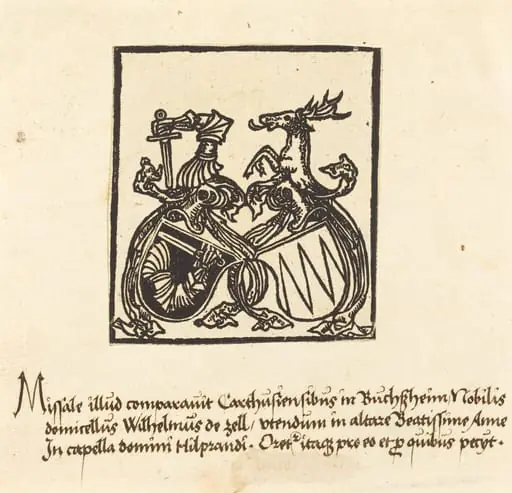 Bookplate of Wilhelm von Zell
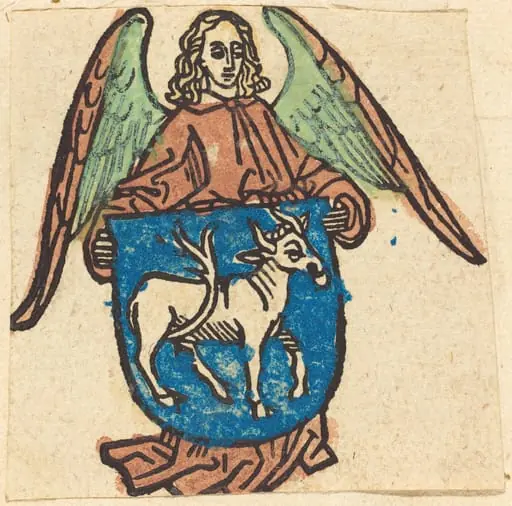 Bookplate of Hilprand Brandenburg of Bibrach
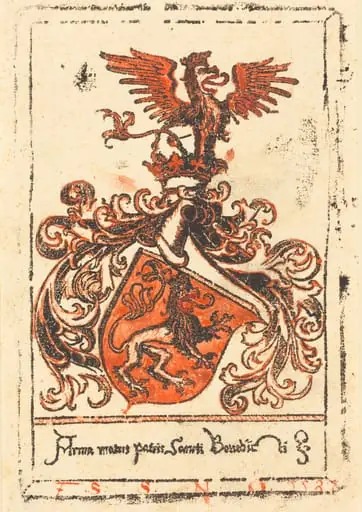 Bookplate of the Abbey of Ottobeuren
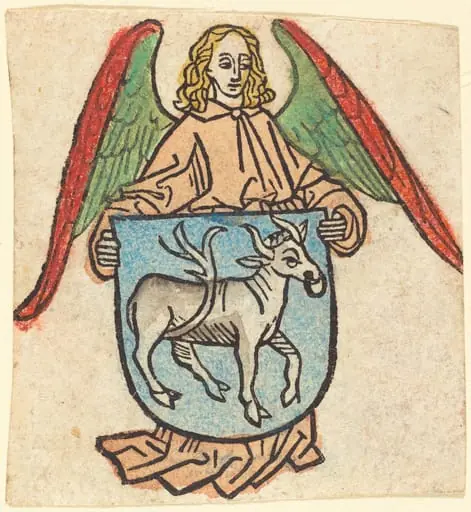 Bookplate of Hilprand Brandenburg of Bibrach
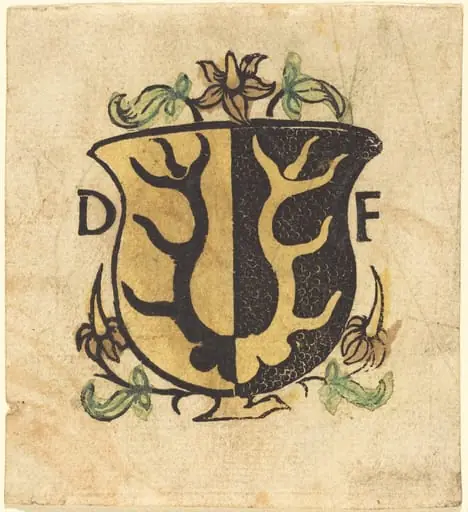 Bookplate of Dominicus Frauenfelder
![Studies for Six Figures (sheet from a model book) [recto], by German 15th Century](https://artifactworldgallery.com/img/german-15th-century--studies-for-six-figures-sheet-from-a-model-book-recto--4837429e0755bc3f-w320.webp) Studies for Six Figures (sheet from a model book) [recto]
Studies for Six Figures (sheet from a model book) [recto] Christ and Mary Interceding with God the Father
![Saint Catherine [verso], by German 15th Century](https://artifactworldgallery.com/img/german-15th-century--saint-catherine-verso--5db2040b17f4b08f-w320.webp)