Artwork
Saint Clare of Assisi
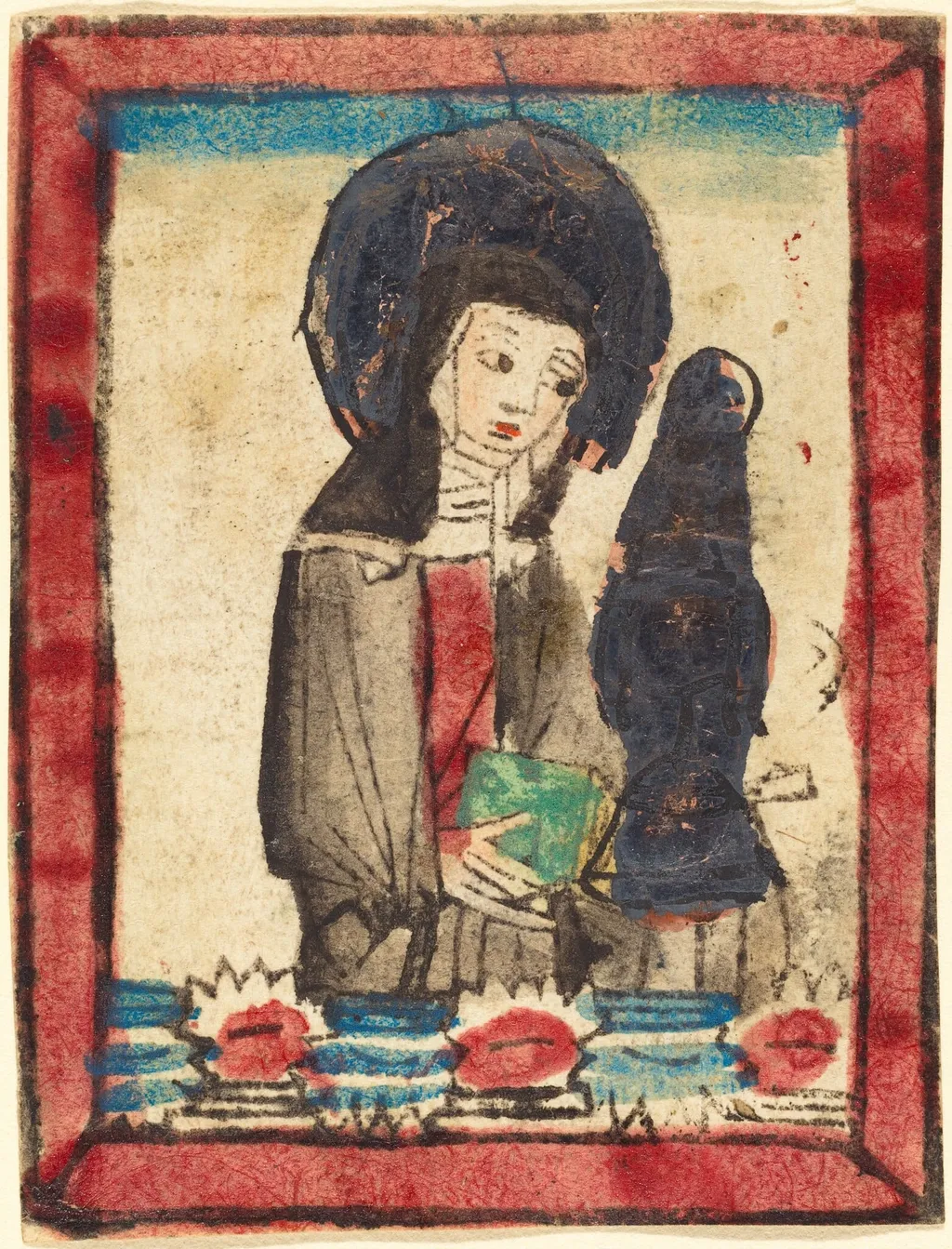
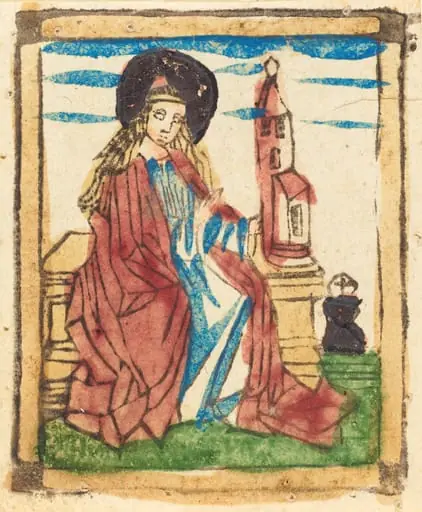
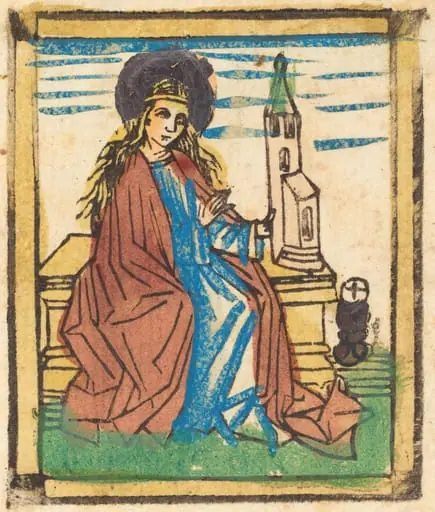
Saint Clare of Assisi is an ink print by the Renaissance artist German 15th Century. It dates from 1460 and is held in the collection of the National Gallery of Art.
About this work
Overview
The work is a hand‑colored woodcut depicting a female figure identified as Saint Clare of Assisi. Executed on paper, the image presents the saint seated, dressed in a black habit with a white veil, and holding a green book. A smaller, darkened figure stands beside her, while the surrounding space is framed by a red border and a patterned floor of blue and white stripes.
Subject & Meaning
Saint Clare, a 13th‑century follower of Saint Francis, is shown in a contemplative pose, the green book likely representing her spiritual writings or the Rule of the Poor Clares. The adjacent dark figure may symbolize a companion, perhaps a disciple or a symbolic representation of humility, underscoring her role as a religious guide.
Technique & Style
The image was produced by carving a design into a wood block, inking the relief, and printing it onto paper. After printing, the print was manually painted with a limited palette of wine red, blue, green, carmine, gray, and gold. The coloration is applied in flat, uniform areas, giving the composition a graphic, two‑dimensional quality typical of early woodcut illustration.
History & Provenance
The print belongs to the tradition of devotional woodcuts that circulated in the late medieval and early Renaissance periods. While specific details of its creation and ownership are not recorded, such works were commonly used for personal piety and as illustrative material in religious texts.
Context
Woodcut printing became a popular medium for disseminating religious imagery in the 15th and 16th centuries, allowing relatively inexpensive reproduction of saintly portraits. The stark outlines and vivid hand‑applied colors reflect the aesthetic of early printmaking before the advent of more sophisticated shading techniques.
Legacy
Images like this contributed to the visual vocabulary of saintly representation, influencing later printed devotional materials. The combination of woodcut precision with hand coloring demonstrates a transitional stage in print culture, bridging manuscript illumination and mass‑produced prints.
Artist & collection

Artist
This 15th-century German artist carved vivid religious scenes into metal and wood, then hand-painted them in bright, symbolic colors.

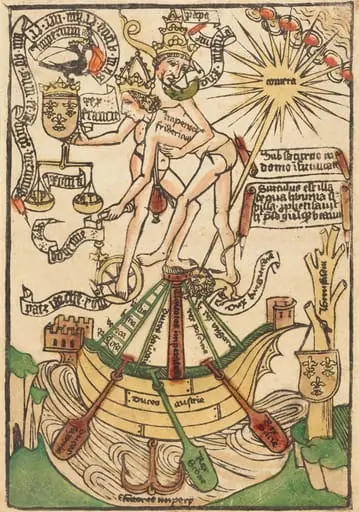 Allegory of the Meeting of Pope Paul II and Emperor Frederick III
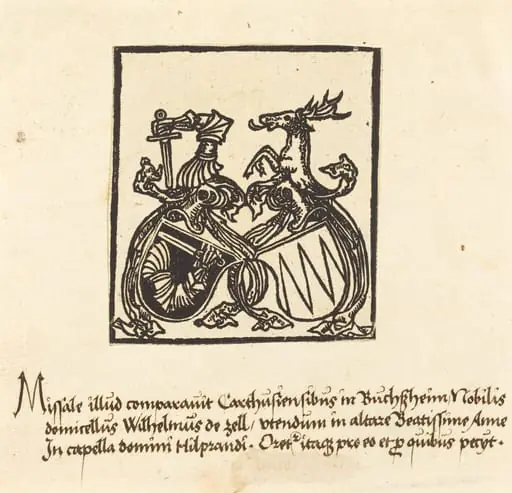 Bookplate of Wilhelm von Zell
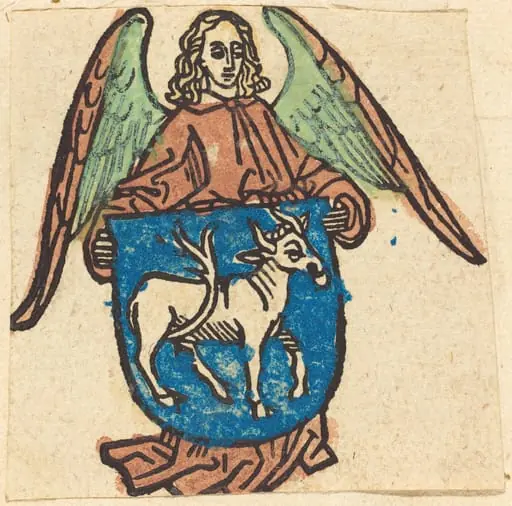 Bookplate of Hilprand Brandenburg of Bibrach
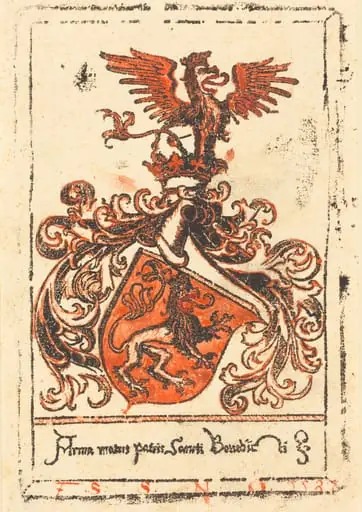 Bookplate of the Abbey of Ottobeuren
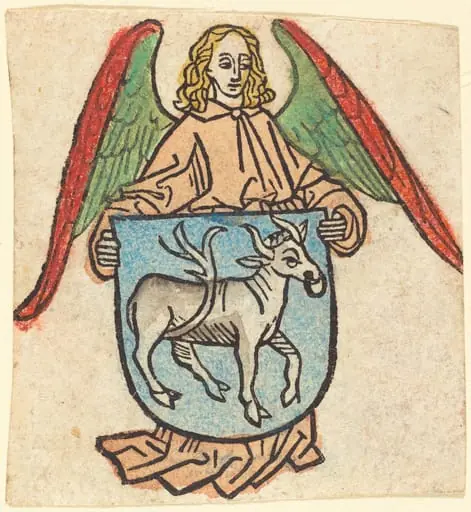 Bookplate of Hilprand Brandenburg of Bibrach
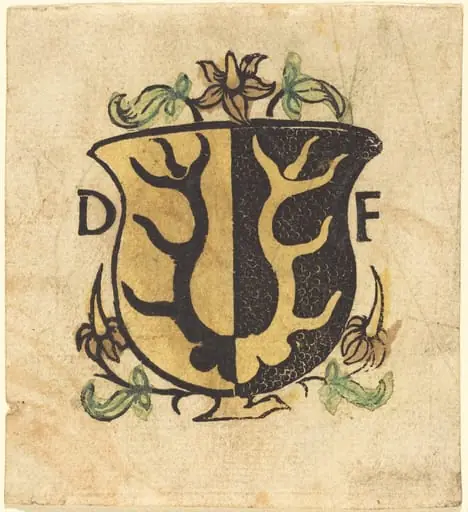 Bookplate of Dominicus Frauenfelder
![Studies for Six Figures (sheet from a model book) [recto], by German 15th Century](https://artifactworldgallery.com/img/german-15th-century--studies-for-six-figures-sheet-from-a-model-book-recto--4837429e0755bc3f-w320.webp) Studies for Six Figures (sheet from a model book) [recto]
Studies for Six Figures (sheet from a model book) [recto]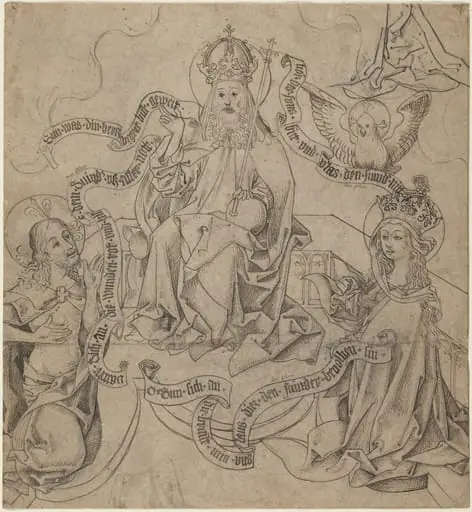 Christ and Mary Interceding with God the Father