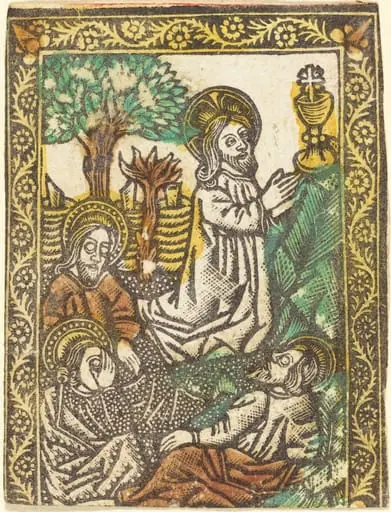
Artwork
Saint Barbara
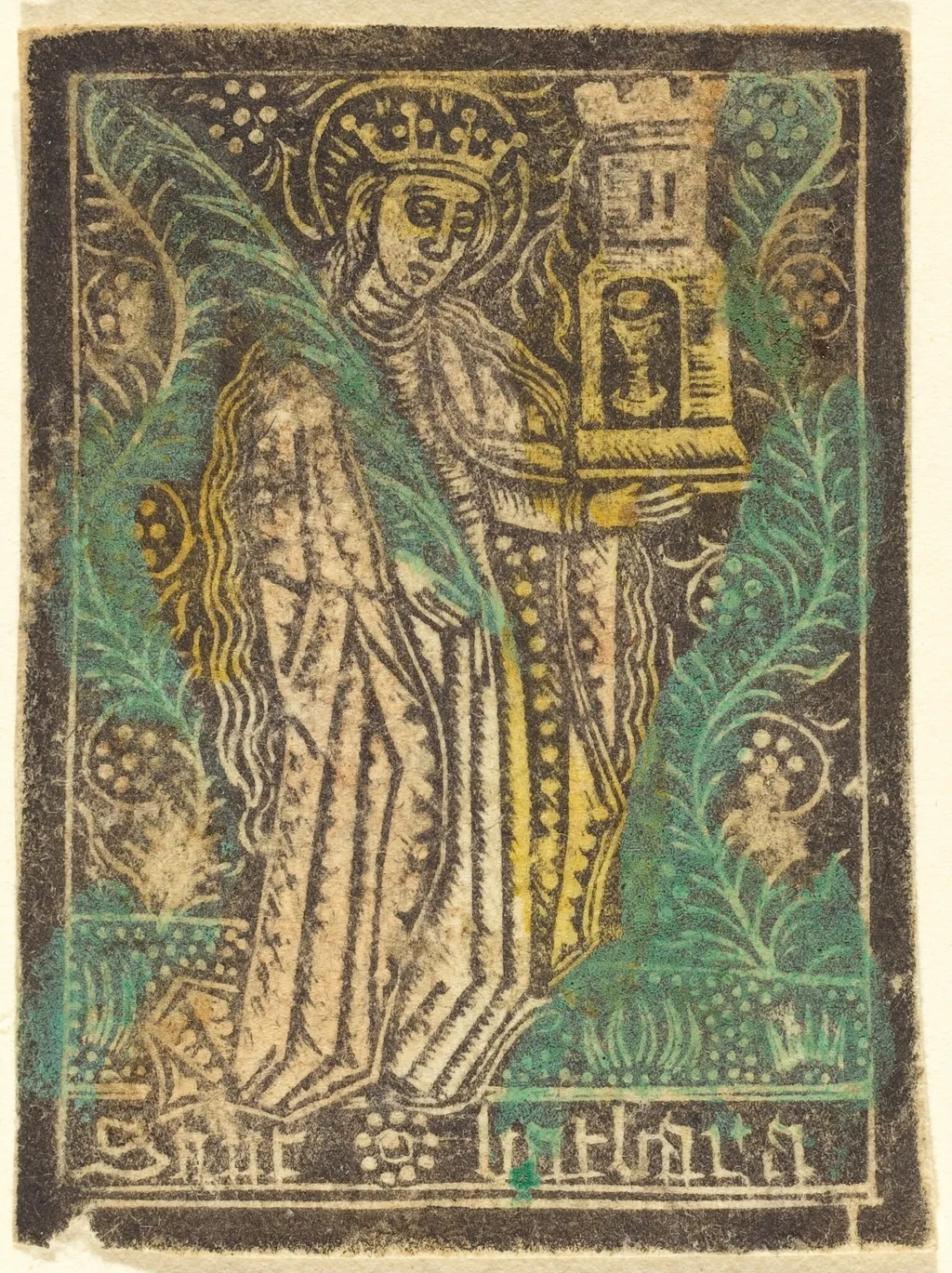
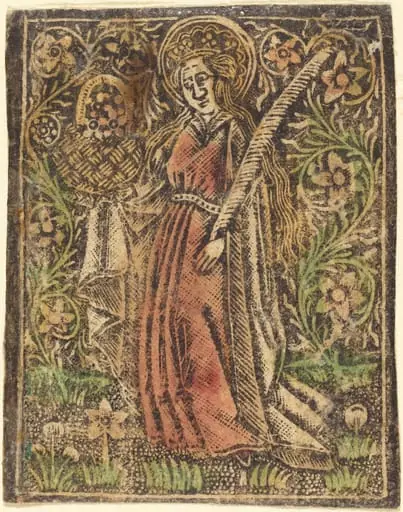
Saint Barbara is a paint print by the Renaissance artist German 15th Century. It dates from 1470 and is held in the collection of the National Gallery of Art.
About this work
The background of the image features a pattern of leaves and flowers, adding a sense of depth and texture to the overall design.
This image presents a metalcut of Saint Barbara, hand-colored in green and yellow. The saint is depicted wearing a crown and a long robe, holding a tower in her right hand. Her long hair flows down her back.
The background of the image features a pattern of leaves and flowers, adding a sense of depth and texture to the overall design. The use of green and yellow colors gives the image a sense of warmth and vibrancy.
The artist's use of metalcut and hand-coloring techniques creates a unique and intricate visual effect. For more information on the artist's style and techniques, explore the works of German 15th Century.
Overview
This 15th‑century German metalcut portrays Saint Barbara, rendered in a hand‑colored palette of green and yellow. The saint stands crowned and robed, clutching a tower in her right hand, while her long hair cascades down her back. The surrounding field is filled with a decorative motif of leaves and flowers, giving the composition a layered visual texture.
Subject & Meaning
Saint Barbara is shown with her traditional attribute, the tower, symbolising the imprisonment imposed by her father and her steadfast faith. The crown denotes her noble status, and the serene pose reflects the saint’s martyrdom and triumph over earthly oppression.
Technique & Style
The image was produced by cutting the design into a metal plate, a method that allows fine lines and intricate detail. After printing, the work was hand‑colored with green and yellow pigments, enhancing depth and warmth while preserving the crispness of the metalcut’s linear quality.
History & Provenance
The print belongs to the corpus of German metalcut prints from the 1400s, a period when artisans combined engraving with hand‑coloring to create devotional images for private contemplation. Its exact origin and ownership trail remain undocumented, but it aligns with the regional practice of producing affordable, richly illustrated religious prints.
Context
During the late medieval era, Saint Barbara’s narrative was popular in Northern Europe, prompting numerous visual representations. Metalcut prints served as accessible devotional objects, bridging the gap between illuminated manuscripts and emerging print technologies.
Artist & collection

Artist
This 15th-century German artist carved vivid religious scenes into metal and wood, then hand-painted them in bright, symbolic colors.

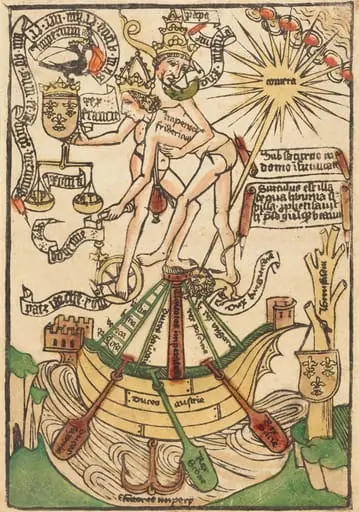 Allegory of the Meeting of Pope Paul II and Emperor Frederick III
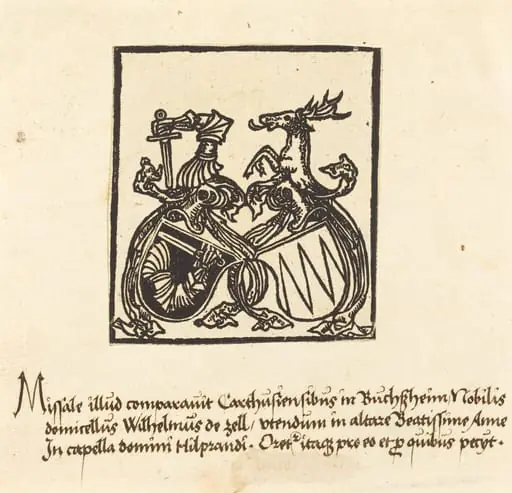 Bookplate of Wilhelm von Zell
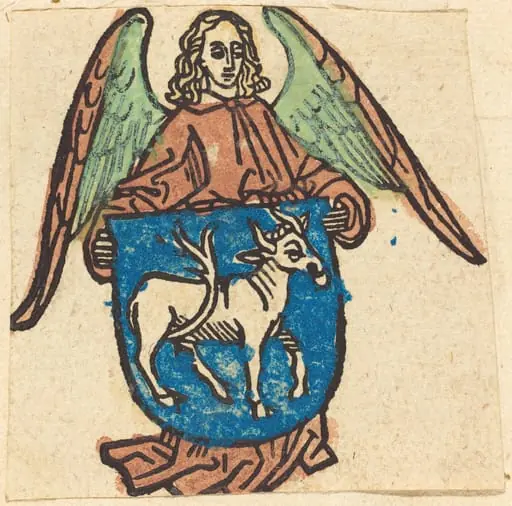 Bookplate of Hilprand Brandenburg of Bibrach
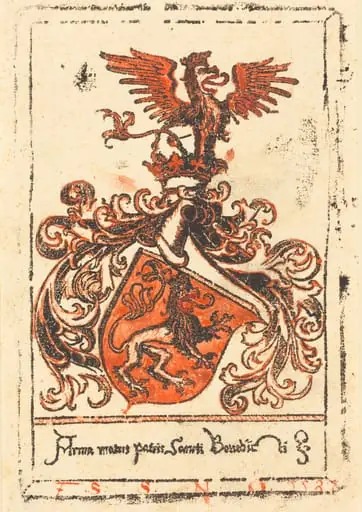 Bookplate of the Abbey of Ottobeuren
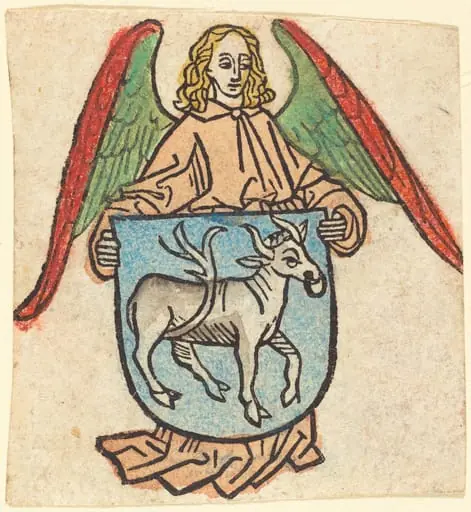 Bookplate of Hilprand Brandenburg of Bibrach
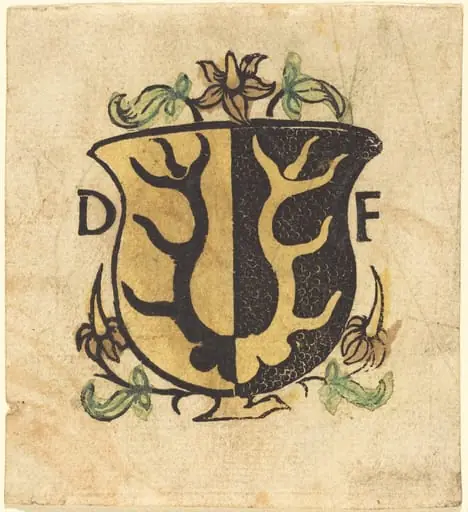 Bookplate of Dominicus Frauenfelder
![Studies for Six Figures (sheet from a model book) [recto], by German 15th Century](https://artifactworldgallery.com/img/german-15th-century--studies-for-six-figures-sheet-from-a-model-book-recto--4837429e0755bc3f-w320.webp) Studies for Six Figures (sheet from a model book) [recto]
Studies for Six Figures (sheet from a model book) [recto] Christ and Mary Interceding with God the Father
![Saint Agnes [verso], by German 15th Century](https://artifactworldgallery.com/img/german-15th-century--saint-agnes-verso--eb41977e5e7551cd-w320.webp)