Artwork
Saint James the Greater
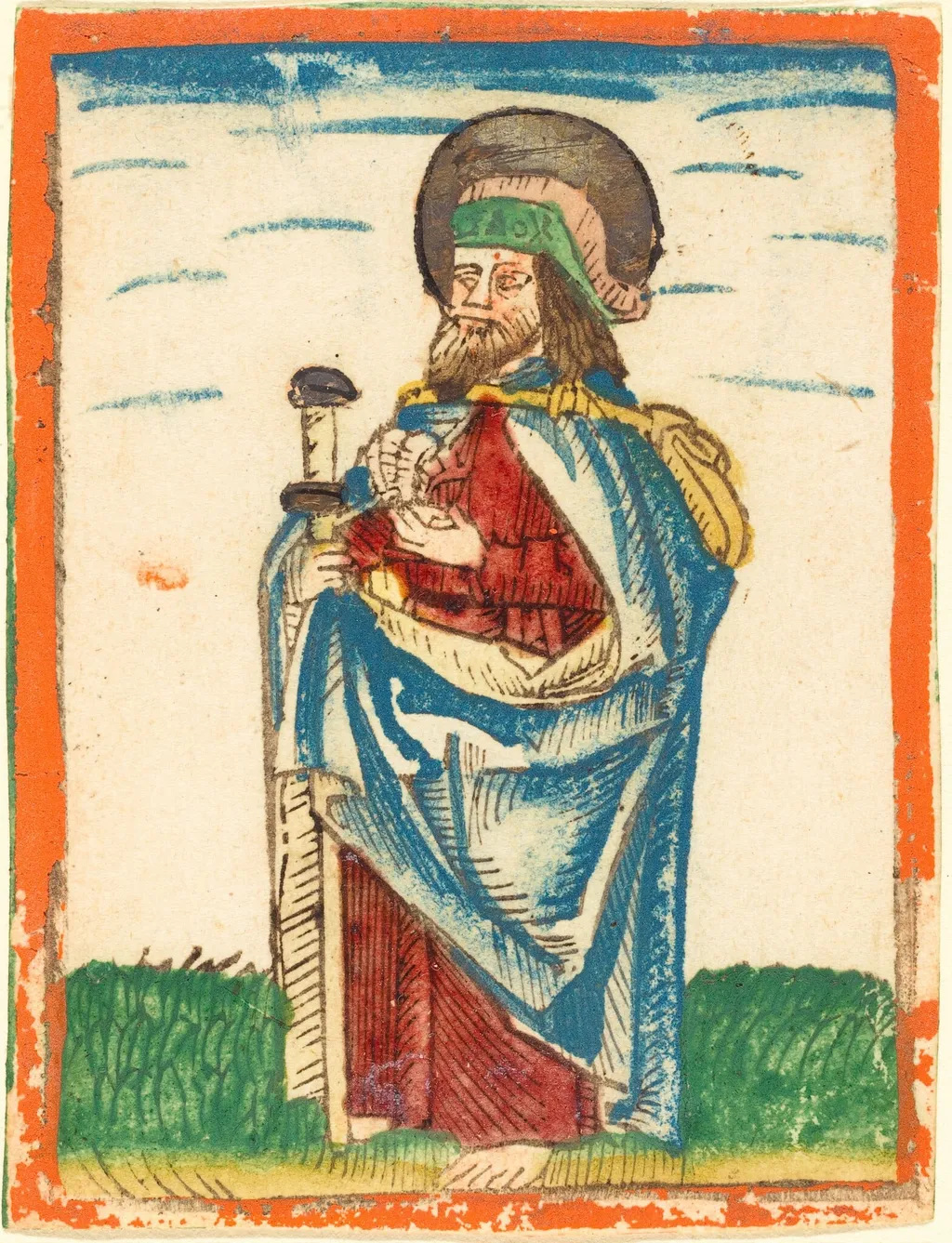
Saint James the Greater is an ink print by the Renaissance artist German 15th Century. It dates from 1485 and is held in the collection of the National Gallery of Art.
About this work
Overview
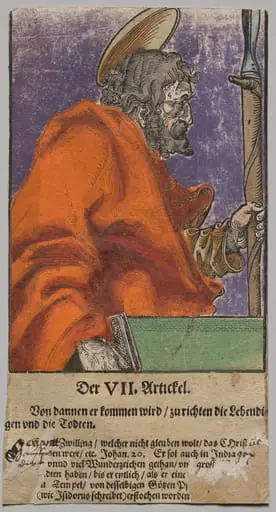
This woodcut depicts Saint James the Greater, printed in brown ink and manually colored with pigments including red lake, blue, green, yellow, gold, and orange.
This woodcut depicts Saint James the Greater, printed in brown ink and manually colored with pigments including red lake, blue, green, yellow, gold, and orange. The image is framed by a decorative border of red and orange, typical of early printed devotional images. Hand-coloring after printing was common in the period, allowing for individual variation and enhanced visual impact without the cost of full painting.
Subject & Meaning
Saint James the Greater, one of Christ’s apostles, is shown with traditional attributes: a pilgrim’s staff and a book, likely the Gospels. His long beard and curly hair reflect medieval iconography of aged, wise saints. The green hat and richly detailed robe suggest his status as a revered figure. The image served as a devotional aid, reinforcing his identity as a patron of pilgrims and a symbol of faith.
Technique & Style
The image was produced using a woodcut technique, where the design was carved into a wooden block, inked, and pressed onto paper. The bold, angular lines of the face and drapery reveal the tool marks of the carver. Colors were applied by hand after printing, using water-based pigments. The rough texture and flat planes reflect the limitations and aesthetic choices of early printmaking rather than naturalistic rendering.
History & Provenance
This print likely dates to the late 15th or early 16th century, a period when woodcuts were widely used for religious imagery in Europe. Its hand-coloring suggests it was made for private devotion rather than mass distribution. While its exact origin is unrecorded, similar prints circulated in Germany and the Low Countries, often sold by itinerant vendors or included in devotional books.
Context
During the late Middle Ages, printed images of saints were accessible alternatives to expensive painted altarpieces. They were used in homes, monasteries, and pilgrimage routes to inspire prayer and devotion. Saint James, as patron of the Camino de Santiago, was especially popular. This print reflects the growing demand for portable, affordable religious art before the Reformation reshaped devotional practices.
Legacy
Though not attributed to a known artist, this woodcut exemplifies the transition from manuscript illumination to print culture. Its survival in original color is rare, offering insight into how early printed images were experienced by laypeople. It remains a tangible link to the material culture of personal piety in the centuries before widespread literacy and mass production.
Artist & collection

Artist
This 15th-century German artist carved vivid religious scenes into metal and wood, then hand-painted them in bright, symbolic colors.

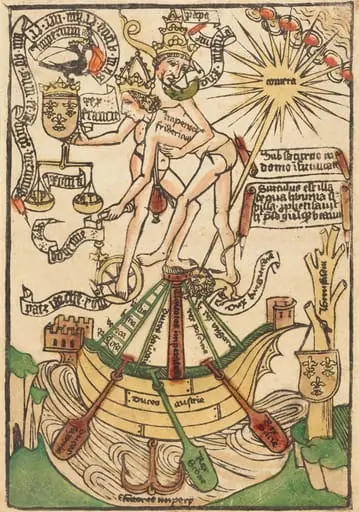 Allegory of the Meeting of Pope Paul II and Emperor Frederick III
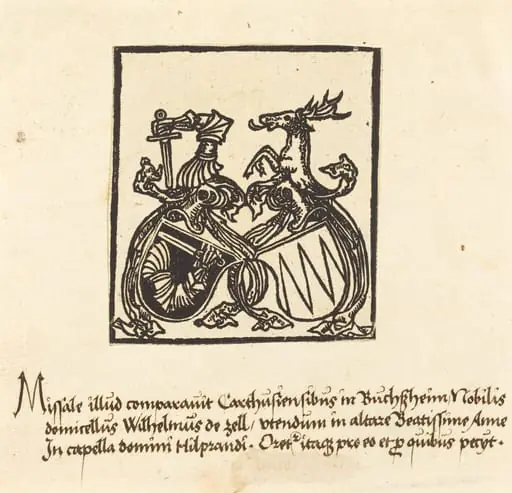 Bookplate of Wilhelm von Zell
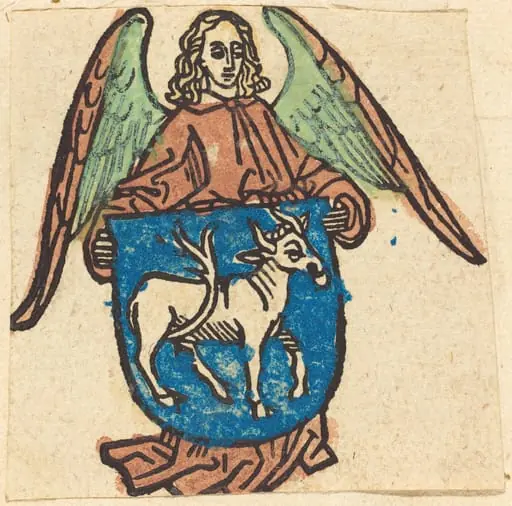 Bookplate of Hilprand Brandenburg of Bibrach
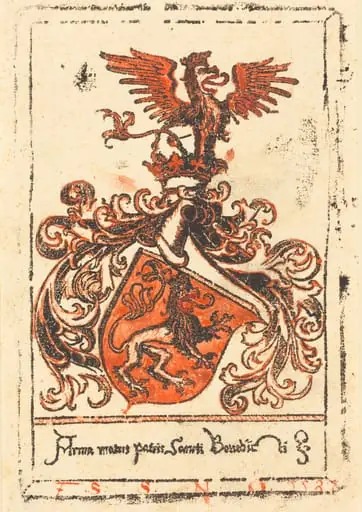 Bookplate of the Abbey of Ottobeuren
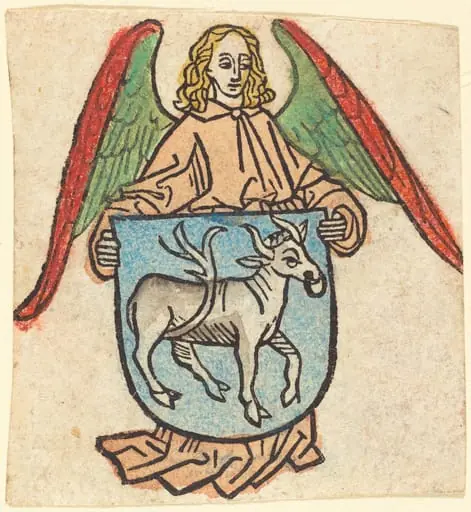 Bookplate of Hilprand Brandenburg of Bibrach
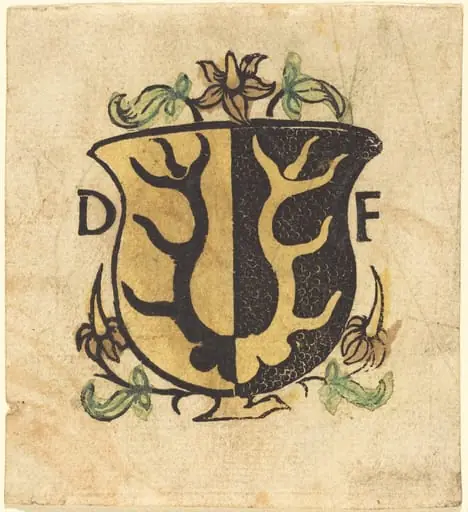 Bookplate of Dominicus Frauenfelder
![Studies for Six Figures (sheet from a model book) [recto], by German 15th Century](https://artifactworldgallery.com/img/german-15th-century--studies-for-six-figures-sheet-from-a-model-book-recto--4837429e0755bc3f-w320.webp) Studies for Six Figures (sheet from a model book) [recto]
Studies for Six Figures (sheet from a model book) [recto] Christ and Mary Interceding with God the Father